

Tara: The Revered Deities in Vajrayana Buddhism
Tara, known in Tibetan as “sgrol-ma” and commonly called Drolma, is one of the most beloved deities in Tibetan Vajrayana Buddhism. She is revered as a Buddhamother, symbolizing limitless compassion, swift action, and the power to liberate beings from suffering. The name Tara originates from Sanskrit and carries the meaning “She Who Liberates”, reflecting her role as a savior and protector.
In Tibetan Buddhism, Tara is regarded as an emanation of Avalokiteshvara (Chenrezig), the Bodhisattva of Compassion. Because of this close connection, she is often referred to as Tara Avalokiteshvara or Drolma Chenrezig. While Avalokiteshvara embodies compassion in a universal form, Tara represents its active, feminine expression, responding immediately to the cries of beings in distress.
The Origin and Spiritual Significance of Tara
According to the sacred text Tara Root Tantra, Avalokiteshvara devoted countless eons to freeing sentient beings from the endless cycle of samsara—birth, death, and rebirth. Despite his tireless efforts, suffering in the six realms continued unabated. Witnessing this, Avalokiteshvara was overcome with deep sorrow, and tears fell from his eyes.
These tears transformed into a lotus flower, from which emerged Green Tara, the Supreme Savior Buddhamother. Upon her appearance, Tara vowed to assist Avalokiteshvara in liberating beings and promised to work ceaselessly for their benefit. Unlike many bodhisattvas who appear in male form, Tara chose to manifest as a female, emphasizing the power of feminine wisdom and compassion in the path to enlightenment.
The Twenty-One Forms of Tara and Their Sacred Roles
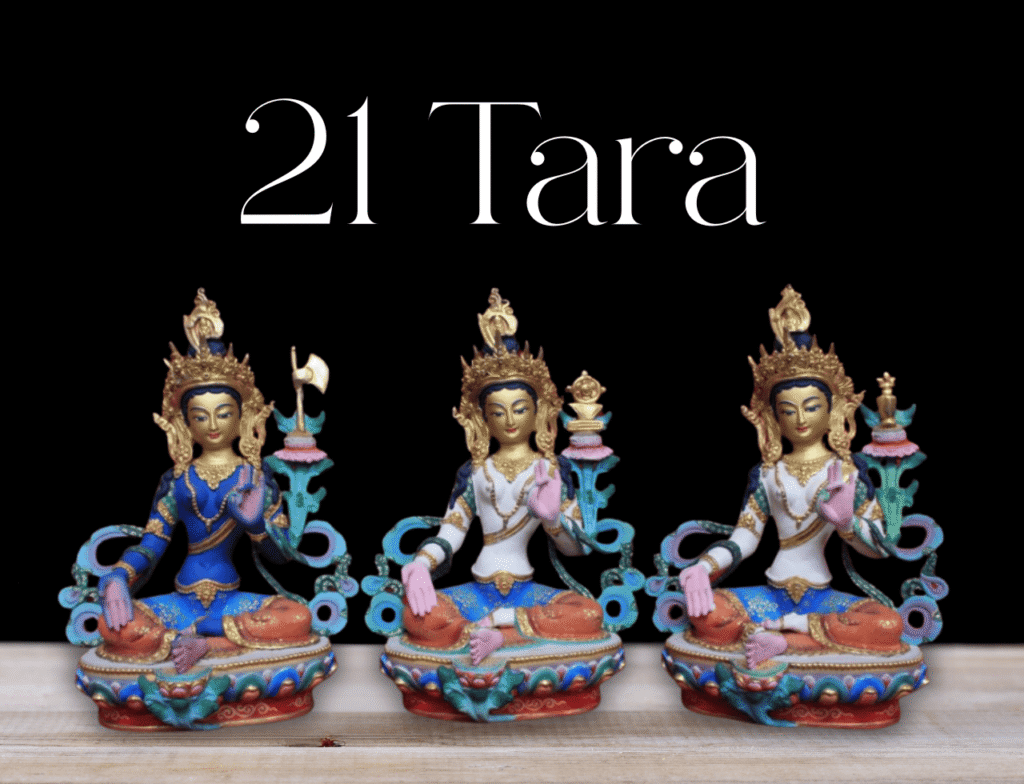
Over time, Tara manifested into twenty-one distinct forms, each embodying specific enlightened qualities and activities. These forms are differentiated by color, posture, expression, and spiritual function, allowing practitioners to connect with Tara according to their particular needs.
Among these manifestations are:
- Green Tara – Swift protector and remover of obstacles
- White Tara – Goddess of longevity, healing, and serenity
- Red Tara – Magnetizing power and control over circumstances
- Yellow Tara – Abundance, prosperity, and increase of merit
- Blue Tara – Wrathful compassion and transformation of negative forces
Each of the Twenty-One Taras pledged to aid Avalokiteshvara in saving sentient beings. In Tibetan Buddhism, the Twenty-One Tara Prayer is widely recited for protection, success, healing, and spiritual progress.
Tara’s Central Role in Tibetan Buddhist Devotion
In Tibet, Tara occupies a unique and intimate place in everyday religious life. Her image is commonly found in monasteries, homes, prayer rooms, and pilgrimage sites. Devotees turn to Tara not only for spiritual liberation but also for help with daily challenges such as fear, illness, danger, and emotional suffering.
Tara’s mantras and visualizations are integral to Tibetan spiritual practice, symbolizing the active compassion of all Buddhas. Unlike more distant cosmic deities, Tara is believed to respond quickly and personally, earning her the reputation as the “Mother who listens immediately.”
Her story and symbolism also highlight the importance of divine feminine energy in Vajrayana Buddhism, reinforcing her status as both a spiritual guide and a compassionate protector within Tibetan religious culture.

Green Tara (sgrol-ljang): The Embodiment of Compassion and Swift Action
Green Tara: The Swift Protector and Savior
Among all her manifestations, Green Tara (sgrol-ljang) is the most widely worshipped in Tibetan Buddhism. She is revered as the Holy Tara Bodhisattva, known for her fearless energy, quick response, and ability to protect beings from both physical and spiritual dangers.
According to Tibetan tradition, Princess Wencheng of the Tang Dynasty—who played a crucial role in the introduction of Buddhism to Tibet—is believed to have been an incarnation of Green Tara. This association further elevated Green Tara’s importance in Tibetan history and devotional practice.
Green Tara embodies courage, compassion, and enlightened activity, always ready to rise from meditation to help beings in need.
The Practice and Spiritual Benefits of Green Tara
Devotees believe that sincere practice of Green Tara can bring both worldly and spiritual benefits. Her rituals and mantra recitations are said to:
- Remove obstacles and fears
- Protect against illness, danger, and misfortune
- Support success in personal and professional life
- Increase wisdom, merit, and spiritual realization
- Assist in breaking the cycle of samsara
The sacred mantra “Om Tare Tuttare Ture Soha” is one of the most frequently chanted mantras in Tibetan Buddhism. Practitioners believe it invokes Green Tara’s swift blessings, helping fulfill wishes while guiding the mind toward compassion and awakening.
Iconography of Green Tara in Tibetan Thangka Art
In Thangka paintings, Green Tara is portrayed as a youthful and radiant figure, symbolizing vitality, hope, and enlightened action. Her green color represents life force, renewal, and compassionate activity.
She appears adorned with silk garments and precious ornaments, reflecting her enlightened status, while maintaining a gentle and approachable expression. Her crown features a small image of Amitabha Buddha, signifying her spiritual lineage and connection to infinite light and compassion.
Symbolism and Sacred Postures of Green Tara
Right Hand Gesture – Granting Boons
Green Tara’s right hand is extended downward in the gesture of supreme generosity, indicating her readiness to grant protection, success, and realizations. This symbolizes her ability to fulfill both spiritual aspirations and everyday needs.
Left Hand Gesture – Refuge and Protection
Her left hand is held at her heart in the gesture of refuge, holding a blue lotus (utpala). The lotus represents purity and spiritual awakening, growing unstained from the mud of worldly existence.
Leg Postures – Balance Between Action and Meditation
Green Tara’s right leg extended forward shows her active engagement in the world, always ready to rise and help sentient beings. Her left leg folded in meditation reflects unwavering inner stability and wisdom, even while engaging in compassionate action.
Green Tara’s Living Presence in Tibetan Buddhist Practice
Green Tara remains a constant presence in Tibetan devotion, meditation, and ritual life. Her image appears in daily prayers, pilgrimage traditions, empowerment ceremonies, and artistic expressions throughout Tibet and the Himalayan regions. She represents the perfect union of wisdom, compassion, and fearless action, guiding practitioners toward both inner peace and enlightened activity.
Her role as a compassionate savior continues to inspire devotion, faith, and spiritual practice across generations, making Green Tara one of the most enduring and powerful figures in Tibetan Buddhism.