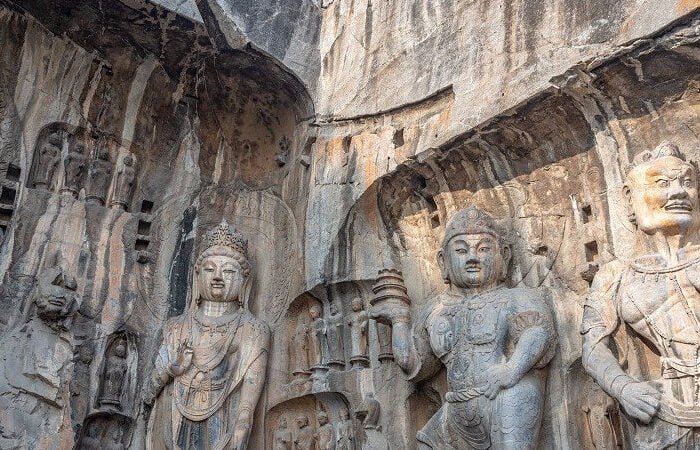
Hidden within the rugged landscape of Gato Town, Mangkang (Markham) County, the Tibetan Cliff Relief of Bodhisattvas is a remarkable example of early Tibetan Buddhist stone art. Carved directly into a massive rock face, this large-scale relief stands as both a spiritual monument and an important cultural relic in eastern Tibet.
Quietly preserved by the mountains for centuries, the site offers valuable insight into the spread of Buddhism, artistic traditions, and religious devotion in the Chamdo region.
Overview of the Cliff Relief
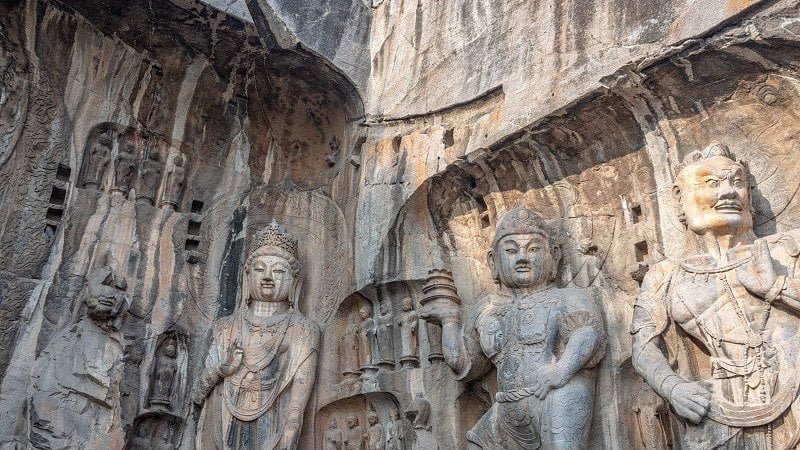
The cliff relief is impressive in both scale and composition. Measuring 9 meters in height and 7.5 meters in width, it dominates the surrounding rock wall while blending naturally into the landscape.
At the center sits Mahavairocana, also known as the Great Sun Tathagata, the cosmic Buddha in Tibetan Buddhism. His figure alone stands 4.95 meters tall, making it the visual and spiritual focus of the entire relief.
| Feature | Details |
|---|---|
| Location | Gato Town, Mangkang County, Chamdo |
| Relief Height | 9 meters |
| Relief Width | 7.5 meters |
| Central Figure | Mahavairocana (Great Sun Tathagata) |
| Height of Mahavairocana | 4.95 meters |
| Discovery | Identified by experts in 2014 |
Mahavairocana: The Central Deity
Mahavairocana is depicted seated in a meditative posture, radiating calm and compassion. He rests on a lotus lion throne, a symbol of purity, wisdom, and supreme authority in Buddhist iconography.
The figure’s proportions are balanced, and the facial expression is serene yet powerful, reflecting the advanced carving techniques and spiritual understanding of early Tibetan artisans.
The Eight Bodhisattvas: Sacred Companions
Surrounding Mahavairocana are eight Bodhisattvas, arranged symmetrically in two vertical tiers on each side, creating a harmonious and orderly composition.
Bodhisattvas on the Right Side
- Upper Tier: Samantabhadra, Vajrapani
- Lower Tier: Ksitigarbha, Avalokiteshvara
Bodhisattvas on the Left Side
- Upper Tier: Maitreya, Akasagarbha
- Lower Tier: Manjushri, Chagay Trang
Each Bodhisattva is carved with strong, vivid lines, distinct facial features, and expressive postures. Despite the limitations of carving into hard rock, the figures display depth, movement, and individual character.
Artistic and Historical Significance
The cliff relief was officially identified by Tibetan cultural heritage experts in 2014, marking an important discovery in the study of Tibetan art history. Scholars believe the relief reflects a high level of early Tibetan stone carving craftsmanship, both technically and spiritually.
Its significance includes:
- Evidence of early Buddhist influence in eastern Tibet
- Insight into iconographic traditions of Tibetan Buddhism
- A valuable reference for studying cliff relief art in the Tibetan cultural sphere
The site plays a crucial role in understanding how Buddhist imagery spread across regions through stone carving rather than portable statues or murals.
Related Discoveries in the Chamdo Region
Before this relief was identified, two other notable representations of Mahavairocana and the Eight Bodhisattvas from the Tibetan period had already been found in the broader Chamdo area.
| Site | Location |
|---|---|
| Renda Cliff Carvings | Renda Township, Chaya County |
| Dari Like Temple Sculptures | Bangda Township, Mangkang County |
These related sites suggest that the theme of Mahavairocana with eight Bodhisattvas was an important and recurring religious motif in eastern Tibet, further highlighting the cultural importance of the Mangkang cliff relief.
Visiting the Cliff Relief
The Tibetan Cliff Relief of Bodhisattvas is located in a remote mountain setting, making visits feel quiet and contemplative. Travelers interested in Tibetan Buddhism, ancient art, and cultural heritage will find the site especially meaningful.
As a lesser-known destination, it remains largely untouched by mass tourism, allowing visitors to experience the relief in an atmosphere close to its original spiritual intent.