

In just 6 milliseconds, electricity generated in the highlands of Tibet travels 1,900 kilometers to light up homes across Hubei Province.
On December 18, the Jinshang–Hubei ±800 kV Ultra-High Voltage Direct Current (UHVDC) transmission project was officially completed and put into operation. This milestone marks the inauguration of Tibet’s first-ever UHV power project, signaling that the large-scale export of clean energy from the “Roof of the World” has officially entered the “UHV Era.”
A Masterpiece of Engineering Across Four Regions
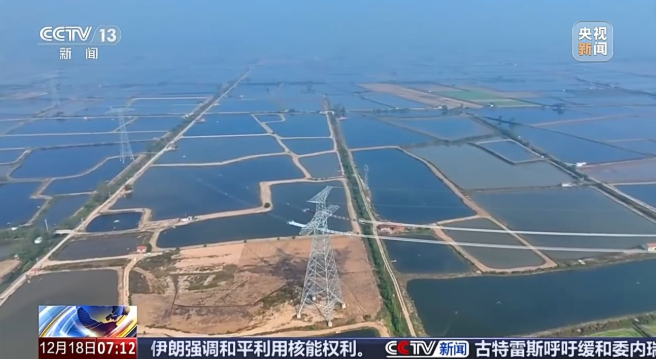
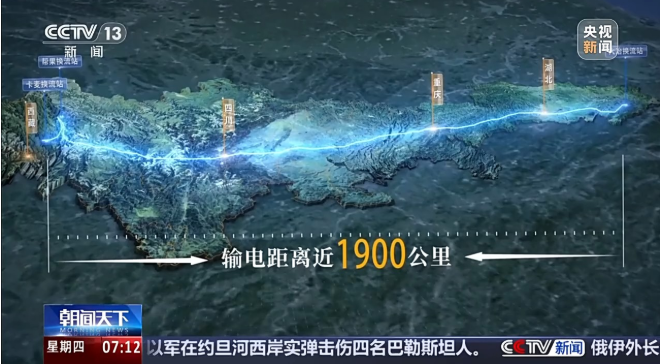
The Jinshang–Hubei project originates from the upper reaches of the Jinsha River and traverses four provinces and municipalities: Tibet, Sichuan, Chongqing, and Hubei. To gather hydropower and new energy from the region, two converter stations—Kamae and Bangguo—were constructed in Qamdo, Tibet, and Garzê, Sichuan, respectively. On the receiving end, the Daye converter station was built in Huangshi, Hubei, integrating the power into the Central China UHV AC backbone grid.
Among these facilities, the Kamae converter station stands out as a feat of extreme engineering. Located in Zhubalong Township, Mangkang County, Qamdo, at an altitude of approximately 3,720 meters, it is currently the highest UHV converter station in the world.
“Double 800” Technology: A High-Speed Energy Highway
The project utilizes “Double 800” UHVDC technology, featuring a rated voltage of ±800 kV and a transmission capacity of 8 million kilowatts. Stretching across a distance of nearly 1,900 kilometers, its 8-million-kilowatt capacity is equivalent to providing Hubei Province with the power output of eight large-scale thermal power plants.
Powering a Greener Future
According to official reports, the project is expected to deliver approximately 40 billion kWh of clean electricity annually. This volume of energy is equivalent to replacing 12 million tons of standard coal and reducing carbon dioxide emissions by about 30 million tons per year. Remarkably, the annual transmission capacity accounts for approximately one-sixth of Hubei Province’s total annual electricity consumption.
Unlocking Tibet’s Clean Energy Potential
For years, the development of Tibet’s abundant hydropower and solar resources was hampered by limited transmission channels and capacity, making it difficult to optimize resource allocation on a national scale.
The completion of this “Power Skyroad” significantly boosts Tibet’s ability to export clean energy. It serves as a massive “green power bank” for Central China, ensuring that Tibet’s natural resource advantages are utilized more fully and efficiently than ever before.