

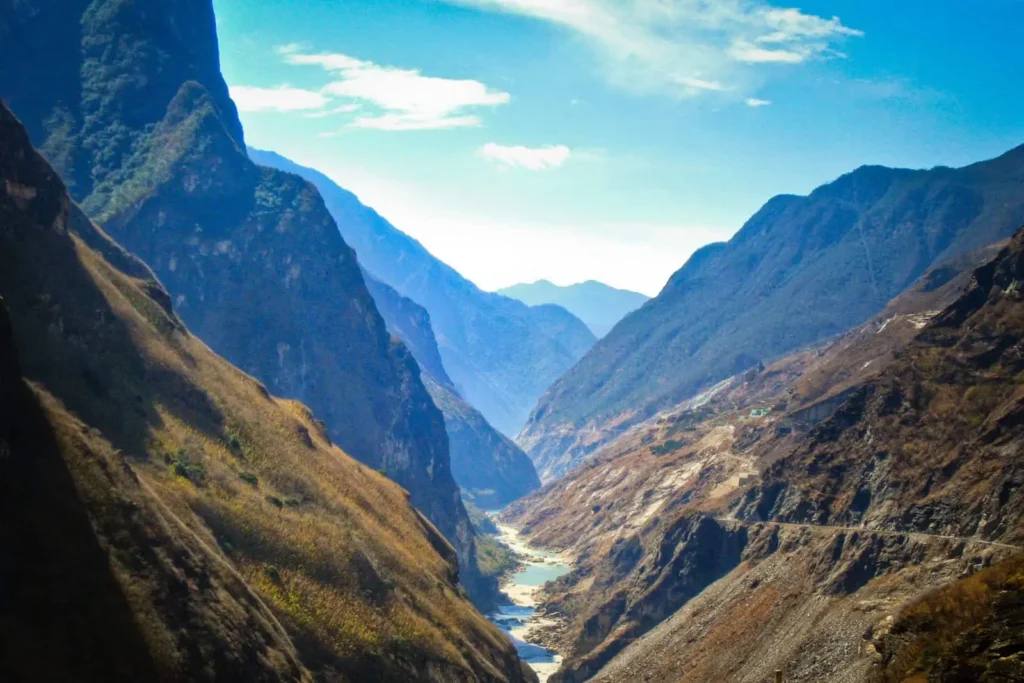
Tiger Leaping Gorge is widely recognized as one of the deepest river canyons in the world. Carved by the powerful Jinsha River, a major tributary of the upper Yangtze, this dramatic landscape plunges nearly 3,790 meters from towering snow-capped peaks to roaring rapids below.
Located in northwestern Yunnan Province, the gorge sits between two majestic mountains: Jade Dragon Snow Mountain (5,596 m) and Haba Snow Mountain (5,396 m). It forms part of the UNESCO-listed Three Parallel Rivers of Yunnan Protected Areas, where the Yangtze, Mekong, and Salween rivers flow in parallel through deep mountain valleys.
For travelers seeking dramatic scenery, high-altitude hiking, and adrenaline-filled adventure, Tiger Leaping Gorge is one of the most unforgettable destinations in China.
Why Is It Called Tiger Leaping Gorge?
The name comes from a local legend. According to folklore, a hunted tiger once escaped by leaping across the narrowest part of the river, using a large rock in the middle as a stepping stone. At this point, the gorge is only about 25 meters wide, with fierce rapids crashing violently against the stone.
This legendary “Tiger Leaping Stone” remains one of the most photographed landmarks in the gorge and symbolizes the raw energy of the landscape.
The Three Sections of Tiger Leaping Gorge
The gorge stretches approximately 15–17 kilometers and is divided into three main sections: Upper Gorge, Middle Gorge, and Lower Gorge. Each offers a different experience, from accessible viewpoints to challenging cliffside hikes.
Upper Gorge: Close to the Roaring Rapids
The Upper Gorge is the most accessible section, located near Hutiaoxia Town. Here, visitors can witness the narrowest and most dramatic stretch of the river.
Key highlights include:
- Thunderous rapids crashing against massive boulders
- The famous Tiger Leaping Stone
- Viewing platforms reached by stairways and escalators
This section is ideal for travelers who want dramatic views without committing to a full-day hike. While some stairways can be steep and slippery, it remains manageable for most visitors.
Middle Gorge: The Classic High Trail Adventure
The Middle Gorge is the heart of the trekking experience and attracts hikers from around the world. The famous “High Road” trail runs along the cliffs roughly 2,000 meters above the river.
This 20–24 km trek typically takes 1–2 days and passes:
- Sheer cliff edges with panoramic river views
- Waterfalls cascading down steep canyon walls
- Traditional Naxi villages and family-run guesthouses
- The challenging “28 Bends,” a steep series of switchbacks
One of the most thrilling features is the Sky Ladder—a nearly vertical metal ladder bolted into the cliffside. It offers an intense but rewarding descent toward the river for confident hikers.
The Middle Gorge is best suited for fit travelers comfortable with heights and uneven terrain.
Lower Gorge: Quiet Trails and Walnut Groves
The Lower Gorge, also known as Walnut Grove, is less crowded and more peaceful. Trails here are gentler and pass through orchards and small villages.
This area is ideal for:
- Multi-day trekking
- Photography
- Combining hiking with rafting
- Visiting the First Bend of the Yangtze
Travelers seeking a quieter experience away from the busiest viewpoints often prefer this section.
Hiking Tiger Leaping Gorge: What to Expect
Hiking Tiger Leaping Gorge is considered one of the best treks in Yunnan. The high trail is narrow and rocky in places but well marked. Along the route, you will encounter:
- Snow-capped mountain backdrops
- Turquoise river views far below
- Grazing goats and terraced farmland
- Guesthouses serving local dishes
Many hikers stay overnight at mountain lodges such as Tea Horse or Halfway Guesthouse, where sunrise and sunset views over the gorge are breathtaking.
The altitude reaches around 2,700 meters, so it’s important to pace yourself and stay hydrated.
White Water Rafting and Other Adventure Activities
Beyond hiking, Tiger Leaping Gorge offers additional adventure options.
White Water Rafting
In calmer downstream sections near the First Bend, guided rafting tours provide a thrilling way to experience the power of the Jinsha River. Water levels and intensity vary by season, making it suitable for both beginners and experienced rafters with proper guidance.
Scenic Drives
For travelers who prefer not to hike, the lower road along the river allows access to scenic viewpoints and photography stops. The Upper Gorge escalator system also provides an easier way to reach viewing platforms close to the rapids.
Cultural Encounters Along the Trail
The gorge is home to the Naxi ethnic community. Many local families operate guesthouses along the hiking route, offering home-cooked meals and insight into mountain life.
Staying overnight allows visitors to experience:
- Traditional hospitality
- Local folklore
- Clear night skies free from city light pollution
This blend of cultural immersion and natural adventure makes the experience even more memorable.
Best Time to Visit Tiger Leaping Gorge
The best months to visit are May to October, when the weather is generally clear and vegetation is lush. However:
- July and August can bring heavy rain
- Trails may become slippery or temporarily closed due to landslides
- Winter offers fewer crowds but colder temperatures
Checking weather conditions before starting a hike is strongly recommended.
How to Get to Tiger Leaping Gorge
Tiger Leaping Gorge is located about:
- 60 km north of Lijiang
- Around 2–3 hours by road from Shangri-La
Travelers typically reach the gorge by bus or private vehicle from Lijiang or Shangri-La. Qiaotou serves as the main starting point for hikers beginning the high trail.
Entrance fees are approximately 65 CNY, and visitors should bring sturdy hiking shoes, rain protection, and sufficient water.
A Premier Adventure Destination in Yunnan
With towering snow mountains, roaring rapids, dramatic cliffside trails, and authentic cultural encounters, Tiger Leaping Gorge stands as one of Yunnan’s most thrilling natural attractions. Whether trekking the high trail, descending toward the raging river, or simply admiring the canyon from scenic viewpoints, visitors experience one of Asia’s most spectacular landscapes.