Tibetan people
Tibetan Customs
Major Festivals in Tibet
Tibetan Language
Few journeys in the world match what this six-day Tibet itinerary offers — a deep dive into Lhasa’s ancient spiritual landmarks followed by one of the most visually stunning natural destinations on the planet, Namtso Lake. Whether you are drawn to Tibetan history, Buddhist culture, or high-altitude landscapes, this classic route delivers all three in one carefully paced adventure.
June through September is the best time to take this tour, with July and August offering the most reliable conditions of the entire year. At Namtso Lake’s elevation of around 4,700 meters, daytime temperatures typically reach a comfortable 15–22°C. The grasslands are green, wildflowers are in bloom, and nomadic herders move across the plateau with their yaks and sheep.
The lake’s deep blue waters reflect the open sky with exceptional clarity, and both road access and weather stability are at their peak. In Lhasa, temperatures is warm with long sunny days — ideal conditions for sightseeing at Potala Palace, Jokhang Temple, and the city’s monasteries. Summer also brings many of Tibet’s most vibrant festivals and cultural events.
Lhasa’s Gonggar Airport sits approximately 60 kilometres from the city centre, and the drive in is a journey worth paying attention to. Traditional Tibetan villages appear along the roadside, the mighty Yarlung Tsangpo — the world’s highest river — flows through the valley below, and iconic yak-skin boats drift along its surface. It is a fitting introduction to everything Tibet has in store.
At around 3,650 meters above sea level, Lhasa’s oxygen levels are considerably lower than most visitors are accustomed to. Day one is intentionally kept free for acclimatization. Rest, hydrate, move slowly, and allow your body time to adjust. If any symptoms of altitude sickness arise, inform your guide or hotel staff immediately for assistance.
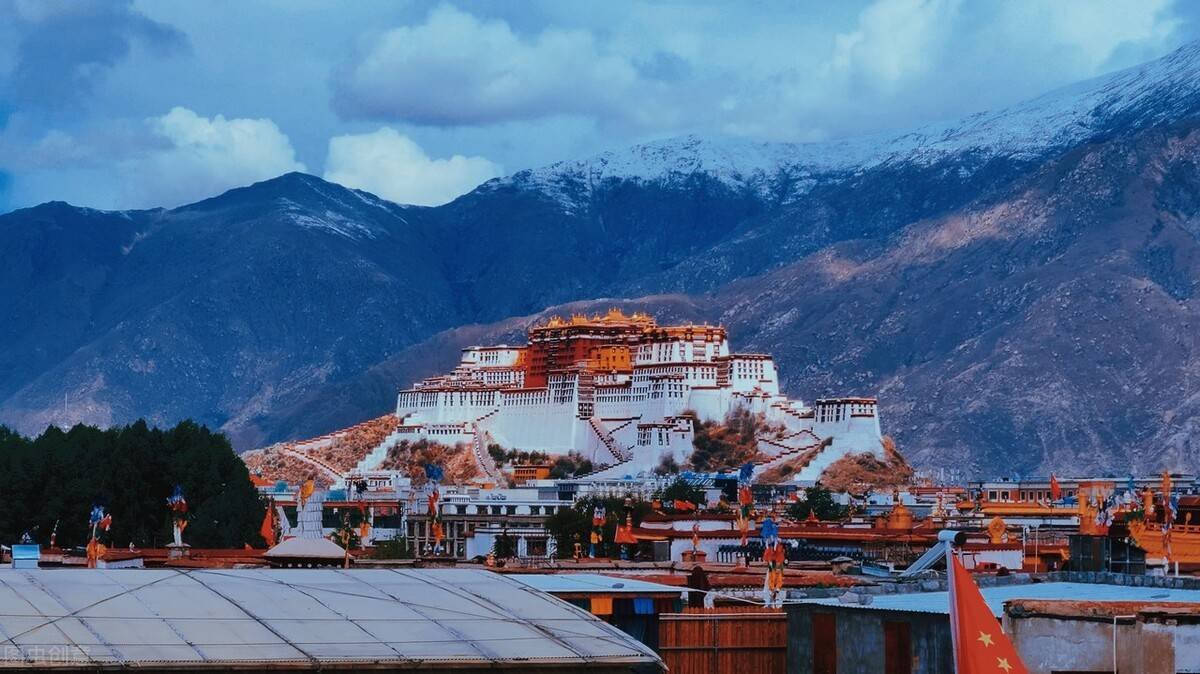
Potala Palace rises from the top of Red Hill at 3,700 meters, visible from almost every corner of Lhasa. First built in the 7th century, it became the winter palace of the Dalai Lamas in the 17th century. The palace contains 999 rooms — divided between the White Palace, which served as the Dalai Lama’s residence, and the Red Palace, home to temples and stupas of past Dalai Lamas. The panoramic views of Lhasa from the upper levels are extraordinary.
Jokhang Temple draws pilgrims from across the Tibetan world and has done so for over 1,300 years. Its architecture blends Tibetan, Tang, Nepalese, and Indian influences, and at its heart sits a rare 12-year-old Buddha statue of great religious significance. The temple is also recognized as the birthplace of the “Geshe” degree in Tibetan Buddhism. The pilgrimage route circling the temple is worn into the blue stone floor by generations of devoted footsteps — visitors are welcome to walk it themselves.
Barkhor Street wraps around Jokhang Temple in a circular route traditionally followed clockwise. The street is lined with market stalls selling Tibetan handicrafts, religious objects, and local goods. It is lively, colourful, and deeply connected to local daily life. Local legend adds an extra layer of intrigue — the Potala Palace’s secret chamber is said to have once been a meeting place for the 6th Dalai Lama, Tsangyang Gyatso
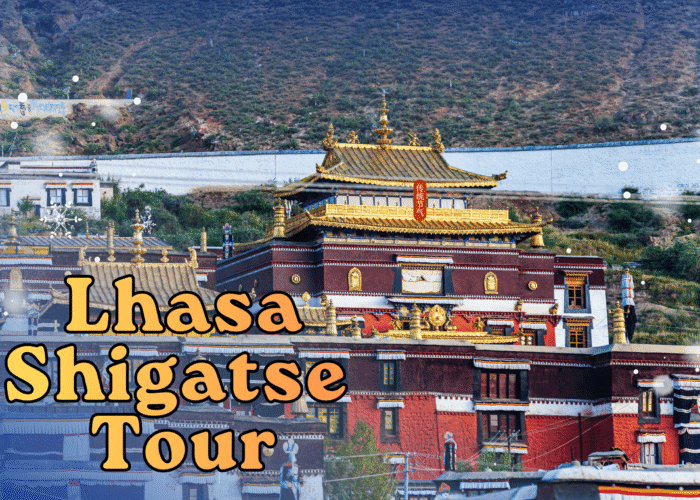
Drepung is one of the six major Gelug monasteries in Tibetan Buddhism and one of the most historically significant. The monastery overlooks the Lhasa River and the plains below, its complex spreading across the hillside in a series of towering Buddha halls, scripture halls, and monks’ residences. During the Shoton Festival, Drepung hosts large-scale Buddha exhibitions that draw thousands of pilgrims.
Sera Monastery is home to more than ten thousand Vajra Buddha statues and is celebrated across Tibet for its scripture debating sessions. Watching these debates — where monks engage in rapid-fire philosophical exchanges using dramatic hand gestures — is one of the most captivating cultural experiences available to visitors in Lhasa. It is a living tradition that has been practised here for centuries.
The journey north toward Namtso Lake is an experience in itself. The landscape opens up gradually into the vast Northern Tibetan Grassland, where herds of cattle and sheep graze across rolling terrain as far as the eye can see.
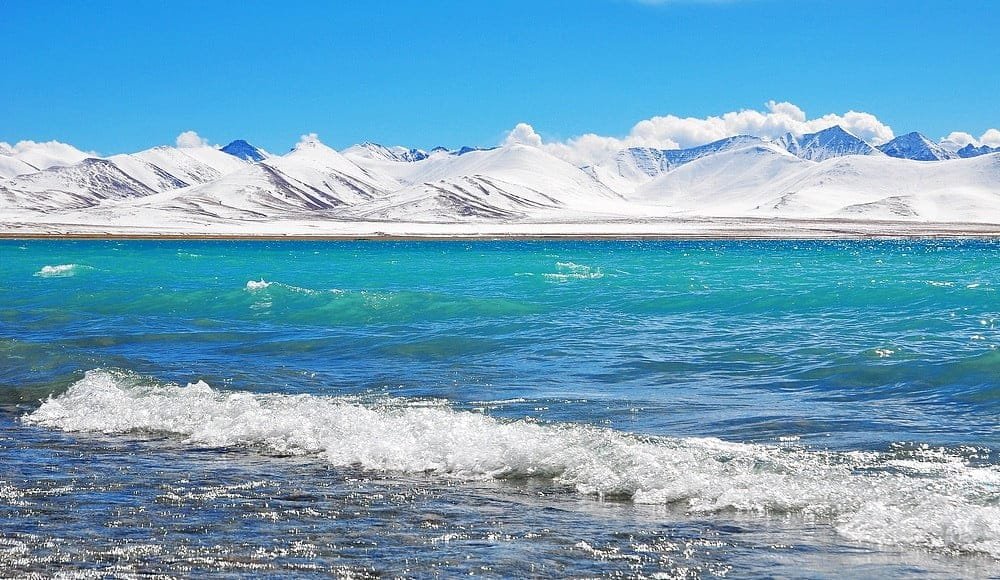
The route passes through the Nagela Mountain Pass, which serves as a natural gateway to the lake beyond. Emerging from the pass and seeing Namtso Lake for the first time is a moment many travellers describe as unforgettable. The water is a vivid, crystalline blue — almost unreal in its clarity and colour.
As evening falls, the sunset over Namtso transforms the sky into layers of colour above the lake’s still surface. It is the kind of scene that makes it easy to understand why Tibetans consider this lake sacred. The night is spent in Damxung or Yangbachen, close enough to Namtso to carry the experience through until morning.
The journey back to Lhasa includes a restorative stop at Yangpachen or Duilong. After the high altitude and open expanse of Namtso, the warm sulphuric waters of the hot springs offer a genuinely welcome moment of physical relief and relaxation. Set within Tibet’s natural landscape, it is a peaceful and memorable way to transition back toward the city before the final day of the tour.
The last morning in Lhasa is free and unhurried. A walk through a familiar street, a final cup of butter tea at a local tea house, or a quiet moment in the city — however you choose to spend it, the time is yours.
When the moment comes, your driver transfers you to Lhasa Gonggar Airport or the train station for your onward journey.
This tour covers the very best of Lhasa — Potala Palace, Jokhang Temple, Barkhor Street, Drepung Monastery, and Sera Monastery. Each site tells a different chapter of Tibetan history and Buddhist tradition, and together they offer a remarkably complete picture of what makes Lhasa one of the world’s most spiritually significant cities.
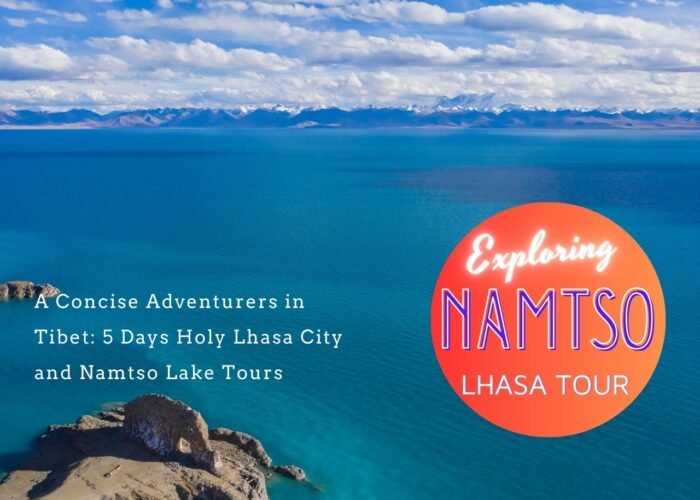
At 4,718 meters above sea level, Namtso Lake is the second-largest alpine saline lake in Tibet. The scale and stillness of this place are difficult to describe. One traveller put it this way: it is “one of those rare places on Earth where you feel the beauty of Nature as something material.” The air feels different here. So does the light. So does the silence.
Here are our contact options for your convenience:
Feel free to reach out anytime!
Yes, you have the option to cancel your tailor-made tour. However, be aware that cancellation charges will be applied as per the Tour Tibet cancellation policy. For detailed information, please review our Terms and Conditions.
Arranging a tour in Tibet independently is not possible due to the mandatory Tibet Travel Permit. This essential document is a requirement for all foreign visitors traveling to the region and can only be obtained through a local travel agency authorized by the Tibet Tourism Bureau.
Absolutely! We encourage you to visit our office and discuss your travel plans directly with our experienced travel consultants. Together, we can create a tailor-made Tibet tour that suits your preferences and requirements.
After confirming your tour arrangements, a deposit of 20% of the total trip cost is required to secure your booking. This deposit can be made via PayPal, Credit Card, Western Union, or Wire Transfer. The remaining balance is due at the start of your tour.