Tibetan people
Tibetan Customs
Major Festivals in Tibet
Tibetan Language
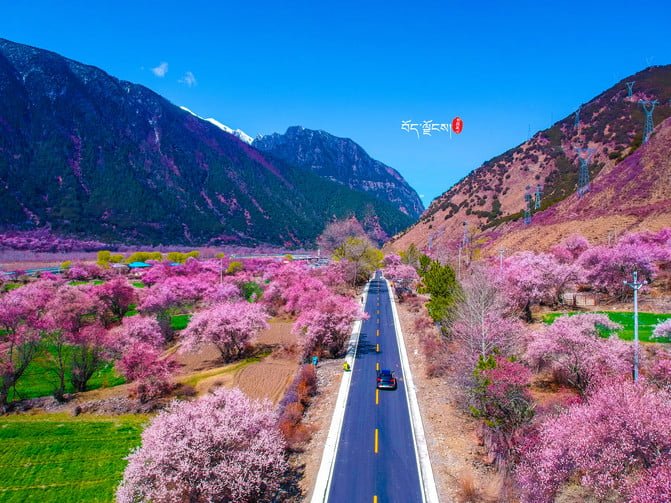
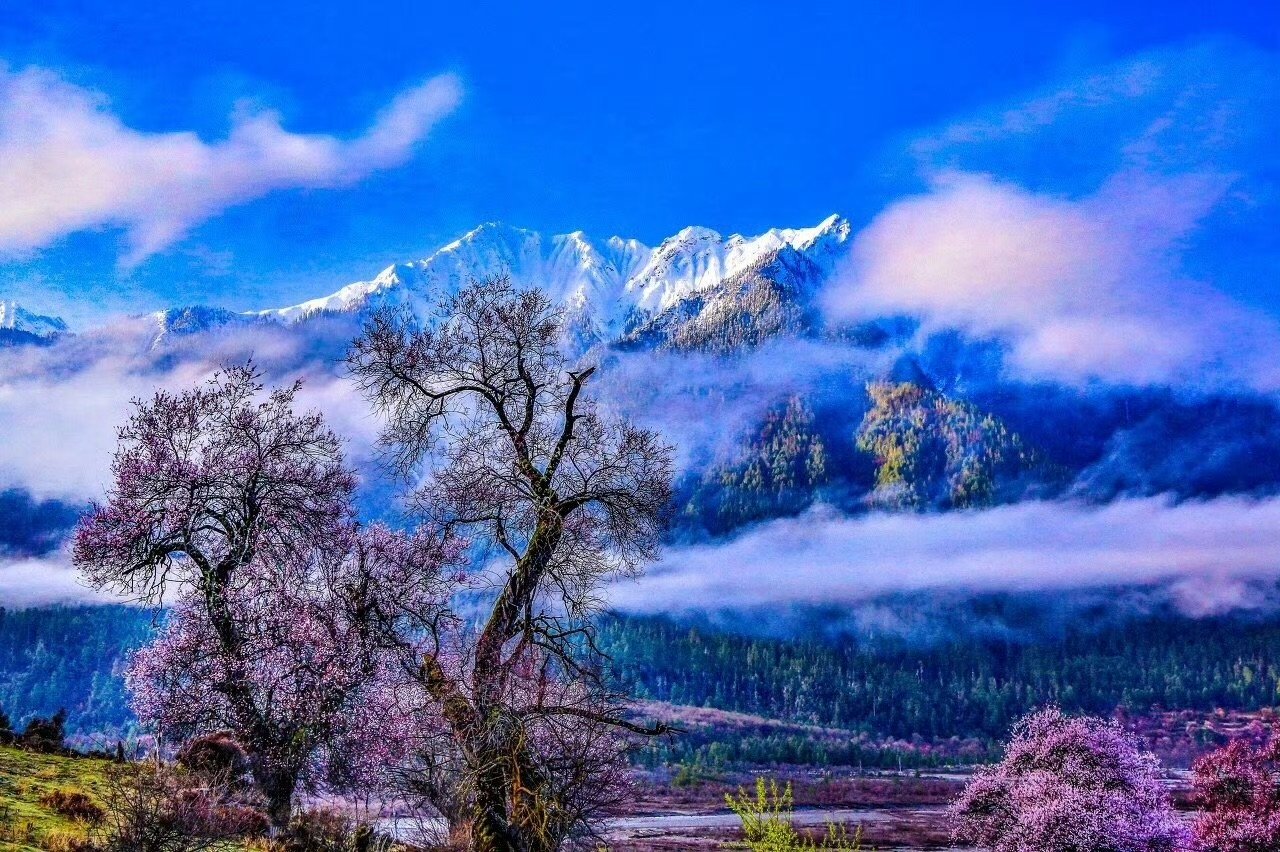
Every spring, a remarkable transformation takes place in Nyingchi, Tibet. Millions of wild peach trees burst into bloom across valleys, hillsides, and riverbanks, painting the landscape in vivid shades of pink and white. Against the backdrop of snow-capped Himalayan peaks and turquoise rivers, the scene is unlike anything else on the Tibetan Plateau. This is the Nyingchi Peach Blossom Festival — one of Asia’s most spectacular seasonal celebrations and a must-visit event for any traveller heading to Tibet in spring.
The Nyingchi Peach Blossom Festival has been held annually since 2002, making it one of Tibet’s longest-running cultural tourism events. Organised by Tibetan officials, the festival celebrates both the region’s natural beauty and its rich cultural heritage. It draws visitors from across China and around the world each year, firmly establishing Nyingchi as a premier spring destination.
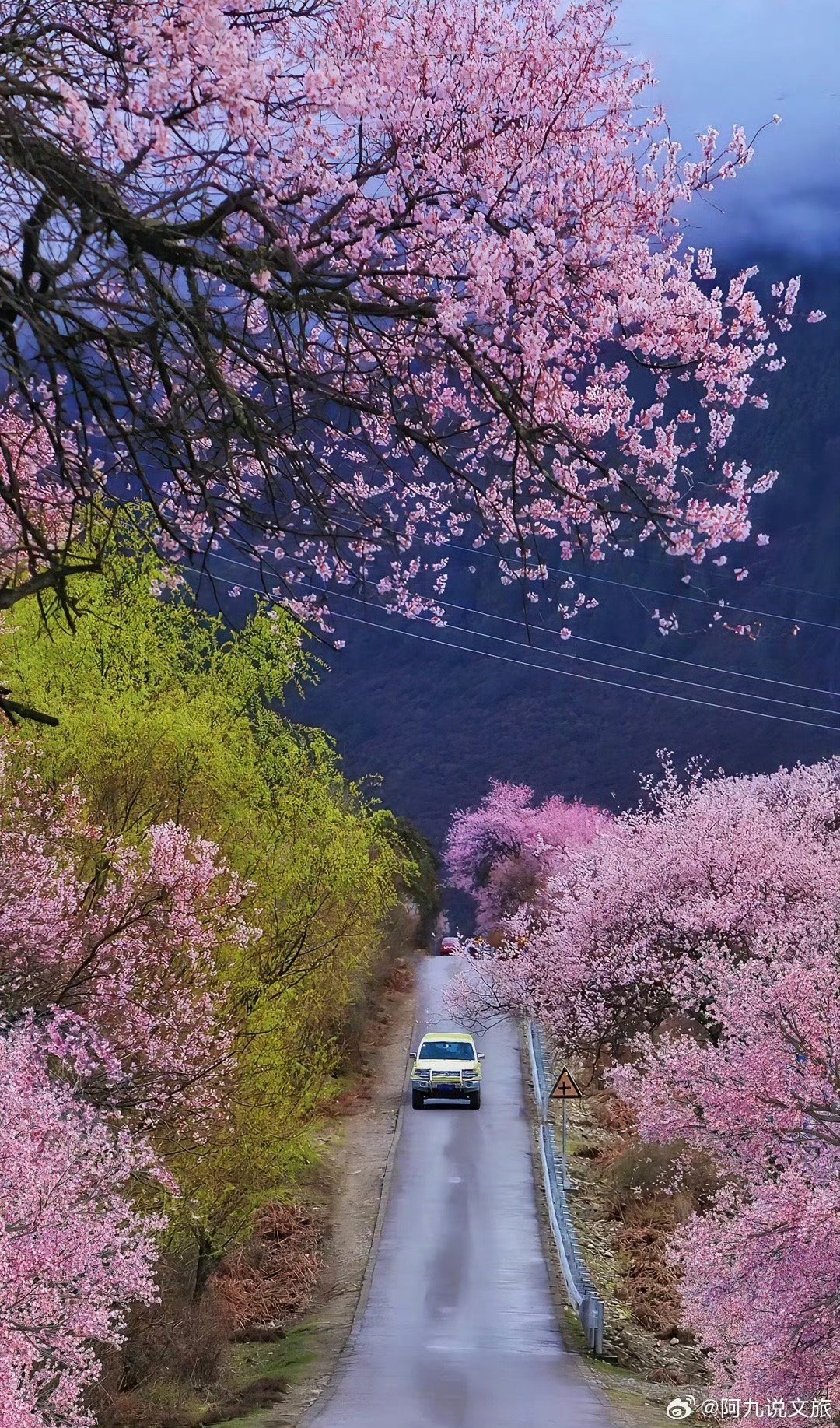
What makes this festival truly special is the character of the blossoms themselves. These are not neat, cultivated orchard trees. They are wild Tibetan peach trees — known botanically as Prunus mira — many of them hundreds of years old, growing freely across gorges, valley floors, and open hillsides. The result is a raw, ancient beauty that feels completely untouched.
Nyingchi is often called the “Switzerland of Tibet” or the “Jiangnan of Tibet” for its lush, lower-altitude landscapes. At roughly 2,800 to 3,000 metres above sea level, it is far more accessible and temperate than most of the Tibetan Plateau, making it an ideal starting point for first-time visitors to Tibet.
This 6-day tour during the Nyingchi Peach Blossom Festival is ideal for a wide range of travellers thanks to its relaxed pace and diverse scenery. Couples and honeymooners will find a deeply romantic setting, from peaceful walks through blooming orchards to sunset views over Ranwu Lake, all paired with comfortable stays in Bayi Town and Bomi. Solo travellers will appreciate how accessible Nyingchi is, with welcoming festival vibes and well-organized group tours that make it easy to explore without stress while meeting like-minded people along the way.
Families with children will benefit from Nyingchi’s lower altitude, making it one of the most comfortable regions in Tibet for younger travellers to enjoy village walks, forest trails, and scenic drives along the Niyang River. At the same time, photography enthusiasts will be drawn to the region’s extraordinary variety — from the glowing peach blossoms of Gala Village to the dramatic landscapes of Midui Glacier and the iconic backdrop of Namjagbarwa Peak — offering endless opportunities for both sweeping landscapes and detailed close-up shots.
The festival typically runs from late March through early April each year, timed to coincide with the peak bloom period. The peach blossoms in Nyingchi generally begin to open in early March, reach large-scale blooming by the end of the month, and arrive at their absolute peak in early April.
The best window for visiting is between March 25 and April 15, when colour saturation is at its highest and the contrast between pink blossoms and snow-capped mountains is most dramatic. That said, bloom timing varies by altitude and location across the region — lower-lying areas such as Bomi County tend to flower first, followed by Zayu County, Bayi District, Milin County, Lang County, and Gongbu Gyamda County.
Temperatures during this period average around 15°C during the day, with noticeably cooler evenings. Warm layers are essential, particularly for early-morning photography sessions or evening cultural events.
Fly into Nyingchi Mainling Airport, located approximately 41 kilometres from Nyingchi. Upon arrival, a local guide will typically greet you with a traditional Khada — a ceremonial Tibetan scarf — and escort you to your hotel in Bayi Town.
The drive from the airport to town runs along the Niyang River, which is flanked by wild peach blossoms during the festival season. Take the afternoon to rest and acclimatise. The lower altitude of Nyingchi makes this a gentler introduction to the Tibetan Plateau than most other parts of the region. In the evening, explore Bayi Town and sample local Tibetan cuisine.
Altitude: 3,000 m → 4,500 m | Distance: 450 km, approx. 8.5 hours driving
After breakfast, set out eastward from Nyingchi. The first major stop is the Great Cypress Nature Reserve, located about 5 kilometres southeast of Bayi Town. Here you can walk among ancient cypress trees more than 2,500 years old — the oldest trees in China and considered sacred in the Bön tradition.
From there, continue towards Serkhym-la Pass at 4,728 metres. On a clear day, this elevated vantage point offers a breathtaking view of Namjagbarwa (7,782 m), the highest peak in the eastern Himalayas. Many travellers stop to hang Tibetan prayer flags here. Descending from the pass, you arrive at Lulang Forest at an elevation of around 3,700 metres. This highland meadow belt is covered with dense spruce, pine, and rhododendron trees backed by jagged snow peaks. A short hike to the Lulang Forest Viewing Platform rewards you with sweeping panoramas of the valley — a scene often compared to the Swiss Alps.
Continuing east, stop at Yuxu Village, a picturesque Tibetan settlement surrounded by peach blossoms, snow-capped mountains, and the pristine Nyang River. Walk the paths between the peach trees and take in views of the distant peaks before driving the final stretch to Bomi for the night.
Altitude: ~3,200 m | Distance: 130 km, approx. 3 hours
Spend the morning exploring the wider Bomi area. The road from Lulang Town through the Tongmai natural passage leads to the confluence of the Yarlung Zangbo River and the Parlung Zangbo River — a dramatic meeting of waters flanked by lush forest and gorge scenery.
Visit Guxiang Lake, a serene glacial lake ringed by forested mountains. Its still surface reflects the surrounding snow peaks, and the tranquil setting is ideal for photography and quiet walks. Peach blossoms line much of the route, set against villages and forests that feel completely removed from the outside world. Overnight in Bomi.
Altitude: ~3,800 m | Distance: 130 km, approx. 3 hours
This is one of the most spectacular days of the journey. Drive approximately 10 kilometres from Bomi to Midui Village, the starting point for visiting Midui Glacier, widely regarded as the most beautiful glacier in China. The glacier’s main peak rises to 6,800 metres, while its lowest end averages just 2,400 metres in altitude — making it one of the lowest-elevation glaciers in the world and unusually accessible. You can hike or ride a horse through the surrounding forest before reaching the ice tongue, which measures 700–800 metres from top to bottom. The interplay of pristine glacial ice, deep blue crevasses, and lush vegetation beginning to revive in spring is extraordinary.
From Midui, continue to Ranwu Lake, situated 89 kilometres southwest of Basu County. Fed by glacier melt, this turquoise alpine lake changes colour with the seasons and time of day. Snow-capped mountains, dense forests, and the reflective water combine to create what many travellers describe as a paradise-like setting. Drive along the upper, middle, and lower sections of the lake for varied perspectives before returning to Bomi for the night.
Altitude: 2,800 m | Distance: 220 km
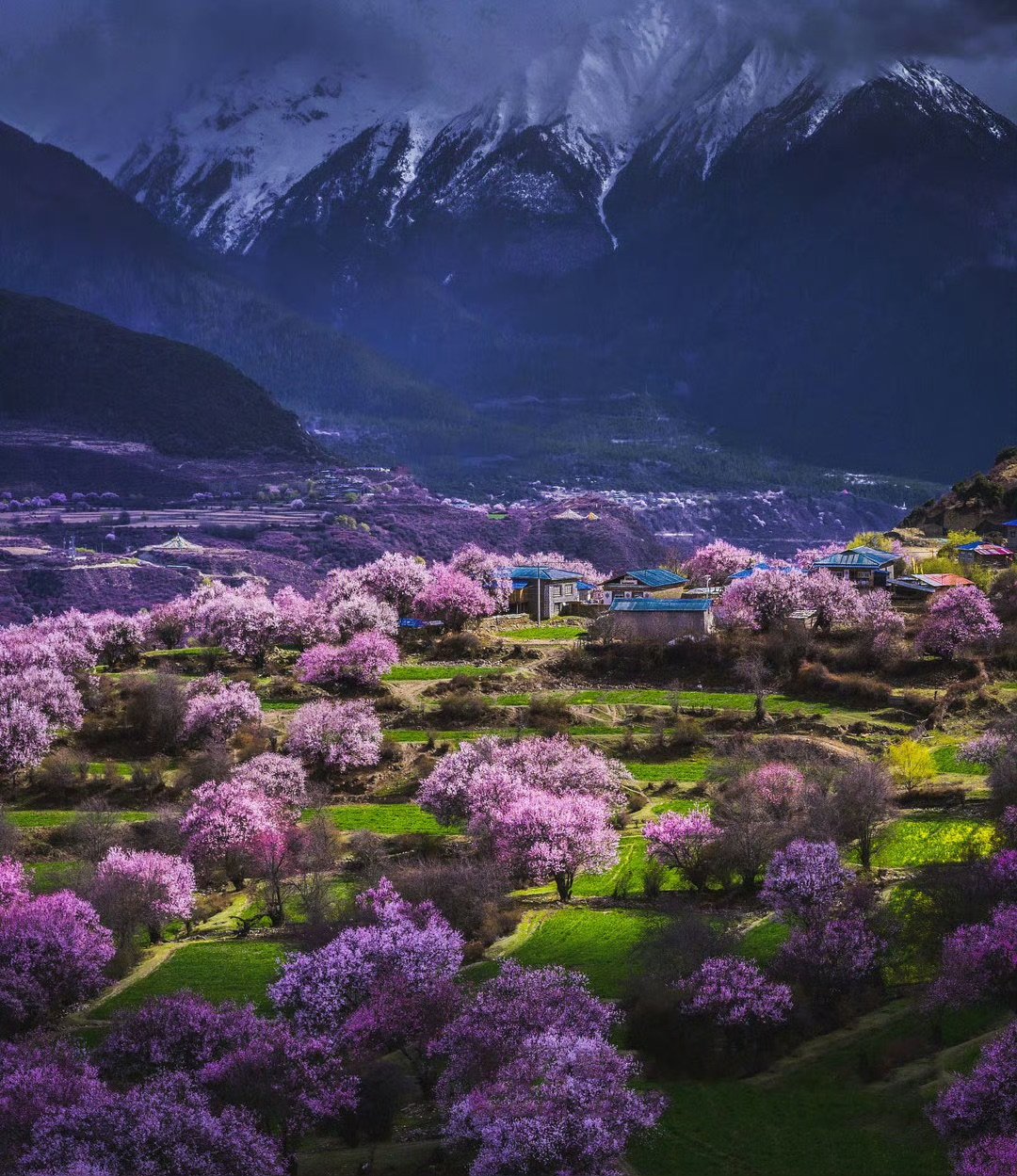
After breakfast, head towards the Bomi Peach Blossom Valley, named among Tibet’s top 100 scenic spots. Spanning nearly 50 kilometres, this is the most concentrated belt of peach blossoms in the entire region. Ancient trees drape themselves over hillsides, wheat fields, and riverbanks in a sweeping display of wild blooms. Villages like Galang and Runa sit within this sea of pink, their traditional stone houses and farm lanes creating the kind of composed, unhurried scene that stays with travellers long after they leave.
Continue towards Taohua Village (Peach Blossom Village) and then on to the Yarlung Zangbo River area. The world’s deepest at over 6,000 metres — provides an extraordinary backdrop of rock walls and river mist, with peach trees blooming along its edges. Stop at Suosong Village to see the blossoms framed by the towering Namchak Barwa Peak. Arrive in Nyingchi and check in for the night.
Altitude: 2,800 m → 3,000 m | Distance: 85 km to airport, approx. 1.5 hours
Spend the final morning at Gala Peach Blossom Village, the official festival hub. Explore the terraced slopes covered in blooms, attend cultural performances, and browse the local craft and food stalls. This is also the best opportunity to watch any remaining festival events, including Tibetan dance performances or traditional competitions.
In the afternoon, your guide will transfer you to Nyingchi Mainling Airport for your departure flight.
The opening ceremony of the Peach Blossom Festival is a vibrant occasion. Each year features a different themed flower-viewing concept, welcoming enthusiasts with cultural performances, traditional Tibetan music and dance, art exhibitions, and local cuisine showcases.
In recent years, the festival has also introduced the Nyingchi Tourism Image Ambassador and Peach Blossom Fairy Trial — a popular competition that draws contestants from across the country. The selected ambassador makes a formal appearance at the opening ceremony, adding a celebratory and community-centred dimension to the event.
Throughout the festival, visitors can enjoy Tibetan equestrian performances, archery, wrestling, stone-carrying competitions, lantern shows, handicraft exhibitions, and photography events. Traditional costume parties and folk music festivities bring the cultural life of local Tibetan communities to the forefront.
Importantly, entry to the festival is free — there are no tickets required for access to Tibetan villages or most organised activities. This openness is one of the reasons the event has grown so popular, though it also means accommodation books up very quickly.
The festival is spread across multiple counties and villages, each offering a distinct experience. Here are the top locations for peach blossom viewing.
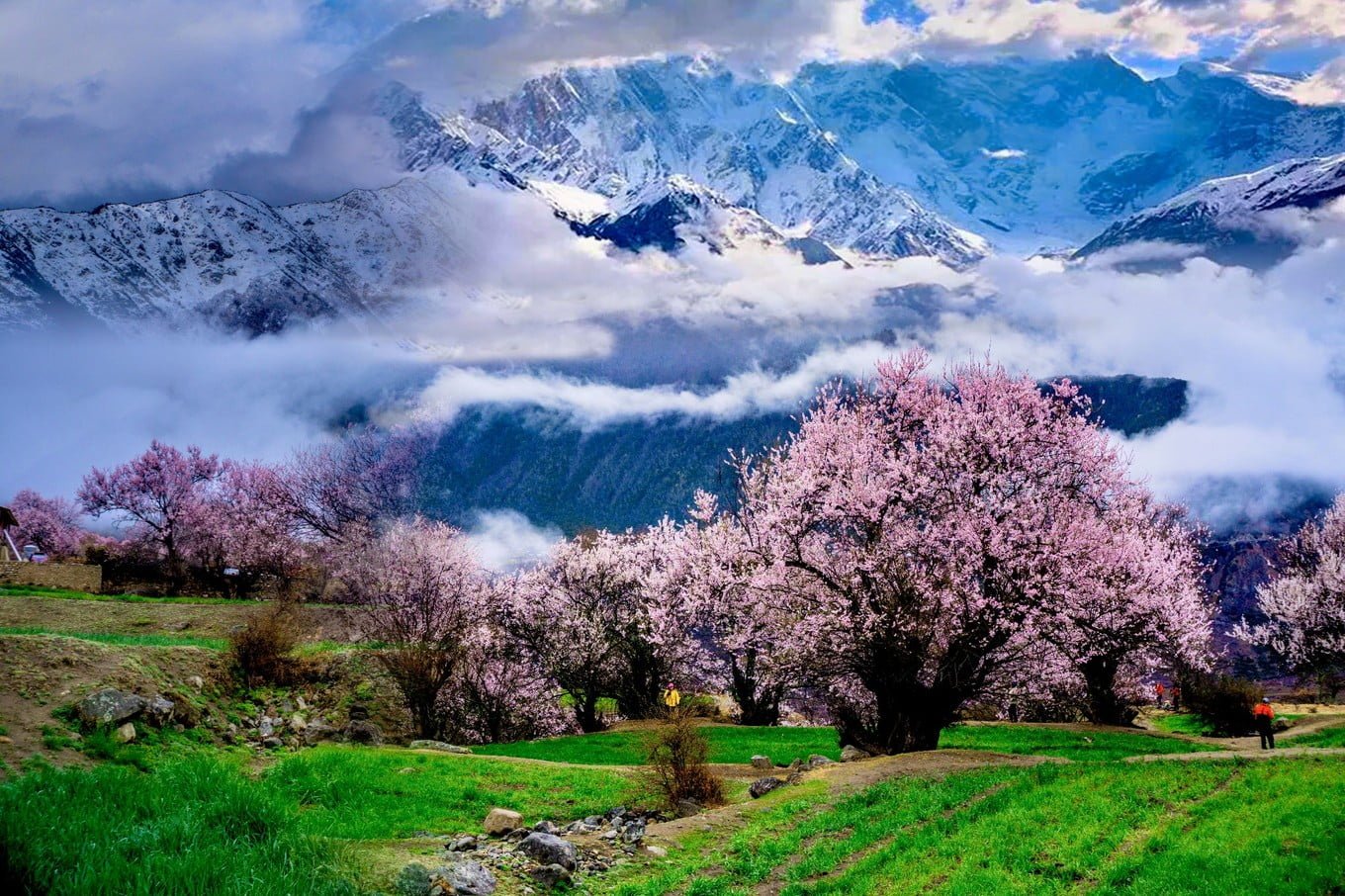
Gala Peach Blossom Village is the undisputed centrepiece of the festival. Located just 10 kilometres from Bayi Town, it serves as the official main venue for the opening ceremony. More than 500 acres of peach trees grow across tiered, terraced slopes, creating a layered pink canopy that rises against the mountainside. For first-time visitors, this is the most convenient and iconic place to begin.
Bomi Peach Blossom Valley, named among Tibet’s top 100 scenic spots by China National Geographic, spans nearly 50 kilometres and is the most concentrated peach blossom region in Bomi County. The blossoms here are wilder and less visited than at Gala Village, making it a favourite with photographers seeking untouched landscapes. Ancient peach trees frame traditional Tibetan farmhouses, with snow peaks rising dramatically in the background.
Suosong Village, a quiet mountain settlement near the Yarlung Zangbo Grand Canyon, offers an intimate experience where peach blossoms are framed by the magnificent Namjagbarwa Peak. The combination of blooms, river views, and mountain scenery here is considered one of the most painterly in the entire region.
Along the Niyang River, from Nyingchi Airport to Bayi Town, wild peach blossoms line the banks of the river for much of the route. Arriving by plane during the festival season offers a fragrant, pink-lined welcome that many travellers remember as their first unforgettable impression of Nyingchi.
The Yarlung Zangbo River Gorge adds yet another dimension — peach blossoms cascading down the canyon walls with the world’s deepest river gorge as their stage. This setting draws landscape photographers and trekkers alike.
Spring weather in Nyingchi is generally mild and pleasant, earning the region its comparison to the water towns of southern China. Average daytime temperatures sit around 15°C, though mornings and evenings can feel closer to 0°C. Occasional snow is possible at higher elevations along the route. The lower altitude of Nyingchi compared to the rest of the Tibetan Plateau means the climate here is noticeably more accessible to visitors who may be nervous about altitude sickness. That said, certain stops along the 6-day itinerary — particularly Serkhym-la Pass and areas near Ranwu Lake — reach considerably higher elevations, so preparation is still important.
The Nyingchi Peach Blossom Festival is more than a flower-viewing trip. It is a chance to witness one of Asia’s most breathtaking natural spectacles, explore Tibet’s lush eastern valleys, and connect with the living culture of a remarkable region. Whether you come for the blossoms, the glaciers, the canyon landscapes, or the warmth of Tibetan hospitality, Nyingchi in spring rarely disappoints.
By Air: Nyingchi Mainling Airport receives direct flights from several Chinese cities including Chengdu, Guangzhou, and Xi’an, as well as connecting flights via Lhasa. The airport is 41 kilometres from Bayi Town, and a local transfer costs around 25 yuan per person. Booking flights well in advance is strongly recommended during the festival season, as seats fill up quickly.
By Road: Cars and long-distance buses are the primary overland option. Approximately 20 daily shuttle buses run between Lhasa and Bayi Town. There are also services connecting to Milin, Bomi, and the southern route. The drive from Lhasa to Nyingchi takes roughly 4 to 5 hours and follows the scenic Nyang River valley.
By Rail: Travel to Lhasa first by train, then continue to Nyingchi by road. Note that all foreign visitors to Tibet are required to obtain a Tibet Travel Permit before entry, which must be arranged through a licensed local travel agency.
Gala Peach Blossom Village — the main festival site with vast pink terraces near Bayi Town.
Suosong Village — blossoms framed by Namjagbarwa Peak and river views.
Absolutely! We encourage you to visit our office and discuss your travel plans directly with our experienced travel consultants. Together, we can create a tailor-made Tibet tour that suits your preferences and requirements.
After confirming your tour arrangements, a deposit of 20% of the total trip cost is required to secure your booking. This deposit can be made via PayPal, Credit Card, Western Union, or Wire Transfer. The remaining balance is due at the start of your tour.