

Who Is White Tara in Tibetan Buddhism?
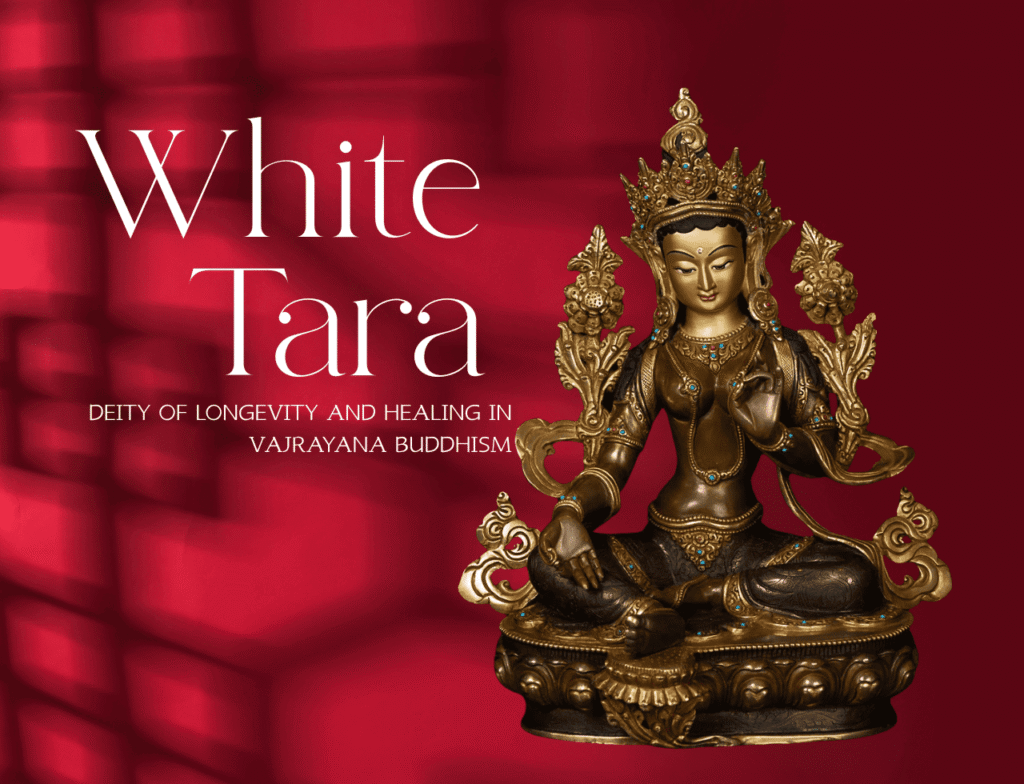
In Tibetan Vajrayana Buddhism, White Tara—known in Sanskrit as Sita-Tara and in Tibetan as sgrol-ma-dkar-po—is one of the most beloved and widely practiced deities. She is honored as the Buddhamother of Longevity, representing long life, healing, wisdom, and compassionate protection.
White Tara is one of the Twenty-One Taras, the various manifestations of the Holy Savior Mother Tara, who herself is an emanation of Avalokiteshvara, the Bodhisattva of Infinite Compassion. According to Tibetan tradition, White Tara is also associated with Princess Bhrikuti of Nepal, believed to be one of Tara’s human incarnations who played a vital role in introducing Buddhism to Tibet.
White Tara: The Beacon of Longevity and Wisdom
White Tara embodies a gentle yet powerful form of enlightened compassion. Unlike wrathful protectors, her energy is calm, nurturing, and deeply healing. She is especially invoked for:
- Long life and vitality
- Healing from illness
- Protection from suffering
- Increase of wisdom and merit
Her white color symbolizes purity, peace, and the clarity of awakened mind. Practitioners believe that White Tara sees all suffering beings with constant awareness and responds swiftly to sincere prayers.
Spiritual Practice of White Tara and Its Benefits
Liberation from Suffering and Fear
The practice of White Tara is believed to help practitioners overcome the cycle of birth, death, and rebirth (samsara). Devotees turn to her to relieve physical suffering, mental distress, and external obstacles such as epidemics, accidents, and what Buddhist texts describe as the eight great fears.
Her compassionate nature makes her particularly approachable for lay practitioners seeking everyday blessings alongside spiritual growth.
White Tara Mantra: Meaning and Spiritual Power
One of the most important aspects of White Tara practice is the recitation of her mantra:
“Om Tare Tuttare Ture
Mama Ayur Jnana Punye Pushtim Kuru Soha”
This mantra is traditionally chanted to:
- Extend lifespan and protect life energy
- Increase wisdom (jnana)
- Accumulate merit (punya)
- Improve health, vitality, and inner balance
Practitioners often visualize White Tara while chanting, believing that her wisdom sees through all obstacles and responds with compassionate clarity.
Iconography of White Tara in Thangka Paintings
A Visual Expression of Compassion and Serenity
In Tibetan Thangka art, White Tara is depicted with exquisite grace and symbolic detail. Her form serves not only as sacred art but also as a meditation support, guiding the practitioner toward calm awareness and healing energy.
Facial Features and Crown: Signs of Enlightened Beauty
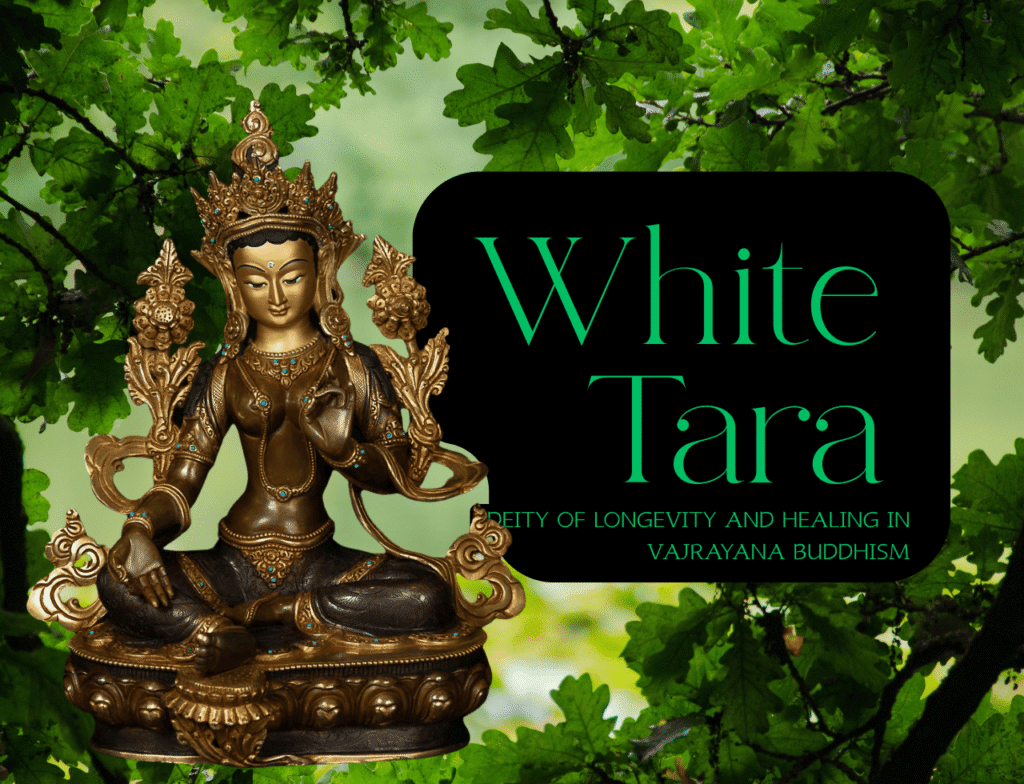
White Tara wears a jeweled crown, symbolizing her awakened state. Her facial features are refined and harmonious:
- Eyebrows shaped like crescent moons
- Long, compassionate eyes
- A straight nose and gentle smile
- Hair partially tied up, with locks flowing over her shoulders
These features reflect her serene wisdom and loving presence.
Body, Color, and Hand Gestures
Her body is pure white, representing spiritual purity and freedom from defilements. She is adorned with colorful celestial robes and precious ornaments such as earrings, bracelets, armlets, rings, and anklets—symbols of enlightened qualities.
- Right hand: Extended downward in the gesture of giving, symbolizing generosity and blessing
- Left hand: Holds a blue lotus (Utpala), representing purity untouched by worldly suffering
The Threefold Lotus and the Three Jewels
The lotus held by White Tara often blooms with three blossoms, symbolizing the Three Jewels of Buddhism:
- The Buddha
- The Dharma (teachings)
- The Sangha (spiritual community)
This signifies that her compassion is rooted in the very foundation of Buddhist refuge.
The Seven Eyes: All-Seeing Compassion
A unique feature of White Tara is her seven eyes:
- Three on her face (including one on the forehead)
- One on each palm
- One on each sole of her feet
These seven eyes symbolize her constant vigilance and omnipresent compassion, allowing her to perceive the suffering of beings in all realms and respond without delay.
Seated Posture: Complete Transcendence
White Tara is seated in full lotus posture upon a lotus and moon disc. This posture represents her complete transcendence over suffering and ignorance, as well as the calm stability of an enlightened mind.
White Tara’s Role in Health, Longevity, and Spiritual Well-Being
White Tara holds a special place in Tibetan Buddhist practice, especially for monks, lay practitioners, elders, and those facing illness or hardship. Her blessings are sought not only for physical longevity but also for a long and meaningful spiritual life filled with wisdom, compassion, and clarity.
Her radiant image in Thangka paintings serves as a reminder of life’s preciousness and the possibility of spiritual growth through gentle, compassionate awareness.