

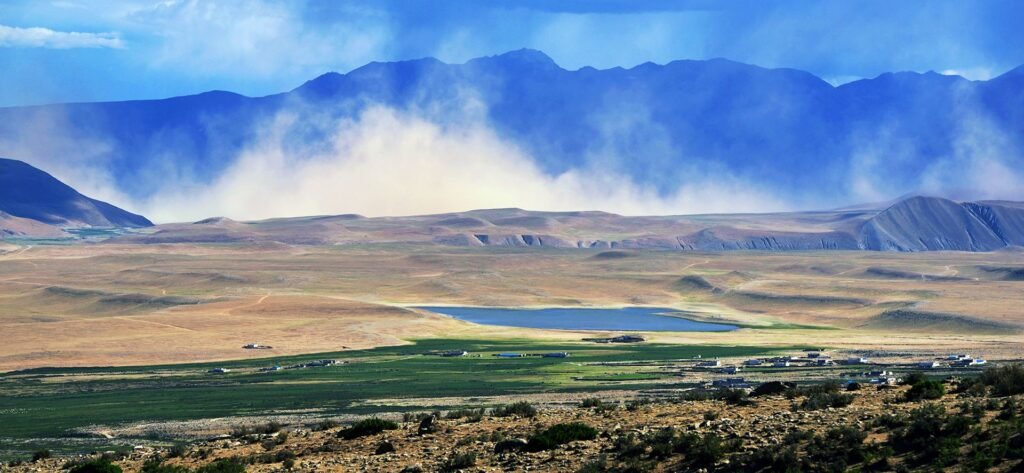
Yangbajing Geothermal Field is one of the most remarkable natural wonders on the Tibetan Plateau. Located about 90 kilometers northwest of Lhasa, at the southern foothills of the Nyenchen Tanglha Mountains, it is also one of the most accessible geothermal sites in Tibet. The field lies close to both the Qinghai–Tibet Highway and the Qinghai–Tibet Railway, making it an easy and popular stop for travelers heading toward northern Tibet.
At an elevation of around 4,300 meters, Yangbajing stretches across nearly 40 square kilometers. Beneath its surface, geothermal energy flows continuously. Hot springs release water at temperatures of about 70°C year-round, and the total heat energy discharged each year is equivalent to 4.7 million tons of standard coal, highlighting the immense geothermal potential of this high-altitude region.
A Landscape Shaped by Powerful Geothermal Activity
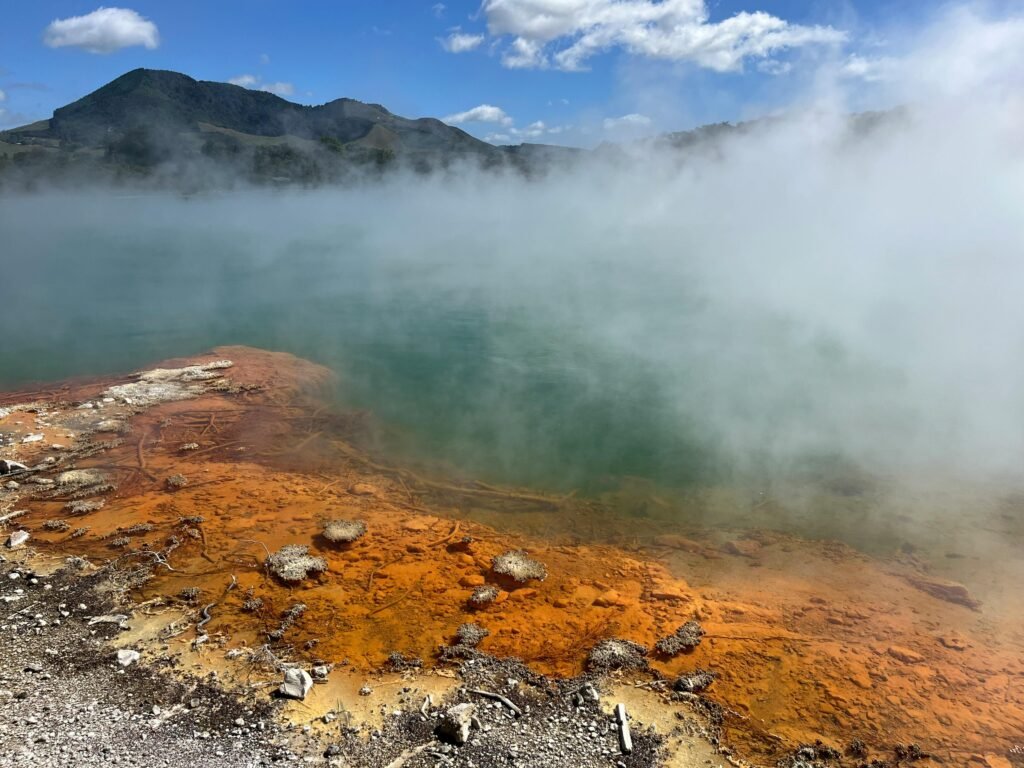
Yangbajing is famous for its extremely active geothermal phenomena. Walking through the area feels like stepping onto a living geological laboratory, where heat from deep within the Earth constantly reshapes the surface.
Across the geothermal field, visitors can observe a wide range of features, including:
- Hot springs and boiling springs
- Geysers and steam vents
- Thermal ground and hydrothermal explosion craters
- Intermittent steam wells where hot water suddenly surges upward
- Hot ponds and geothermal marshes
These geothermal formations cover more than 7,000 square meters, creating a dramatic landscape filled with rising steam, bubbling water, and mineral-stained ground.
Underground, Yangbajing contains two geothermal reservoir systems—a shallow reservoir and a deep reservoir. The shallow system lies only 100 to 300 meters below the surface, with temperatures ranging from 100°C to 172°C, making it especially valuable for scientific research and geothermal energy use.
Geothermal Power Station: Clean Energy from the Plateau
One of the most important highlights of Yangbajing is its geothermal power station, completed in 1977 through a joint research and construction project between China and the United Nations. It remains the largest geothermal power station in China.
Steam extracted from deep geothermal wells is transported through pipelines to drive turbines, generating clean, low-cost, and environmentally friendly electricity. The power station supplies energy to the Lhasa region, and so far it has produced more than 2.4 billion kilowatt-hours of electricity, accounting for about 30% of Lhasa’s total power supply.
This project stands as a milestone in the use of renewable energy on the Tibetan Plateau and demonstrates how natural geothermal resources can support sustainable development at extreme altitudes.
Hydrothermal Explosion Crater: A Rare Geological Site
On December 4, 1977, a man-made hydrothermal explosion occurred during scientific experiments in Yangbajing. The blast hurled rocks and debris more than 50 meters into the air, leaving behind a nearly circular crater.
The crater measures about 14 meters in diameter and 10 meters deep. Over time, it has filled with hot water, forming a striking geothermal pit. Today, it serves as a rare and valuable example of hydrothermal geological activity, attracting geologists, researchers, and curious visitors alike.
Geyser Eruptions: Yangbajing’s Most Spectacular Sight
Among all the geothermal features, the geyser eruptions are undoubtedly the most breathtaking. When a geyser erupts, scalding hot water and steam shoot hundreds of meters into the sky, accompanied by a thunderous roar that can be heard from several kilometers away.
Witnessing a geyser eruption feels unforgettable. Boiling water surges upward like a white dragon rising from the earth, creating one of the most dramatic natural spectacles on the Tibetan Plateau and a dream scene for photographers and nature lovers.
The Romantic Hot Water Lake Experience
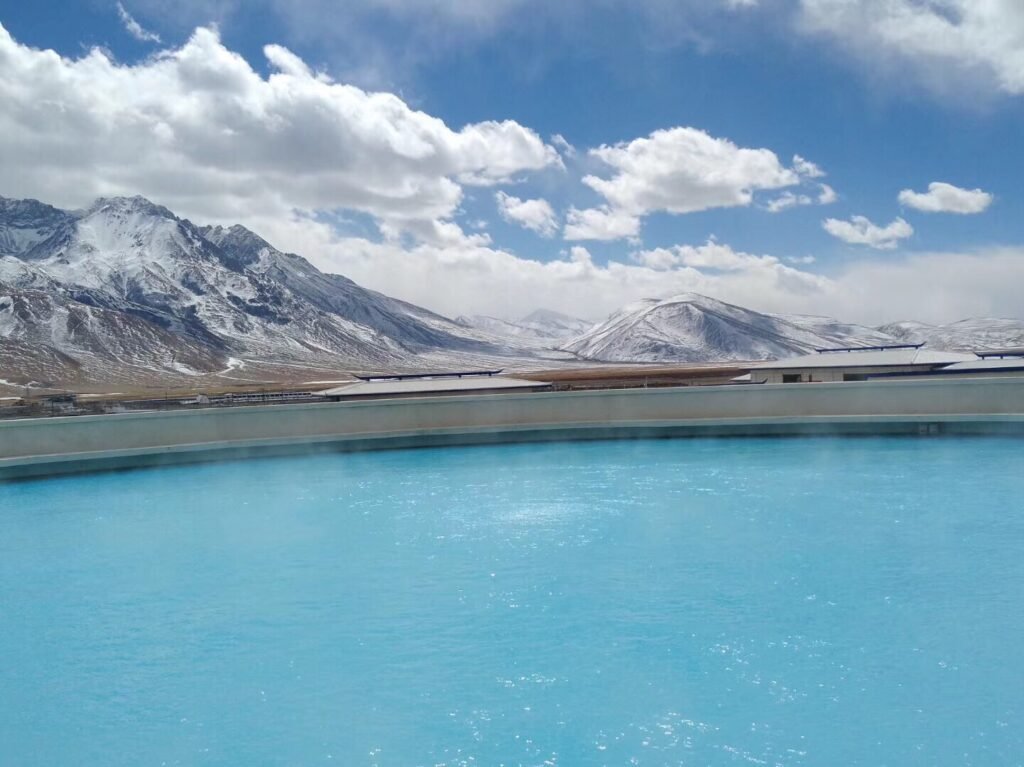
On the eastern edge of the geothermal field lies the famous Hot Water Lake, the largest hot water lake in China. It covers an area of 7,350 square meters and reaches a maximum depth of 16 meters.
To make use of this natural resource, geothermal bathing facilities have been built along the lake’s western shore. Because the water temperature ranges from 30°C to 40°C, the hot spring water is first cooled in two open-air pools before being used for bathing.
Surrounded by distant snow-capped mountains and drifting steam, soaking in the Hot Water Lake offers a romantic and unforgettable highland hot spring experience, especially after a long journey across the plateau.
Leisure and Wellness at the Holy Medicine Spring Resort
Near Yangbajing, in Qucai Village of Ningzhong Township, close to the Qinghai–Tibet Highway, lies another cluster of boiling springs. Geothermal surveys in this area have recorded drilling temperatures as high as 125.5°C.
In 1998, the Tibet Department of Geology and Mineral Resources, together with local authorities, invested in building the Holy Medicine Spring Resort, a wellness center focused on therapeutic geothermal bathing.
The resort includes:
- Two indoor hot spring pools
- One outdoor swimming pool
Bathing here feels like entering a mythical celestial hot spring, offering a deep sense of relaxation, peace, and healing amid the highland landscape.
Practical Travel Tips for Visiting Yangbajing
- Entrance fee: Around 158 RMB (subject to change)
- Distance from Lhasa: Approximately 87 kilometers
- Transportation: Accessible by private car, self-drive, or train (Yangbajing has its own railway station)
- Accommodation: Hotels are available nearby but tend to be expensive; most travelers choose a day trip from Lhasa
Best Time for Photography and Sightseeing
Early morning is the most magical time to visit Yangbajing Geothermal Field. Thick white mist drifts slowly across the ground, while massive steam clouds rise from the geothermal pools, creating a scene that feels like a fairyland on earth.
If a geyser erupts during your visit, you may witness boiling water shooting straight into the sky—an awe-inspiring moment that defines the raw power and beauty of Yangbajing’s geothermal landscape.
Yangbajing National Geopark and Its Surroundings
Yangbajing is part of the Yangbajing National Geopark, which covers an area of about 70 square kilometers. It is regarded as one of the largest geothermal resource zones in the world and is often described as:
- “A Natural Geothermal Museum”
- “The Geothermal City of the Qinghai–Tibet Plateau”
The region is also home to:
- The world’s only high-altitude cosmic ray research base
- China’s mountaineering training base
- The snow-covered Nyenchen Tanglha Mountains, a favorite destination for mountaineers and adventure seekers
Many of the geological relics and landscapes found here are rare on a global scale, making Yangbajing a unique destination where science, nature, and high-altitude beauty come together.