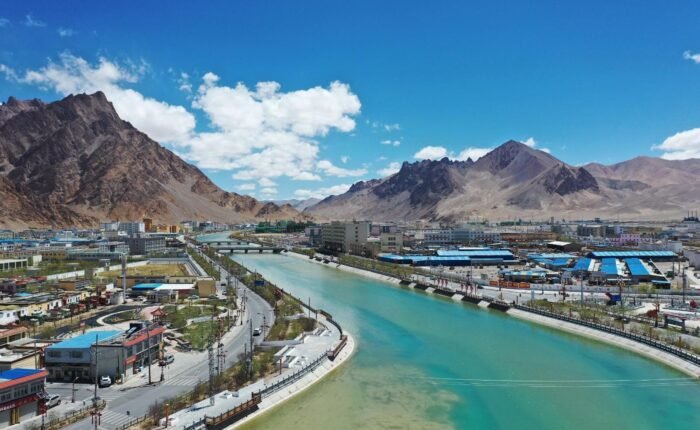
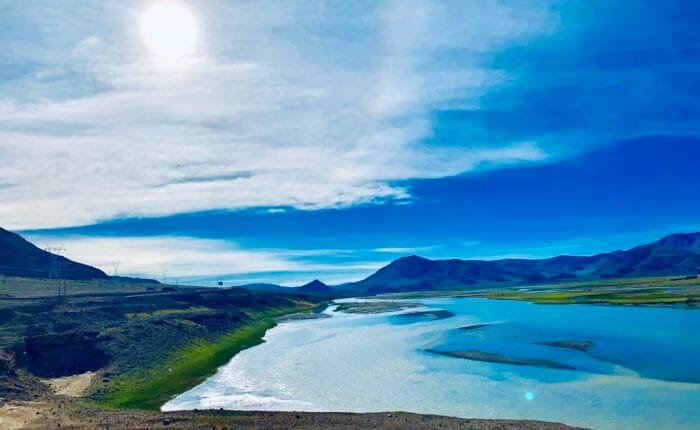
Shiquanhe: Gateway to Western Tibet Shiquanhe is a fast-growing town in the far west of Tibet, located along the upper reaches of the Indus River. Its name comes directly from this great river, which has shaped the land and sustained life here for centuries. Before modern development, the area was little more than red willow...Read More
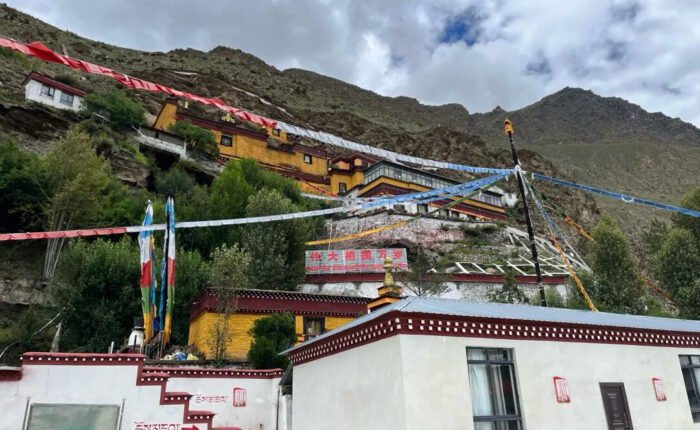
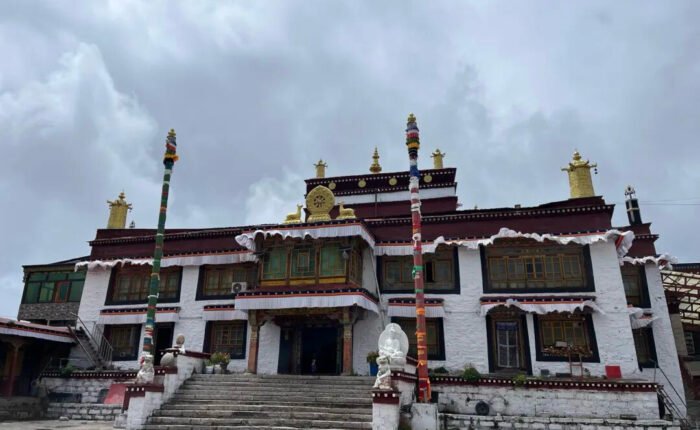
Tashigang Monastery, a fascinating spiritual site, perches atop a small hill in Tashigang Township, just west of Ngari’s county seat and downstream of the Sengge Zangbo river. Founded by Lama Lhada Datsangwa, part of the Hemis Monastery system from Ladakh, it carries stories of faith that span centuries. A Unique Spiritual Heritage Legend tells us...Read More
Overview of the Paxiong Reba Festival Paxiong, a village located on the eastern bank of the Quchin Zangbo River at the source of the Parlung Zangbo in Bomi County, Nyingchi, celebrates the Reba Festival, a historic event with more than 800 years of tradition. Originating from the era of the Kagyu school’s master Milarepa and...Read More
Introduction to the Xiba Bear Fighting Festival Xiba Village, nestled within Duoji Township of Bomi County, Nyingchi, celebrates the “Bear Fighting Festival,” also known as the “Wosang Festival,” on the 15th day of the fifth Tibetan month each year. The festival, characterized by its long history and distinctive village-level celebrations, revolves around activities of “shooting...Read More
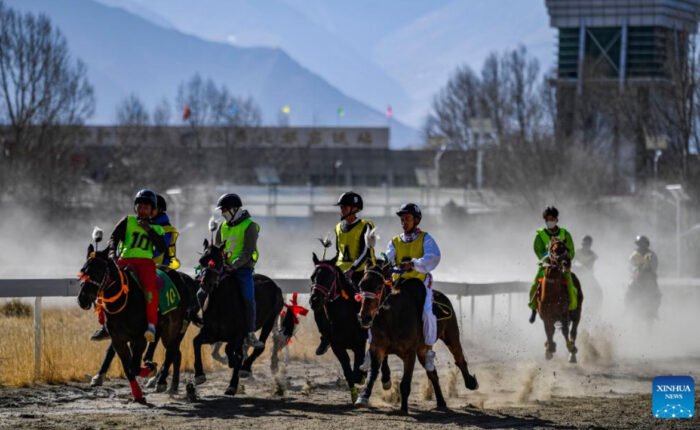
Overview of the Dadha Equestrian Festival Dadha, a village located on the eastern bank of the Quchin Zangbo upstream of the Parlung Zangbo in Bomi County, Nyingchi, hosts an equestrian festival with a long history and unique form. In Tibetan, “Dadha” means “Arrow Horse,” indicating the festival’s focus on archery and horse racing. This celebration...Read More
Introduction to Garang Lake Garang Lake (dgav-gnam-mtsho), nestled in Garang Village of the ancient township northwest of Bomi County’s town in Nyingchi, Tibet, is a serene body of water covering 2 square kilometers. “Garang” in Tibetan means “white sky,” earning it the nickname “Heavenly Lake.” Situated below the flat terrain of Garang Village, the lake’s...Read More
The Songzong Horse Racing Festival is one of the most vibrant traditional festivals in eastern Tibet, blending religious devotion, folk customs, and thrilling equestrian sports into a colorful celebration. Held annually in Songzong Town, Bomi County, Nyingchi, this festival offers visitors a rare opportunity to witness authentic Tibetan culture along the scenic Sichuan–Tibet Highway. Deeply...Read More
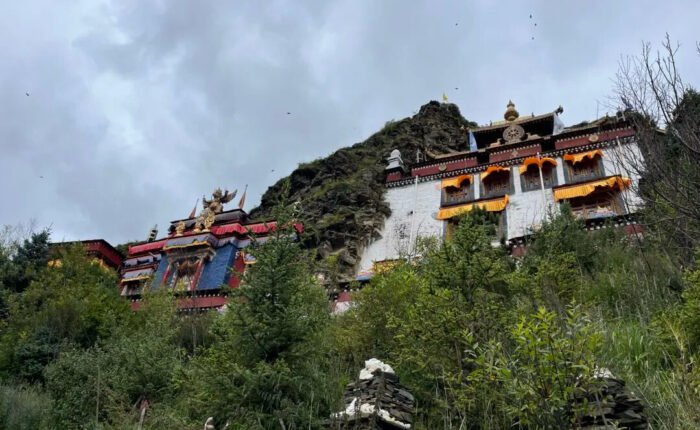
The Historic Gangda Monastery Gangda Monastery, nestled in Juelong Village of Naxi Township, Mangkang County, is a beacon of the Gelug (Yellow Sect) school of Tibetan Buddhism. With its origins dating back over 500 years to the mid-Ming Dynasty, the monastery has withstood the tests of time and history. Despite suffering damage during the Cultural...Read More
Introduction to Gu Township Lake Gu Township Lake, nestled in the ancient Gu Village west of Bomi County’s town in Nyingchi, Tibet, sits at an elevation of 2600 meters. The lake stretches 5 kilometers in length and varies between 1 to 2 kilometers in width, with its deepest point reaching 20 meters. It was formed...Read More
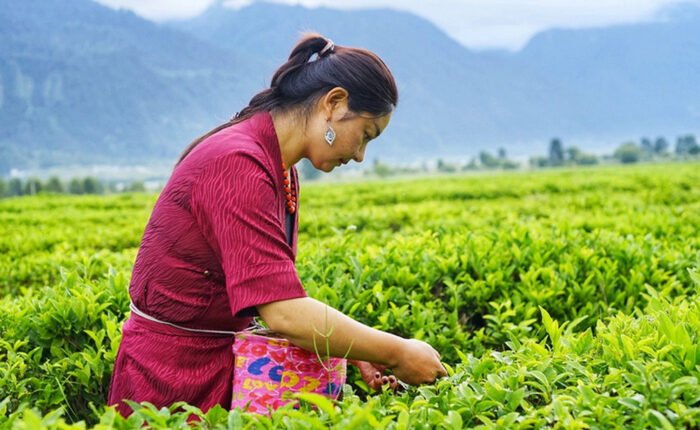
Discover Yigong Tea Plantation in Bomi County, Nyingchi—the world’s highest tea plantation. Learn about its history, unique Tibetan teas, high-altitude cultivation, and visitor information.Read More
Discover Nayu Hot Spring, Pailong Hot Spring, and the legendary Longya Han Spring in Bomi County, Tibet. Explore healing waters, wild bathing spots, local legends, and travel tips along the Sichuan–Tibet Highway.Read More
The Essence of Parlung Tsangpo River The Parlung Tsangpo River—also written as Parlung Zangbo, Polong Tsangpo, or Bo Tsangpo River—is one of the most powerful and scenic rivers in southeastern Tibet. Flowing through Nyingchi (Linzhi), mainly across Bomi County, it is the largest and most water-rich left-bank tributary of the Yarlung Tsangpo River. Its dramatic...Read More
Explore Sangzom Bonri and Armor Mountain in Bomi County, Nyingchi—sacred twin peaks known for pilgrimages, healing hot springs, wildlife, and nearby Zangdok Palri, one of eastern Tibet’s holiest mountains.Read More
The Revered Bara Rechui Monastery Located approximately 2 kilometers north of the Qukizhaka Township government in Mangkang County, Bara Rechui Monastery was established by the Fifth Bara Jawa Jatso Rinpoche, a revered figure in the Gelug (Yellow Sect) school of Tibetan Buddhism. With over 330 years of history, this monastery has witnessed the ebb and...Read More
The Resilient Dexung Lakang Dexung Lakang, situated in Adong Village Committee of Muxu Township, Mangkang County, is a monastery steeped in history and spirituality. Founded in the mid-Qing Dynasty as a Gelug (Yellow Sect) institution, it faced significant damage during the Cultural Revolution but was restored to its former glory in 1988. The monastery, featuring...Read More
Located just 200 meters north of Gatuo Town, the seat of Mangkang (Markham) County in eastern Tibet, Woeser Monastery is one of the most historically important and spiritually active monasteries in the region. Known locally as Weise Monastery (维色寺), this ancient religious complex stands at an altitude of about 3,850 meters in Qamdo (Chamdo) City,...Read More
Discover Jise (Gyise) Monastery in Mangkang County, a sacred Nyingma Buddhist site founded in 1538, home to a rare Tang Dynasty Shakyamuni Buddha, Ganden Chorten Stupas, and priceless Tibetan religious relics at 4,000 meters altitude.Read More
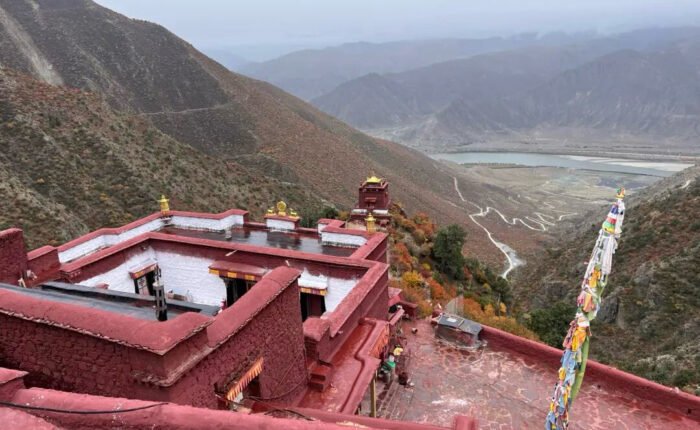
Hidden in the northeastern part of Mangkang County, within Zongxi Township, Nyigo Monastery (Hyin-mgo-dgon) rises quietly at an elevation of 4,250 meters. The name Nyigo means “Crown of the Sacred Mountain” in Tibetan, a fitting title for a monastery believed to be infused with deep spiritual power. Founded in the early 17th century, Nyigo Monastery...Read More
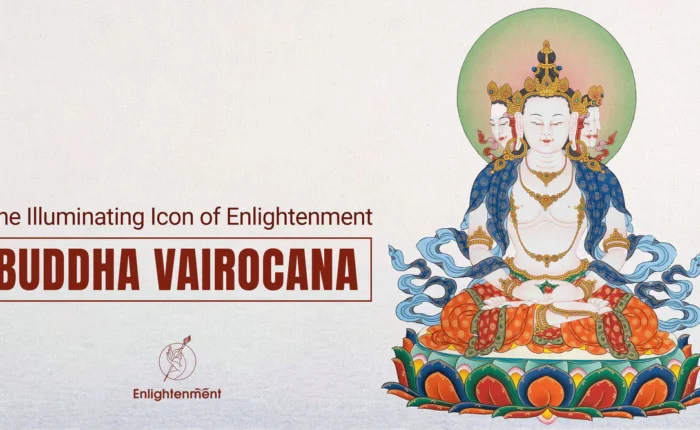
Unveiling the Great Sun Tathagata: The Cosmic Buddha of Illumination The Great Sun Tathagata is one of the most profound and revered figures in Vajrayana Buddhism, symbolizing ultimate enlightenment and infinite wisdom. Known in Tibetan as Nambar Nangze (རྣམ་པར་སྣང་མཛད) the Great Sun Tathagata refers to Mahavairocana Buddha, also widely called Vairocana Buddha. The title “Great...Read More
Hidden deep within the dramatic landscapes of Mangkang County, at the bottom of the stunning Zagu Si Gorge, lies the mysterious Langba Nampar Nangdzé Temple, also widely known as the Princess Wencheng Temple. Though modest in size—covering only about 350 square meters—this ancient temple holds immense historical, religious, and cultural value, making it one of...Read More