
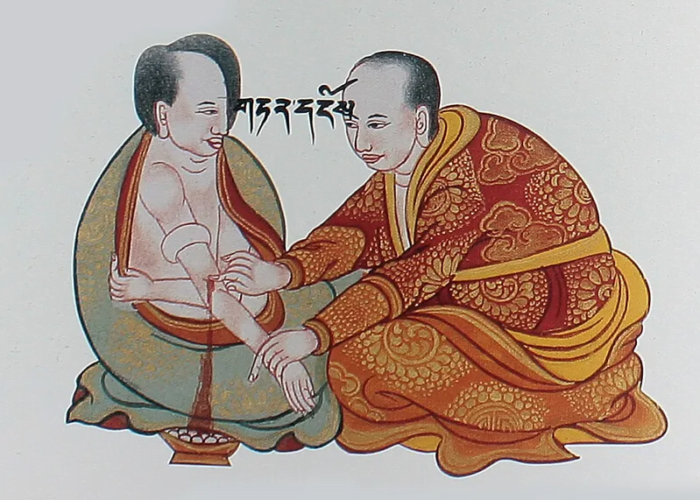
Tibetan Medicine: Ancient Wisdom from the Roof of the World
Tibetan medicine is one of the world’s oldest holistic healing systems, with a history spanning more than 2,500 years. Rooted in Himalayan culture and deeply influenced by Buddhist philosophy, this traditional medical system developed through centuries of close interaction with nature.
An early principle of Tibetan medicine states: “Where there is poison, there is medicine.” This idea reflects a profound understanding of the natural world—recognizing that harmful substances, when properly understood and prepared, can also serve as powerful remedies. Medicine and poison are seen as interconnected forces that can transform into one another depending on dosage, balance, and intention.
This foundational belief shaped the evolution of Tibetan herbal medicine and remains central to its philosophy today.

The Origins of Tibetan Medical Knowledge
In ancient times, communities living on the Tibetan Plateau relied on observation and experience to understand the healing properties of plants, minerals, and animal products. Through daily survival in a harsh high-altitude environment, they learned which herbs could heal, which could harm, and how to use both responsibly.
Hunters and nomads also observed the medicinal effects of certain animal substances. Over time, this accumulated knowledge formed a structured medical system known for its diagnostic precision and holistic worldview.
Tibetan medicine gradually developed its own comprehensive theory of health, disease, physiology, and treatment—distinct yet harmoniously connected to Buddhist philosophy.
The Core Principle: Balance of the Three Nyipa
At the heart of Tibetan medicine lies the concept of Nyipa, often translated as the “three humors” or “three energies.” These are:
- rLung (Wind/Energy)
- mKhris-pa (Bile)
- Bad-kan (Phlegm/Cold principle)
Health is maintained when these three forces remain in balance. Disease arises when they become disturbed or excessive.
Tibetan medical theory also connects long-term imbalance to the “three poisons” in Buddhist philosophy:
- Desire
- Hatred
- Delusion
This connection illustrates how Tibetan medicine integrates physical health with mental and spiritual well-being.
Comparison of rLung, mKhris-pa, and Bad-kan
| Category | rLung (Wind Energy) | mKhris-pa (Bile / Heat Principle) | Bad-kan (Cold / Water-Earth Principle) |
|---|---|---|---|
| Core Meaning | Subtle energy movement | Heat and transformation | Cold and stabilizing force |
| Associated Elements | Air | Fire | Water & Earth |
| Primary Nature | Movement | Heat | Stability |
| Key Qualities | Light, Mobile, Subtle, Dynamic, Clear | Hot, Sharp, Oily, Intense | Cool, Heavy, Stable, Oily, Soft, Moist |
| Governs | Breath, circulation, nervous system | Digestion, metabolism, body temperature | Fluids, structure, lubrication |
| Physical Functions | Controls breathing and circulation; supports speech and movement; aids digestion | Regulates metabolic processes; maintains warmth | Maintains bodily fluids; stabilizes joints; assists stomach digestion |
| Mental Influence | Mental clarity, emotional balance | Ambition, intelligence, decisiveness | Calmness, emotional steadiness |
| When Balanced | Smooth mind-body coordination | Vitality and sharp thinking | Strength, immunity, stability |
| When Imbalanced | Anxiety, restlessness, instability | Inflammation, irritability, excess heat | Lethargy, heaviness, sluggish digestion |
| Traditional Analogy | Like a horse carrying the mind as rider | Like fire transforming fuel | Like water and earth providing grounding |
Understanding rLung (Wind Energy)
rLung, pronounced “loong,” is often translated as “wind,” but it represents much more than air or breath. It refers to subtle energy movement within the body.
Nature of rLung
rLung is associated primarily with the air element and movement. It is described as:
- Light
- Mobile
- Subtle
- Dynamic
- Clear
A traditional analogy compares rLung to a horse and the mind to its rider. If the horse is disturbed, the rider cannot travel smoothly. Likewise, when rLung is imbalanced, mental and physical functions are affected.
Functions of rLung
- Controls breathing and circulation
- Supports speech and bodily movement
- Regulates nervous system activity
- Aids digestion and nutrient separation
- Influences mental clarity and emotional stability
rLung plays a central role in linking body, speech, and mind.
Understanding mKhris-pa (Bile/Heat Principle)
mKhris-pa corresponds to the fire element. It governs heat, transformation, and metabolism within the body.
Characteristics of mKhris-pa
- Hot
- Sharp
- Oily
- Intense
Functions of mKhris-pa
- Regulates digestion and metabolic processes
- Maintains body temperature
- Influences ambition, intelligence, and decisiveness
When balanced, mKhris-pa supports vitality and clear thinking. When excessive, it may lead to inflammatory conditions or irritability.
Understanding Bad-kan (Cold/Water-Earth Principle)
Bad-kan is often compared to phlegm in English translations, but it refers more broadly to the body’s cold and stabilizing qualities.
It is associated with the water and earth elements.
Characteristics of Bad-kan
- Cool
- Heavy
- Stable
- Oily
- Soft
- Moist
Functions of Bad-kan
- Maintains bodily fluids and lubrication
- Stabilizes joints
- Supports immune strength
- Provides mental calmness and emotional steadiness
- Assists digestion by mixing food in the stomach
Bad-kan is considered cooling and grounding, much like water or the moon.
The Five Elements in Tibetan Medicine
Tibetan medical theory states that everything in the universe—including the human body—is composed of five fundamental elements:
- Wind (Air) – movement
- Fire – transformation and heat
- Water – cohesion and fluidity
- Earth – structure and solidity
- Space – openness and expansion
These five elements interact to form the three Nyipa. Health depends on maintaining harmony not only within the body but also between the body and the external environment.
This interconnected view emphasizes that climate, diet, behavior, emotions, and lifestyle all influence health.
The Seven Bodily Constituents and Three Wastes
Beyond the three Nyipa, Tibetan medicine describes the body through the theory of the “Seven Elements” and the “Three Excreta.”
The Seven Bodily Constituents
- Food essence
- Blood
- Flesh
- Fat
- Bone
- Marrow
- Reproductive fluid
These seven substances develop sequentially and sustain physical vitality.
The Three Wastes
- Sweat
- Urine
- Stool
In a healthy individual, there is a balanced relationship between the three Nyipa, the seven bodily constituents, and the three excreta. Maintaining this equilibrium is the central goal of Tibetan medical treatment.
Diagnosis and Treatment in Tibetan Medicine
With over 1,300 years of documented clinical practice, Tibetan medicine developed detailed diagnostic methods, including:
- Pulse reading
- Urine analysis
- Visual observation
- Questioning about lifestyle and emotional state
Treatment approaches often include:
- Herbal formulas
- Mineral-based medicines
- Dietary adjustments
- Behavioral guidance
- Spiritual practices
The aim is not merely to eliminate symptoms but to restore systemic balance.
The Philosophy: Medicine and Poison as One
The saying “Where there is poison, there is medicine” reflects a deep ecological understanding. In Tibetan medical thought:
- Every substance has dual potential
- Dosage determines effect
- Context shapes outcome
This philosophy highlights moderation, knowledge, and balance. A harmful plant may become healing when properly prepared. Likewise, excess of even beneficial substances can cause imbalance.
This nuanced approach continues to define traditional Tibetan medicine today.
Tibetan Medicine in the Modern World
Despite historical challenges and diaspora, Tibetan communities around the world continue to practice and preserve their medical traditions. Institutions dedicated to Tibetan healing methods operate internationally, integrating ancient knowledge with modern research.
Tibetan medicine remains valued for its holistic approach, especially in areas such as:
- Stress-related disorders
- Digestive health
- Chronic inflammatory conditions
- Preventive wellness
Its emphasis on harmony between mind, body, and environment makes it increasingly relevant in today’s fast-paced world.
Through its profound theories of balance, elements, and transformation, Tibetan medicine offers a timeless framework for understanding health as an integrated and dynamic state of being.