Kongpo (Gongbu) New Year: A Forest Losar of Ancient Rituals and Living Traditions
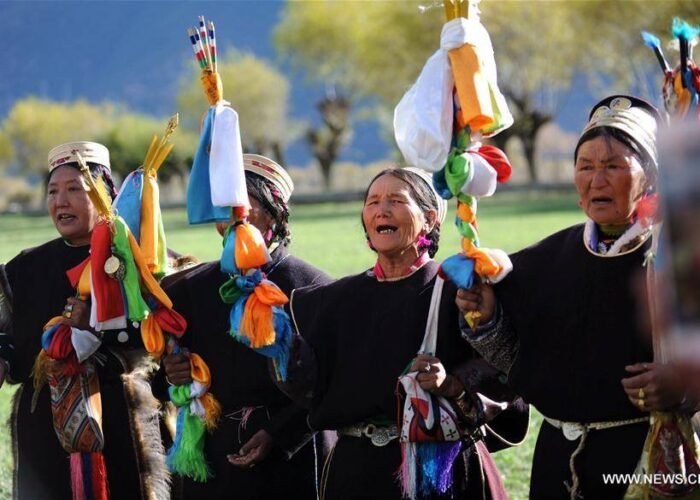
The Kongpo (Gongbu) New Year is one of the most distinctive traditional festivals in eastern Tibet. Recently listed among the first batch of regional-level intangible cultural heritage items in Tibet, this festival reflects the deep connection between Kongpo people and their forested homeland.
Unlike the widely celebrated Tibetan New Year, or Losar, the Kongpo New Year preserves its own calendar, rituals, and festive atmosphere. It is mainly observed in today’s Nyingchi (Linzhi) region, including Bayi District, Milin County, and Kongpo Gyamda (Gongbu Jiangda), areas known for dense forests, rivers, and fertile valleys.
Origins and Legends of Kongpo Losar
Local legends trace the origin of Kongpo Losar to a time of warfare. According to oral tradition, the Kongpo region once faced repeated invasions. To inspire courage and unity among warriors, the local leader Achung Gyalpo declared that the New Year should be celebrated on the first day of the tenth month of lunar calendar.
This declaration marked the birth of Kongpo Losar, a festival that continues to this day. Many of its customs reflect the natural environment of Kongpo, blending forest symbolism, ancestral beliefs, and early Bon religious elements.
The Ghost Expulsion Ritual: Cleansing the Space Before Losar
One of the most dramatic customs of the Kongpo New Year is the Ghost Expulsion Ritual, performed on the eve of the ninth lunar month.
As evening falls, each household takes part in driving away negative spirits believed to cause disturbances during Losar. Family members light pine-branch torches and rush through every room, throwing stones into corners while loudly chanting:
“Zhe, Gu Wa! Zhe, Gu Wa!”
(“Ghosts, just you wait!”)
Some people pour barley wine or alcohol onto the burning torches, creating a sharp sizzling sound that heightens the ritual’s intensity. Afterward, doors are sealed with smoke from pine and cypress branches, symbolizing purification and protection, ensuring that the New Year begins in peace and joy.
Feasting the Dogs: A Unique Kongpo Losar Custom
In Kongpo tradition, Losar celebrations extend beyond humans to include animals, especially dogs.
Inviting the Dogs to Dine
After the ghost-expelling ritual, the household prepares a special New Year feast for dogs. Traditional foods are arranged on a wooden board, including:
- Tsampa
- Beef, mutton, and pork
- Walnuts
- Butter and buttermilk
- Barley wine
- Ginseng fruit
The host then calls out three times: “Comfortable dog, happy dog, please come and dine!” Only after the third invitation may the dogs begin to eat.
Reading Omens from the Dog’s Choice
The dog’s behavior is carefully observed, as it is believed to reflect divine messages:
- Eating tsampa → a good harvest
- Drinking buttermilk → agricultural prosperity
- Eating meat → strictly forbidden, believed to bring illness and misfortune
If a dog overturns the tray or behaves aggressively, it is considered a bad omen, and the animal is immediately driven away.
Skyes-Rtags and the New Year’s Eve Feast
Once the dogs have finished, the family gathers for the New Year’s Eve meal. A key dish is Skyes-Rtags, made from butter, milk, and flour. The dough is shaped into dumplings and roasted over an open fire on pointed wooden sticks.
According to Kongpo belief, eating until full is essential, as those who go hungry on New Year’s Eve risk being taken away by ghosts during the night. The meal is both nourishment and spiritual protection.
First Day of Losar: Water, Fireworks, and Offerings
On the first day of Kongpo Losar, people set off fireworks to welcome the New Year. At dawn, women rush to fetch water from nearby sources, following strict rules:
- No speaking
- No looking back
The first bucket of water is considered sacred and is used for offering rituals, mixing barley wine, and preparing tsampa, ensuring purity and blessings for the household.
Honoring the Harvest Goddess
Early in the morning, families carry offerings and barley wine to the fields to worship the Harvest Goddess, chanting:
“Lo Ya Ma, please partake of our feast!”
This ritual expresses gratitude for the past harvest and prayers for abundance in the coming year. Afterward, people sing, dance, and celebrate together in open fields.
Sports, Trade Fairs, and Festive Gatherings
Kongpo New Year is also a time for physical strength and community bonding. Traditional competitions include:
- Archery
- Wrestling
- Tree felling
- Stone lifting
In recent years, the Nyingchi region has added trade fairs to the celebrations, showcasing local products, forest goods, and handicrafts, blending tradition with modern life.
Shooting Whistling Arrows: The “Vbri-hsiu” Competition
One of the most thrilling highlights of Kongpo Losar is whistling arrow shooting, known in Tibetan as “Vbri-hsiu.” This activity is listed as a regional-level intangible cultural heritage.
Whistling arrows are made with bamboo shafts about 80 centimeters long, feathers at the tail, and wooden tips drilled with small holes. When released, they produce a sharp “Zhi-Zhi” sound that echoes across the valley.
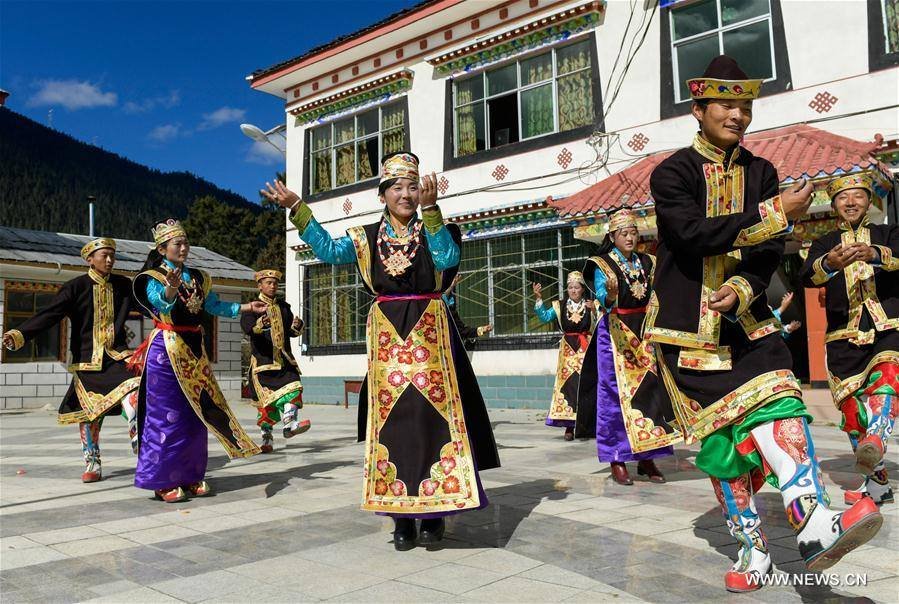
During competitions, villagers perform a special arrow dance near the field, filling the air with music, rhythm, and excitement.
Gongpo Arrow Dance: A 1,300-Year-Old Tradition
Recognized as an intangible cultural heritage of Tibet, the Kongpo arrow dance dates back more than 1,300 years, to the era of King Ajie Jibu.
Originally created to encourage archers, the dance is performed during major festivals and joyful occasions. Men stand on the right, women on the left, lining both sides of the archery ground. When their village archer competes, they sing arrow songs and dance energetically, boosting morale and intensifying the festive spirit.
Nyang Phola Sum: The Bon Festival of Treasure Seekers
Nyang Phola Sum, also known as Myang-po-lha-sum, is a traditional Bon religion festival held on the tenth day of the eighth lunar month, often in the Year of the Horse.
The festival includes deity worship, ritual dances, horse racing, and yak racing, symbolizing the defeat of demons, celebration of harvests, and prayers for favorable weather. Although banned after 1954, it was officially restored in 1990.
Mi-Na Cham: A Rare Folk Ritual Dance
A major highlight of Nyung Bala Su is Mi-Na Cham (also called Mi-Rna-Vchams), a rare folk ritual dance unique to the Linzhi region.
Unlike monastic Cham dances, Mi-Na Cham is performed by villagers to expel evil and invite blessings. With a history of over 600 years, it is performed on a large scale every twelve years and on a smaller scale every six years.
Male dancers wear masks, hold drums and drumsticks, and move in circles or crossing formations. Their movements are powerful, bold, and solemn, reflecting strength, protection, and vitality. This dance has been officially recognized as an intangible cultural heritage of the Tibet Autonomous Region.
Legend of Nyang Phola Sum and the Sacred Gem
Local legend tells of a sacred jewel called Sheygo Zunmei, once kept in the Kongpo region and believed to ward off evil. When the gem was stolen and taken to Kyungbo Dingqing, Kongpo suffered droughts and disease.
In response, rituals were held on the tenth day of the eighth lunar month in the Year of the Horse. Over time, these rituals evolved into Nyang Phola Sum. It is believed that during the festival, the sacred gem returns symbolically, restoring peace, balance, and prosperity to Kongpo.