Gurla Mandhata Peak: The Mountain of the Three Peaks in Ngari
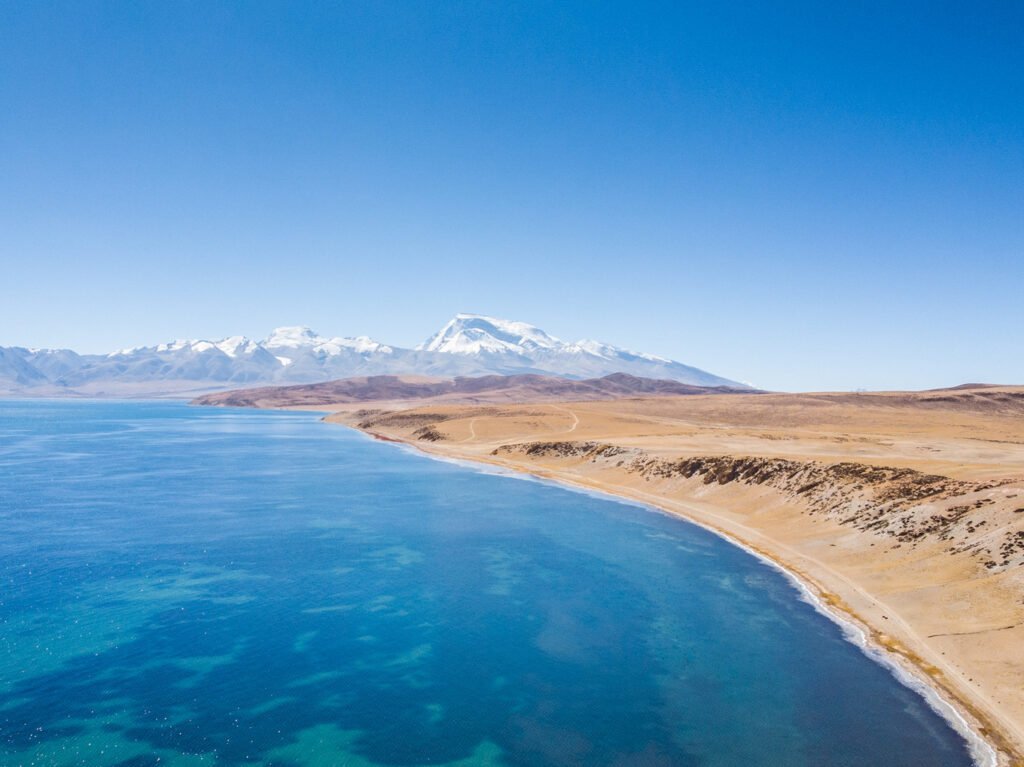
Gurla Mandhata Peak, also known simply as Mount Namo Nenyi rises proudly along the border of Purang County and Zanda County in the Ngari region of western Tibet. Reaching an elevation of 6,112 meters, it is one of the most striking snow-covered mountains in the area.
Locally known as the “Mountain of the Three Peaks,” Gurla Mandhata is distinguished by its dramatic triple summits. These towering peaks remain blanketed in snow throughout the year, creating a powerful and majestic presence against the vast Tibetan Plateau. For travelers exploring Ngari, the mountain stands as a constant landmark, visible from great distances on clear days.
A Sacred Landscape of Snow and High Pastures
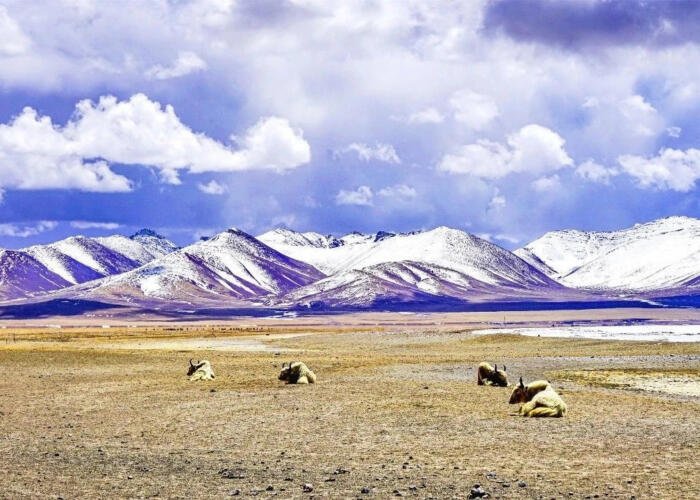
At the base of Gurla Mandhata Peak lie wide natural pastures that stretch across the high plateau. These fertile grasslands play a vital role in local life, serving as important grazing areas for yaks, hybrid yaks, cows, and Tibetan sheep.
The combination of glacial meltwater, seasonal streams, and open alpine meadows creates ideal conditions for pastoralism. For generations, local herders have depended on these pastures, moving their livestock with the seasons in harmony with the harsh but generous environment of Ngari.
Nacha Mountain: The “Black Flower Mountain” of Ngari
Nacha Mountain, also known as Namoza, lies in the southeastern part of Gar County within Ngari Prefecture. Its name translates to “Black Flower Mountain,” a poetic description that reflects its dark-toned slopes and rich natural setting.
Compared to the stark, icy heights of Gurla Mandhata, Nacha Mountain is known for its extensive grasslands and abundant water resources. The lower slopes and surrounding plains are especially lush, making this area one of the most important pastoral zones in the region.
Rich Grasslands and Thriving Pastoral Life
The fertile pastures at the foot of Nacha Mountain support a diverse range of livestock. Yaks, hybrid yaks, cows, sheep, goats, and horses graze freely across the open grasslands, forming the backbone of the local pastoral economy.
Reliable water sources and nutrient-rich grass allow herders to sustain large herds throughout the grazing season. These conditions make Nacha Mountain a crucial natural asset for nearby communities, particularly in an environment where suitable pastureland can be limited.
Mountains That Shape Life in Ngari
Both Gurla Mandhata Peak and Nacha Mountain represent the powerful connection between nature and human life in Ngari. Beyond their scenic beauty, these mountains provide essential grazing resources that support traditional Tibetan livelihoods.
Their contrasting landscapes—one dominated by permanent snow and towering peaks, the other defined by fertile grasslands and flowing water—highlight the ecological diversity of western Tibet. Together, they form an important part of Ngari’s natural heritage, shaping both the environment and the daily lives of the people who depend on it.