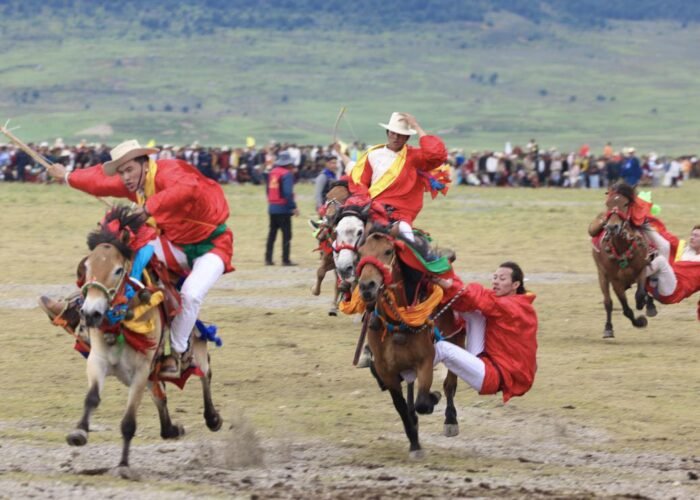
The Damshung Horse Racing Festival, also known as the Dam Kyireng Horse Racing Festival, is one of the most important traditional festivals on the northern Tibetan grasslands. Recognized as a National Intangible Cultural Heritage of China (Second Batch), the festival carries deep historical, cultural, and social meaning rooted in Tibetan nomadic life.
Held on the vast grasslands of Damshung County, this festival is not only about horse racing. It is a living expression of Tibetan identity, community bonds, and centuries-old grassland traditions that continue to thrive today.
The Meaning Behind “Dokre Tsokdu”
In Tibetan, the festival is called “Dokrey Tsokdu”, a phrase that literally means inviting lamas to chant scriptures. Interestingly, the festival did not begin as a religious event.
In its earliest form, the Damshung Horse Racing Festival was a harvest celebration, a trading market, and a time for entertainment and social gathering. Nomads came together to exchange agricultural and pastoral goods, renew friendships, and celebrate the abundance of the grasslands.
Over time, religious ceremonies and political symbolism gradually became part of the festival. These evolving elements transformed it into the most influential and grand celebration across the Nagqu–Damshung grasslands.
Origins Rooted in Nomadic Life
According to legend, more than 500 years ago, eight nomadic tribes lived across the northern Tibetan Plateau. Horses were central to their daily lives—essential for travel, herding, trade, and survival. As a result, these communities developed extraordinary riding skills and strong emotional bonds with their horses.
To determine whose horses were strongest and whose riders were most skilled, the tribes agreed to hold an annual horse racing competition every autumn in Damshung. The most talented riders were selected through these contests, earning honor and recognition.
Generation after generation, this practical competition gradually evolved into the Damshung Horse Racing Festival, preserving the spirit of nomadic life through sport and celebration.
Festival Schedule and Grassland Atmosphere
The Dangjireng Horse Racing Festival begins on the 10th day of the seventh month of the Tibetan lunar calendar. While the core racing events last three days, celebrations and related activities often continue for nearly a month.
During this period, the normally quiet grasslands of Damshung come alive. Nomads from surrounding regions arrive with their families, horses, and tents. The open plains fill with color, laughter, music, and the rhythmic sound of hooves, creating a powerful sense of community and shared heritage.
Horse Racing: The Heart of the Damshung Festival
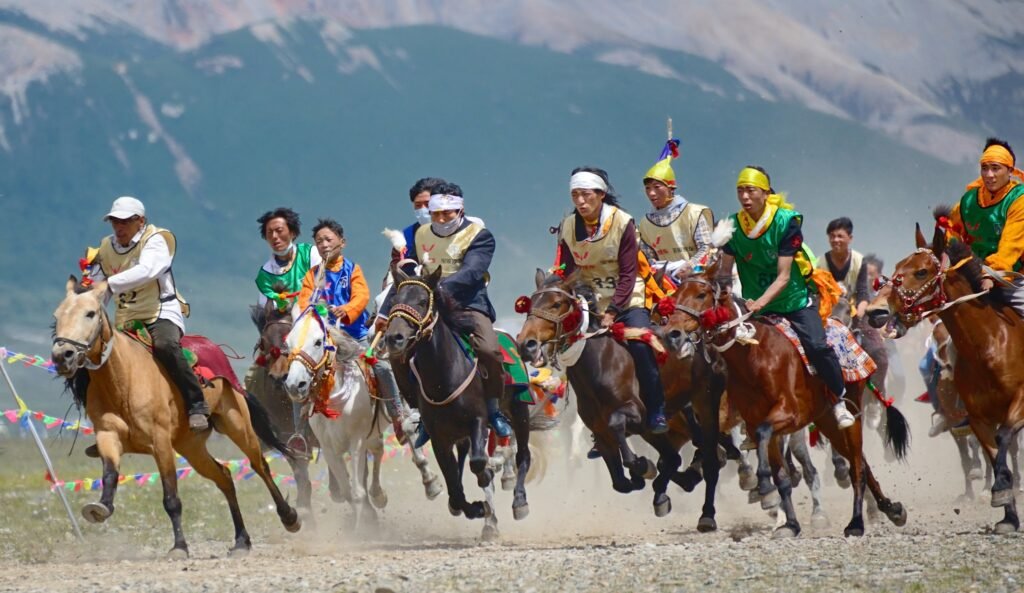
Horse racing is the undisputed centerpiece of the Damshung Horse Racing Festival. The competitions are exciting, varied, and deeply rooted in traditional Tibetan horsemanship.
Main racing events include:
- Long-distance races (10,000 meters, 5,000 meters, and 3,000 meters)
- Short-distance trotting races, locally known as “broken-step races”
- Mounted skill competitions, testing balance, courage, and control
These races are not simply about speed. They demonstrate endurance, discipline, and the harmonious relationship between rider and horse—values that lie at the heart of nomadic culture.
Elegance and Discipline in Trotting Races
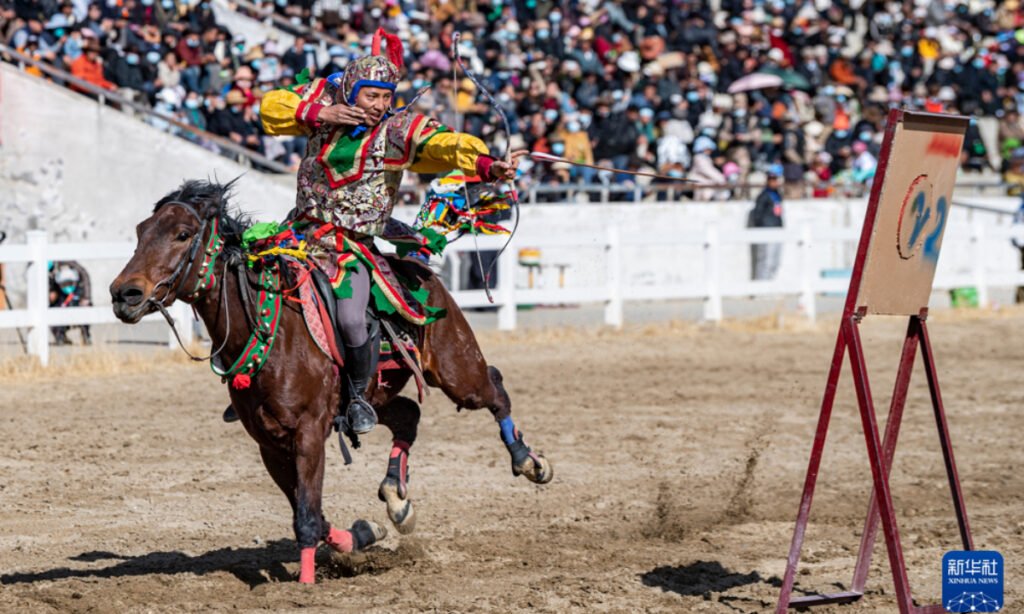
Among all events, the trotting race stands out for its elegance and ceremonial beauty. Horses participating in these races are meticulously prepared using fine-toothed iron brushes. Their manes are braided into dozens of thin plaits and decorated with colorful silk ribbons, while their tails are tied into intricate traditional knots.
Every detail of the equipment—saddles, saddle pads, bridles, and ornaments—is carefully selected and richly decorated, giving the horses a majestic and energetic appearance.
The riders are often middle-aged men dressed in festive Tibetan clothing. Unlike long-distance races, the key challenge here is maintaining speed without breaking into a gallop. Success depends on control, balance, and subtle communication between horse and rider, favoring precision over raw power.
Beyond Racing: Traditional Competitions and Trade
The Damshung Horse Racing Festival is much more than a sporting event. It is a complete cultural gathering where traditional skills and daily nomadic life come together.
Other popular activities include:
- Archery competitions, showcasing precision and strength
- Stone-lifting contests, reflecting physical endurance
- Trading of agricultural and pastoral products, continuing ancient market traditions
These activities create a vibrant atmosphere where sport, commerce, and culture blend seamlessly, turning the festival into a true celebration of grassland heritage.
Visitor Highlights: The World’s Largest Yak-Hair Tent
Near the racetrack stands an enormous black yak-hair tent, a powerful symbol of pride for the people of Damshung. Measuring 45 meters long, 24 meters wide, and 6 meters high, the tent covers an area of 1,080 square meters and reportedly cost over 6 million yuan to construct.
Believed to be the largest yak-hair tent in the world, it has been submitted for Guinness World Records recognition.
Today, this massive tent has become a signature cultural tourism attraction. Inside, visitors can explore a traditional nomadic lifestyle exhibition featuring historical objects such as:
- Pack bags
- Butter churns
- Yak-dung stoves
- Old-style Tibetan firearms
At the center of the tent is a large hearth surrounded by tables and seating, where guests can enjoy traditional Tibetan cuisine alongside Chinese dishes, creating a warm and welcoming communal space.
Cultural Experiences and Souvenir Markets
Just 25 meters from the main tent, a lively market area offers visitors a wide range of local products, including:
- Ethnic handicrafts
- Travel souvenirs
- Precious Tibetan medicinal products
The surrounding area also features horse photography zones and traditional Tibetan costume photo spots. While taking photos, visitors can enjoy folk performances and equestrian shows, offering a deeply immersive experience of northern Tibetan grassland culture.