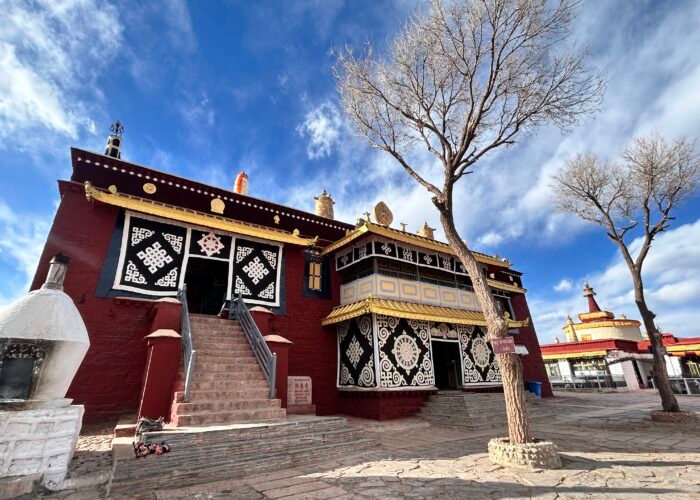
Nestled in the tranquil landscapes of Lhunzhub County, about 70 kilometers north of Lhasa, Langtang Monastery (གླང་ཐང་དགོན།) stands as one of Tibet’s lesser-known yet deeply significant spiritual sites. Founded in 1093, this ancient monastery connects the early teachings of the Kadampa tradition with the philosophical depth of the Sakya school, offering travelers a rare opportunity to explore an authentic center of Tibetan Buddhism away from the usual tourist routes.
For history lovers, spiritual seekers, and cultural explorers, Langtang Monastery is more than just a destination — it is a living archive of Tibetan wisdom that has endured for nearly a millennium.
The Origin Story: A Hat Toss That Shaped History
The monastery was established by the respected Kadampa master Geshe Langtangpa Dorje Senge in 1093, whose vision transformed this quiet valley into a thriving hub of Buddhist learning.
According to local legend, the monastery’s location was chosen through a mystical act. Geshe Langtangpa tossed his dharma hat into the air and vowed to build a monastery wherever it landed. The hat descended in Langtang Village, marking the sacred ground where the monastery still stands today.
At its height, Langtang Monastery reportedly housed more than 2,000 monks, making it one of the major religious institutions in the region.
Who Was Geshe Langtangpa Dorje Senge?
Geshe Langtangpa (1054–1123) was a key figure in the Kadampa school, known for discipline, scholarship, and compassion. As a student of Potowa, one of the three great Kadampa masters, he dedicated his life to preserving and transmitting the classical teachings.
A Master of Compassion
Langtangpa was admired for his humble lifestyle. Historical accounts describe how he often gave away offerings he received to ensure that his thousands of disciples were properly fed and supported.
Influential Teacher
His impact extended beyond his own monastery. He served as a spiritual preceptor to several important figures, including Khyungpo Naljor, the founder of the Shangpa Kagyu lineage.
An Enduring Spiritual Presence
Today, Langtangpa’s stupa (reliquary) remains within the monastery grounds, continuing to serve as the spiritual heart of the complex and a focal point for pilgrims.
From Kadampa Roots to Sakya Tradition
Although Langtang Monastery began as a Kadampa institution, the religious landscape of Tibet evolved over the centuries. By the 14th century, the monastery gradually aligned with the rising Sakya school, known for its sophisticated philosophical system.
This transition reflects the dynamic nature of Tibetan Buddhism, where monasteries often adapted while preserving earlier traditions.
Key Highlights of the Transformation:
- Lineage Connection: Today, the monastery practices the renowned Lamdre (“Path and Result”) teachings, a core doctrine of the Sakya tradition.
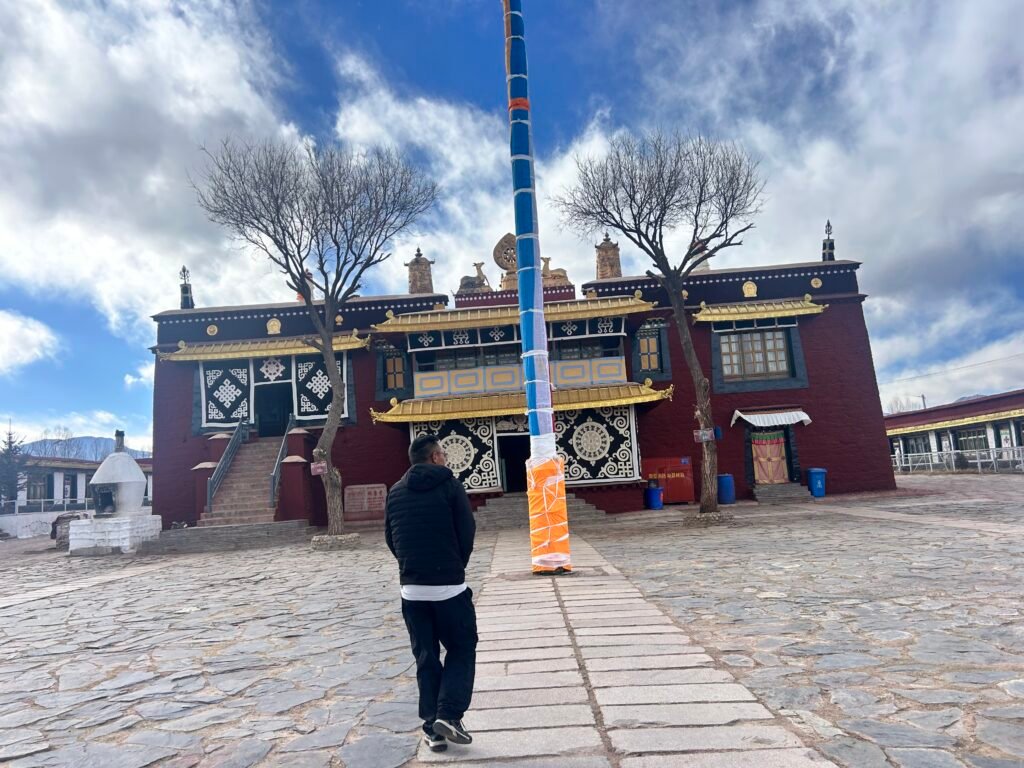
- Architectural Fusion: While the original Kadampa layout still shapes the monastery’s structure, interior decorations — including mandalas and sacred imagery — display clear Sakya artistic influence.
- Historical Context: The shift is closely associated with the broader period linked to Drogön Chögyal Phagpa, an important Sakya leader whose era helped expand the school’s reach across Tibet.
This blending of traditions gives Langtang Monastery a distinctive identity rarely found elsewhere.
Architectural Splendor Along the Mountainside
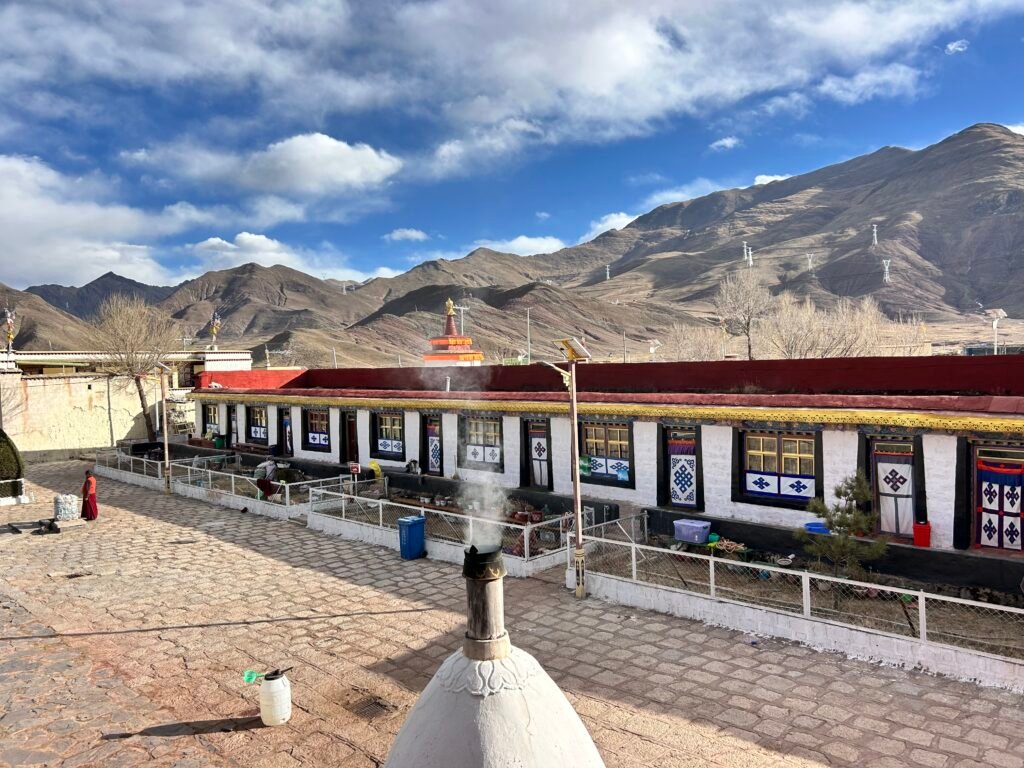
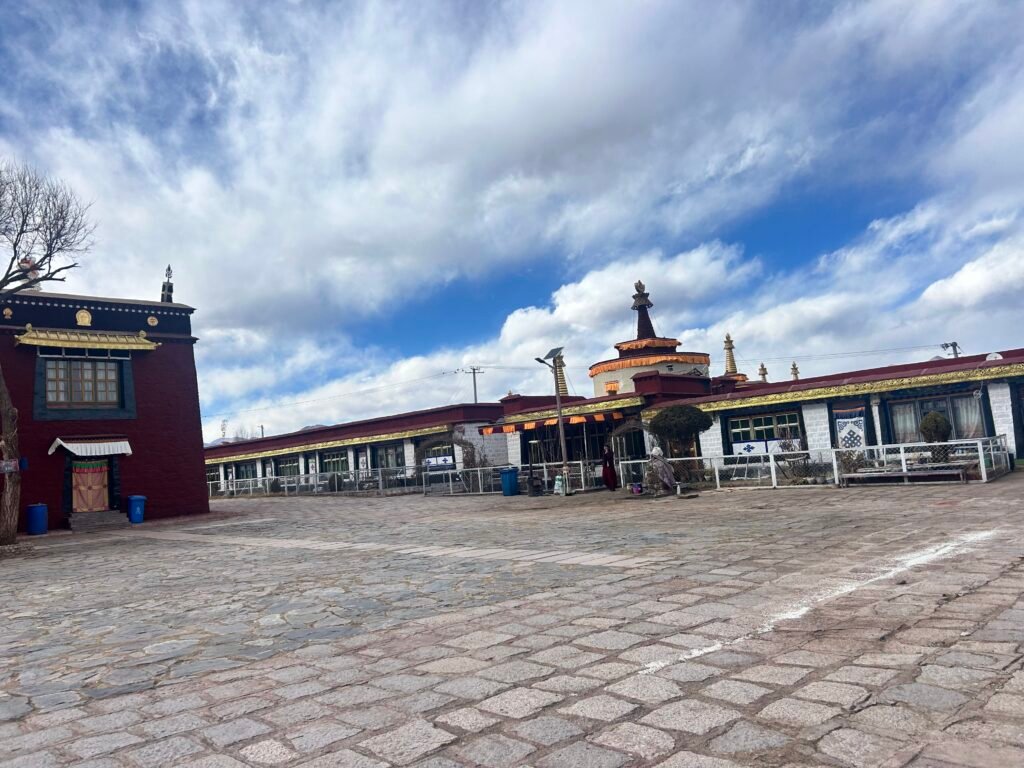
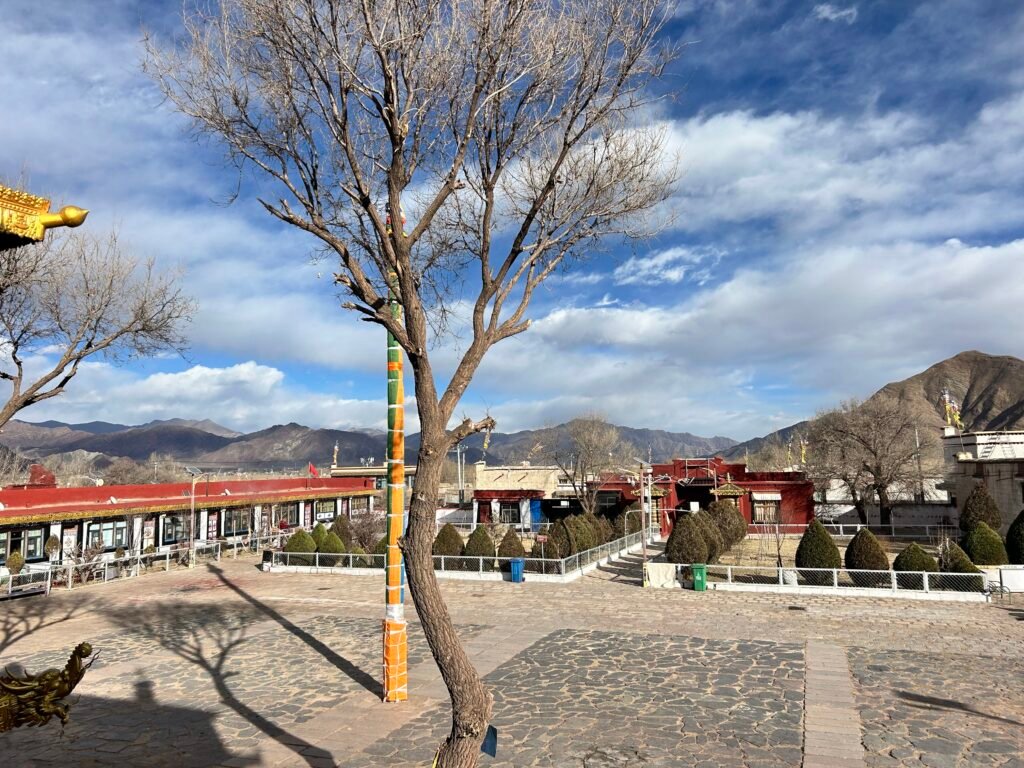
Built in harmony with the surrounding slopes, Langtang Monastery appears to grow naturally from the landscape. The complex includes:
- A central assembly hall
- Residential quarters for monks
- Ancient stupas
- Meditation spaces overlooking the valley
The peaceful setting enhances the monastery’s contemplative atmosphere, making it an ideal place to slow down and absorb the rhythm of Tibetan monastic life.
Rare Murals: A Hidden Treasure for Art Lovers
One of Langtang’s most remarkable features is its collection of ancient wall paintings. These murals are invaluable to art historians because they reveal a fascinating fusion of Indian and Central Asian artistic traditions.
Expect to see:
- Vibrant mineral pigments that have retained their intensity for centuries
- Graceful lines depicting Buddhist deities and teachers
- Iconography that reflects Tibet’s role as a crossroads of cultural exchange
Despite the passage of time, many of these paintings remain strikingly well preserved.
The Haven of birds in Langtang Monastery
Visitors often describe Langtang Monastery using a charming local phrase — the monastery of with lots of Birds” Evidence of its lasting spiritual importance. The surrounding environment is calm and ecologically rich. Friendly local guardians that add warmth and character to the monastery grounds. Together, these elements create a welcoming and lived-in atmosphere rarely found at larger monasteries.
Festivals and Spiritual Life
Langtang Monastery is not merely a historical relic — it remains an active place of worship with a dedicated monastic community. Throughout the year, traditional ceremonies bring together monks and local residents, blending philosophy with vibrant cultural expression.
Monlam Prayer Festival (1st Tibetan Month)
This major event features Cham ritual dances, intricate butter sculptures, and collective prayers for peace and prosperity.
Sakya Puja (5th Month)
Dedicated to Sakya Pandita, the festival emphasizes scriptural study, debate, and doctrinal reflection.
Anniversary of Geshe Langtangpa (10th Month)
A solemn yet meaningful day honoring the monastery’s founder and his enduring legacy.
Travel Guide: Visiting Langtang Monastery
For travelers seeking an off-the-beaten-path experience near Lhasa, Langtang Monastery makes an excellent cultural excursion.
How to Get There
The monastery is approximately a 1.5-hour drive (70 km) from Lhasa.
Options include:
- Hiring a private vehicle for flexibility
- Taking a bus from Lhasa North Suburb Station to Lhunzhub County and arranging local transport to Langtang Village
Best Time to Visit
May through October offers pleasant temperatures, greener landscapes, and easier road conditions — ideal for photography and exploration.
A Special Winter Highlight
Lhunzhub is known as the “Home of the Black-necked Crane.” During winter, visitors may spot these rare and elegant birds in nearby valleys, adding a unique wildlife dimension to the journey.
Visitor Etiquette
- Entry is generally free
- Dress modestly out of respect for local customs
- Maintain quiet inside prayer halls
- Always ask permission before photographing monks or sacred objects
Why Langtang Monastery Deserves a Place on Your Tibet Itinerary
While many travelers focus on Tibet’s famous landmarks, Langtang Monastery offers something increasingly rare — authenticity, serenity, and deep historical continuity. Its thousand-year legacy, layered traditions, and artistic treasures make it a rewarding destination for those eager to look beyond the surface of Tibetan culture.
Whether you are tracing the footsteps of Kadampa masters, exploring Sakya philosophy, or simply searching for a peaceful monastery near Lhasa, Langtang reveals a quieter side of Tibet that continues to inspire devotion and curiosity alike.