
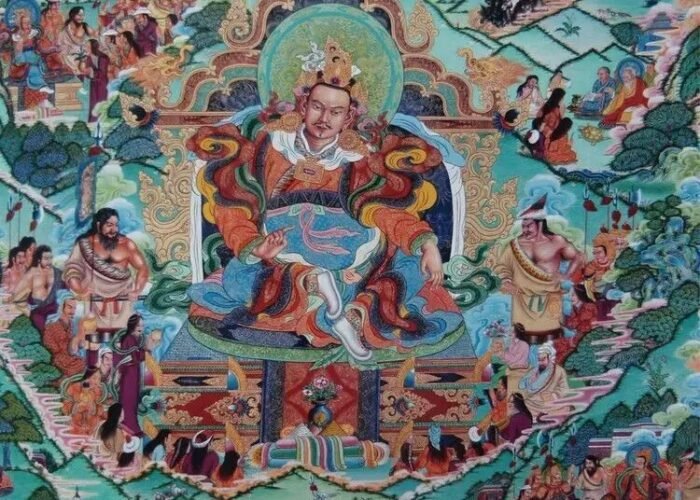
Namri Songtsen ( གནམ་རི་སྲོང་བཙན) was one of the most important early rulers of the Tibetan Plateau. As a key figure in the transformation of Tibet from a loose tribal confederation into a centralized kingdom, he laid the political and military foundations for what would later become the powerful Tibetan Empire.
Though often remembered as the father of Songtsen Gampo, Namri Songtsen’s own achievements were remarkable. His leadership reshaped early Tibetan history and set the stage for the unification of the plateau.
Historical Background: Tibet Before Unification
Namri Songtsen was born in 558 CE, the Earth Tiger Year, during a transformative era in early Tibetan history. He was the son of Tagri Nyenzig (སྟག་རི་གཉན་གཟིག་) and Queen Drökar Töngtsün. As a descendant of the Yarlung royal lineage, he inherited not only noble blood but also the responsibility of strengthening a fragile and divided realm.
From a young age, Namri Songtsen grew up in a political environment marked by rivalry among clans and shifting regional alliances. His reign would ultimately become a turning point in the consolidation of power across central Tibet.
Marriage and Royal Heirs
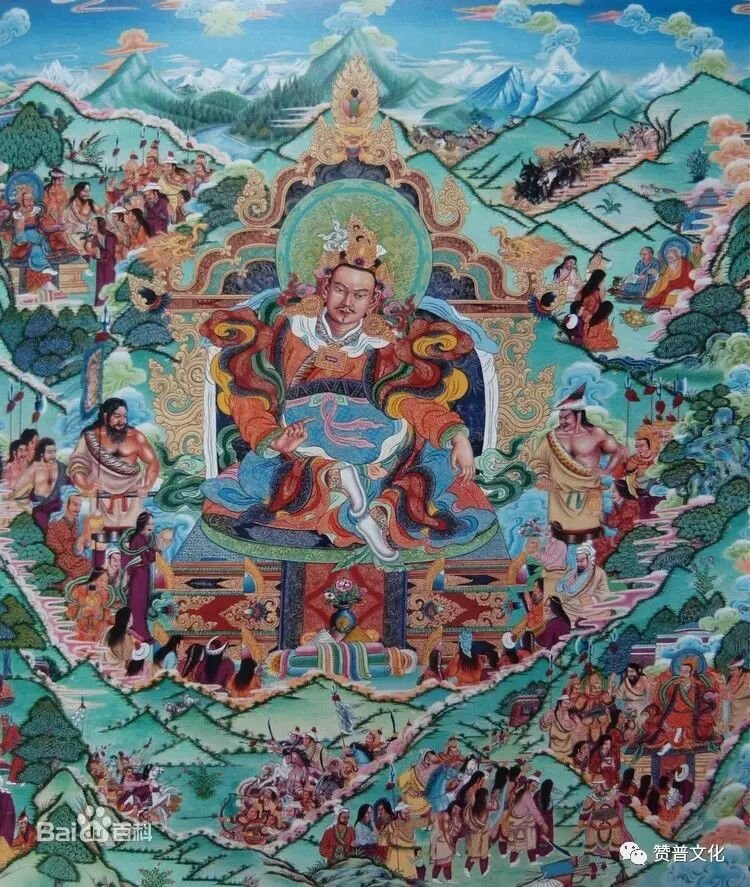
During his reign, Namri Songtsen took Tsephongza Drima Thökar as his queen. Their union strengthened internal alliances among noble clans and reinforced the legitimacy of the Yarlung royal house.
From this marriage, two sons were born:
- Songtsen Gampo
- Gungri Gungtsen
Songtsen Gampo would later become one of the most celebrated rulers in Tibetan history, completing the unification process initiated by his father. Gungri Gungtsen, although less historically prominent, was also part of the royal lineage that strengthened dynastic continuity.
Royal Court and Religious Influence
During his rule, several influential ministers supported the king, including members of powerful clans such as the Nyang, Dbas, and Tse families. These aristocratic houses played a crucial role in military campaigns and state administration.
The chief religious authority at court was the Bon priest Tri Khung Drakpa, who served as the king’s personal spiritual advisor. Before the spread of Buddhism in Tibet, Bon was the dominant religious tradition, deeply connected to royal rituals, protection rites, and state ceremonies.
Namri Songtsen strengthened alliances through marriage as well. He took Drima Thökar as queen and maintained political ties through strategic family connections, reinforcing loyalty among influential clans.
Cultural Exchanges and Early Innovations
One of the notable developments during Namri Songtsen’s reign was increased contact with neighboring regions. Historical sources suggest that knowledge of astrology and medicine was introduced from areas corresponding to imperial China during this period. These exchanges reflect early intellectual and cultural interactions between Tibet and surrounding civilizations.
Influences from India, Central Asia, and even Byzantium are also mentioned in Tibetan historical texts.
A traditional account from this era also describes the discovery and recognition of salt as a valuable resource. According to legend, after hunting a wild yak in a northern region, the meat was carried on horseback and later tasted salty due to exposure. This led to the identification of salt deposits and the beginning of organized salt collection. While partly legendary, the story illustrates how early Tibetans expanded their knowledge of natural resources.
Delegation of Authority and Military Leadership
At one stage, Namri Songtsen entrusted aspects of state administration to close family members, including his younger brother and his mother, Queen Drökar Töngtsün. This delegation allowed him to focus directly on military campaigns.
Rather than ruling solely from the palace, he personally assumed the role of military commander. Leading an army said to number in the tens of thousands, he launched decisive campaigns to consolidate Yarlung authority.
Early Diplomatic Relations with China
Namri Songtsen was also forward-looking in diplomacy. Historical records indicate that he sent embassies to the Sui Dynasty in 608 and 609 CE. These missions are widely considered the first officially recorded contacts between Tibet and imperial China.
These early diplomatic exchanges laid the groundwork for the more extensive international relations that would flourish under his son’s reign. They also demonstrate that Tibet was emerging as a recognized political entity in East and Inner Asia.
Military Campaigns and Territorial Consolidation
Namri Songtsen personally led large military forces—sometimes described as numbering in the tens of thousands—into battle. He conquered key fortresses and defeated regional rulers who resisted Yarlung authority.
Namri Songtsen’s campaigns resulted in major territorial gains:
- The destruction of the fortress of Yuna (མཁར་ཡུ་སྣ་)
- The defeat and killing of the ruler known as Zingpoje (དགུ་གྲི་ཟིང་པོ་རྗེ་)
- The flight of Mangpoje (མང་པོ་རྗེ་) to the land of the Drugu. (གྲུ་གུ)
These victories significantly weakened rival powers and removed obstacles to central authority.
Expansion from Pakyung to Kongpo
Following these campaigns, territories stretching from Pakgi Yungba in the south to Kongpo Brena (ཀོང་པོ་བྲེ་སྣ་) in the east were brought under royal control. These regions were incorporated into the expanding Yarlung state and placed under the authority of the Tsenpo (king).
Through these campaigns, large parts of Ü and Tsang were brought under the authority of the Yarlung monarchy. Influential figures such as Khyungpo Pungse (ཁྱུང་པོ་སྤུང་སད་) and Senggo Michen (སེང་གོ་མི་ཆེན) contributed to expanding royal control, subduing regional lords, and incorporating tens of thousands of households into the empire.
Renaming of Territories and Political Authority
As newly conquered lands were incorporated, Namri Songtsen asserted authority symbolically as well as militarily. Some regions were renamed by royal decree, reinforcing centralized rule and redefining local identity under Yarlung leadership.
These administrative decisions were not merely symbolic—they reflected a shift from tribal autonomy to a structured political system governed by royal command.
Relocation of the Royal Residence
During his reign, the royal seat was moved north of the Yarlung Tsangpo River. A new palace known as Jampa Migyur Ling was reportedly constructed in the Maldro region. This relocation indicates both strategic planning and growing royal confidence.
Establishing a new political center helped solidify authority over recently unified territories and demonstrated the expanding reach of the monarchy.
Assassination and Royal Burial
Despite his military and political successes, Namri Songtsen’s reign ended tragically. According to historical tradition, he was poisoned—possibly through a conspiracy involving rivals.
His death briefly destabilized the kingdom. However, his teenage son Songtsen Gampo quickly suppressed the rebellion and consolidated royal authority. Rather than reversing his father’s policies, he expanded upon them.
Because of his foundational role in state formation, many historians consider Namri Songtsen a co-founder of the Tibetan Empire alongside his more widely celebrated son.
He was buried at Donkhar Mdo, where a square-shaped royal tomb was constructed. This architectural style later became characteristic of early Tibetan royal burial monuments. His tomb is described as being located to the right of earlier royal burial sites, and it became known by the name Gungri Sokkar (གུང་རི་སོག་ཀར).
These burial traditions reflect the growing sophistication of royal ceremonial practices and the increasing importance of monumental architecture in early Tibetan statecraft.
A Turning Point in Early Tibetan History
Namri Songtsen’s reign represents a crucial phase in Tibet’s transition from fragmented tribal rule to centralized monarchy. Through military conquest, political restructuring, cultural exchange, and symbolic state-building, he laid the essential groundwork for imperial expansion.
His achievements directly prepared the way for his son, Songtsen Gampo, who would complete the unification process and establish Tibet as a major power in Inner Asia.
Namri Songtsen stands not merely as a predecessor, but as a foundational architect of early Tibetan state formation and royal authority.