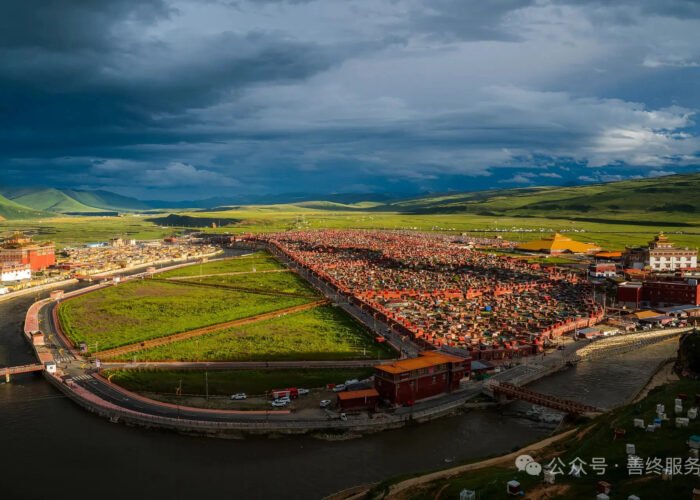
Yarchen Gar, officially known as Yachen Orgyen Samden Ling, is located in Changtuo Village, Acha Town of Baiyu County in Garzê Prefecture, Sichuan. Sitting at an altitude of around 4,000 meters, it is the largest settlement of female practitioners (nuns, known as Jo Mu) in the world. Often described as the “Women’s Kingdom” of Tibet, it is also an important spiritual center of the Nyingma school of Tibetan Buddhism, focused on the practice of Dzogchen.
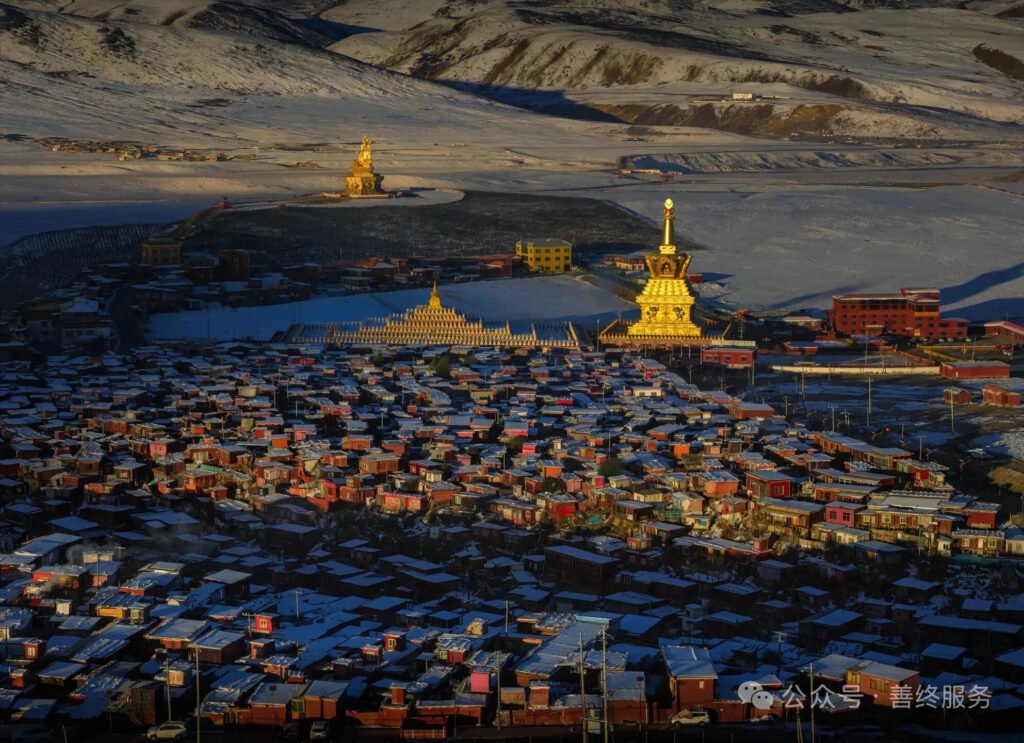
Overview of Yarchen Gar
Yarchen Gar was founded in 1985 by the Dzogchen master Khenpo Akyug. Despite its relatively recent history, it has grown rapidly into a vast spiritual community shaped entirely by faith and dedication. Garzê Tibetan Autonomous Prefecture is home to two major Buddhist centers. One is Seda, known for its large Buddhist academy. The other is Yarchen Gar, a vast monastic settlement where more than 20,000 nuns live and practice.
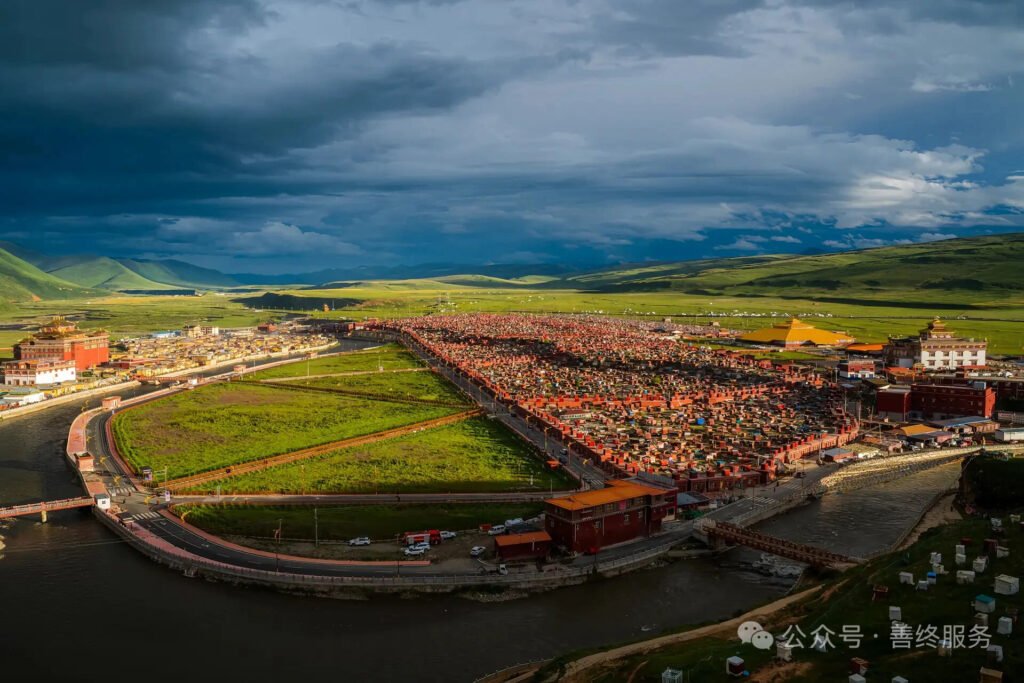
If Seda’s red houses resemble “flames rising up the mountain,” then Yarchen Gar feels like “scriptures resting in water.” Thousands of red wooden huts are scattered across the greenery, blending quietly into the surroundings. In the early morning, as smoke rises gently from the huts, even the sunlight seems softer. Over time, the monastery has expanded into what locals call “Yarchen City,” a striking spiritual landscape on the high plateau.
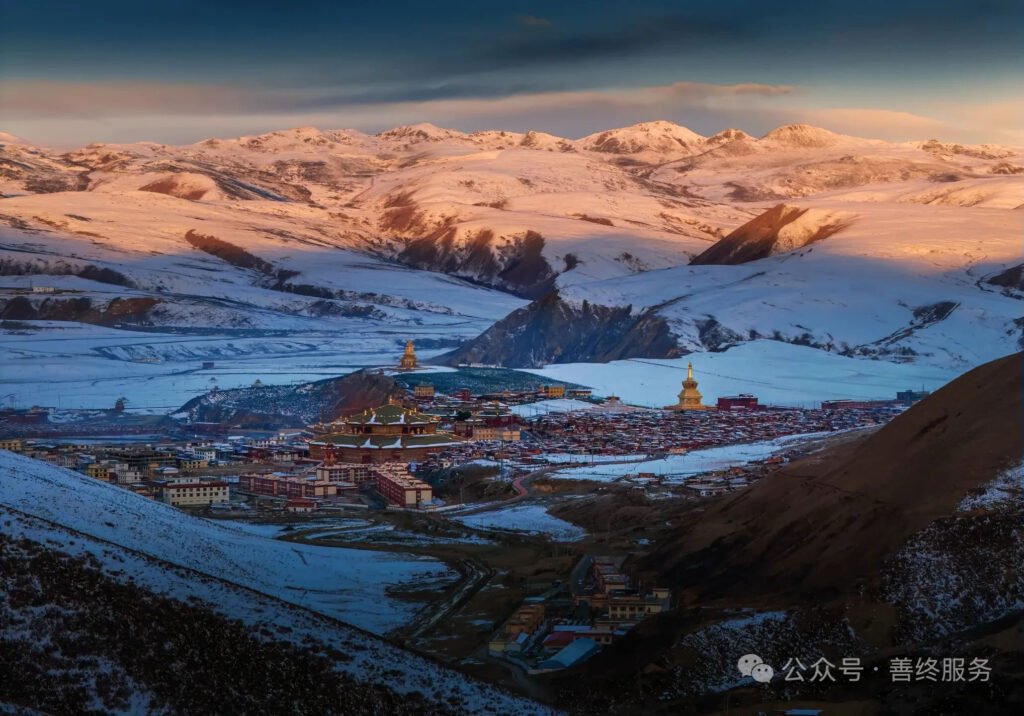
A Unique Layout: A Sacred Space Divided by the River
Yarchen Gar is shaped by the Changqu River, which naturally divides the monastery into separate practice areas.
At the center lies Jue Mu Island, the core practice zone for female practitioners. Covering about 0.15 square kilometers and surrounded by water on three sides, this area is strictly reserved for nuns. Male visitors, including tourists, are not allowed to enter.
Across the river is the Draba Area, where male practitioners live and study. The entire monastery is further divided into eight practice zones, each with specific functions and spiritual focus.
A strict nightly rule is observed. After sunset, the two bridges connecting the island are closed, and all nuns must return to their huts. This system helps maintain discipline and a focused state of mind.
Daily Life and Spiritual Practice
Life in Yarchen Gar is simple, disciplined, and deeply spiritual. The nuns live in small red wooden huts, usually just 1–2 square meters in size. These huts are built by the practitioners themselves and are densely arranged, forming a vast “red ocean” across the landscape.
A typical day begins early, with morning prayers held between 5:30 and 7:00. During the day, practitioners engage in chanting, study, and manual work. After 3:00 PM, debate sessions take place, where monks and nuns discuss Buddhist philosophy through a traditional method of clapping and dialogue.
Retreat practice is especially important. In winter, practitioners first complete a one-month preliminary retreat, followed by a 108-day intensive retreat. During this period, they remain in isolation, observe silence, and avoid all outside contact.
Daily life requires self-sufficiency. Practitioners gather firewood, carry water, and grow food. The entire community follows a vegetarian lifestyle, and smoking or drinking is strictly prohibited.

Key Experiences and Highlights
Yarchen Gar offers several unique experiences for visitors who wish to observe respectfully. The best panoramic view can be seen from the viewing platform near the statue of Padmasambhava. From here, visitors can overlook the entire settlement, with the red huts spread across the island and the Changqu River winding around it.
Morning prayer in the main assembly hall is another powerful moment. Hundreds of nuns chant together, creating a solemn and immersive atmosphere. Visitors must remain completely quiet during this time.
In the afternoon, debate sessions provide insight into Tibetan Buddhist learning methods. The rhythmic clapping and active discussions create a lively yet focused scene.
Visitors can also take part in simple rituals such as offering butter lamps, which are available at small shops on the island for prayer and blessings. Nearby, travelers may explore traditional Tibetan craftsmanship, including the forging of Tibetan knives in Hepo Township, an area known for its long history of metalwork.
The Practice of Retreat
Every winter, many nuns enter an intensive retreat known as the “100-day retreat.” They stay in small, enclosed huts—sometimes less than 10 square meters—spending long periods in silence and isolation. This is a time for deep reflection and meditation, often described as a truly immersive spiritual experience. It is a practice of turning inward, away from the outside world.
Monastic Rules and Visiting Guidelines
Yarchen Gar maintains strict rules that all visitors must respect. Male visitors are strictly prohibited from entering Jue Mu Island and must observe from designated areas along the river or outer paths.
Photography is limited. Close-up photos of nuns are not allowed without permission, and drone use is completely banned. When photographing the red huts, visitors should keep a respectful distance.
Visitors are expected to behave quietly, avoid running or loud noise, and dress modestly. Religious objects such as prayer flags and ritual items should not be touched. Directly giving money to nuns is not permitted. Donations should be made through official monastery channels.
Due to the high altitude, visitors should prepare for altitude sickness, avoid intense physical activity, and carry necessary supplies.
Transportation and Accommodation
Getting There
Yarchen Gar is accessible mainly by road.
- Chengdu: via Kangding and Ganzi, then continue to Yarchen Gar (around 12 hours)
- Gesar Airport: 4 hours by road
- Baiyu County town: 3 hours via provincial roads
Public transport options include taking a long-distance bus from Chengdu to Ganzi, followed by a hired vehicle to Yarchen Gar.
Road conditions can be challenging. Winter roads may freeze, and landslides are possible during the rainy season. A four-wheel-drive vehicle is recommended.
Where to Stay
Accommodation options are simple but sufficient. Guesthouses near the monastery offer basic comfort, including heating and hot water, with vegetarian restaurants nearby. Budget travelers can find basic dorm-style lodging outside the monastery area, though conditions are limited.
Food in the area is entirely vegetarian, with local Tibetan dishes such as butter tea, tsampa, and barley cakes widely available.
Best Time to Visit
The best time to visit Yarchen Gar is from May to October, when the weather is milder and the surrounding grasslands are green.
June to July is ideal for photography, as wildflowers bloom across the plateau. September to October offers clear skies and rich autumn colors.
Winter, from November to April, presents a very different experience. Snow covers the landscape, creating a dramatic atmosphere, but temperatures can drop between -10°C and 5°C, and some roads may be closed.
A Comparison of Yarchen Gar and Seda
Yarchen is often compared with the well-known Buddhist academy in Seda, but the two places offer different experiences. It is centered on female practitioners and is known as the largest nuns’ settlement in the world. Its layout features a central island surrounded by a river, creating a distinct and enclosed spiritual space. The number of visitors is relatively low, and the atmosphere remains quiet and less commercialized. Management is strict, with clear gender-based access rules and nighttime restrictions.
In contrast, Seda has a more balanced population of monks and nuns, with a larger number of tourists and a more open layout across the hills. Yarchen Gar stands out for its simplicity, discipline, and the powerful presence of devotion expressed through the daily lives of its practitioners.