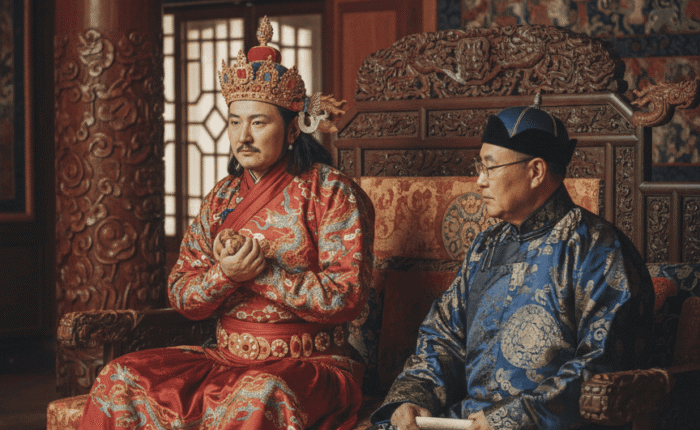
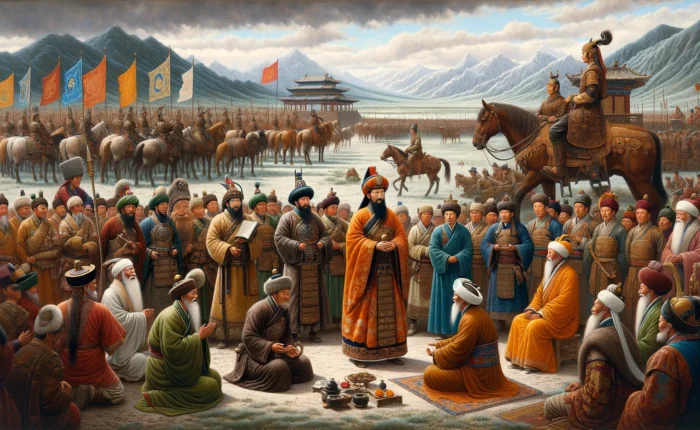
Tugh Temur (1304–1332), Mongolian: ᠲᠦᠪᠲᠡᠮᠦ known posthumously as Emperor Wenzong of the Yuan dynasty, was one of the most politically active rulers of the Mongol Empire’s later period. Bearing the Mongolian khan title Jayaγatu Khan, he became the eighth emperor of the dynasty and ruled twice—first from 1328 to 1329, and again from 1329 until his...Read More
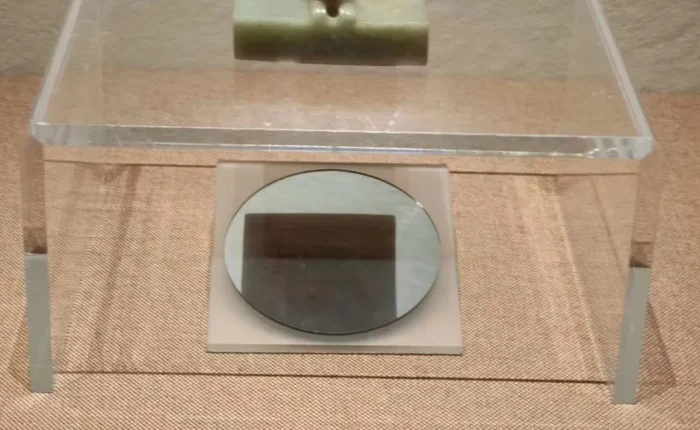
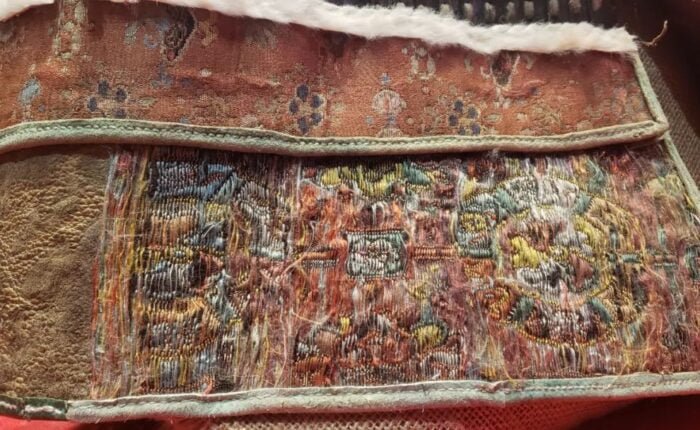
Seal of the Mardrak Military and Civil Myriarchy Date: 1316 CECollection: Tibet Museum The Seal of the Mardrak Military and Civil Myriarchy is a significant administrative artifact from the Sakya dynasty period, offering rare material evidence of governance systems in eastern Tibet during the early 14th century. This seal reflects how political authority, military control,...Read More
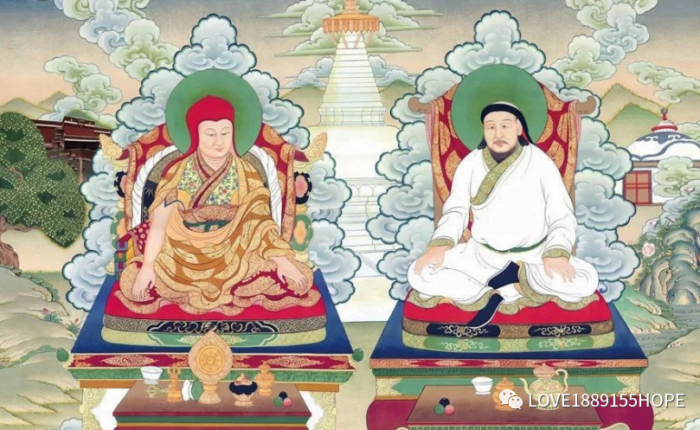
Explore the life of Drogon Choegyal Phakpa, also known as Lobsang Gyamtso and Phakpa Rinpoche. Born in 1235, he was the fifth patriarch of the Sakya sect and founder of the Sakya Dynasty in Tibet. Discover his profound impact as Kublai Khan's spiritual advisor, his leadership in the Bureau of Buddhist and Tibetan Affairs, and...Read More
Explore the rise of the Mongol Empire, a unique force in 13th-century Asia under Genghis Khan's leadership. Discover how this first universal empire united disparate tribes and treated various religions equally, echoing its military prowess across continents. Delve into the multifaceted history of the Mongols, their cultural assimilation, and the impact of their conquests on...Read More
The Sakya Dharma King’s iron armour, a testament to an extraordinary period in history. It stands as a remarkable artefact of the Yuan Dynasty’s cultural and political legacy. Bestowed by Kublai Khan, the founder of the Yuan Dynasty, this iron armour. It dates back more than 700 years, is a singular relic of its kind....Read More
The Transition of Erdos Mongols to Yellow Buddhism: Explore the historical evolution of Yellow Buddhism in Inner Mongolia's Ordos region, as Erdos Mongols shifted from tribal affiliations to fervent practitioners. Discover the interplay of politics, religion, and cultural exchange in this transformative era.Read More