Introduction to the Overland Adventure
Traveling overland from China through Tibet into Nepal is widely regarded as one of the last great journeys on earth. This epic route takes you across vastly different worlds, starting in ultra-modern Chinese cities and climbing onto the high-altitude Tibetan plateau, finally descending into the lush Himalayan valleys of Nepal.
It is not just a journey across borders, but a transformative experience that spans civilizations, belief systems, and landscapes. From the imperial capitals and silk road relics to sacred monasteries and the breathtaking foot of Mount Everest, this route offers unmatched cultural depth and raw natural beauty. Travelers seeking meaning and adventure will find the China–Tibet–Nepal overland route standing in a class of its own.
China–Tibet–Nepal Overland Route at a Glance
This epic journey typically takes 14 to 21 days, depending on your pace, acclimatization needs, and sightseeing preferences.
What makes this route special:
- Ancient capitals and Silk Road heritage
- The world’s highest railway
- Sacred lakes and Himalayan mountain passes
- Mount Everest from the Tibetan side
- A dramatic descent into Nepal
This gradual westward and southward journey allows travelers to experience China, Tibet, and Nepal as a continuous story, rather than disconnected destinations.
Phase 1: Imperial China to the Silk Road (Beijing to Xi’an)
Exploring Beijing: China’s Political and Cultural Heart
Most travelers begin in Beijing, China’s capital and one of the world’s most historically layered cities. Here, ancient dynasties and modern power coexist.
Key highlights include:
- Tiananmen Square: An iconic public square known for its historical significance and symbolic monuments.
- Forbidden City: A magnificent palace complex that served as the imperial residence of the Ming and Qing dynasties.
- Great Wall of China: A UNESCO World Heritage Site, showcasing the architectural prowess and cultural heritage of ancient China.
- Summer Palace: A vast imperial garden with stunning landscapes, pavilions, and temples, offering a tranquil escape from the city’s hustle and bustle.
Beijing provides a strong historical foundation before moving west toward China’s ancient trade routes.
High-Speed Train to Xi’an
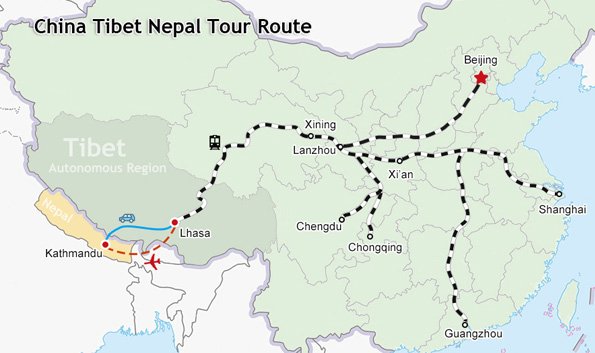
From Beijing, travelers typically board a high-speed bullet train to Xi’an, covering over 1,200 kilometers in just 4–5 hours. The landscape changes dramatically as eastern plains give way to central China’s loess plateaus.
Xi’an: Gateway to the Silk Road
Xi’an is one of China’s most important historical cities and the eastern terminus of the Silk Road.
Must-see experiences include:
- The Terracotta Army – over 8,000 life-sized warriors guarding Emperor Qin Shi Huang
- Ancient City Wall – one of the best-preserved city walls in Asia
- Muslim Quarter – vibrant street food culture and the Great Mosque
Xi’an also serves as a major departure point for the Qinghai–Tibet Railway, making it a natural transition point into Tibet.
Riding the Qinghai–Tibet Railway: The Sky Train to Lhasa
The Qinghai–Tibet Railway is more than transportation—it is an experience in itself.
Often described as the world’s highest railway, this engineering marvel climbs to elevations above 5,000 meters, crossing vast, untouched wilderness.
What Makes the Tibet Train Special
- Pressurized cabins with supplemental oxygen
- Panoramic windows for plateau views
- Passes through Kekexili Nature Reserve, home to Tibetan antelope
- Gradual altitude gain helps with acclimatization
The journey typically takes 22–24 hours, and many travelers find it gentler than flying directly into Lhasa.
Phase 2: Lhasa – The Spiritual Heart of Tibet
Arrival in Lhasa (3,650m)
Lhasa, meaning “Place of the Gods”, is the spiritual center of Tibetan Buddhism. At an altitude of 3,650 meters, most travelers stay here for 2–3 days to acclimatize. Life in Lhasa moves at a slower pace, shaped by prayer, pilgrimage, and tradition.
Potala Palace – Icon of Tibet
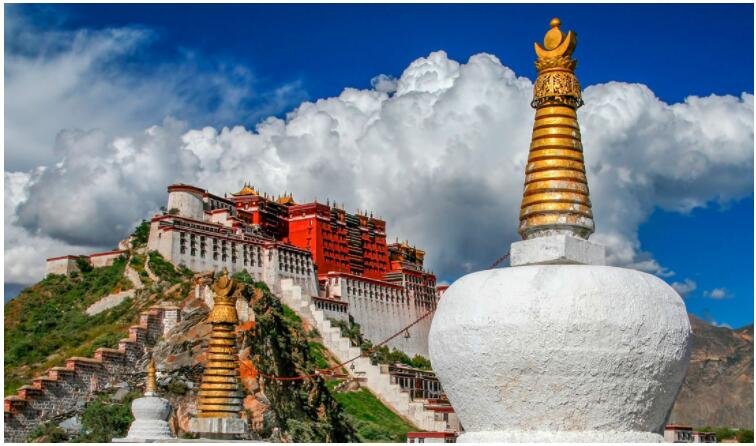
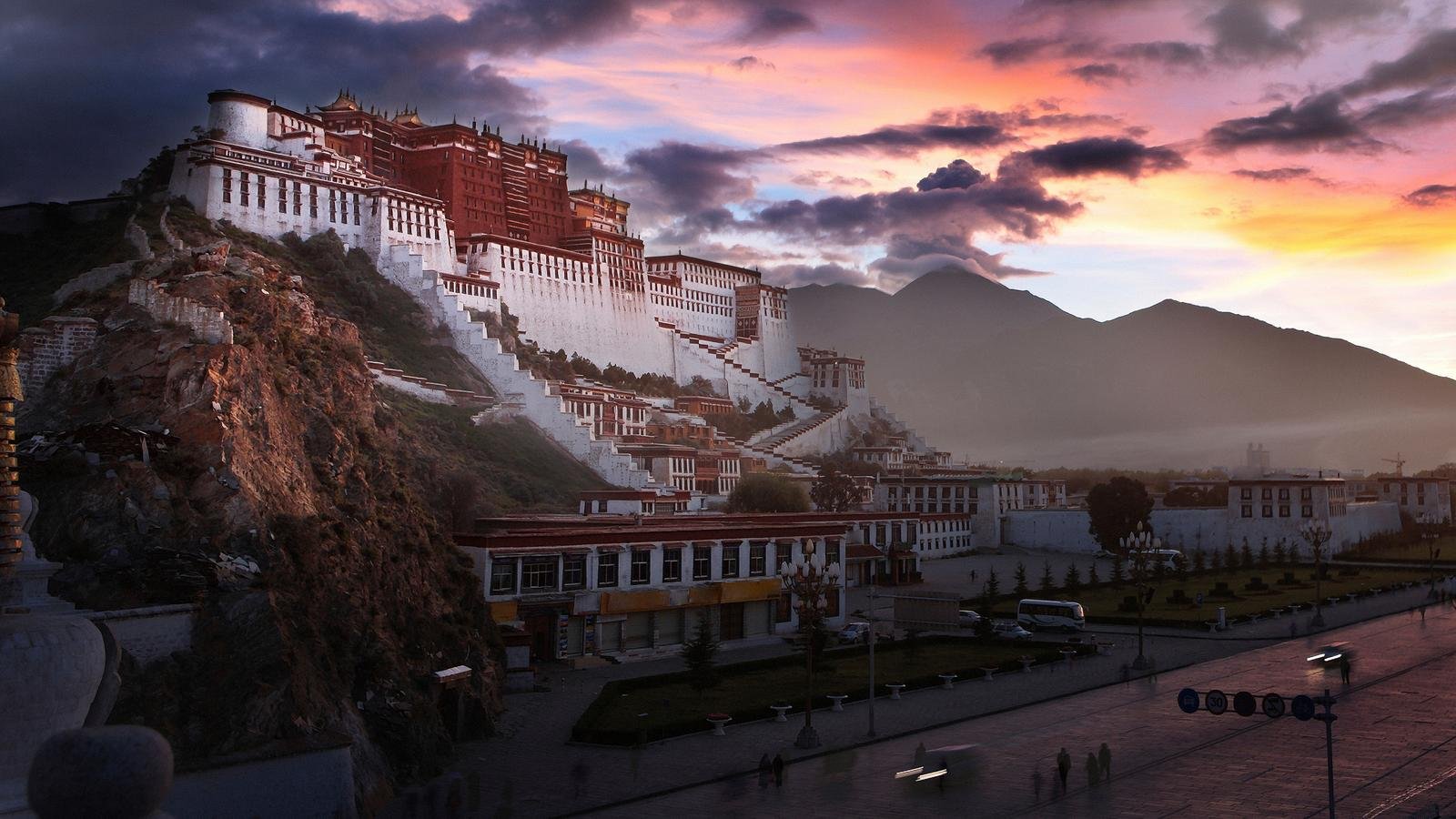
The Potala Palace dominates Lhasa’s skyline and is one of the most recognizable landmarks in Asia. Why it matters:
- Former winter residence of the Dalai Lamas
- Houses sacred chapels, murals, and stupas
- Offers panoramic views over Lhasa Valley
- Visitor numbers are strictly limited, and tickets must be arranged in advance.
Jokhang Temple and Barkhor Street
The Jokhang Temple is the most sacred site in Tibetan Buddhism. Inside is the revered statue of Jowo Shakyamuni, attracting pilgrims from all over the Tibetan world. Outside the temple lies Barkhor Street, where pilgrims perform kora (ritual circumambulation), spinning prayer wheels and chanting mantras. Walking Barkhor is one of the most authentic cultural experiences in Tibet.
Sera Monastery – Monk Debates
Sera Monastery is famous for its lively afternoon debates. Every afternoon (except Sundays):
- Monks gather in the courtyard
- Philosophical arguments are expressed through gestures and claps
- Visitors can observe centuries-old Buddhist education in action
- It is one of the most memorable experiences in Lhasa.
Phase 3: Across Central Tibet (Lhasa to Shigatse)
Leaving Lhasa, the journey enters the vast openness of the Tibetan Plateau.
Yamdrok Lake – Sacred Turquoise Waters
Yamdrok Yumtso is one of Tibet’s four holy lakes and is instantly recognizable by its turquoise color. At viewpoints over 4,400 meters, prayer flags flutter against snow-capped peaks, creating one of Tibet’s most iconic scenes.
Gyantse – A Historic Fortress Town
Gyantse is one of the best-preserved traditional towns in Tibet. Key Sights in Gyantse
- Gyantse Dzong (Fortress) – Offers panoramic valley views
- Kumbum Stupa – A unique multi-level stupa filled with chapels and murals
- Gyantse reflects Tibet’s artistic, military, and religious heritage.
Shigatse – Home of the Panchen Lama
Shigatse is Tibet’s second-largest city and an important religious center. The main attraction is Tashilhunpo Monastery, founded in 1447 and traditionally associated with the Panchen Lama. The monastery remains active, with hundreds of monks in residence.
Phase 4: Mount Everest from the Tibetan Side
Journey to Everest Base Camp (North Face)
From Shigatse, the road climbs steadily toward the Himalayas. Along the way, travelers encounter:
- High mountain passes above 5,000 meters
- Distant views of multiple 8,000-meter peaks
- Nomadic settlements and yak pastures
- The Tibetan approach to Everest is less crowded and more dramatic than the Nepal side.
Everest Base Camp (5,200m)
At Tibetan Everest Base Camp, travelers experience:
- Direct views of Mount Everest’s North Face
- Visits to Rongbuk Monastery, the world’s highest monastery
- Unforgettable sunrise and sunset light on Everest
- Vehicle access allows travelers to reach EBC without long treks.
Phase 5: Descending into Nepal via Gyirong
Gyirong Valley – Tibet’s Green Gateway
After days on the high plateau, the descent into Gyirong Valley feels dramatic. The landscape changes rapidly:
- Dry alpine terrain becomes green forests
- Snow mountains give way to waterfalls and rivers
- The climate becomes noticeably warmer
- Gyirong is often called “Tibet’s hidden garden.”
Crossing the Gyirong–Nepal Border
The Gyirong–Rasuwa border is the main land crossing between Tibet and Nepal. Here travelers:
- Exit China and Tibet
- Complete Nepal visa procedures
- Transfer to Nepali vehicles
- The road continues downhill toward Kathmandu through deep river valleys.
Phase 6: Kathmandu Valley – Nepal’s Cultural Core
Arrival in Kathmandu
Kathmandu feels energetic and chaotic after the stillness of Tibet. The city blends:
- Hindu and Buddhist traditions
- Ancient temples and modern life
- Markets filled with color, incense, and sound
Kathmandu Durbar Square
Durbar Square showcases Nepal’s royal and architectural history. Highlights include:
- Intricately carved wooden temples
- Former royal palaces
- Traditional courtyards and shrines
- Nearby Patan and Bhaktapur offer equally impressive heritage sites.
Boudhanath Stupa and Swayambhunath
Two iconic landmarks dominate Kathmandu’s spiritual landscape:
- Boudhanath Stupa – One of the largest Buddhist stupas in the world
- Swayambhunath (Monkey Temple) – Hilltop shrine with panoramic valley views
- Both are deeply connected to Tibetan Buddhism and Himalayan culture.
Other Notable Destinations:
- Chengdu, China: Home to the Giant Panda Breeding Research Center and renowned for its spicy Sichuan cuisine.
- Jiuzhaigou Valley, China: A UNESCO World Heritage Site featuring stunning waterfalls, colorful lakes, and diverse wildlife.
- Pokhara, Nepal: A lakeside town offering spectacular mountain views, boating activities, and scenic hikes.
Natural Wonders:
- Kathmandu Valley: A fertile and scenic valley surrounded by mountains, showcasing Nepal’s natural beauty.
- Mount Everest: The world’s highest mountain, straddling the border between Nepal and China, attracting adventurous climbers and trekkers.
- Tibetan Plateau: The world’s highest plateau, renowned for its unique ecosystem and breathtaking landscapes.
Best Time to Travel from China to Tibet and Nepal
- April to June: Clear skies, spring landscapes
- September to October: Best weather and Everest visibility
- July to August: Monsoon affects Nepal, Tibet remains dry
- February to March: Tibet often closed to foreigners
Cultural Experiences
Tibetan Buddhism:
- Immerse yourself in the rich traditions of Tibetan Buddhism, visiting monasteries, participating in meditation sessions, and learning about the spiritual significance of the region.
- Witness the vibrant Tibetan festivals, including the Tibetan New Year (Losar) and the Saga Dawa Festival, showcasing colorful ceremonies and cultural performances.
- Interact with local monks and pilgrims to gain insights into Tibetan culture and spiritual beliefs.
Nepalese Cuisine:
- Indulge in the diverse flavors of Nepalese cuisine, known for its unique blend of spices and fresh ingredients.
- Try traditional dishes such as momos (steamed dumplings), dal bhat (rice and lentil soup), and sel roti (sweet fried bread).
- Explore local markets and street food stalls to sample a variety of authentic Nepalese delicacies.
Himalayan Trekking:
- Embark on a trekking adventure in the Himalayas, offering breathtaking scenery, diverse terrains, and encounters with local communities.
- Choose from various trekking routes, ranging from moderate to challenging levels, suitable for adventurers of all experience levels.
- Discover hidden valleys, remote villages, and panoramic mountain views while immersing yourself in the beauty of the Himalayas.
Cultural Performances:
- Attend traditional dance and music performances showcasing the rich cultural heritage of China, Tibet, and Nepal.
- Experience the vibrant colors, intricate costumes, and mesmerizing rhythms that bring these ancient cultures to life.
- Participate in interactive workshops to learn about the history and techniques behind these traditional art forms.
Village Homestays:
- Immerse yourself in the local culture by staying in traditional village homestays.
- Interact with host families, learn about their daily lives, and gain a deeper understanding of the local traditions and customs.
- Enjoy home-cooked meals prepared with fresh, local ingredients, offering a taste of authentic Tibetan or Nepalese cuisine.
Permits and Visas You Need
Traveling overland through Tibet requires advance planning. Required Documents
- Chinese Tourist Visa
- Tibet Travel Permit (arranged by licensed agency)
- Alien’s Travel Permit (for Everest and border areas)
- Group Visa (mandatory if entering Tibet from Nepal)
- Nepal Visa (available on arrival)
Independent travel in Tibet is not permitted.
Health, Altitude, and Packing Tips
- Spend at least 2–3 days in Lhasa for acclimatization
- Drink plenty of water and avoid alcohol
- Pack layered clothing for temperature changes
- Use sunscreen and UV protection
- Consult a doctor about altitude medication if needed
Optional Route: Starting from Chengdu
Many travelers choose Chengdu as their starting point instead of Beijing. Why Chengdu is popular:
- Giant Panda Research Base
- Relaxed atmosphere
- Direct flights and trains to Lhasa
The “Panda to Everest” route is now one of the most popular ways to experience this legendary overland journey.
Conclusion
The journey across China, Tibet, and Nepal is an unforgettable experience, showcasing the harmonious blend of ancient cultures, stunning landscapes, and diverse traditions. Embark on this epic journey with an open mind and a thirst for adventure, and prepare to be captivated by the beauty and richness of this extraordinary region.