
Stretching across some of the harshest and highest terrain on Earth, the Xinjiang–Tibet Railway stands as one of the most ambitious infrastructure projects of the 21st century. Designed to connect Hotan in Xinjiang with Shigatse in Tibet, this massive rail corridor is steadily moving from concept to reality.
As China’s fourth major railway into Tibet—following the Qinghai–Tibet, Sichuan–Tibet, and Yunnan–Tibet lines—it is set to transform access to the Tibetan Plateau. More importantly, it will fill a long-standing gap in western Tibet’s transport network, linking remote regions that have remained isolated for decades.
Spanning vast deserts, towering mountain ranges, and frozen permafrost zones, the railway is not only an engineering challenge but also a project with deep economic, strategic, and social implications. Once completed, it will reshape transportation across western China and redefine connectivity across Asia.
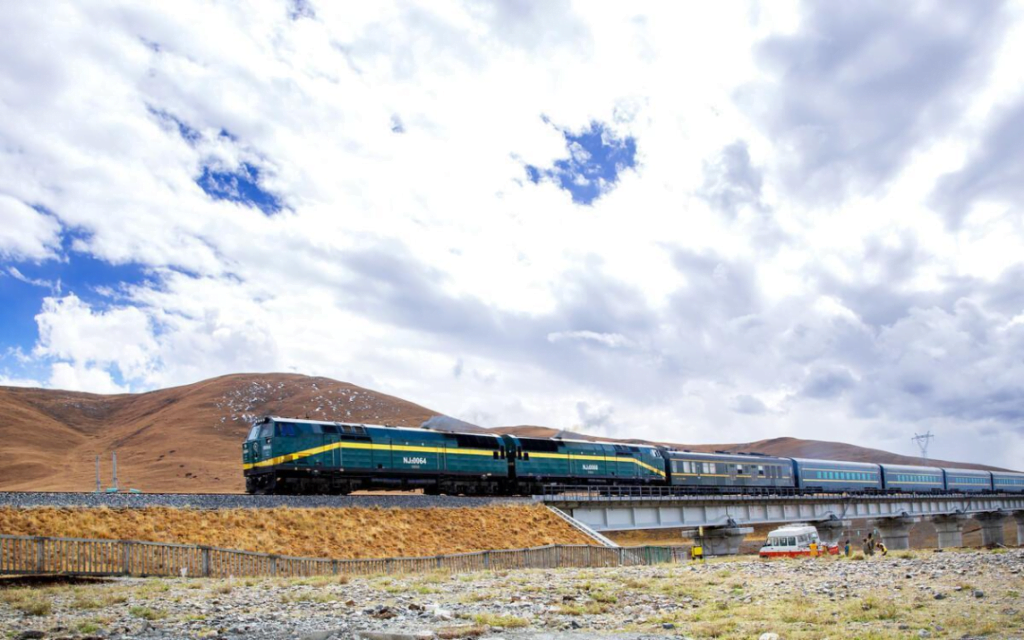
A Sky Railway Across the World’s Highest Terrain
The Xinjiang–Tibet Railway is planned as a 1,980-kilometer line, running from Hotan in the north to Shigatse in the south. Of this total length, approximately 462.6 kilometers lie in Xinjiang, while 1,517.4 kilometers pass through Tibet.
The route follows the Tizinafu River before crossing four of Asia’s most formidable mountain systems: the Kunlun Mountains, Karakoram Range, Gangdise Mountains, and the Himalayas.
Along its path, the railway will traverse the vast and remote Ali region of Tibet, connecting multiple counties, many of which lie near international borders. These include areas such as Rutog, Gar, Pulan, Saga, and Zhongba, forming a crucial link between isolated communities.
Once completed, the line will connect with the existing Lhasa–Shigatse Railway, extending access to Lhasa and integrating western Tibet into the broader rail network.
At an average elevation exceeding 4,500 meters, with peaks approaching 5,400 meters, the railway will become the highest-altitude rail line in the world. It must cross more than 200 kilometers of permafrost, navigate glaciers and ice rivers, and stretch across over 1,000 kilometers of desert and Gobi terrain. These conditions make it one of the most challenging railway projects ever attempted.
Construction Progress and Phased Development
The Xinjiang–Tibet Railway is advancing through a carefully structured, phased construction plan.
In August 2025, the establishment of Xinjiang–Tibet Railway Co., Ltd., with a registered capital of 95 billion yuan, marked a major milestone, signaling the transition from planning to active implementation. Earlier that year, the project was included in China’s national list of priority infrastructure initiatives, highlighting its strategic importance.
Construction is divided into multiple sections. The Xinjiang portion is scheduled to begin in November 2025, with completion targeted for 2030. This section will include a high proportion of tunnels and bridges, accounting for more than 60 percent of the route.
In Tibet, work will begin with the Shigatse–Peku Co section, a 403-kilometer stretch expected to start construction in 2026. Surveys and design work are already underway for other segments, ensuring steady progress toward the final goal.
The entire railway is planned for completion by 2035, marking a new era of connectivity across the Tibetan Plateau.
Engineering Challenges at Extreme Altitudes
Building a railway across such extreme terrain presents some of the most complex engineering challenges in the world. Every kilometer requires careful planning, advanced technology, and innovative solutions.
High-Altitude Conditions
A significant portion of the railway lies above 4,000 meters, where oxygen levels are only about 60 percent of those at sea level. Workers must operate in an environment where temperatures average around minus five degrees Celsius and can drop to minus forty degrees in winter.
These harsh conditions affect both human performance and machinery, requiring specialized equipment and strict safety measures.
Complex Geological Environment
The railway crosses regions known for unstable geology, including active fault zones, landslides, and moraine layers. Engineers must address challenges such as permafrost, high ground stress, and sudden rock bursts.
Permafrost areas require special construction techniques to prevent track deformation as the ground freezes and thaws. In mountainous regions, tunnels and bridges must be designed to withstand extreme pressure and environmental stress.
Environmental Protection
The route passes through several protected natural areas, making ecological preservation a key priority. Construction must minimize environmental impact while maintaining the integrity of fragile ecosystems.
Green technologies and restoration measures are essential, ensuring that the railway coexists with the natural environment rather than disrupting it.
Design and Performance Standards
The Xinjiang–Tibet Railway is designed as a mixed passenger and freight line, with speeds ranging from 120 to 200 kilometers per hour. This balance allows for efficient transport while maintaining safety under extreme conditions.
Strategic Importance: National Defense and Economic Growth
The Xinjiang–Tibet Railway holds significant strategic value, both for national defense and economic development.
Strengthening Border Connectivity
Parts of the railway run close to sensitive border areas, making it an important component of national defense infrastructure. Once operational, it will significantly reduce the time required to transport supplies and personnel, improving response capabilities in remote regions.
Faster and more reliable transportation will enhance logistical efficiency and strengthen overall connectivity along the border.
Driving Economic Development
The railway is expected to unlock major economic opportunities across western China. By connecting resource-rich regions, it will improve access to minerals, energy, and agricultural products.
Areas such as Hotan are known for jade resources, while regions around Shigatse and western Tibet hold valuable mineral deposits. Improved transport will reduce costs, increase efficiency, and support industrial growth.
Logistics between Xinjiang and Tibet are expected to become significantly faster and more affordable, encouraging trade and investment. This will contribute to the development of a high-altitude economic corridor across the plateau.
Boosting Tourism Potential
The new railway will also support tourism growth by improving access to some of Tibet’s most iconic destinations. Travelers will be able to reach remote sites such as Mount Kailash, Mount Everest, and Lake Bangong more easily.
This increased accessibility is expected to create new travel routes and attract more visitors, further supporting local economies.
Expanding Regional Connectivity
Beyond China, the railway will play a role in broader regional integration. It is expected to connect with future rail networks linking to Nepal and Central Asia, forming part of a larger Eurasian transport corridor.
This development aligns with wider initiatives aimed at strengthening trade and connectivity across the region, positioning the Tibetan Plateau as a key link between East and Central Asia.
Transforming Lives on the Plateau
For people living in western Tibet and southern Xinjiang, the Xinjiang–Tibet Railway represents more than infrastructure—it is a lifeline.
For decades, many communities in these regions have faced limited transportation options, making travel difficult and goods expensive. The new railway will improve access to markets, healthcare, education, and employment opportunities.
Plans include around 35 stations along the route, with an initial number opening to serve key towns and rural areas. This will support regional development and help bridge the gap between urban and rural communities.
The construction phase itself is expected to generate significant economic activity, including demand for materials such as steel and cement, as well as job creation for local populations.
By improving connectivity and supporting economic growth, the railway will contribute to long-term development and improved living standards across the plateau.
A Landmark Project on the Roof of the World
The Xinjiang–Tibet Railway is one of the most ambitious infrastructure projects ever undertaken in high-altitude environments. From crossing the towering Himalayas to navigating vast desert landscapes, it represents a new chapter in engineering and transportation development.
As construction progresses toward its planned completion in 2035, the railway is set to redefine travel, trade, and connectivity across western China and beyond. Its impact will extend far beyond transportation, shaping economic growth, regional integration, and daily life on the Tibetan Plateau.