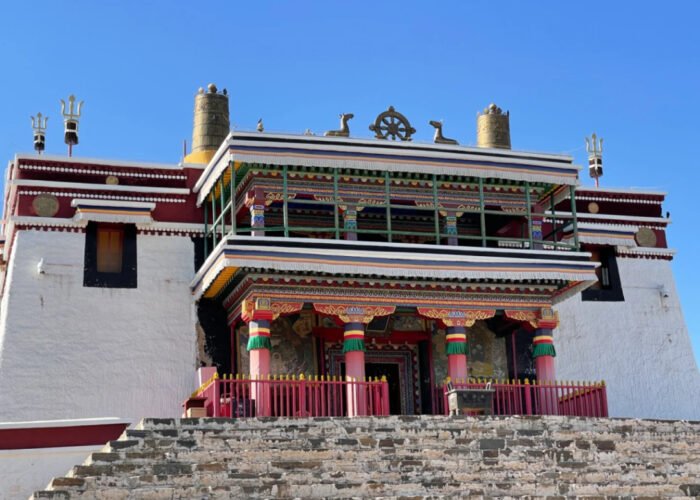
Dechen Kalsang Phodrang (བདེ་ཆེན་ཕོ་བྲང་།), widely known as Dechen Phodrang or the Panchen New Palace, is the historic summer residence of the Panchen Lamas in Shigatse. Located about 500 meters north of Tashilhunpo Monastery in Samzhubzê District, this palace represents a rare blend of religious authority, garden elegance, and modern-era architectural innovation.
Constructed in 1954 as the summer palace of the 10th Panchen Lama, Dechen Phodrang stands as one of the most representative Tibetan religious buildings of the modern period.
The Historical Evolution of Dechen Phodrang
The origins of Dechen Phodrang trace back to 1844, when the 7th Panchen Lama, Tenpai Nyima, built the original summer residence known as Gongjue Linka. This earlier palace complex included temples, scripture halls, a golden hall, and protector deity shrines.
In 1954, a severe flood destroyed Gongjue Linka. Following Premier Zhou Enlai’s directive, the central government allocated 500,000 silver dollars to construct a new summer palace. The newly built Dechen Phodrang, also called the “New Palace”, was designed to preserve traditional Tibetan religious architecture while meeting the living and working needs of the Panchen Lama in the modern era.
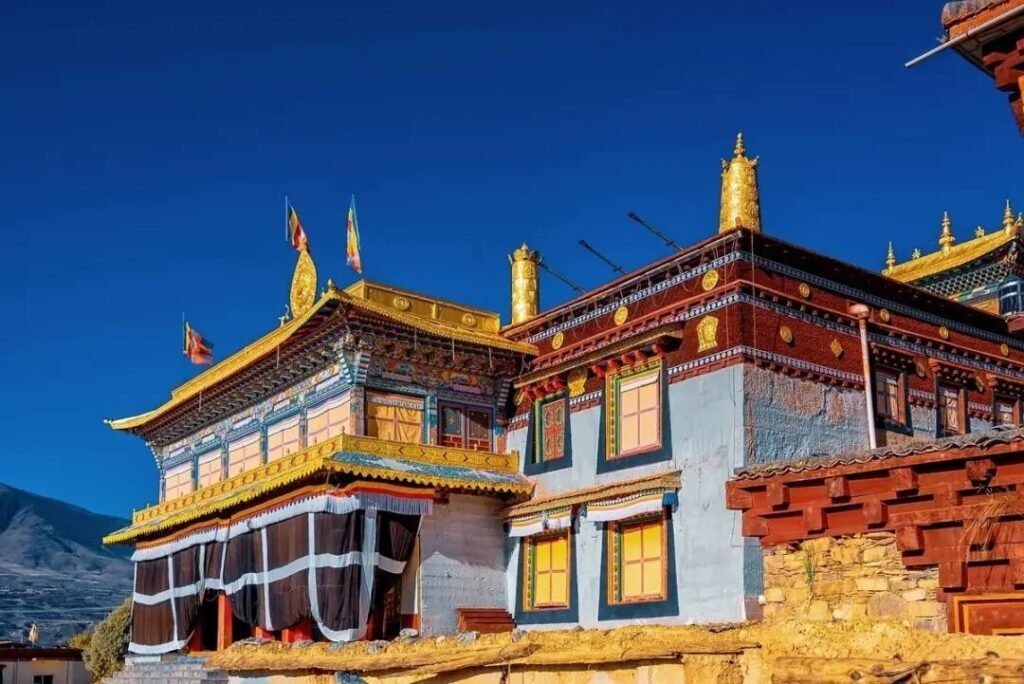
Location and Overall Layout
Dechen Phodrang is situated in the western part of Shigatse, forming a spatial and spiritual dialogue with Tashilhunpo Monastery to the south. Together, they create a complementary “Monastery–Palace” pattern, reinforcing Shigatse’s role as the religious heart of Tsang (Western Tibet).
Covering an area of more than 500,000 square meters, the palace complex is notable for its garden-style layout, an uncommon feature among Tibetan religious buildings. Tall trees, flowering plants, shaded paths, and open courtyards make it especially suitable as a summer retreat.
Three-Stage Spatial Design and Functional Zoning
Progressive Three-Gate Sequence
The architectural experience of Dechen Phodrang unfolds through a three-stage spatial progression, enhancing both ceremonial depth and visual impact:
- First Gate (Main Gate Pavilion):
A traditional Tibetan gate supported by four octagonal vermilion pillars, decorated with relief carvings of tigers, dragons, and floral motifs. The surrounding walls feature colorful murals of rolling clouds, human figures, and Buddhist stories, executed with exceptional craftsmanship. - Second Gate (Forecourt Courtyard):
Designed as a quadrangle courtyard, this space acts as a transitional buffer, offering openness, light, and a sense of calm before entering the palace core. - Third Gate (Main Palace Entrance):
Beyond this gate rises the main palace structure, marking the climax of the architectural sequence.
Courtyard and Main Palace Area
The central symmetrical courtyard enhances natural lighting and ventilation while reinforcing ritual order. It connects the entrance sequence to the main palace building, which serves as the spiritual and functional heart of the complex.
Main Palace Architecture and Interior Functions
The main building follows a three-storey Tibetan flat-roof fortress style, integrating residence, administration, and religious use. Inside are:
- Living quarters of the Panchen Lama
- Administrative offices
- Five scripture halls of varying sizes
- Over 100 Buddha statues enshrined within ceremonial halls
This multifunctional design reflects the palace’s role as a place for religious practice, governance, and daily life.
Core Elements of Traditional Tibetan Architecture
Structural Features
- Flat Roof (Aga Earth Construction):
Rammed aga soil roofing ensures durability, waterproofing, and insulation, with parapet walls and Mani-style decorative elements along the edges. - Stone–Wood Hybrid Structure:
Thick stone walls form the lower levels, while upper sections use wooden frameworks, improving stability and earthquake resistance. - Grand Scripture Halls:
Large halls feature column-grid layouts and high side windows, creating a solemn, mystical atmosphere ideal for Buddhist ceremonies.
Decorative Arts: Sculpture and Painting
- Wood Carving:
Beams, columns, doors, and corridors are richly carved with motifs such as the Eight Auspicious Symbols, sacred animals, and floral patterns. - Murals:
Notable wall paintings include “Phagpa Meeting Kublai Khan”, Mount Sumeru, and scenes of samsara and Buddhist cosmology. Mineral pigments ensure vivid colors that resist fading over time. - Gilded Roofs and Ritual Symbols:
Sections of the main hall feature gilded copper tiles, complemented by victory banners, treasure canopies, and other Tibetan ritual ornaments that heighten the sacred presence.
Multi-Cultural and Modern Architectural Innovations
Soviet-Influenced Design Elements
As a product of the 1950s, Dechen Phodrang incorporates subtle Soviet-style architectural features, such as:
- Simplified geometric layouts
- Balanced window proportions
- Clean decorative lines
These elements blend harmoniously with traditional Tibetan forms, reflecting the architectural trends of the time.
Modern Materials and Construction
- Reinforced concrete combined with stone and wood improves structural strength
- Modern glass windows and sealing techniques enhance indoor comfort
- Improved ventilation and lighting suit the working and living needs of a modern religious leader
Han–Tibetan Architectural Integration
- Vermilion pillars and simplified bracket systems draw from Han Chinese architecture
- Central-axis symmetry reflects both Chinese palace planning and Tibetan monastery traditions
Artistic and Historical Highlights
One of the most valuable murals inside the palace depicts Drogön Chögyal Phagpa meeting Kublai Khan, symbolizing the historic relationship between Tibetan Buddhism and the Yuan court. This artwork is celebrated for its historical narrative, artistic precision, and cultural symbolism.
New Palace Linka: A Garden Retreat
Located on the southeastern side of the complex, New Palace Linka is one of the four major Linkas in Shigatse. Designed for rest and contemplation, it reinforces the palace’s identity as a summer residence, offering shaded paths and tranquil garden scenery.
Dechen Phodrang in Modern Tibetan History
On January 28, 1989, the 10th Panchen Lama passed away in Dechen Phodrang. Since then, the palace has been opened to the public, becoming an important site for pilgrimage, cultural exploration, and historical remembrance.
Travel Tips for Visiting Dechen Phodrang
- Ticket Price: 30 RMB per person
- Opening Hour: 9:30 AM to 5:00 PM
How to Get There
- Taxi from Shigatse city center
- Short walk from Tashilhunpo Monastery
Visitor Notes
- Murals are extremely precious; do not touch or use flash photography
- The three-gate sequence is an architectural highlight—move slowly and observe the carvings and paintings
- The garden areas are ideal for summer walks, offering insight into the Panchen Lama’s seasonal lifestyle