Horse racing and archery festivals in Tibet are among the most exciting and culturally significant events on the Tibetan Plateau. These festivals combine religion, athletic skill, nomadic heritage, and community celebration. For centuries, they have brought together families, herders, monks, and traders in a powerful expression of Tibetan identity.
In the vibrant and spiritually rich land of Tibet, religious activities have always shaped daily life. By the 17th century, many public gatherings began to blend symbolic religious rituals with competitive sports. Horse racing and archery gradually became the highlight of major festivals, transforming them into large-scale cultural events that continue today.
Historical Origins of Horse Racing and Archery in Tibet
The tradition of horse racing and archery in Tibet dates back more than 1,500 years. During the Tubo period (7th–9th centuries), horse racing began as a form of military training and warrior competition. It was also connected to sacrificial rituals and religious ceremonies. Over time, these competitions became integrated into festivals, weddings, harvest celebrations, and community gatherings.
Some historical accounts connect Tibetan horse racing culture to the epic of King Gesar, one of the longest epic poems in the world, dating to around the 11th century. In these stories, horsemanship represents bravery, strength, and honor.
In 1408, the king of Gyantse formally designated April 10–27 for prayers and sacrifices, followed by entertainment activities on April 28. This decree marked one of the earliest structured horse racing and archery festivals in Tibet.
By the mid-17th century, religious elements became more symbolic, and competitive events such as horseback archery gained prominence. In northern Tibet’s Qiangtang pastoral region, large festivals developed during the 17th and 18th centuries, influenced by military-style assemblies. Since then, horse racing and archery festivals have remained central to Tibetan cultural life.
Horse Racing and Archery in Lhasa
Horse racing and archery spread widely across Tibet by the 15th century, reaching areas such as Lhasa, Qiangtang, and Kongpo. Among these regions, Lhasa became especially well known for its competitions.
During the time of the Fifth Dalai Lama, horse racing and archery events reached a peak. After the Great Prayer Festival, competitions continued for four days. The blend of religious ceremonies and thrilling races created a powerful and unforgettable atmosphere. These events attracted large crowds and strengthened social unity.
Major Horse Racing and Archery Festivals in Tibet
Today, several major festivals continue this tradition. Most are held during the summer months when the grasslands are green and travel conditions are favorable.
Gyantse Horse Racing and Archery Festival (Dama Festival)
Held in Gyantse, this festival is one of the oldest in Tibet, with a history of over 500 years. It usually takes place from mid-June to early July, around the 15th–18th day of the fourth Tibetan month.
The festival features horse racing, archery, wrestling, Tibetan opera, songs, and dances. It began as a memorial athletic event and developed into a major cultural celebration in southern Tibet.
Nagqu Horse Racing Festival
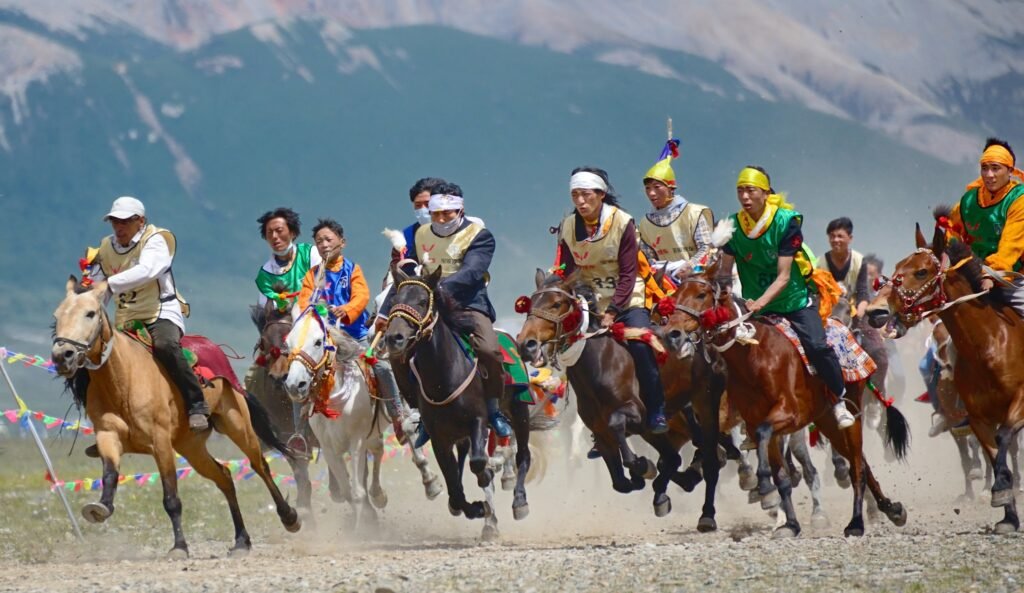
The Nagqu Horse Racing Festival, held in Nagqu, is considered the largest horse racing festival in northern Tibet. It takes place in early August and attracts thousands of participants and spectators.
Nomadic families gather on the vast grasslands, setting up tents and forming temporary communities. The festival includes high-speed horse races, archery contests, yak racing, and cultural performances. It is a vivid display of nomadic heritage and traditional skills.
Damxung Horse Racing Festival
Near Lhasa, Damxung hosts its famous horse racing festival in late July to early August. One of the best-known events here is “Dangmujiryang,” held on the Damxung Plain. The celebration lasts five to seven days.
The festival begins with a religious ceremony and horse blessing ritual, followed by horse examinations. The main attractions are speed races, equestrian stunts, and archery competitions. Riders perform impressive skills such as picking up scarves from the ground while galloping at full speed.
Shangri-La Horse Racing Festival
In Tibetan areas of Yunnan, Shangri-La hosts its own horse racing festival, usually in May or June. Traditional equestrian skills, including picking up hada scarves and performing horsemanship displays, highlight the event. The festival showcases Tibetan minority culture in this region.
Ongkor Festival
The Ongkor Festival is celebrated in rural farming areas near Lhasa during July and August. It is a three-day harvest festival that includes horse racing, archery, and wrestling competitions. The event expresses gratitude to deities for a successful agricultural season.
Main Events and Competition Highlights
Tibetan horse racing and archery festivals include a range of traditional competitions designed to test speed, precision, and endurance.
Horse Racing
Horse racing events vary from short sprints to long-distance endurance races. Some competitions involve single riders, while others include relay-style formats. Riders wear colorful traditional clothing, and horses are decorated with prayer flags and ornaments.
Archery on Horseback
Archery competitions often take place while riders gallop at full speed. Using traditional recurve bows, archers aim at fixed targets. Accuracy and timing are essential. This discipline reflects Tibet’s historical warrior culture.
Equestrian Stunts
Equestrian stunts are among the most exciting parts of the festival. Riders pick up scarves or objects from the ground without slowing down. Some demonstrate balance skills and acrobatics on horseback.
Yak Racing and Traditional Sports
Yak racing adds a unique and entertaining element to the festival. Other activities may include wrestling, rock lifting, and traditional singing competitions.
Winners receive prizes such as livestock, silk scarves, or cash. These rewards symbolize honor and social recognition within the community.
Cultural and Social Significance of Tibetan Horse Racing Festivals
Horse racing and archery festivals serve important cultural and social functions in Tibet. Historically, they honored local deities, celebrated harvests, and recognized brave warriors. Over time, they also became major social gatherings.
Families travel long distances to attend these festivals. Temporary tent settlements appear across the grasslands, creating lively cultural centers filled with trade, food, music, and conversation. These gatherings strengthen community bonds in Tibet’s vast and remote landscapes.
The festivals are also known as traditional matchmaking opportunities. Many couples have first met during these events, making them important milestones in personal and family life.
Today, horse racing and archery festivals continue to preserve Tibetan nomadic traditions and equestrian skills. They reflect a strong connection between people, horses, land, and faith. Through these dynamic celebrations, the spirit of the Tibetan Plateau remains alive and visible in every race, every arrow, and every gathering on the open grasslands.