

Kurukulla in Tibetan Buddhism: An Introduction to a Powerful Female Deity
In Tibetan Vajrayana Buddhism, Kurukulla is a highly revered female tantric deity associated with wisdom, action, magnetizing power, and spiritual transformation. Known as the Goddess of Wisdom and Action, Kurukulla represents the dynamic union of insightful awareness (Prajna) and skillful activity (Karma)—two essential forces on the Buddhist path to enlightenment.
In Tibetan, she is called Lhamo Rigjema (ལྷ་མོ་རིག་བྱེད་མ་), a name that highlights her role as a divine embodiment of awakened intelligence and transformative action. Kurukulla is especially important within Tibetan tantric traditions, where she is practiced for spiritual empowerment, protection, and mastery over inner and outer obstacles.
Kurukulla’s Central Role in the Sakya Tradition
Kurukulla holds a unique and elevated position in the Sakya school of Tibetan Buddhism, one of the four major traditions of Tibet. She is revered as part of the “Red Trinity”, a group of three powerful red deities associated with magnetizing activities and tantric accomplishment.
More significantly, Kurukulla is one of the Thirteen Golden Dharmas of Sakya, a sacred and exclusive collection of advanced tantric teachings transmitted through the Sakya lineage. These teachings form the core spiritual heritage of the Sakya school and are practiced to attain both worldly accomplishments and ultimate liberation.
Because of this association, Kurukulla is not merely a symbolic figure but a central meditational deity whose practices are deeply rooted in lineage transmission, ritual discipline, and yogic realization.
The Meaning of Kurukulla: Wisdom United with Action
The name “Kurukulla” is often interpreted as symbolizing the inseparable unity of wisdom (Prajna) and action (Upaya or Karma). In Mahayana and Vajrayana Buddhism, wisdom alone is incomplete without compassionate action, and action without wisdom can lead to confusion.
- Prajna (Wisdom): Insight into the true nature of reality, emptiness, and impermanence
- Action (Karma / Paramitas): The active expression of wisdom through generosity, ethical conduct, patience, joyful effort, and meditation
Kurukulla embodies this perfect balance, reminding practitioners that enlightenment is achieved not only through understanding but through engaged, enlightened activity in the world.
Kurukulla as a Wisdom Deity in Vajrayana Practice
As a wisdom deity, Kurukulla transcends conventional feminine archetypes. She is believed to possess the extraordinary ability to magnetize, influence, and tame the minds of sentient beings, not for worldly control, but to guide them toward spiritual awakening.
Traditional texts and oral teachings describe her practice as beneficial for:
- Removing obstacles and interferences
- Protecting against diseases, accidents, and natural disasters
- Overcoming inner afflictions such as attachment and confusion
- Gaining spiritual charisma and clarity
Her magnetizing power is often misunderstood as worldly attraction; in its highest form, it refers to the power of awakened compassion and wisdom to draw beings toward Dharma.
Kurukulla in Tibetan Cultural Beliefs: Wangyi Lhamo, the Powerful Mother
In Tibetan cultural and spiritual traditions, Kurukulla is also known as “Wangyi Lhamo”, meaning “The Powerful Mother”. This title reflects her role as a formidable protector and subjugator of harmful forces, both visible and invisible.
She is believed to:
- Subdue negative spirits and obstructing energies
- Guard practitioners against psychological and spiritual harm
- Establish control over chaotic influences in the environment
This protective aspect makes Kurukulla especially revered in regions where ritual practice, spirit beliefs, and tantric protection are deeply interwoven with daily life.
Kurukulla’s Iconography in Tibetan Thangka Art
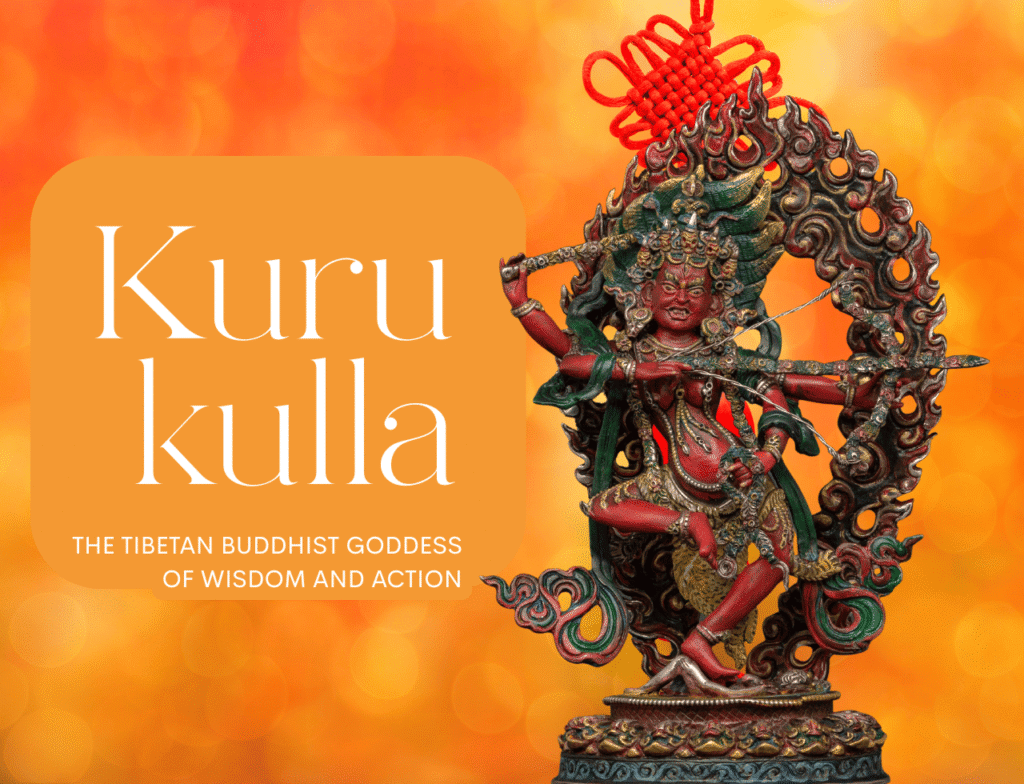
Kurukulla is vividly portrayed in Tibetan Thangka paintings, where her iconography conveys deep symbolic meaning and tantric instruction. She is commonly depicted in a dynamic dancing posture, expressing active engagement with the world.
Key visual elements include:
- Red body color, symbolizing magnetizing power and enlightened activity
- One face and four arms, representing unified awareness and multi-dimensional action
- Crown of five skulls, symbolizing the transformation of the five afflictions into five wisdoms
- Flowing red and yellow hair, indicating her fiery energy and spiritual vitality
Her wrathful yet passionate expression is not anger, but the intensity of unyielding compassion and commitment to liberation.
Symbolism of Kurukulla’s Sacred Attributes
Bow and Arrow: Focused Meditation and Piercing Wisdom
In one pair of hands, Kurukulla holds a bow and arrow made of Utpala flowers. These are not weapons of violence, but instruments of enlightened intent.
- The bow represents meditative concentration and focused intention
- The arrow symbolizes penetrating wisdom that cuts through ignorance and illusion
Together, they signify the practitioner’s readiness to apply wisdom precisely and effectively.
Iron Hook and Noose: Mastery Over Mind and Energies
In her other hands, Kurukulla holds an iron hook and a noose, both rich in tantric symbolism.
- Iron hook: Draws back wandering thoughts and distracted energies
- Noose: Gathers scattered awareness and awakens latent wisdom
These implements illustrate Kurukulla’s ability to capture negative forces and transform them into enlightened awareness, guiding practitioners toward mastery of mind and spirit.
Kurukulla as the Living Union of Wisdom and Action
Kurukulla’s richly layered symbolism, dynamic iconography, and profound tantric role make her one of the most compelling female deities in Tibetan Buddhism. Through her imagery, rituals, and teachings, she continuously reveals the inseparable nature of wisdom and compassionate action, guiding practitioners on the Vajrayana path toward realization and protection.