Lhasa, the administrative center of the Tibet Autonomous Region, lies in the southern central part of the plateau, along the northern bank of the Lhasa River. Known as one of the highest cities in the world, Lhasa stands at an altitude of 3,650 meters and covers an urban area of about 50 square kilometers.
The name “Lhasa” comes from the Tibetan language and means “Holy Place of the Gods.” In earlier times, it was also called “Rasa,” meaning “Place of Goats,” reflecting a local legend about the transportation of construction materials.
The Lhasa River: Lifeline of the City
Flowing gently through the region, the Lhasa River is considered the mother river of Lhasa. It is a tributary of the Yarlung Tsangpo River and is known in Tibetan as “Kyi Chu,” meaning “Happy River.”
Originating from the Nyenchen Tanglha Mountains, the river stretches for 568 kilometers, passing through regions such as Nakchu, Lhundrup, Maizhokunggar, and Chushul before merging into the Yarlung Tsangpo.
Along its banks, daily life unfolds in a traditional rhythm. Tibetan women can often be seen washing clothes and carpets in the river, singing folk songs and chatting as they work, creating a vivid picture of local culture.
Geography and Climate of Lhasa
Lhasa is surrounded by diverse regions:
- East and southeast: Nyingchi and Lhoka
- West and north: Nakchu
- Southwest: Shigatse
The greater Lhasa area covers approximately 29,518 square kilometers.
The climate is relatively mild for such a high altitude. The average annual temperature is around 7.5°C. January sees an average of 2.3°C, while July reaches about 15.4°C, making summers cool and winters cold but manageable.
Population and Ethnic Diversity
Lhasa is home to around 500,000 people from more than 30 ethnic groups. Tibetans make up about 80% of the population, while other groups include Han Chinese and Hui communities.
This diversity contributes to the city’s unique cultural atmosphere, where different traditions and lifestyles coexist.
Agriculture and Natural Resources
Lhasa plays an important role in Tibet’s agriculture. The region produces a variety of crops, including:
- Highland barley
- Wheat
- Corn
- Beans
Vegetables such as potatoes, cabbage, tomatoes, cucumbers, and eggplants are also grown. Fruit cultivation includes apples, peaches, pears, and walnuts.
Forests in the region contain trees like poplar, willow, birch, and cypress.
Animal husbandry is equally important. Local people raise yaks, cattle, sheep, goats, and hybrids like the “zo.”
The region is also rich in medicinal herbs, including the highly valued caterpillar fungus, known for its effectiveness and high price.
Wildlife in the area includes wild yaks, Tibetan antelopes, Mongolian gazelles, snow leopards, and various bird species such as swans and Tibetan snowcocks.
Traditional Crafts and Cultural Products
Lhasa is known for its traditional handicrafts, which reflect Tibetan culture and daily life. These include:
- Carpets
- Wooden bowls
- Swords
- Jewelry made of gold and silver
One particularly meaningful item is the “Banden,” an apron worn by married Tibetan women. While wedding rings symbolize marriage in many parts of the world, in Tibet, the Banden serves as a visible sign of marital status.
Famous Attractions in Lhasa
Lhasa is home to many of Tibet’s most important cultural and religious landmarks, including:
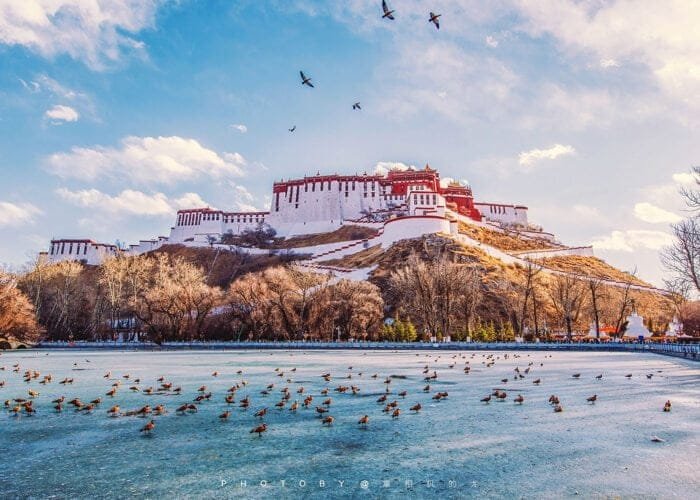
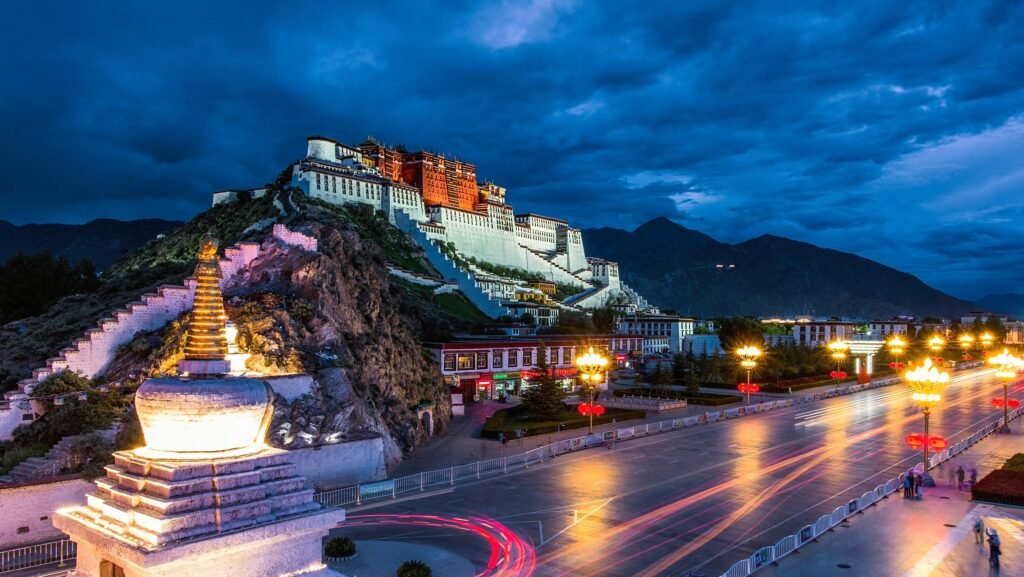
- Potala Palace
- Jokhang Temple
- Ramoche Temple
- Norbulingka
- Drepung Monastery
- Sera Monastery
Other sites include Zongyab Lhukhang (Dragon King Pool), Potala Square, and the Tibet Museum.
The Potala Palace is listed as a UNESCO World Heritage Site, along with Jokhang Temple and Norbulingka, highlighting their global cultural importance.
The Legend Behind Lhasa’s Name
According to legend, goats were used to transport stones for building the Jokhang Temple. This story gave rise to the name “Rasa,” or “Place of Goats,” which later evolved into Lhasa.
A 1,400-Year History
Lhasa has a history of over 1,400 years. In 633 AD, Songtsen Gampo moved the capital from Yarlung to Lhasa. He established key structures such as the Potala Palace, Jokhang Temple, and Ramoche Temple, transforming Lhasa into a major political and cultural center.
After the fall of the Tibetan Kingdom in the 9th century, development slowed. However, religious activities around Jokhang Temple gradually revived the city.
Between the 14th and 17th centuries, major monasteries of the Gelug school were established, including:
- Ganden Monastery
- Sera Monastery
- Drepung Monastery
With the rise of the Gelug school and recognition of the Dalai Lama’s reincarnation system, Lhasa regained its status as Tibet’s central city. Religious and political institutions flourished, and major landmarks were restored.
Modern Development and Urban Growth
From the 17th to the early 20th century, Lhasa saw steady growth. Residential buildings, monasteries, shops, and streets expanded as the population increased.
In the mid-20th century, major political changes reshaped the city. By 1960, Lhasa was officially recognized as a city, and in 1965, it became the capital of the Tibet Autonomous Region.
Over the past decades, infrastructure has developed rapidly. Improvements include:
- Electricity networks
- Water supply systems
- Drainage systems
Modern residential buildings now stand alongside traditional Tibetan-style architecture. Public services such as education, healthcare, and cultural facilities have also expanded.
Transportation and Communication
Lhasa has experienced fast growth in transportation and telecommunications. Improved connectivity has made the city more accessible while supporting economic and social development.
Cultural Heritage and Preservation
Lhasa is recognized as one of China’s first 24 historical and cultural cities. Major landmarks such as the Potala Palace, Jokhang Temple, Norbulingka, Drepung Monastery, Sera Monastery, and Ganden Monastery are protected as important cultural heritage sites.
These sites represent the spiritual and historical identity of Tibet and continue to attract visitors from around the world.
Urban Living in Lhasa Today
Modern Lhasa presents a blend of tradition and development. In the city center, many residential buildings are around five stories high, with apartments typically ranging from 70 to 80 square meters.
Families usually consist of three to four members living together. The average cost of purchasing an apartment in Lhasa is about 10,000 yuan per square meter, reflecting the city’s growing urban economy.