Lhasa, Gyantse, and Shigatse form the cultural Golden Triangle of Back Tibet. This classic travel route connects the most important history, religious art, and dramatic natural landscapes of Tibet. Along this journey, travelers can explore ancient Tibetan civilization while experiencing the power of snow mountains and glaciers.
Lhasa: The Sacred City and Heart of Tibetan Civilization
Historical Background
Lhasa was the center of the Tubo Kingdom. In the 7th century, Songtsen Gampo unified Tibet and established his capital here, laying the foundation of Tibetan history.
With the arrival of Princess Wencheng, the Jokhang Temple was built, and Barkhor Street gradually formed around it. This area became an important pilgrimage route for Tibetan Buddhists.
During the Yuan, Ming, and Qing dynasties, Lhasa developed into Tibet’s political and religious center. The Potala Palace became the Winter Palace of successive Dalai Lamas and a symbol of spiritual and political authority.
Cultural Treasures
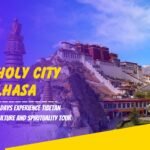
The Potala Palace is the highest ancient palace complex in the world. It combines palace, fortress, and monastery architecture. Inside, visitors can see sacred statues, murals, and stupas that represent the essence of Tibetan art.
The Jokhang Temple is the ultimate sacred site for Tibetan Buddhists. It houses the 12-year-old statue of Shakyamuni brought by Princess Wencheng and is respected by all major schools of Tibetan Buddhism.
Barkhor Street surrounds the Jokhang Temple. It is both an ancient pilgrimage path and a lively cultural street. Traditional shops, prayer wheels, and local life create a vivid picture of Tibetan culture.
Tibetan opera, thangka painting, incense making, Tibetan medicine, butter tea, and tsampa are also important cultural symbols of Lhasa.
Natural Beauty
The Lhasa River Valley, nourished by a tributary of the Yarlung Tsangpo River, offers open plains under clear blue skies. Snow mountains frame the horizon, giving Lhasa its nickname, the “City of Sunshine.”
About 220 kilometers from Lhasa lies Namtso Lake, one of Tibet’s three sacred lakes. Its deep blue waters reflect the nearby Nyainqentanglha Mountains, creating a pure and majestic landscape.
Gyantse: The Heroic Ancient Town of Back Tibet
Historical Significance
Gyantse has been an important military stronghold since the Tubo period. In the 14th century, the Dzong Fortress was built, making the town a key administrative and trade center in Back Tibet.
In 1904, local residents bravely resisted British forces at the fortress. This event earned Gyantse the name “Hero City.”
Located at a crossroads between Central Tibet, Back Tibet, and the Kham region, Gyantse became a meeting point for different schools of Tibetan Buddhism.
Cultural Highlights
Gyantse Dzong stands on a cliff above the Nyangchu River. It is one of the best-preserved fortress ruins in Tibet and still shows traces of its defensive history.
Pelkhor Chode Monastery was founded in 1418 and is unique because it integrates three major Tibetan Buddhist schools in one complex.
Its most famous structure is the Kumbum Stupa, also known as the Ten-Thousand Buddha Pagoda. Inside are thousands of statues and murals, representing a peak of Tibetan architecture and art.
Pala Manor is the only fully preserved noble estate among the former eight aristocratic manors of old Tibet. It offers insight into traditional Tibetan society.
Natural Landscapes
Nyenchen Khangsar Mountain rises to 7,191 meters and is one of the four major snow mountains in central Tibet.
Karola Glacier is part of this mountain system. Its massive ice formations and glacier tongue create a dramatic high-altitude scene.
The fertile Nyangchu River Valley surrounds Gyantse with farmland, snow peaks, and historic architecture.
Shigatse: Capital of Back Tibet
Historical Role
Shigatse means “the most fertile estate” in Tibetan. In the 14th century, it became the political and religious center of Back Tibet under the Phagmodrupa Dynasty.
Tashilhunpo Monastery serves as the seat of successive Panchen Lamas. This established Shigatse as a major religious center alongside Lhasa.
Today, Shigatse is the second-largest city in Tibet and an important gateway connecting Tibet with Nepal and India.
Cultural Heritage
Tashilhunpo Monastery is one of the six great monasteries of the Gelug school. It houses the world’s largest bronze statue of Maitreya Buddha and preserves many sacred relics.
Sakya Monastery is known as the “Second Dunhuang” because of its vast collection of murals and scriptures.
Shigatse is also the birthplace of Tibetan opera master Thangtong Gyalpo. It remains a core area for Tibetan opera traditions and other intangible cultural heritage such as carpet weaving, knife making, thangka painting, and highland barley wine brewing.
Natural Wonders
Mount Everest, at 8,848.86 meters, is located in Tingri County of Shigatse. The Everest region also includes several other peaks above 8,000 meters.
Yamdrok Lake lies along the route from Lhasa to Shigatse. Its bright blue water is often described as a turquoise jewel on the plateau.
The upper reaches of the Yarlung Tsangpo River flow through wide valleys in Shigatse, where snow mountains, grasslands, and villages create striking highland scenery.
Travel Information
Best Travel Time: April to May and September to October offer stable weather and clear views, ideal for sightseeing and cultural exploration.
Suggested Route: Lhasa → Yamdrok Lake → Gyantse (Dzong Fortress, Pelkhor Monastery, Karola Glacier) → Shigatse (Tashilhunpo Monastery) → Everest Base Camp (optional) → Return to Lhasa.
Required Permits: Valid ID and border pass are required for Gyantse, Shigatse, and the Everest region.
Cultural Etiquette: Remove hats when entering monasteries. Keep quiet and avoid touching religious statues or ritual objects. Respect local customs and pilgrimage traditions.