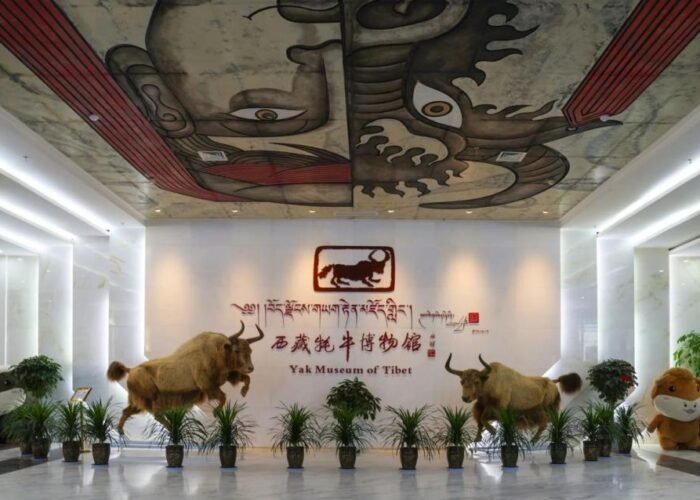
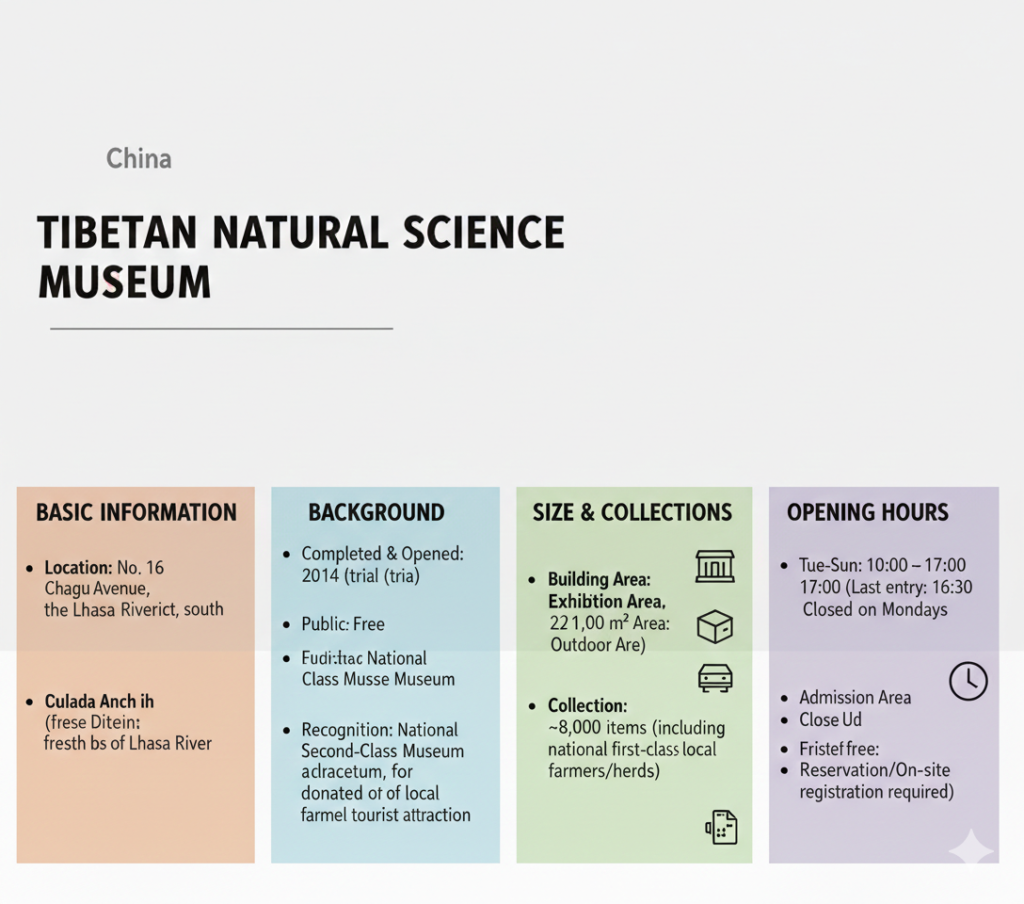
The Tibetan Yak Museum is a unique cultural attraction in Lhasa, dedicated entirely to the yak and its deep connection with Tibetan life. Located in the Liuwu New District on the southern bank of the Lhasa River, the museum sits east of Lhasa Railway Station and forms part of the Lhasa Mass Culture and Sports Center.
Covering a construction area of 8,088 square meters and an outdoor exhibition space of more than 10,000 square meters, the museum houses thousands of artifacts related to yak history and culture. It is widely recognized as the only museum in China with a dedicated focus on yak heritage.
Opening and Visitor Information
The Tibetan Yak Museum officially opened to the public on November 15, 2014, following a ribbon-cutting ceremony held on World Museum Day, May 18, 2014. Since its opening, the museum has offered free admission to visitors.
In May 2015, it was awarded a national 4A-level tourist attraction rating, recognizing its cultural value and visitor experience.
The Meaning Behind the “Yak Spirit”
At the heart of the museum is the concept of the “yak spirit,” symbolizing honesty, loyalty, compassion, resilience, courage, and vitality. These qualities reflect not only the animal itself but also the character and lifestyle of the Tibetan people who have relied on yaks for centuries.
The yak has long been essential to life on the Tibetan Plateau. It provides milk, butter, meat, wool, transport, and fuel. In harsh high-altitude conditions, the yak represents survival and endurance. The museum uses this theme to illustrate the interdependence between humans and nature in Tibetan society.
Main Exhibition Areas and Highlights
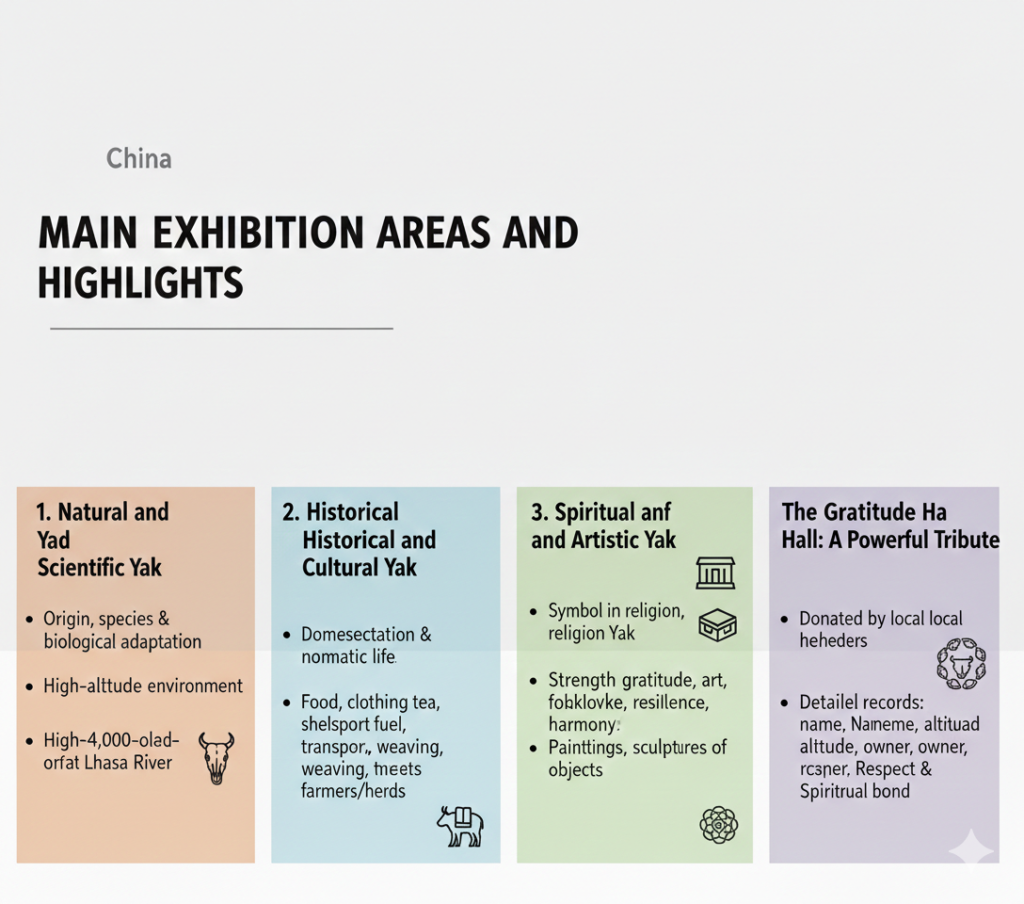
The museum is divided into three core thematic sections, each presenting a different dimension of yak culture.
1. Natural and Scientific Yak
This section explores the origin, species characteristics, and biological adaptation of the yak to high-altitude environments. A major highlight is the fossil display, including a 45,000-year-old wild yak skull, which offers rare evidence of the animal’s ancient lineage on the Tibetan Plateau.
Visitors can learn about the evolution of wild and domesticated yaks and how they became essential to survival in extreme climates.
2. Historical and Cultural Yak
This area focuses on the domestication of the yak and its role in shaping Tibetan nomadic life. Exhibits show how yaks provide food, clothing, shelter materials, transportation, and fuel.
From yak caravans to butter tea, from wool weaving to traditional black tents, the displays illustrate how yak culture forms the backbone of pastoral civilization in Tibet.
3. Spiritual and Artistic Yak
The yak is not only an economic resource but also a spiritual symbol. This section presents the yak’s presence in Tibetan religion, painting, sculpture, and folklore.
Through art and ritual objects, visitors can see how the yak represents strength, gratitude, resilience, and harmony between humans and nature.
The Gratitude Hall: A Powerful Tribute
One of the museum’s most moving spaces is the “Gratitude Yak Hall.”
A circular display presents 158 yak skulls donated by local herders. Each skull is accompanied by detailed records, including the yak’s name, altitude of residence, owner, and contributions during its lifetime.
This exhibit reflects the deep respect pastoral families hold for their animals. It also highlights the emotional and spiritual bond between humans and yaks on the plateau.
Rare Golden Wild Yak Specimen
At the center of the main hall stands an impressive specimen of a rare golden wild yak subspecies. This striking display is one of the museum’s most photographed highlights and showcases the unique biodiversity of the Tibetan Plateau.
A Cultural Landmark in Lhasa
Located in Lhasa, the museum serves as both a cultural preservation center and an educational institution. Its core functions include collecting, conserving, researching, and exhibiting yak-related artifacts.
Beyond exhibitions, the museum aims to promote public understanding of yak culture and its influence on Tibetan civilization. It provides insight into how the relationship between humans and yaks shaped economic systems, cultural identity, and environmental adaptation on the plateau.
Why Visit the Tibetan Yak Museum?
For travelers exploring Lhasa, the Tibetan Yak Museum offers a focused and informative experience that complements visits to religious landmarks and historical sites. It provides context for understanding rural Tibetan life and the ecological realities of the plateau.
As a specialized museum dedicated entirely to yak heritage, it stands out as a distinctive cultural attraction in Tibet, highlighting a symbol that continues to define life at high altitude.
Interactive Cultural Experiences
The Tibetan Yak Museum is not only about viewing exhibits. It also offers hands-on cultural activities, including:
- Butter tea tasting inside a traditional black tent
- Yak wool weaving demonstrations
- Grinding roasted barley (tsampa)
- Educational programs such as “Young Museum Guide” and nomadic culture study tours
These interactive sessions provide a deeper understanding of daily life in pastoral communities.
Transportation and Visiting Tips
Public Transport:
Take a city bus to Liuwu New District and walk or take a short taxi ride to No. 16 Chagu Avenue.
Self-Driving:
Parking facilities are available within the district.
Guided Tours:
Free multilingual guided services are available. Advance reservation is recommended.
Visitor Etiquette:
- Do not touch specimens
- Avoid loud noise
- Follow photography regulations
- Respect Tibetan cultural customs
Cultural Significance
Often called the “Boat of the Plateau,” the yak has sustained life in Tibet for centuries. The museum centers around the idea of “Yak Spirit,” symbolizing honesty, loyalty, endurance, compassion, and courage.
By using the yak as its narrative thread, the Tibetan Yak Museum connects thousands of years of nomadic civilization, daily production, religious belief, and artistic expression. It serves as an important platform for preserving and sharing Tibetan culture with visitors from around the world.