

Discover the Linze Macaques: Wildlife Wonders of Nyingchi, Tibet
Hidden in the peaceful landscapes of Linze Village in Gongbo’gyamda County, Nyingchi, lives one of Tibet’s most fascinating wildlife communities — the Linze macaques. First discovered in 2003, this remarkable group now numbers over 500 individuals, making them one of the largest macaque populations in the region.
Surrounded by dramatic cliffs, river valleys, and dense forests, these macaques thrive in one of the most beautiful and biodiverse areas of the Tibetan Plateau. For travelers exploring eastern Tibet, visiting Linze offers a rare chance to witness wildlife in its natural habitat.
Located in Nyingchi (also known as Linzhi), this area is home to a thriving population of Tibetan macaques (Macaca thibetana), a large and robust monkey species native to China’s mountainous regions.
Classified as a national second-class protected animal in China, the Tibetan macaque has become a symbol of successful wildlife conservation in southeastern Tibet.
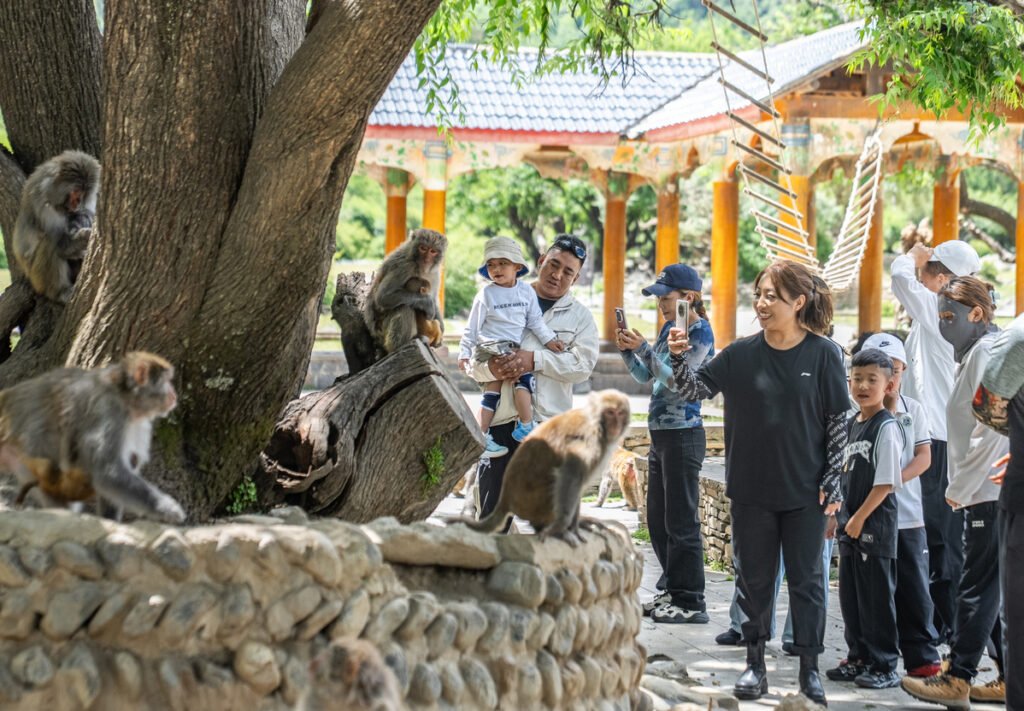
Where Are the Linze Macaques Found?
Linze Village lies within Gongbo’gyamda County, part of the lush forested region of Nyingchi in southeastern Tibet. Unlike the arid highlands many associate with Tibet, this area features river valleys, thick woodlands, and steep mountain terrain.
The macaques prefer:
- Rocky cliffs overlooking streams
- Forested valleys near rivers
- Mixed dense and sparse woodland
They are most commonly seen descending from the mountains between 2:00 PM and 3:00 PM, when they forage for food. This predictable behavior makes afternoon visits the best time for wildlife observation.
A Highly Social and Intelligent Species
Macaques are known for their complex social systems. The Linze macaques typically live in groups of 30 to 50 individuals, although some communities can grow to nearly 200 members.
Within each group, there is a clear hierarchy, cooperative grooming behavior, and strong family bonds. Watching their interactions offers a fascinating glimpse into primate social dynamics — communication through calls, facial expressions, and body language plays a vital role in maintaining group harmony.
Their playful nature, frequent vocalizations, and coordinated movement across cliffs and forest floors make them especially engaging for visitors and wildlife photographers.
Tibetan Macaques (Macaca thibetana): A Unique Mountain Species
The Tibetan macaque is one of the largest macaque species in Asia. Known for their strong build and thick fur, they are well adapted to cold mountain climates.
Distinctive Features:
- Thick grey-brown fur with an orange sheen on the lower back
- Deep red coloration on the chest, belly, and legs
- Short tail compared to other macaque species
- Bare face and ears, turning red as they mature
Their dense coat helps them survive cooler temperatures, while their social intelligence allows them to thrive in large, organized groups.
A Thriving Population: From Discovery to Conservation Success
The Linze macaques were first notably documented in this location around 2003. Since then, conservation and local protection efforts have helped the population grow significantly.
Recent reports suggest that the number of macaques in the Linze area now exceeds 7,000 individuals, making it one of the largest known populations of Tibetan macaques in China.
This remarkable growth reflects:
- Strong local conservation policies
- Community awareness
- Ongoing ecological protection efforts
Today, Linze has become an important site for eco-tourism and wildlife research in southeastern Tibet.
Macaques in Tibetan Folklore and Cultural History
The macaque holds a special place in Tibetan culture. According to traditional stories, macaques are believed to be ancestors of the Tibetan people. Folklore tells of macaques transforming into humans — a legend depicted in ancient texts and murals inside the iconic Potala Palace and Norbulingka in Lhasa.
Archaeological discoveries further enrich these narratives. Findings in areas such as Nyingchi, Metok, Dingri, and the Karuo Site suggest early human activity across the Tibetan Plateau dating back thousands of years. These discoveries intertwine mythology and science, deepening the cultural significance of macaques in Tibet.
Interesting Facts About the Linze Macaques
1. Language and Scientific Classification
In Tibetan, macaques are called “Zhewu.” Scientifically, they are known as rhesus macaques. In China, they are listed as a national second-class protected animal, highlighting their ecological importance and the need for conservation.
2. Physical Characteristics
Adult Linze macaques are striking in appearance:
- Grey-brown fur
- A distinctive orange sheen on their lower backs
- Deep red coloration on the chest, belly, and legs
- Bare faces and ears
Young macaques have lighter facial coloring, which gradually turns flesh-colored or red as they mature. Their expressive faces make them especially captivating to observe.
3. Diet and Daily Life
These macaques primarily feed on:
- Wild vegetables
- Forest plants
- Seasonal fruits
- Natural vegetation found along riversides
They are energetic, vocal, and curious animals. Their daily descent from higher cliffs to forage is one of the most anticipated wildlife moments in Linze.
Macaques in Tibetan Medicine
In traditional Tibetan medicine, macaques are believed to possess therapeutic properties. Historical medical texts mention various uses:
- Bones are traditionally used to induce labor and detoxify the body
- Gallbladder preparations are believed to treat food and drug poisoning
- Brain extracts are described as remedies for headaches, memory issues, and nervous exhaustion
- Fur has been used in medicinal incense for epilepsy
Today, wildlife protection laws strictly regulate animal use, and conservation awareness continues to grow across Tibet.
Visiting Linze Village: A Unique Wildlife Experience
For travelers seeking authentic Tibet wildlife experiences, Linze Village offers something rare — observing macaques in their natural mountain habitat.
When visiting:
- Keep a safe distance
- Avoid feeding the animals
- Remain quiet and respectful
- Follow local conservation guidelines
Responsible tourism helps protect both visitors and wildlife while preserving this unique ecosystem for future generations.
Why the Linze Macaques Matter
The Linze macaques represent more than a wildlife attraction. They symbolize:
- The rich biodiversity of southeastern Tibet
- The deep connection between Tibetan culture and nature
- The ecological value of Gongbo’gyamda County
- The harmony between folklore, history, and living wildlife
Their presence enhances the natural beauty of Nyingchi and offers travelers a powerful reminder of Tibet’s diverse landscapes beyond snow-capped peaks and monasteries.
Exploring Linze is not just about seeing macaques — it is about stepping into a living story where nature, culture, and history meet in one of Tibet’s most enchanting regions.