

Mongje Trikar was a prominent royal woman of the 7th-century Tibetan Empire. She was a princess of the Tuyuhun kingdom, the wife of Tibetan crown prince Gungsong Gungtsen, and the mother of Emperor Mangsong Mangtsen (r. 650–676 CE), the 34th ruler of imperial Tibet.
Although historical records about her life are limited, her identity connects two major powers of the Qinghai–Tibet Plateau—Tibet and Tuyuhun—at a decisive moment in early Tibetan imperial history.
Name, Identity, and Royal Status
Understanding Her Name
Her most widely used modern transliteration is Mongje Trikar (Tibetan: མོང་རྗེ་ཁྲི་དཀར།).
- “Mongje” refers to her personal name.
- “Trikar” (also rendered as Triga or Chiga in earlier transliterations) was an honorific title used for noble or royal women in Tibet, similar to “Lady” or “Consort.”
She was born into the royal family of Tuyuhun, known in Tibetan sources as “Azha.” The Tuyuhun kingdom was a culturally diverse state in the Qinghai region, shaped by Xianbei, Han Chinese, Qiang, and steppe traditions.
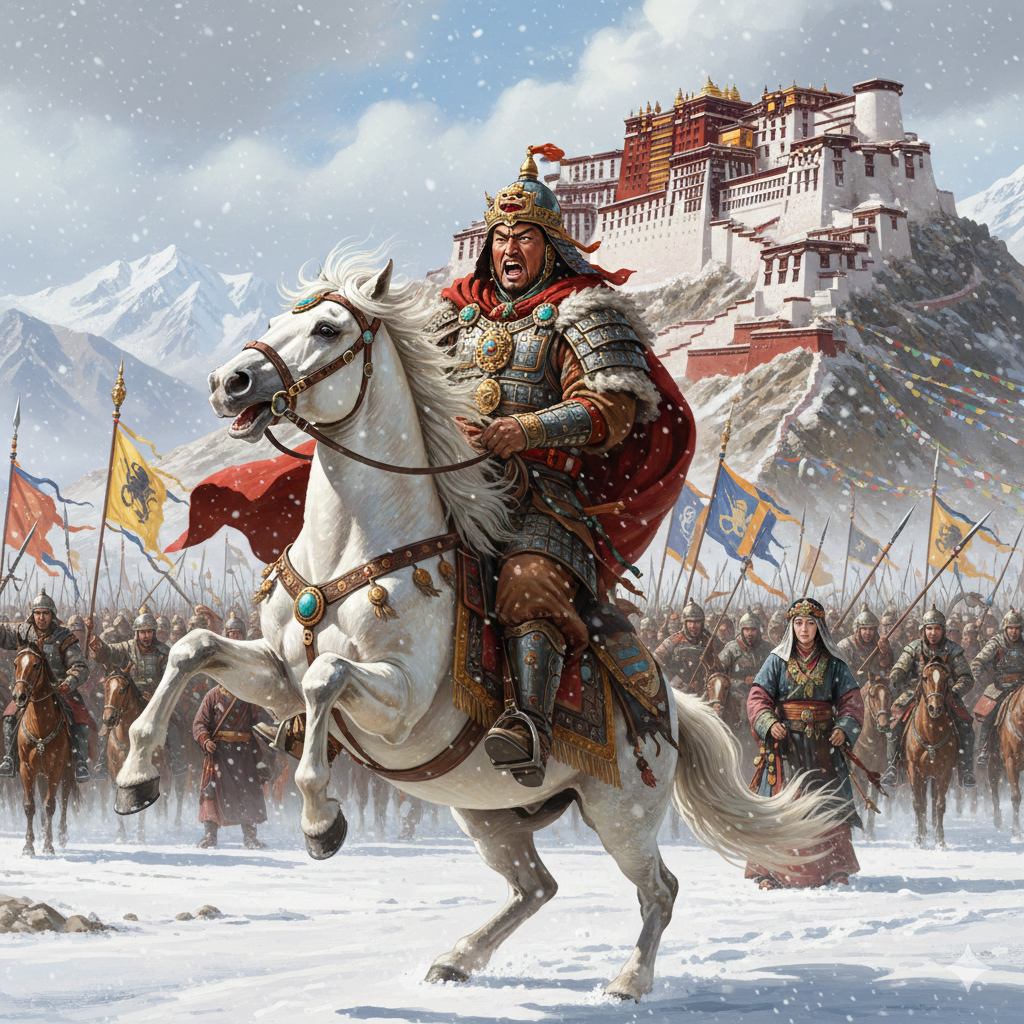
Marriage and Royal Family Connections
Mongje Trikar married Gungsong Gungtsen, the son of the great Tibetan ruler Songtsen Gampo. Gungsong Gungtsen died at a young age and never formally ruled as emperor.
Their son, Mangsong Mangtsen, later ascended the throne while still a child. Through him, Mongje Trikar became the mother of a reigning Tibetan emperor—an exceptionally prestigious and influential position within the royal court.
Historical Background: Tibet and Tuyuhun in the 7th Century
Mongje Trikar lived during the height of Tibetan imperial expansion. In the mid-7th century, the Tibetan Empire was rapidly increasing its military strength and political influence across Central Asia.
Political Marriage as Diplomacy
Her marriage represented a strategic alliance between Tibet and Tuyuhun. In the early 7th century, political marriages were a common diplomatic tool used to stabilize relations between neighboring states on the plateau.
However, the relationship between the two powers later changed. In 663 CE, Tibetan forces conquered Tuyuhun, transforming the former alliance into direct political control. Mongje Trikar’s presence in the Tibetan court reflects this transitional phase—when diplomacy gradually gave way to imperial expansion.
The Mother of an Emperor
When Mangsong Mangtsen ascended the throne in 650 CE, he was still a minor. Since his father had already passed away, the young emperor ruled under a regency.
Real political authority during his early reign was exercised by the powerful Gar (mGar) clan, especially the influential minister Gar Tongtsen Yulsung (known in Chinese sources as Lu Dongzan). This period marked the beginning of several decades of Gar family dominance in Tibetan politics.
Although Mongje Trikar is not recorded as directly participating in state affairs, her status as queen mother gave her strong symbolic and dynastic importance. In Inner Asian courts, the mother of a reigning monarch held considerable prestige within palace hierarchy and succession politics.
Cultural Exchange Between Tibet and Tuyuhun
As a Tuyuhun princess residing in Lhasa, Mongje Trikar likely contributed to cultural interaction between the two societies.
The Tuyuhun kingdom itself blended steppe traditions with Chinese and Central Asian influences. Through royal marriage, court rituals, and aristocratic networks, aspects of Tuyuhun culture may have entered Tibetan elite society.
This cultural exchange became increasingly significant as Tibet expanded into multi-ethnic territories across the plateau and Central Asia.
Historical Sources and Records
Information about Mongje Trikar comes from several historical traditions.
Tibetan Sources
- The Old Tibetan Annals preserved among the Dunhuang manuscripts
- Debther sngon po (“Blue Annals”)
- rGyal rabs gsal ba’i me long (“The Clear Mirror of Royal Genealogies”)
These sources confirm her identity as a Tuyuhun princess and the mother of Mangsong Mangtsen.
Chinese Historical Records
Chinese dynastic histories such as:
- Old Book of Tang
- New Book of Tang
mention Mangsong Mangtsen and refer to his mother more briefly, often describing her simply as a Tuyuhun consort.
Dynastic Significance
Mongje Trikar’s historical importance can be understood in three key areas.
1. Continuity of the Tibetan Royal Line
Through her son, she ensured the continuation of the Yarlung dynasty after the death of Songtsen Gampo. Under Mangsong Mangtsen’s reign, Tibet maintained its expansion and strengthened its position in Central Asia.
2. Integration of the Qinghai–Tibet Plateau
Her dual identity as a Tuyuhun princess and Tibetan queen reflects the broader integration of diverse ethnic groups into the Tibetan imperial structure. This process later contributed to more stable governance in former Tuyuhun territories.
3. The Role of Royal Women in Early Tibet
Mongje Trikar represents the significant yet often understated role of royal women in early Tibetan history. While not always visible in military or administrative records, queens and queen mothers played vital roles in diplomacy, succession, and court alliances.
Her life stands among other influential women of the Tibetan imperial era who shaped political continuity from within the royal household.
Family Lineage
- Father: A ruler of the Tuyuhun kingdom (name uncertain in surviving records)
- Husband: Gungsong Gungtsen, crown prince of Tibet
- Son: Mangsong Mangtsen (34th Tibetan emperor)
- Father-in-law: Songtsen Gampo, founder of the unified Tibetan Empire
- Grandson: Tridu Songtsen (also known as Dusong Mangpoje, r. 676–704 CE)
Mongje Trikar’s story reflects a pivotal era when political marriage, imperial ambition, and cultural exchange reshaped the Qinghai–Tibet Plateau. As both a Tuyuhun princess and the mother of a Tibetan emperor, she remains a key figure for understanding the multicultural foundations of the early Tibetan Empire.