Nestled quietly on the southern slopes of Chubi Mountain, along the banks of the Lhasa River, Shungseb Nunnery stands as one of the most serene and spiritually rich destinations near Lhasa. Surrounded by shrubs, forests, and natural wildlife, this ancient temple offers a peaceful escape from the busy urban and monastic life of central Tibet.
With a history spanning more than 900 years, Shungseb Nunnery is widely known as one of the largest nunneries in the region. Its tranquil setting, combined with deep spiritual traditions and a powerful history of destruction and revival, makes it a unique destination for travelers seeking authentic Tibetan Buddhist culture.
Meaning of Shungseb: The Ancient Pine Forest
The name “Shungseb” translates as “ancient pine forest.” This name comes from a local legend dating back nearly a thousand years. It is said that the area was once covered with dense pine trees, creating a lush and quiet forest.
Within this forest, a natural spring flowed with fresh, sweet water. Rare birds gathered around the spring, and the peaceful environment attracted people from nearby villages. They began visiting the site to offer incense and prayers, slowly transforming it into a sacred place of worship.
Over time, this natural sanctuary evolved into a respected Buddhist shrine, known not only for its beauty but also for its spiritual energy.
Location and Natural Setting
Shungseb Nunnery is located in Chushur County, about 50 to 65 kilometers from Lhasa, on the southern bank of the Lhasa River. The nunnery sits at an altitude between 4,100 and 4,430 meters, positioned on the hillside of a mountain that overlooks a wide valley.
The surrounding landscape forms a natural amphitheater of mountains, shrubs, and juniper forests. The setting feels like a hidden village carved into the hillside, far from crowded tourist routes.
The quiet environment, filled with birds and occasional wildlife, enhances the sense of isolation and calm. This makes the nunnery an ideal place for meditation, reflection, and experiencing the natural beauty of Tibet.
A History of Over 900 Years
The origins of Shungseb Nunnery date back to the 12th century, when it was first established as a religious retreat. Initially, it belonged to the Kagyu tradition of Tibetan Buddhism and served as a center for spiritual practice.
By the 14th century, the site had become an important place for teachings and meditation. Over time, it transitioned into the Nyingma tradition, also known as the “Red School” of Tibetan Buddhism.
However, the nunnery faced a major turning point in the 18th century. During the Dzungar invasion of Tibet, the temple was heavily damaged. Buildings were destroyed, scriptures were lost, and the site fell into ruin. For more than a century, Shungseb remained abandoned and silent.

The Legendary Story of Jetsun Rinpoche
The revival of Shungseb Nunnery is closely connected to the remarkable life of Jetsun Rinpoche, a legendary female spiritual master.
Around 80 years ago, an elderly woman dressed in simple, worn clothing appeared at the ruins of the temple. Jetsun Rinpoche lived like a beggar, yet her determination was extraordinary. She devoted herself to spiritual practice, reciting scriptures daily and collecting small donations.
She made a vow to rebuild Shungseb Nunnery, even though many people doubted it was possible. Through patience, faith, and persistence, she slowly gathered support and resources.
She became known as “Mani Lochen,” meaning the master of the six-syllable mantra. Her efforts gradually transformed the ruins into a functioning nunnery once again.
Thanks to her dedication, Shungseb Nunnery was restored to its former glory. She lived to the age of 120 and was deeply respected by followers, who treated her like a living saint. Even today, her portraits remain inside the temple, preserving her legacy for future generations.
A Center of Nyingma Spiritual Practice
Today, Shungseb Nunnery is an important center of the Nyingma tradition. The nunnery is known for its strict spiritual discipline and deep commitment to practice.
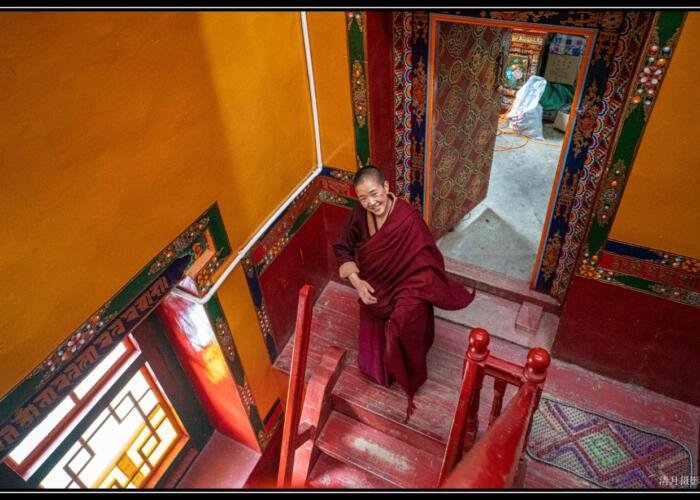
The nuns living here follow a simple and dedicated lifestyle. Their daily routine begins early in the morning, often around 5 a.m., with prayers, scripture recitation, and meditation. Life at the nunnery is quiet, structured, and focused on spiritual growth.
Two important practices are especially emphasized:
- Dzogchen (Great Perfection): A core teaching of the Nyingma tradition that focuses on understanding the true nature of the mind.
- Tummo (Inner Heat Meditation): A special meditation practice where practitioners generate internal heat through concentration and breathing techniques.
The strict discipline and dedication of the nuns have made Shungseb Nunnery well known for its serious approach to spiritual training.
Architecture and Layout
Shungseb Nunnery is built along the mountainside, blending naturally with its surroundings. The red walls and golden rooftops stand out against the green shrubs and forested slopes, creating a striking visual contrast.
The nunnery is divided into two main areas: the residential section for the nuns and the main temple complex.
The main assembly hall is a three-story structure that houses important statues and sacred images. Inside, visitors can find representations of Guru Rinpoche, Tara, and other Buddhist figures. The walls are decorated with traditional paintings that add color and depth to the spiritual atmosphere.
Around the main hall, simple huts serve as living quarters for the nuns. These modest structures reflect the humble lifestyle practiced within the nunnery.
Sacred Sites and Spiritual Highlights
Shungseb Nunnery offers several important places for visitors to explore and experience.
Main Assembly Hall
The central building of the nunnery contains sacred statues and detailed artwork. It serves as the main space for prayers and ceremonies.
Machik Labdrön Chapel
This chapel honors Machik Labdrön, an important spiritual figure associated with the site. Her presence adds historical and spiritual significance to the nunnery.
Gangri Thökar and Meditation Caves
Above the nunnery lies a sacred mountain area where practitioners have meditated for centuries. The caves in this region are linked to great masters such as Longchenpa, who practiced meditation here.
The journey to these higher areas involves a steep but rewarding hike, offering panoramic views of the valley and distant Himalayan landscapes.
A Paradise for Nature and Bird Lovers
The environment around Shungseb Nunnery is rich in natural beauty. The forests, shrubs, and streams create a habitat for many species of birds and animals.
During the summer months, especially in July, the area becomes a paradise for birdwatchers. Many species gather around the water sources, adding life and movement to the peaceful setting.
The combination of spiritual atmosphere and natural beauty makes the nunnery a unique destination for both cultural and nature-based travel.
How to Get to Shungseb Nunnery from Lhasa
Reaching Shungseb Nunnery from Lhasa is relatively simple.
- By Road: The journey takes about 40 to 60 minutes by car, covering a distance of 50 to 65 kilometers. The road is paved and in good condition.
- Final Approach: A road leads close to the nunnery, but visitors usually need to walk the final section uphill for about 30 to 45 minutes.
Private vehicles or tour arrangements are the most convenient options, while public transportation requires additional walking or local transport.
A Tibet Travel Permit is required for visiting the area, and it must be arranged through a licensed travel operator.
Visiting Information
- Altitude: Between 4,100 and 4,430 meters
- Opening Hours: Generally from 9:00 AM to 6:00 PM
- Entrance Fee: Free or a small fee in some cases
- Best Time to Visit: Spring and autumn offer clear weather, while summer provides greener landscapes
The nunnery remains open throughout the year, though weather conditions may vary.
Practical Travel Tips
When visiting Shungseb Nunnery, it is important to be prepared:
- Altitude Awareness: Move slowly and stay hydrated to avoid altitude discomfort.
- Clothing: Wear modest and respectful clothing suitable for a religious site.
- Behavior: Maintain silence and avoid disturbing the nuns during their practice.
- Photography: Ask for permission before taking photos, especially inside temple buildings.
- Respect Traditions: Walk clockwise around sacred areas and avoid touching religious objects.
These simple practices help preserve the peaceful atmosphere of the nunnery.
Nearby Attractions Around Lhasa
A visit to Shungseb Nunnery can be combined with other destinations near Lhasa:
- Yamdrok Lake, located further south, known for its stunning turquoise waters
- Potala Palace, the iconic landmark of Tibet
- Jokhang Temple, one of the most sacred temples in Tibetan Buddhism
- Drak Yerpa, another important meditation site
These locations can be included in a day trip or extended itinerary from Lhasa.
Why Shungseb Nunnery Stands Out
In a region known for grand monasteries and famous landmarks, Shungseb Nunnery offers something different. It is quiet, less crowded, and deeply connected to both nature and spiritual practice.
Its history of destruction and rebuilding, along with the inspiring story of Jetsun Rinpoche, adds emotional depth to the site. The peaceful surroundings and authentic lifestyle of the nuns create an experience that feels genuine and meaningful.
For travelers seeking a calm and reflective place, Shungseb Nunnery remains one of the most special destinations near Lhasa.