

Understanding Tara: The Compassionate Savior in Tibetan Buddhism
Tara holds a deeply revered position in Tibetan Buddhism as one of the most compassionate and accessible Bodhisattvas. She is widely regarded as an emanation of Avalokiteshvara, the Bodhisattva of Compassion, embodying his active and dynamic compassion in feminine form.
Devotees honor Tara as the “Savior from the Eight Great Dangers.” According to Buddhist tradition, she protects beings from both external dangers and inner afflictions, guiding practitioners away from fear, suffering, and spiritual obstacles. In Vajrayana Buddhism, Tara also represents swift action, wisdom, longevity, and auspicious fortune.
The Eight Great Dangers: Outer Threats and Inner Afflictions
The Eight Great Dangers refer not only to physical threats but also to the mental poisons that obstruct spiritual progress.
| Outer Danger | Inner Meaning |
|---|---|
| Lions | Pride |
| Elephants | Ignorance |
| Serpents | Jealousy |
| Fire | Anger |
| Water | Attachment |
| Thieves | Wrong views |
| Non-humans (demons, spirits) | Doubt |
| Imprisonment | Miserliness |
Through her compassionate power, Tara liberates beings from these dangers, transforming fear into wisdom and confusion into clarity.
Green Tara: Active Compassion in a Turbulent World
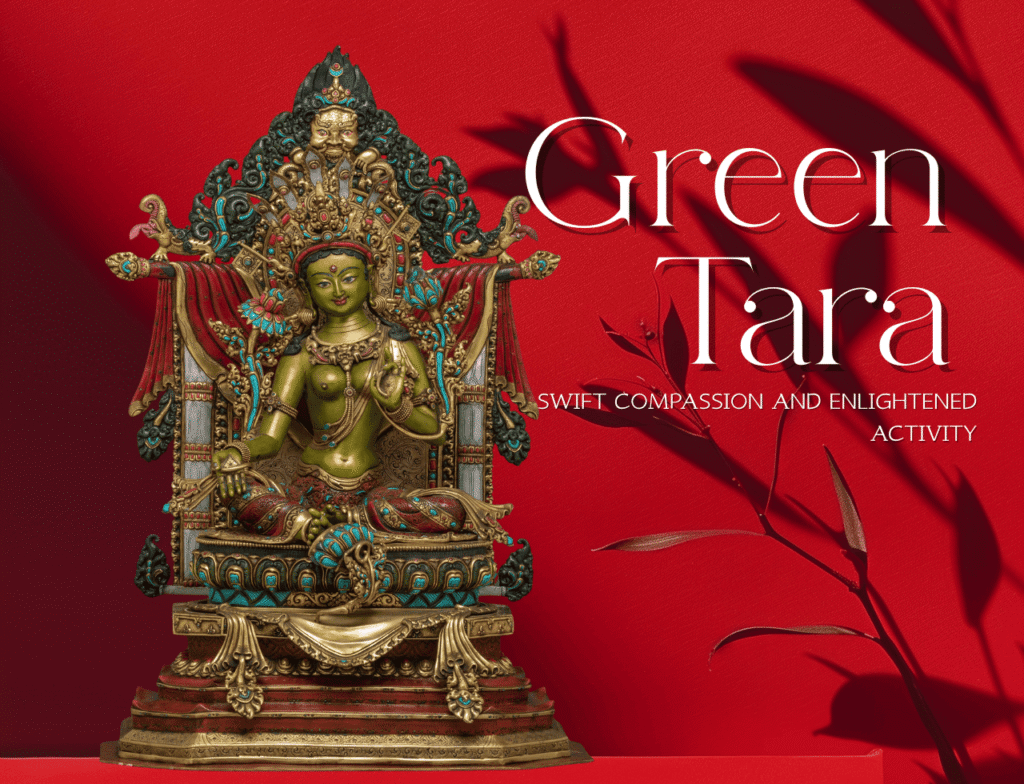
Among Tara’s many forms, Green Tara is the most widely worshipped. She symbolizes swift compassion and enlightened activity, always ready to respond to the suffering of sentient beings.
In Tara Thangka paintings, Green Tara often appears seated amid a world filled with turmoil and danger. Although her name emphasizes the color green, artists frequently depict her in golden hues to express deep reverence and sacredness. This artistic choice reflects her enlightened nature rather than literal color symbolism.
Above Green Tara in many Thangkas sits Amitabha Buddha, seated in meditation posture upon a lotus throne. His presence emphasizes Tara’s connection to the Pure Land tradition and her origin as an emanation of compassion.
The Eight Taras: Individual Protectors from Each Danger
In traditional Thangka compositions, eight forms of Tara appear around the central figure, each offering protection from a specific danger.
- Tara Who Saves from Lions
Positioned to Amitabha’s right, this Tara symbolizes the antidote to pride and arrogance. - Tara Who Saves from Elephants
Placed to Amitabha’s left, she represents liberation from ignorance and mental dullness. - Tara Who Saves from Water
Often shown below the main figure on the left, she prays for beings overwhelmed by attachment and emotional floods. - Tara Who Saves from Non-Humans
Depicted directly below, she subdues red demons, symbolizing doubt and unseen fears. - Tara Who Saves from Serpents
Shown to the right, she neutralizes jealousy and hidden resentment. - Tara Who Saves from Fire
This form protects from anger and destructive emotions. - Tara Who Saves from Thieves
She guards against wrong views and loss of spiritual direction. - Tara Who Saves from Imprisonment
This Tara frees beings from greed, attachment, and karmic bondage.
Each Tara embodies a specific aspect of enlightened wisdom, offering protection both externally and internally.
The Twenty-One Taras: Manifestations of Enlightened Compassion
The Twenty-One Taras represent a complete mandala of compassionate activity. All twenty-one are female Bodhisattvas and direct emanations of Avalokiteshvara’s boundless compassion.
This practice remains central across all major schools of Tibetan Buddhism. Many of the visual forms of the Twenty-One Taras originate from meditative visions and spiritual experiences of accomplished masters rather than purely symbolic design.
Monks and nuns commonly recite the Praises to the Twenty-One Taras early in their religious training, reflecting the practice’s importance in cultivating compassion, courage, and wisdom.
Ritual Practice and Living Tradition of Tara Worship
Tara practice remains a living and vibrant tradition in Tibet and Himalayan regions.
- Most monasteries conduct monthly or frequent Tara pujas
- Rituals include chanting praises, mantras, and offering prayers
- Devotees believe Tara practice helps remove karmic obstacles and fear
Tibetan families often request Tara rituals during:
- Moving to a new home
- Starting a business
- Pregnancy and childbirth
- Illness or life transitions
Practitioners believe Tara grants health, longevity, protection, and auspicious conditions.
Central Depiction of Green Tara in Thangka Art
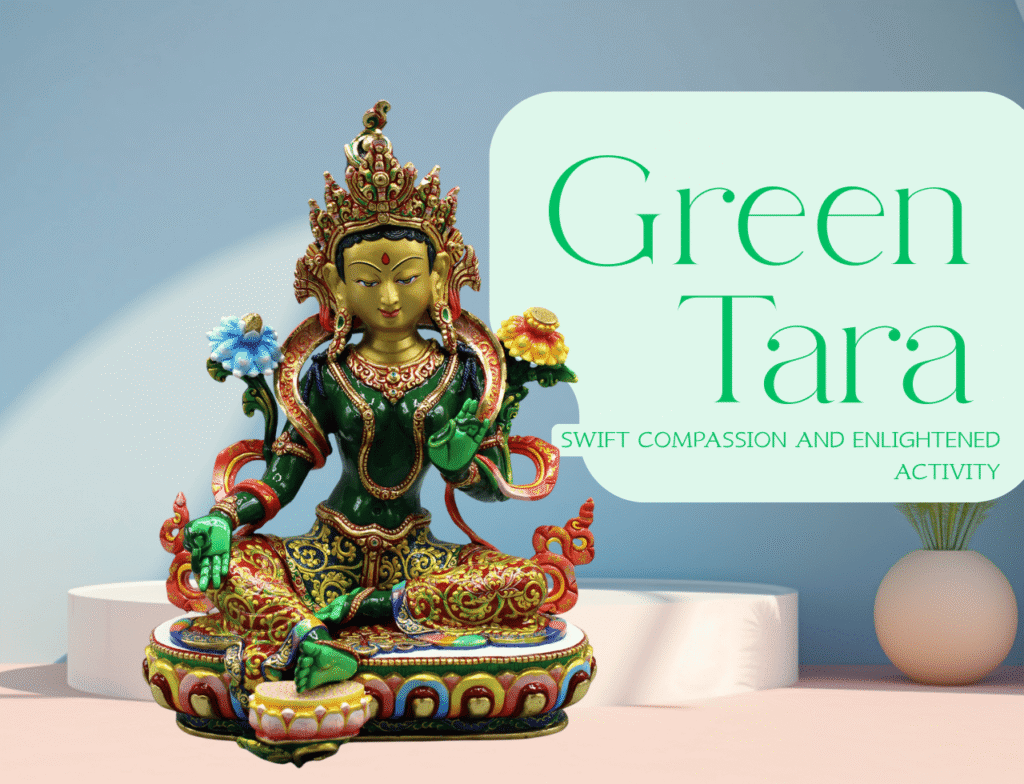
In Thangka paintings of the Twenty-One Taras, Green Tara occupies the central position. Artists portray her as a youthful, radiant woman with a calm and compassionate expression.
Key Iconographic Features of Green Tara
- Right Hand Gesture: Granting boons and fulfilling wishes
- Left Hand: Holding a blue utpala lotus, symbolizing purity and enlightened power
- Posture:
- Right leg extended, ready to act
- Left leg folded, representing meditative stability
This posture reflects Tara’s unique role as both a contemplative and an active savior.
Symbolism of the Surrounding Twenty Taras
The remaining twenty Taras encircle the central figure, each with distinct colors, gestures, and expressions. Despite these differences, they share common symbolic elements:
- Lotus flowers, representing purity beyond suffering
- Vases of amrita, the nectar of immortality
- Peaceful yet powerful expressions
Together, they form a complete vision of enlightened compassion responding to every form of fear and suffering experienced by sentient beings.