
Deshin Shekpa: Early Life and the Rise of the 5th Karmapa
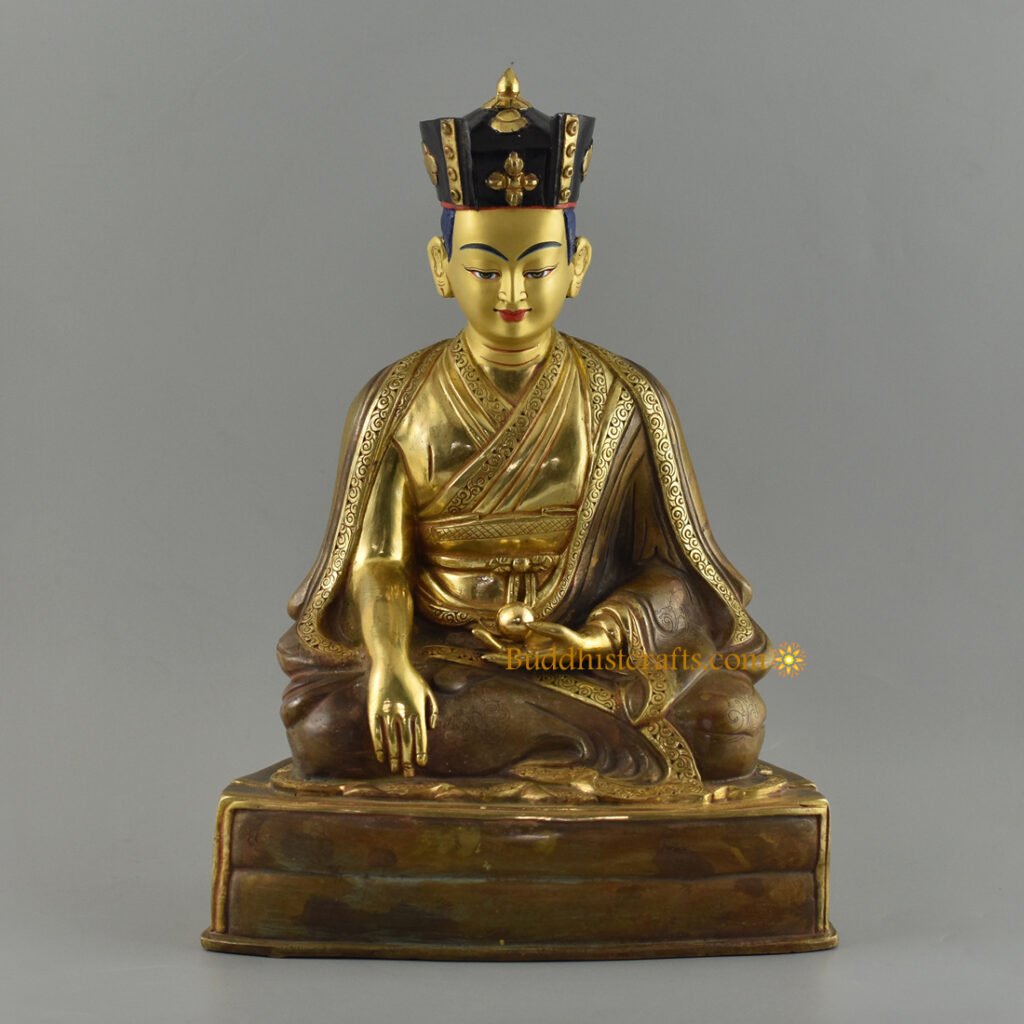
Deshin Shekpa, later recognized as the 5th Karmapa, stands as one of the most influential figures in the history of Tibetan Buddhism. His life bridges profound spiritual realization and pivotal historical engagement between Tibet and imperial China. From miraculous signs at birth to his early enthronement and eventual invitation to the Ming court, Deshin Shekpa’s journey reflects both religious destiny and political significance.
Early Life of Deshin Shekpa (Born 1383)
Deshin Shekpa was born in 1383 in the Nyangpo region of Tibet, an area known for its strong Buddhist traditions. Tibetan historical records describe his birth as being accompanied by auspicious signs, including rainbows and unusual celestial phenomena. Such occurrences were traditionally interpreted as indications of a highly realized being, immediately drawing the attention of the local community.
From an early age, Deshin Shekpa displayed extraordinary intelligence, calmness, and compassion—qualities closely associated with advanced spiritual practitioners. These early signs reinforced the belief that he was a reincarnated master within the Karma Kagyu lineage, destined to assume a major role in Tibetan Buddhist history.
Family Background and Early Spiritual Inclinations
Raised in a deeply devout family, Deshin Shekpa was immersed in Buddhist values from childhood. His family actively supported his spiritual development, ensuring that he received early exposure to Buddhist teachings, rituals, and ethical discipline. This nurturing environment played a critical role in shaping his religious orientation and intellectual curiosity.
By the age of six, Deshin Shekpa had already begun formal study of Tibetan Buddhist scriptures. He demonstrated an exceptional ability to understand complex philosophical concepts, as well as a natural affinity for meditation and contemplative practices. His studies covered a broad spectrum, including Buddhist logic, ethics, ritual practice, and Mahayana philosophy.
Monastic Education and Tantric Training
Deshin Shekpa’s formal monastic education intensified under the guidance of respected teachers and scholars of the time. Among his most influential mentors was Khenpo Shenga, a renowned lama who played a crucial role in introducing him to tantric Buddhism. Under such guidance, Deshin Shekpa received initiations into advanced Vajrayana practices, deepening his experiential understanding of Buddhist realization.
His training emphasized not only textual mastery but also strict ethical conduct, meditative discipline, and philosophical debate. This balanced education laid a strong foundation for his later role as a spiritual leader capable of guiding both monastics and lay followers across Tibet and beyond.
Enthronement as the 5th Karmapa at Tsurphu Monastery
At the remarkably young age of twelve, Deshin Shekpa was formally recognized and enthroned as the 5th Karmapa at Tsurphu Monastery, the principal seat of the Karma Kagyu school. This early enthronement was highly unusual and underscored the deep confidence Tibetan Buddhist leaders placed in his realization and leadership abilities.
Assuming such responsibility at a young age required exceptional maturity. Deshin Shekpa quickly demonstrated his capacity to uphold monastic discipline, transmit teachings, and represent the Karma Kagyu lineage during a period of growing interregional influence.
Invitation to the Ming Court (1403)
A defining moment in Deshin Shekpa’s life occurred in 1403, when he was formally invited to the imperial court of the Yongle Emperor of the Ming Dynasty. This invitation marked a major milestone in Tibet–China relations and reflected the rising prestige of Tibetan Buddhism within Chinese imperial circles.
The Yongle Emperor, known for his interest in Buddhist teachings and spiritual legitimacy, recognized Deshin Shekpa as a figure of immense religious authority. He requested the Karmapa’s presence in Nanjing, then the capital of the Ming Empire, initiating one of the most significant cross-cultural exchanges of the era.
Deshin Shekpa at the Ming Imperial Court
Deshin Shekpa’s journey to Nanjing was both symbolic and transformative. Upon arrival, he was received with extraordinary honors befitting a high spiritual master. The Ming court organized elaborate welcoming ceremonies, reflecting the emperor’s reverence for the Karmapa and Tibetan Buddhism.
During his stay, Deshin Shekpa performed tantric empowerments and blessing rituals for the Yongle Emperor and the imperial family. These rituals were believed to confer protection, longevity, and spiritual merit, reinforcing the traditional relationship between religious authority and political power in imperial China.
His teachings deeply influenced court officials and scholars, fostering greater understanding and respect for Tibetan Buddhist philosophy and ritual practice.
The Yongle Kangyur and Lasting Cultural Impact
One of the most enduring outcomes of Deshin Shekpa’s visit was the imperial recognition of the Kangyur, the canonical collection of the Buddha’s teachings. Under the Yongle Emperor’s patronage, the Yongle Kangyur was commissioned as a printed edition—an unprecedented achievement that greatly expanded the preservation and dissemination of Tibetan Buddhist texts.
This act not only strengthened the spiritual bond between Tibet and the Ming Dynasty but also marked a critical moment in the history of Buddhist textual transmission. The Yongle Kangyur remains a cornerstone of Tibetan Buddhist scholarship to this day.
Imperial Titles and Lavish Gifts from the Ming Court
Deshin Shekpa, the 5th Karmapa, received extraordinary recognition from the Yongle Emperor of the Ming Dynasty, reflecting the high esteem in which he was held as both a spiritual authority and a diplomatic figure. This relationship reached a ceremonial peak in 1407, when Deshin Shekpa presided over major imperial rites dedicated to honoring deceased members of the royal family. These grand ceremonies brought together high-ranking officials, scholars, and monks, underscoring the Karmapa’s central role in Sino-Tibetan religious relations.
During these events, the Yongle Emperor formally conferred upon Deshin Shekpa the exalted title of “Tathagata”, a term traditionally reserved for fully enlightened beings within Buddhist doctrine. Bestowing such a title upon a living Tibetan lama was unprecedented and signaled a profound level of imperial reverence. It acknowledged not only Deshin Shekpa’s spiritual realization but also his importance in facilitating dialogue between Tibetan Buddhism and the Chinese imperial system.
This imperial recognition marked a moment of cultural convergence, as Tibetan Buddhist concepts were integrated into Ming court ideology. By honoring Deshin Shekpa with titles drawn from Buddhist cosmology, the Ming court effectively positioned Tibetan Buddhism as a legitimate and respected spiritual force within the empire’s worldview.
Gifts of Power, Faith, and Diplomacy
In addition to honorary titles, Deshin Shekpa was presented with lavish imperial gifts that reflected the wealth and authority of the Ming dynasty. These offerings included fine silks, ceremonial robes, precious metals, sacred objects, and substantial material donations. Such gifts were not merely acts of generosity but symbolic gestures reinforcing the alliance between spiritual legitimacy and imperial power.
For the Ming emperors, supporting eminent Buddhist masters served both religious and political purposes. By honoring figures like the 5th Karmapa, the court strengthened its moral authority while fostering stability along its western frontiers. For Deshin Shekpa and the Karma Kagyu lineage, these gifts enhanced their institutional standing and enabled the expansion of monastic activities and scholarly production in Tibet.
The exchange of titles and gifts thus functioned as a diplomatic language, one that transcended borders and linked the spiritual aspirations of Tibetan Buddhism with the governance strategies of imperial China.
The Legacy of the “Great Treasure Dharma King”
Deshin Shekpa’s enduring legacy is inseparable from the honorific title “Great Treasure Dharma King”, a designation that encapsulates both his spiritual depth and historical influence. This title, associated with immense reverence, came to define not only Deshin Shekpa himself but also the future identity of the Karmapa lineage. All subsequent Karmapas inherited this title, affirming the precedent he established.
Following his passing in 1415, Deshin Shekpa was remembered as a master who successfully navigated the intersection of religion, diplomacy, and culture. His close relationship with the Yongle Emperor set a lasting model for interactions between Tibetan Buddhist leaders and Chinese rulers, shaping how Tibetan Buddhism was perceived and supported beyond the Tibetan Plateau.
Long-Term Influence on Tibetan Buddhism and Sino-Tibetan Exchange
Beyond titles and ceremonies, Deshin Shekpa’s contributions had far-reaching intellectual and cultural consequences. His teachings, writings, and ritual transmissions enriched Tibetan Buddhist scholarship, particularly within the Karma Kagyu tradition. The texts and interpretations associated with his lineage continued to guide practitioners and scholars for centuries.
Equally important were the cross-cultural exchanges he facilitated. Through his presence at the Ming court, Tibetan Buddhist art, philosophy, and ritual practices influenced Chinese religious life, while Chinese patronage reshaped aspects of Tibetan monastic institutions. These exchanges affected religious art, canonical printing projects, and philosophical discourse, leaving traces that extended well beyond his lifetime.
Deshin Shekpa’s role as the 5th Karmapa and Great Treasure Dharma King thus represents a defining chapter in the shared history of Tibet and China—one in which spiritual authority and political engagement coexisted, shaping the trajectory of Tibetan Buddhism in East Asia.