

In the late 19th century, rising tensions between Tibet and British India erupted into armed conflict along the Himalayan frontier. The flashpoint was Longla (Lungto) Pass, a strategic mountain gateway near the border of Tibet and Sikkim.
This confrontation, often referred to as the Sikkim–Tibet War of 1888, reflected competing territorial claims, imperial expansion, and frontier insecurity—rather than a simple narrative of invasion or resistance.
Strategic Importance of Longla Pass
Longla Pass lay near the junction of Tibet, Sikkim, and Bhutan, controlling access from the southern Himalayan slopes into the Chumbi Valley—an important corridor between India and Tibet.
In the 1880s, the political status of Sikkim had become increasingly tied to British India. The British sought to formalize borders and secure trade routes, while Tibetan authorities questioned British-backed boundary arrangements and the growing presence of British officials and survey teams in Sikkim.
Because the frontier had never been clearly demarcated on the ground, both sides interpreted the boundary differently. When Tibetan forces established defensive positions at Longla, British authorities viewed this as a forward military move into territory they considered within the Sikkim sphere.
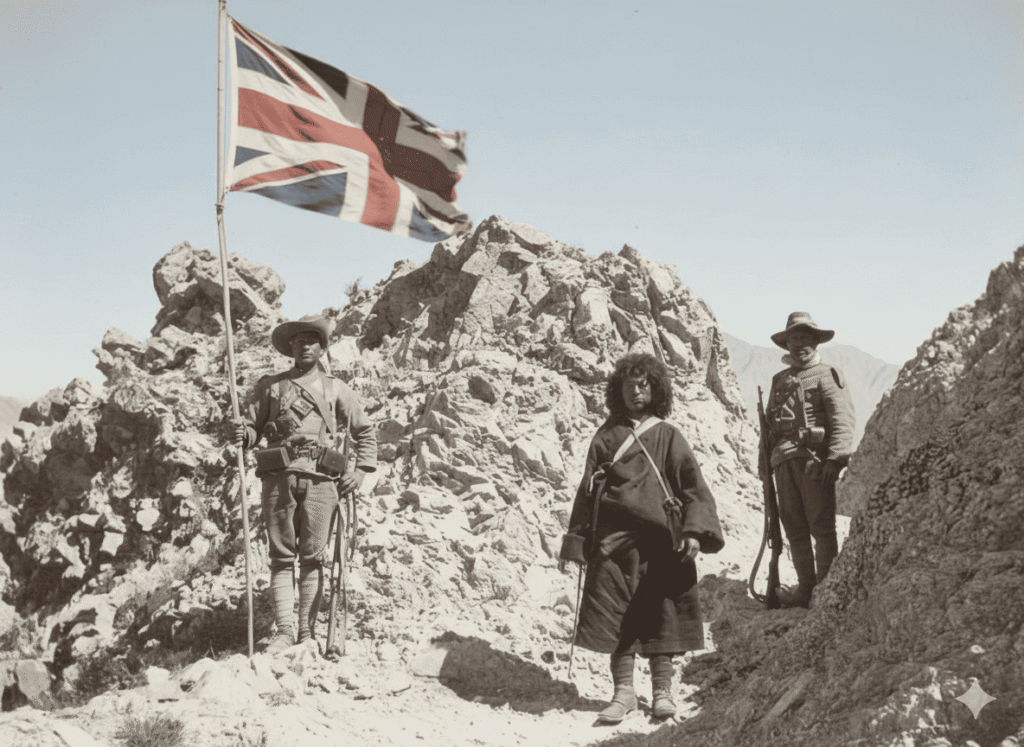
Diplomatic Disputes Before the War
In December 1886, the British Minister in Beijing, Sir John Walsham, protested to the Qing government, arguing that Tibetan military positions near Longla interfered with trade and violated agreements relating to Sikkim.
British officials maintained that earlier diplomatic understandings between Britain and the Qing Empire recognized Sikkim as separate from Tibet and within Britain’s sphere of influence. Tibetan authorities, however, did not necessarily accept the validity of these arrangements, particularly as they had not directly participated in negotiating them.
Throughout 1887, diplomatic exchanges failed to resolve the dispute. British representatives signaled that force might be used if Tibetan troops did not withdraw.
Military Mobilization in Early 1888
By early 1888, British India had mobilized more than 2,000 troops near the frontier. The expeditionary force was commanded by Thomas Graham.
Tibetan forces also strengthened their positions around Longla, constructing stone fortifications and reinforcing mountain approaches. The high-altitude terrain, narrow passes, and unpredictable weather made the region difficult for both sides.
The Battle of Longla (March 1888)
On March 20, 1888, British Indian forces launched an attack on Tibetan positions at Longla. The next day, artillery bombardment damaged Tibetan defensive structures and forced a withdrawal.
Tibetan troops retreated northward toward Nathong (Na Tang), where they constructed additional stone defenses along elevated ridgelines. British forces advanced again, using sustained artillery fire to overcome these positions and secure control of the area.
The fighting demonstrated the technological imbalance between the two sides. British troops were equipped with modern artillery and rifles, while Tibetan forces relied largely on older firearms and traditional defensive structures.
Continued Fighting and Reinforcements
Despite setbacks, Tibetan authorities mobilized additional troops from different regions. Forces gathered in the Chumbi Valley and surrounding areas in preparation for further resistance.
Several attempts were made to challenge British positions, but British Indian forces maintained control of key passes. By mid-1888, the fighting had shifted toward Nenyen Mountain and nearby strategic points.
In September 1888, British troops launched a major assault on Tibetan positions. After heavy casualties, Tibetan forces retreated further north. British troops occupied several frontier locations but did not push deep into central Tibet.
Political Context and Qing Involvement
At the time, Tibet was under Qing imperial suzerainty, and diplomatic negotiations were conducted between Britain and the Qing government rather than directly with Tibetan authorities.
In mid-1888, under pressure from military developments and diplomatic realities, Tibetan forces withdrew from some contested areas.
Historical Significance
The 1888 conflict at Longla Pass was a limited but important frontier war. It revealed:
- The fragility of Himalayan border arrangements
- The expanding reach of British India into the eastern Himalayas
- The complexities of Qing–Tibetan–British relations
Rather than a simple case of aggression or defense, the conflict emerged from competing territorial claims, shifting imperial influence, and unresolved boundary definitions in a remote but strategically significant region of the Himalayas.
This frontier war would shape later developments in British–Tibetan relations and set the stage for further confrontations at the turn of the 20th century.