

The origins of the Tibetan Empire (c. 608–866) are often shrouded in the mist of heroic legends and grand narratives. While these retellings capture the spirit of the era, the historical record points to a sophisticated and rapid expansion that began in the early 7th century. Tibet’s first major appearance on the international stage occurred around 608 CE with an embassy to the Chinese Sui court, signaling the emergence of a new power in Central Asia.
The Yarlung Dynasty and the Imperial Social Contract
The foundation of the empire lay in the Yarlung Valley, where local kings successfully united various small kingdoms along the Yarlung Tsnagpo River. This expansion was not merely a matter of conquest, but a strategic coalition. The Tibetan Emperor functioned as a primus inter pares—a “first among equals”—leading a group of clan chiefs and regional rulers.
Under this “imperial social contract,” local leaders aligned with the Emperor to avoid invasion and secure favorable terms. Key features of this system included:
- Parallel Power Structures: Clan lands and social hierarchies often remained intact, operating alongside the central imperial administration.
- Oaths of Loyalty: The coalition was bound by sacred oaths; the Emperor promised just rule in exchange for the unwavering obedience of his vassals.
- Shared Interests: Former independent kings became the empire’s ministers and generals, ensuring that imperial conquests benefited both the center and the regional elites.
Territorial Expansion and the Silk Road Rivalry
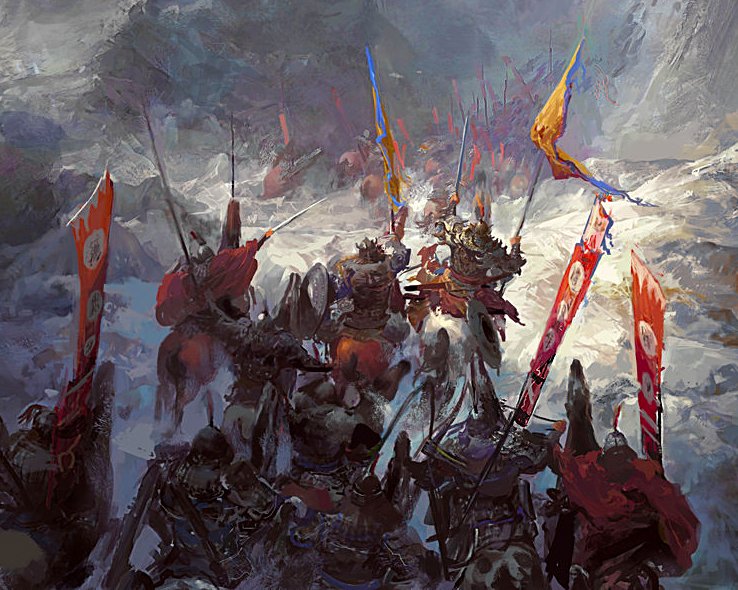
By the mid-7th century, Tibet began incorporating culturally similar kingdoms such as Zhangzhung to the west and Sumpa to the north. This northward push inevitably brought Tibet into conflict with the Tuyuhun (Azha), a Turkic people near Lake Kokonor. Following a decisive victory in 670, Tibet secured its borders but found itself in direct competition with the Tang Dynasty of China.
The relationship between Tibet and China was defined by a volatile mix of diplomacy and warfare:
- Dynastic Marriages: Princess Wencheng arrived in Tibet in 641, followed later by the Princess of Jincheng in 710. While often portrayed as symbols of unity, these marriages were strategic tools in a deeply fraught relationship.
- The Silk Road Economy: For nearly 200 years, Tibet and China were natural rivals, constantly maneuvering for control over the lucrative Silk Road trade routes.
- Global Alliances: Tibet proved to be a master of international diplomacy, frequently forming and breaking alliances with the Western Turks and later the Arabs to undermine Chinese influence.
Military Dominance and the Western Frontier
Following their success against the Azha, the Tibetan military machine pressed deep into Central Asia. Allied with the Western Turks and Khotan, they seized control of key hubs like Aksu and Kashgar. To the southwest, they expanded into modern-day Sichuan, forging alliances with the Qiang peoples and the burgeoning Nanzhao Empire.
Despite internal turmoil—such as the late 7th-century civil war between Emperor Tri Dusong and the powerful Gar clan—Tibet remained a formidable force. In 715, a landmark alliance with Arab forces allowed Tibet to wrest Ferghana from the Tang sphere of influence. This era was characterized by a “see-saw” of power; while the Tang launched massive counter-attacks between 738 and 753, the Tibetan Empire maintained its status as a dominant superpower capable of challenging the world’s greatest contemporary empires.
Peak and Fragmentation: The Zenith of Tibetan Power
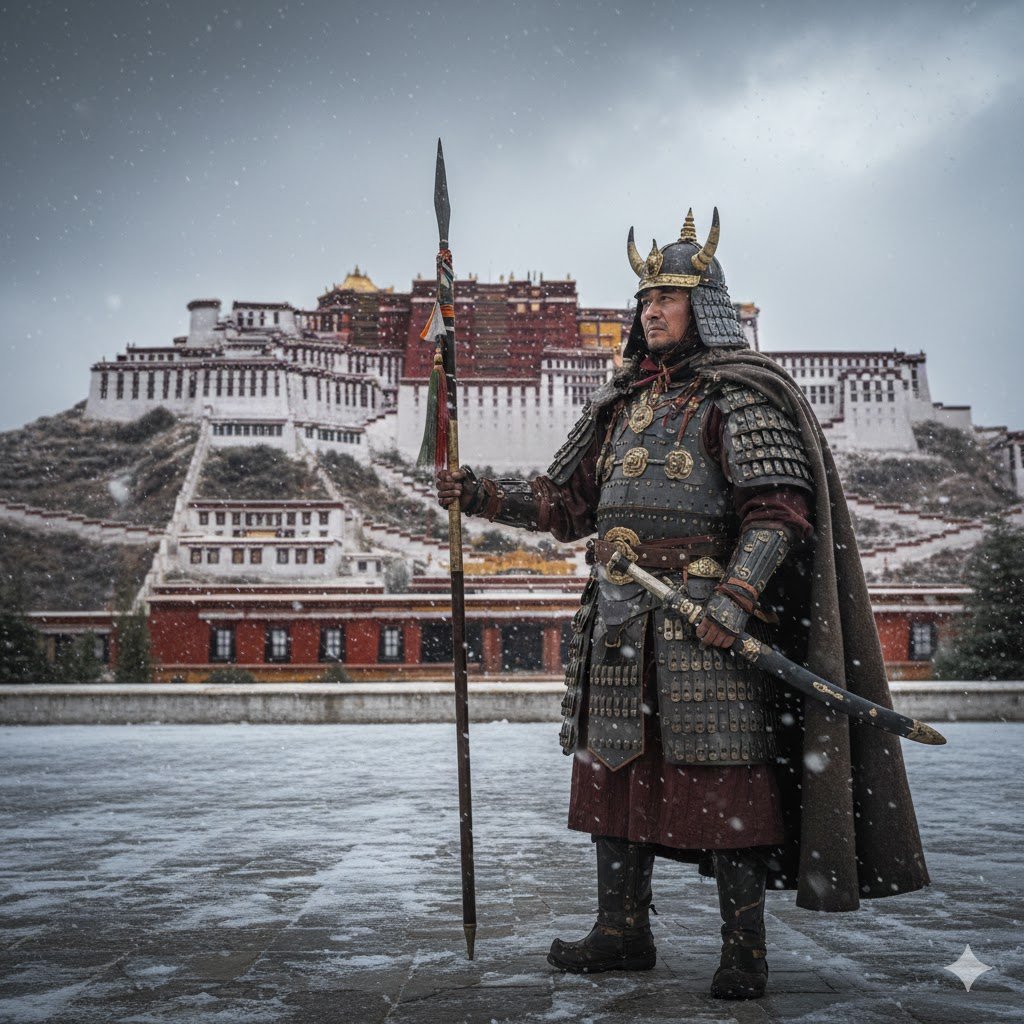
The mid-8th century marked a turning point where Tibet transitioned from a regional power to a dominant force capable of humbling the Tang Dynasty. Following a strategic alliance with Nanzhao in 751, Tibet capitalized on the chaos of China’s An Lushan Rebellion.
In a stunning display of military reach, Tibetan forces invaded and captured the Tang capital of Chang’an in 763, briefly installing a puppet emperor. While the occupation of the capital lasted only two weeks, the geopolitical landscape had shifted permanently. Over the following two decades, Tibet systematically conquered the city-states of the Gansu Corridor, effectively severing China’s direct access to the Silk Road.
The Era of Four Empires and the Great Treaty
By the late 8th century, Tibet was a central player in a “world war” involving the major powers of Eurasia. The empire found itself fighting on multiple fronts:
- Northwest: Conflict with the expanding Arab Caliphate.
- North/Northeast: Rivalry with the Uighur Empire.
- West/Southwest: Battles against a combined front of the Tang and Nanzhao (after the latter defected back to China in 794).
This period of perpetual warfare eventually led to the Treaty of 821–822, a landmark diplomatic achievement where Tibet, China, the Uighurs, and Nanzhao agreed to formalize their borders. The treaty protocols famously recognized Tibet as a diplomatic equal to China—a long-standing goal of the Tibetan emperors.
The Machinery of Empire: Administration and the Khö
The rapid expansion of Tibet was supported by a sophisticated administrative system known as khö (mkhos). Rather than relying on brute force alone, the Yarlung Dynasty integrated conquered territories through meticulous civil engineering and population management.
The “Manual for Great Administration”
In 654, Chief Minister Gar Tongtsen established formal protocols for imperial governance. The empire was divided into five primary “administrations”: Tibet, Zhangzhung, Sumpa, Chip, and Tongkhyap. Each was managed by an administrative chief (khöpön), ensuring that central authority reached the furthest fringes of the realm.
Taxation and the Military-Agricultural Complex
The Tibetan administration revolutionized how the state utilized its land and people through several key mechanisms:
- The Kya Unit: Land was divided into units called kya, which served as the basis for levying grain taxes.
- Population Tallies: Detailed censuses were conducted to assess the “carrying capacity” of the land and the number of available soldiers.
- The Wangri (Shares of Power): This measure formally assigned eighteen territories to specific clans. By enshrining existing clan rights within the imperial legal code, the state turned potential rivals into invested stakeholders.
This system created a self-sustaining loop: the grain harvested from the kya directly fed the soldiers conscripted from those same districts, allowing the Tibetan military to maintain a presence far from the Yarlung heartland.
Collapse and the End of an Era
The stability of the early 9th century proved fleeting. The “Four Empires” began to crumble almost simultaneously:
- 840: The Uighur Empire fell to the Kirghiz.
- 842: Tibet entered a violent succession crisis, leading to the total fragmentation of centralized power.
- 866: The Tibetan Empire officially ceased to exist as a unified entity, devolving into localized fiefdoms.
As the Tibetan Empire dissolved, China also plunged into crisis. The late Tang period was marked by xenophobic purges and the Great Anti-Buddhist Persecution, reflecting the instability of a world where the old imperial orders were rapidly vanishing.
The Administrative Blueprint: Horns and Thousand-Districts
To govern its vast and diverse territories, the Tibetan Empire developed a sophisticated, tiered administrative hierarchy. This system transformed a collection of autonomous clans into a unified military and fiscal machine.
The Four Horns (Bökham Rupzhi)
The most famous division of the empire was the Horn System, which organized central Tibet into districts designed for taxation and conscription. This system was not just geographical; it was conceptual.
- The Orientation: The “Central Horn” was envisioned as facing south. Consequently, the Right Horn was located to the west and the Left Horn to the east.
- Evolution: While a three-horn system (Central, Left, and Right) was active by 684 CE, the formal “Four Horns” classification emerged by 733 CE. This included the Branch Horn (Rulak).
- Stability: The borders of these horns largely mirrored the traditional regions of Ü and Tsang, many of which persist in Tibetan geography today.
The Thousand-District System (Tongdé)
The fundamental building block of the empire was the Thousand-District or tongdé. This unit represented approximately one thousand households. This system was brilliantly dual-purpose:
- Military: Each tongdé was required to levy one soldier per household, creating a ready-made military division.
- Civil: The district heads (tongpön) acted as governors, mediating local disputes and managing the distribution of grain surpluses.
Hierarchy within a Horn
Each Horn was divided into an Upper and Lower half, creating a structured chain of command:
- Upper Half: Four thousand-districts, each led by a tongpön (usually a hereditary post held by a specific clan).
- Lower Half: Four thousand-districts plus a “sub-thousand-district” (tongwuchung) of roughly 500 households.
- The Royal Guard: Each horn also contributed a Royal Guard Thousand-District (kurung tongdé). These four elite units—one from each horn—traveled with and protected the Emperor.
The Mobile Capital: The Emperor’s Court (Podrang)
A common misconception is that Lhasa served as a fixed capital like modern-day Beijing or London. In reality, the heart of the Tibetan Empire was mobile. The Emperor and his court moved seasonally, typically alternating between summer and winter residences.
A City of Tents
The imperial court was a massive, wandering encampment involving thousands of people, including officials, ritual specialists, soldiers, and Buddhist monks (sangha). This mobility served a dual purpose: it allowed the Emperor to be physically present among his subjects and ensured the court did not deplete the resources of a single region for too long.
According to Chinese records from the 9th century, the Emperor’s residence was a sight of immense power and ritual:
- Defense: A fence of spears and a hundred upright halberds guarded the perimeter.
- Ritual: Sorcerers in bird-shaped hats and tiger-girdles performed drum rituals at the three gates.
- Splendor: The Emperor sat on a high platform inside a tent adorned with gold figures of dragons, tigers, and leopards.
“The ritual and political center of the empire was the emperor himself… he was girt with a sword inlaid with gold.” — New Tang Annals
Law, State, and the Section on Law and State
Much of what we know about this period comes from post-dynastic histories that describe the Section on Law and State. This legal framework formalized the relationship between the Emperor and the clans. By assigning specific “shares of power” (wangri) to certain families, the empire essentially “legalized” the status of local elites, making them permanent stakeholders in the imperial project.
Through this combination of mobile majesty and rigid administrative districts, the Yarlung kings successfully managed an empire that stretched from the Silk Road to the borders of Southeast Asia.
The Pulse of Governance: The Political Council (Dünma)
While the Emperor was the symbolic and ritual heart of the empire, the actual machinery of state was operated by the Political Council, or dünma. Much like the royal court, this was a nomadic governing body that met biannually in summer and winter locations across Central Tibet.
Decision-Making and the Chief Minister
The council was led by a rotation of high-ranking ministers, with the Chief Minister holding the most significant influence. Their meetings were the “boardroom” of the empire, where the following critical tasks were handled:
- Land Legislation: Drafting laws that governed how territory was used and divided among the clans.
- Taxation and Finance: Setting the rates for grain levies and managing the imperial treasury.
- Personnel Management: Promoting, rewarding, or replacing officials across the vast imperial administration.
Favorite meeting sites included the Kyi River valley (near modern Lhasa), Meldro to the east, and the region of Lak. This mobility ensured that the central administration remained connected to the various regional power bases of Central Tibet.
Devolved Power: Regional Councils
The empire was too vast to be governed solely from one moving point. Consequently, power was devolved to regional bodies:
- The Eastern Council: A separate council in Domé (Eastern Tibet) mirrored the central council’s functions.
- Military Governments (Trom): These regional military administrations on the empire’s borders held their own councils to respond quickly to frontier threats and local governance needs.
Fragmentation: The Legacy of the Imperial Project
The Tibetan Empire’s collapse was not just a political failure but a structural dismantling. The “pan-Tibetan identity” fostered by the Yarlung kings was ultimately a graft—a centralized system placed over deeply rooted regional and clan interests.
The Devolution of Power
When the central authority fractured in 842 CE, the empire did not simply vanish; it broke back down into its constituent parts:
- Succession Crises: Pretenders to the royal bloodline fought over smaller and smaller fragments of the former empire.
- Decentralization: Without an Emperor to enforce the “social contract,” power returned to regional clans.
- Military Remnants: Some military governments, like Madrom on the Upper Yellow River, reconfigured themselves into independent kingdoms.
- Resurgent Regionalism: In Central Tibet, clans moved away from the imperial model and returned to local power structures, such as the ancient cults of mountain deities.
What Remains Today?
While the empire fell, its administrative fingerprints remain visible. The Four Horns of Tibet, once the engines of tax and troop levies, transitioned from political districts to purely geographical designations. Today, the names and boundaries of regions like Ü and Tsang continue to define the cultural and geographical map of Tibet.
Behind the History: Sources and Methodology
Modern understanding of this era relies on a cross-reference of ancient and medieval records:
- The Old Tibetan Annals: Discovered in the Dunhuang caves, these provide a year-by-year account of the court’s movements and council decisions.
- The Section on Law and State: Post-dynastic histories that preserve the legal codes of the 7th and 8th centuries.
- The mkhas pa’i dga’ ston: A 16th-century history that provides the most stable record of the place names and boundaries of the original Thousand-Districts.
By weaving together these disparate threads—from 7th-century administrative manuals to 16th-century religious histories—historians have reconstructed the sophisticated bureaucracy that once allowed a small valley kingdom to rule the heights of Central Asia.