

Vijaya in Buddhist Scriptures: The Origin of Enlightened Wisdom
In Buddhist philosophy, Vijaya is revered as a profound source of enlightenment and wisdom. According to the “The Sutra on Repaying the Kindness of the Buddha through Great Skillful Means“, known in Tibetan as ཐབས་མཁས་པ་ཆེན་པོའི་སངས་རྒྱས་དྲིན་ལན་བསབ་པའི་མདོ།, Vijaya is identified as the primordial source of all Buddhas. This text emphasizes that the wisdom embodied by Vijaya is essential for the awakening of every enlightened being.
Similarly, the Mahaprajnaparamita Sutra describes Prajnaparamita—the perfection of wisdom—as the mother of all Buddhas. This teaching highlights the central role of wisdom (prajna) in Buddhist realization and establishes the feminine principle as the foundation of enlightenment itself. In this context, Vijaya is not merely a deity but a cosmic principle of awakened awareness.
The Divine Feminine in Vajrayana and Tantric Buddhism
Wisdom and Compassion in Union
In Vajrayana Buddhism, the divine feminine plays a crucial spiritual role. Enlightenment is understood as the union of wisdom (female principle) and compassion or skillful means (male principle). This sacred balance is expressed through Tantric deities appearing in yab-yum (father-mother) form.
Male deities, often called Vajras or Wrathful Kings, embody dynamic compassion and enlightened activity. Their female counterparts—known as Buddhamothers or Dakinis—represent transcendent wisdom and insight. Together, they symbolize the inseparability of method and wisdom on the path to awakening.
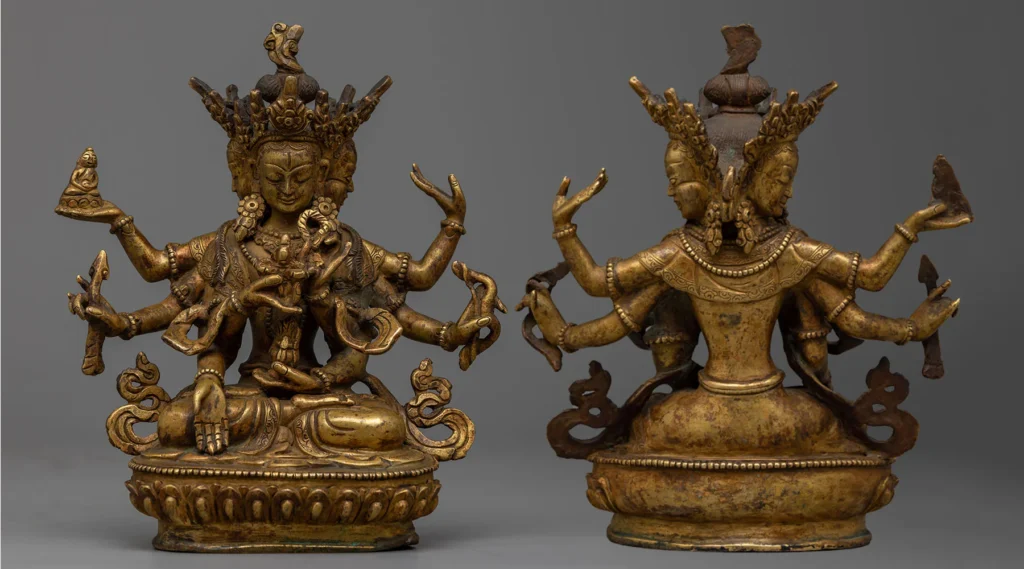
Solo Buddhamothers: Independent Expressions of Feminine Enlightenment
While many Buddhamothers appear in union with male deities, Vajrayana Buddhism also honors independent feminine deities who stand alone as complete embodiments of enlightenment. These solo Buddhamothers reveal that wisdom itself is fully sufficient for liberation.
Prominent examples include:
- Namgyalma (Vijaya)
- The White Umbrella Goddess (Sitatapatra)
- Prajnaparamita
- Tara in her various forms
Each represents a unique expression of the enlightened feminine, addressing specific spiritual and worldly needs such as longevity, protection, wisdom, and liberation.
Namgyalma (Vijaya): The Goddess of Longevity and Victory
Namgyalma, known in Sanskrit as Vijaya and in Tibetan as rnam-par-rgyal-ma, is one of the Three Long-Life Deities in Tibetan Buddhism, alongside Amitayus and White Tara. She is considered an emanation of Vairocana Buddha, the cosmic Buddha representing ultimate truth and universal wisdom.
Namgyalma is especially revered for her boundless compassion and her ability to grant long life, health, and spiritual merit. Beyond longevity, she holds a powerful role in purifying negative karma, particularly actions related to disrespect toward sacred objects, Buddhist teachings, or monastic vows.
The Deeper Meaning of Namgyalma Thangka Iconography
In Thangka paintings, Namgyalma is depicted in a highly symbolic and refined form. Every aspect of her appearance conveys layers of spiritual meaning and serves as a visual aid for meditation.
She is typically portrayed as white in color, radiating purity, clarity, and freedom from defilements. Her serene yet powerful presence reflects the balance between peaceful compassion and enlightened strength.
The Three Faces of Namgyalma: Mastery Over All Realms
Namgyalma’s three faces represent her all-encompassing wisdom and ability to guide beings through diverse circumstances:
- Central White Face – Symbolizes peace, tranquility, and pure awareness
- Left Black Face – Displays a wrathful expression, representing the power to destroy obstacles, ignorance, and negative forces
- Right Yellow Face – Signifies abundance, nourishment, growth, and prosperity
Together, these faces show her mastery over peaceful, wrathful, and enriching activities.
The Eight Arms: Symbols of Protection and Fulfillment
Namgyalma’s eight arms hold sacred implements, each symbolizing a specific enlightened quality or blessing. Common attributes include:
- Vajra – Indestructible wisdom and unwavering truth
- Bow and Arrow – Focused intention and direct realization
- Vase of Nectar – Longevity and spiritual nourishment
- Lasso or Noose – The ability to bind and liberate beings from samsara
These implements indicate her power to support both spiritual liberation and worldly well-being.
Namgyalma Mantra: The Sound of Longevity and Liberation
Sacred Chant for Purification and Awakening
The mantra of Namgyalma is traditionally recited for long life, wisdom, and karmic purification:
“Om Ami Dhare Dara Dharin Svaha”
Chanting this mantra is believed to:
- Extend lifespan and vitality
- Purify negative karma accumulated over lifetimes
- Enhance wisdom and clarity
- Create favorable conditions for enlightenment
Practitioners often combine mantra recitation with visualization of Namgyalma, especially on auspicious lunar days, during healing rituals, or at critical life moments.
Namgyalma’s Living Presence in Vajrayana Practice
In Vajrayana Buddhism, Namgyalma is not merely a symbolic figure or artistic subject. She is a living presence within meditation, ritual, and daily practice. Her role as a Buddhamother reflects the deep reverence for wisdom as the ultimate source of awakening.
Through her imagery, mantra, and teachings, Namgyalma continues to guide practitioners toward a path where longevity supports realization, and wisdom leads beyond suffering into liberation.