
Tibetan Buddhist sculpture is one of the most refined and spiritually profound art traditions in the Himalayas. Known for its intricate craftsmanship, symbolic precision, and devotional depth, this sacred art form transforms complex Buddhist philosophy into powerful visual expressions.
More than decorative objects, Tibetan Buddhist statues serve as meditation supports, ritual focal points, and embodiments of enlightened qualities. Influenced by Indian Buddhism and enriched by indigenous Tibetan traditions, Tibetan sculpture reflects a living spiritual culture shaped over centuries.
The Origins of Tibetan Buddhist Sculpture
The roots of Tibetan Buddhist sculpture trace back to Indian Buddhist art, especially from the Gupta period (4th–6th century CE). During this time, classical Indian sculptural techniques and iconographic systems spread across the Himalayas.
As Buddhism entered Tibet, these artistic principles blended with local beliefs, including elements from the ancient Bon tradition. Over time, Tibetan artists developed a distinctive style marked by:
- Refined facial expressions
- Detailed ornamentation
- Strict adherence to sacred proportions
- Symbolic gestures (mudras)
- Integration of local spiritual imagery
This fusion created a uniquely Tibetan artistic identity—both deeply Buddhist and culturally rooted in the Tibetan plateau.
The Spiritual Purpose of Tibetan Buddhist Statues
Religion has always been central to Tibetan life, and sculpture plays a vital role in spiritual practice. These statues are not simply works of art; they are considered sacred supports for meditation and devotion.
Every detail carries meaning:
- Hand gestures symbolize specific teachings.
- Facial expressions reflect inner realization.
- Postures represent stages of enlightenment.
- Attributes and ornaments communicate spiritual qualities.
Whether placed in monasteries, temples, or household shrines, Tibetan Buddhist sculptures serve as bridges between the human and enlightened realms.
The Hierarchy of the Tibetan Buddhist Pantheon
Tibetan Buddhist iconography follows a carefully structured spiritual hierarchy. At the center stands the historical Buddha, surrounded by celestial Buddhas, Bodhisattvas, protector deities, lineage masters, and local guardians.
This layered pantheon mirrors Tibetan cosmology, presenting a visual “mandala of enlightened beings.” Each figure has a precise role and position, reinforcing the interconnected nature of wisdom, compassion, and protection.
Main Categories of Tibetan Buddhist Sculpture
Buddhas: Embodiments of Enlightenment
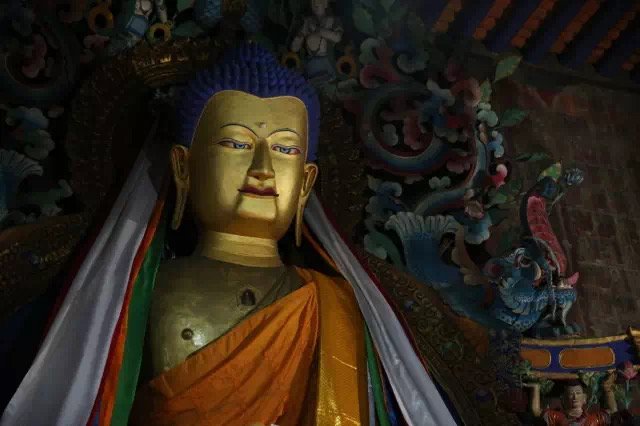
Buddha statues are among the most revered forms in Tibetan Buddhist art.
Shakyamuni Buddha is typically shown seated in meditation, often performing the earth-touching gesture (Bhumisparsha Mudra), symbolizing his moment of enlightenment.
Other important Buddha forms include:
- Amitabha – Associated with the Pure Land and infinite compassion.
- Medicine Buddha – Symbolizes healing and spiritual medicine.
Common symbolic features include:
- Lotus throne (purity and transcendence)
- Halo or aureole (spiritual radiance)
- Elongated ears (renunciation of worldly wealth)
Proportions and iconography are guided by tantric texts to ensure spiritual accuracy.
Bodhisattvas: Compassion in Form
Bodhisattvas represent beings who delay their own final enlightenment to help others. Their statues are often richly adorned with crowns, jewelry, and silk garments.
Key Bodhisattvas include:
- Manjushri – Holds a flaming sword that cuts through ignorance.
- Avalokiteshvara (Chenrezig in Tibetan) – Often depicted with multiple arms to symbolize boundless compassion.
- Green Tara – Represents swift action and protection.
- White Tara – Associated with long life and serenity.
These sculptures are especially popular in meditation practice, where practitioners visualize the qualities embodied by each deity.
Wrathful Protector Deities: Guardians of the Dharma
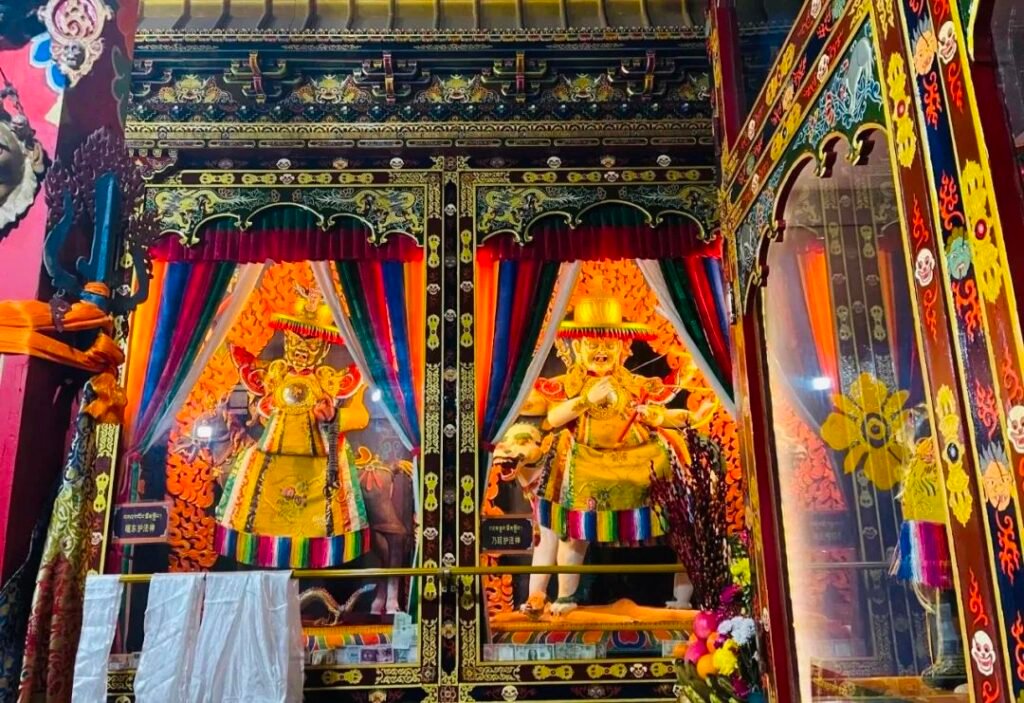
In contrast to the serene Buddhas and Bodhisattvas, wrathful deities appear fierce and dynamic. Their terrifying expressions symbolize the forceful removal of ignorance and negativity.
Important protector figures include:
- Mahakala – Defender of Buddhist teachings, depicted with flames and skull ornaments.
- Palden Lhamo – A powerful female guardian associated with protection of Tibet.
- Vajrapani – Holds a vajra (thunderbolt), symbolizing indestructible wisdom.
Despite their fierce appearance, these figures embody compassion expressed through strength and protection.
Lineage Masters and Historical Lamas
Tibetan sculpture also honors great teachers and spiritual leaders who shaped Tibetan Buddhism.
- Padmasambhava (Guru Rinpoche) – Credited with establishing Buddhism in Tibet. His statues portray him as both teacher and tantric master.
- Lama Tsongkhapa – Founder of the Gelug school, often depicted wearing a yellow hat and holding lotus stems with scriptures.
These statues preserve lineage memory and inspire devotion to spiritual teachers.
Indigenous Deities and Nature Spirits
Tibetan Buddhist sculpture also reflects the integration of pre-Buddhist Bon traditions. Local mountain gods, river spirits, and territorial guardians are often incorporated into the Buddhist pantheon.
This blending of indigenous spirituality and Buddhist philosophy enriches Tibetan art and reflects the close relationship between nature and religion in Himalayan culture.
Materials and Techniques in Tibetan Buddhist Sculpture
Creating a Tibetan Buddhist statue is both an artistic and sacred process. Sculptors traditionally begin with prayers and follow strict iconographic manuals.
Common Materials
- Bronze – The most widely used material, ideal for fine detail.
- Copper and gilt gold – Often used for gilded statues.
- Wood and clay – Used for larger temple statues.
Traditional Techniques
- Lost-wax casting (for metal statues)
- Hand carving (wood sculptures)
- Polychrome painting
- Gold gilding
- Inlay with semi-precious stones
Each stage reflects careful devotion and technical mastery.
Symbolism of Color and Ornamentation
Color plays a powerful symbolic role in Tibetan Buddhist sculpture:
- Gold represents enlightenment.
- Red symbolizes power and transformation.
- Blue signifies infinite wisdom.
- White reflects purity and compassion.
Ornaments such as crowns, necklaces, and ritual implements further communicate spiritual meaning, turning each sculpture into a complete symbolic language.
Tibetan Buddhist Sculpture in Monasteries and Daily Practice
In monasteries and temples, statues serve as central ritual objects. Devotees offer butter lamps, incense, and prayers before them. Pilgrims circumambulate sacred images as acts of merit and devotion.
In private homes, smaller statues are placed on household altars, supporting daily meditation and spiritual reflection.
Through these practices, Tibetan Buddhist sculpture remains a living tradition—not confined to museums, but integrated into daily religious life.
Historical Development and Artistic Evolution
Early Tibetan sculptures show strong Indian and Nepalese influence. Later periods incorporated stylistic elements from China and Central Asia. As Tibetan Buddhist schools such as Nyingma, Kagyu, Sakya, and Gelug developed, artistic styles became increasingly refined and regionally distinct.
Today, contemporary Tibetan artists continue to preserve traditional methods while adapting to modern audiences. Smaller, portable statues are now widely crafted for practitioners around the world, ensuring that Tibetan Buddhist art remains accessible and relevant.
Tibetan Buddhist sculpture stands as a powerful expression of Himalayan spirituality. Through sacred geometry, symbolic precision, and devotional artistry, these statues continue to embody the living essence of Tibetan Buddhism and its enduring artistic heritage.