Tibetan people
Tibetan Customs
Major Festivals in Tibet
Tibetan Language
For centuries, Lhasa has been the spiritual and cultural centre of Tibet — a city where ancient monasteries stand beneath vast open skies, pilgrims circle sacred temples at dawn, and the air carries the scent of juniper incense. For international travellers, a visit to Lhasa is not simply sightseeing. It is a rare opportunity to step into a living culture that has shaped one of the world’s most distinctive civilisations. This guide covers everything you need to know to plan a meaningful, well-paced trip to Tibet’s storied capital.
Lhasa is most accessible and enjoyable between April and October, when temperatures are mild and skies are generally clear. The peak season runs from June to September, when sunshine is most reliable but visitor numbers are also highest. May and October offer a good balance of good weather and fewer crowds. Winter visits (November to March) are possible and offer a quieter, more contemplative experience, though temperatures drop significantly and some high-altitude routes may be restricted.
Altitude: approximately 3,650 m
You will arrive at Lhasa Gonggar Airport, located approximately 60 kilometres from the city centre. Your guide and driver will meet you at the airport and transfer you to your hotel in Lhasa, a journey of roughly one hour along a road that offers early glimpses of the plateau landscape — wide valleys, the Yarlung Tsangpo River winding between ochre hillsides, and Tibetan villages built from stone and rammed earth.
The most important priority on arrival day is acclimatisation. Lhasa’s altitude means that even physically fit travellers may experience mild symptoms such as headaches, breathlessness, or fatigue in the first 24 hours. The advice is consistent: rest, hydrate well, eat light meals, and resist the temptation to be immediately active. Most symptoms ease significantly by the second day. Avoid alcohol on your first night, and keep your room well ventilated.
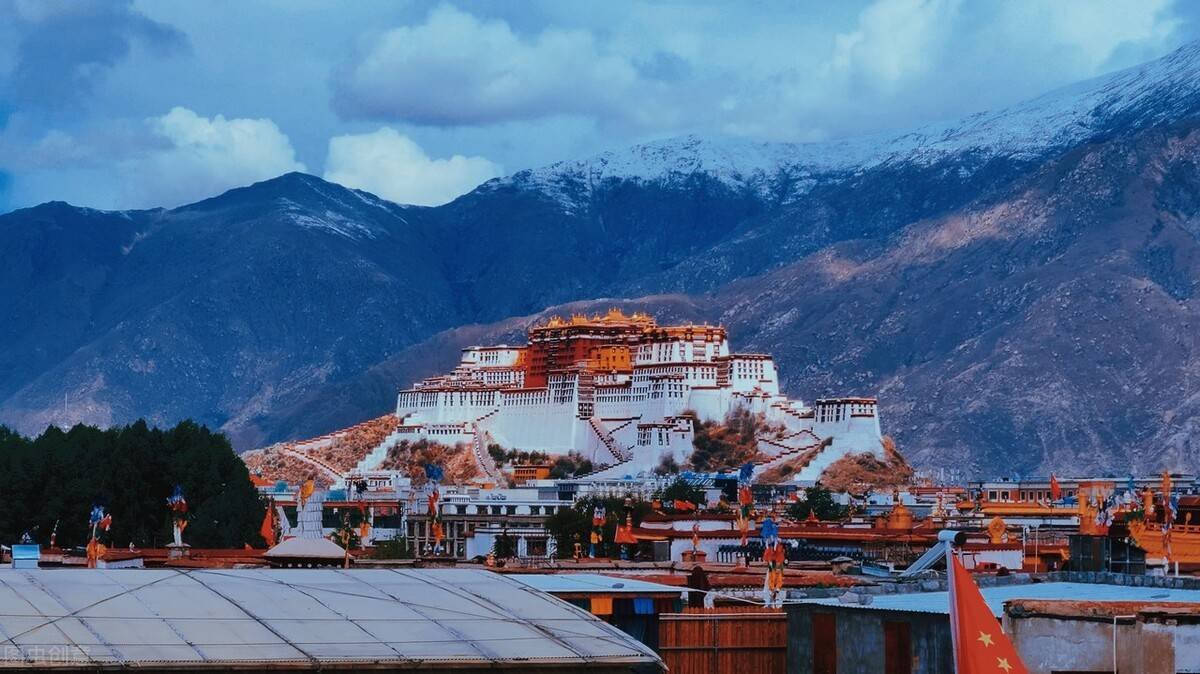
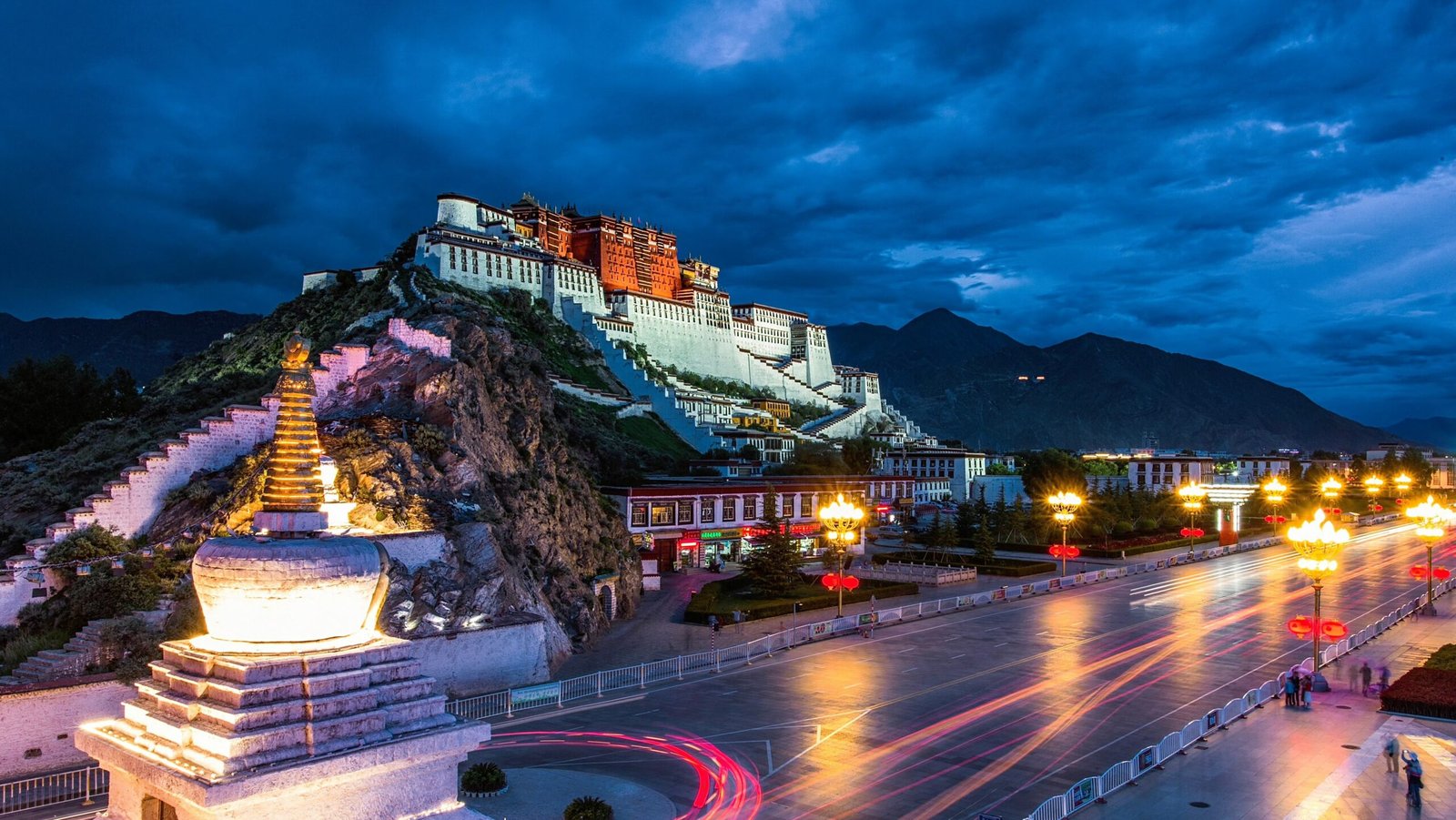
After breakfast, the day begins at the Potala Palace. Entry is time-ticketed and visitor numbers are strictly capped, so your guide will have arranged access in advance. Plan for a visit of approximately two hours to explore the White and Red Palaces, the golden tombs of the Dalai Lamas, and the rooftop terraces with their panoramic views.
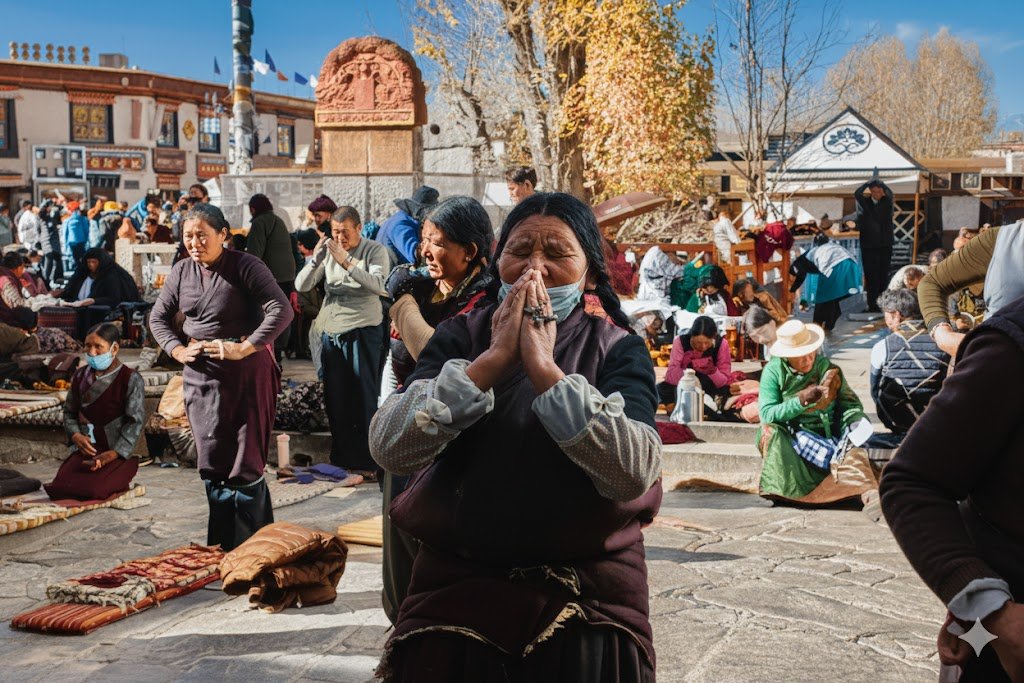
After lunch, head to the Jokhang Temple and Barkhor Street. The Jokhang is best experienced on foot, moving through its dim, lamp-lit interior at a slow pace. Allow time to observe the pilgrims at the entrance courtyard and inside the chapels before stepping out onto Barkhor Street for the rest of the afternoon. The street is most lively in the mid-to-late afternoon, as local residents and pilgrims complete their circuits alongside traders and visitors.
A stop for Tibetan sweet milk tea at a local teahouse on Barkhor Street is highly recommended. It is one of the most natural opportunities to rest, observe daily life, and engage with local culture at an unhurried pace.
The morning is devoted to Drepung Monastery, a 20-minute drive west of the city. Arriving early allows you to explore the assembly halls and college chapels before the site becomes busy. Your guide can help navigate the extensive complex and provide context for the artwork and architecture you encounter.
In the afternoon, make your way to Sera Monastery in time for the monks’ debate, which typically begins around 3 PM and runs for approximately one to two hours. The debate courtyard fills gradually as monks gather in clusters, the sound of clapping and animated Tibetan exchanges filling the air. Photography is generally permitted but should be done respectfully and without interrupting the proceedings.
After the debate, there is time to explore Sera’s main assembly hall and surrounding chapels before returning to the hotel.
Your final morning in Lhasa is at leisure. Depending on your departure time, this may be an opportunity to return to a favourite spot — perhaps an early circuit of Barkhor Street, a quiet hour in Norbulingka’s gardens, or a last cup of butter tea at a local cafe. After checking out from the hotel, your driver will transfer you to Lhasa Gonggar Airport or the train station for your onward journey.
Lhasa offers a unique blend of spiritual depth and everyday life that unfolds at a calm, unhurried pace. You can expect to see pilgrims performing kora (circumambulation) around sacred sites, the soft sound of prayer wheels spinning, and the scent of incense drifting through temple courtyards. The city’s landmarks, including the Potala Palace, Jokhang Temple, and Barkhor Street, are not just historical sites but active places of worship, where traditions continue as they have for centuries. The atmosphere is deeply cultural, and respectful observation becomes an essential part of the experience.
At the same time, Lhasa’s high altitude of around 3,650 metres means your body will need time to adjust. Most travellers experience mild symptoms such as fatigue or shortness of breath during the first day or two, so rest and hydration are important. Travel is well-organised, with guided tours, arranged transport, and regulated accommodations for international visitors. Overall, expect a journey that is both physically gentle and culturally enriching, where each day reveals a deeper connection to Tibet’s living heritage.
Lhasa sits at an elevation of approximately 3,650 metres on the Tibetan Plateau, making it one of the highest capital cities in the world. Despite its remote location, it is remarkably accessible by air, rail, and road — and the journey itself, by whichever route you choose, is a dramatic introduction to the scale and beauty of the plateau.
What sets Lhasa apart from other heritage destinations is the density of its cultural significance. Three of its core landmarks — the Potala Palace, Jokhang Temple, and Barkhor Street — are collectively recognised as UNESCO World Heritage Sites. Beyond these, Lhasa is home to two of the six great monasteries of the Gelugpa school of Tibetan Buddhism, both of which remain active centres of religious life. Visiting Lhasa means engaging with a tradition that is still very much alive, not simply preserved behind glass.
Here are our contact options for your convenience:
Feel free to reach out anytime!
Yes, you have the option to cancel your tailor-made tour. However, be aware that cancellation charges will be applied as per the Tour Tibet cancellation policy. For detailed information, please review our Terms and Conditions.
Arranging a tour in Tibet independently is not possible due to the mandatory Tibet Travel Permit. This essential document is a requirement for all foreign visitors traveling to the region and can only be obtained through a local travel agency authorized by the Tibet Tourism Bureau.
Absolutely! We encourage you to visit our office and discuss your travel plans directly with our experienced travel consultants. Together, we can create a tailor-made Tibet tour that suits your preferences and requirements.
After confirming your tour arrangements, a deposit of 20% of the total trip cost is required to secure your booking. This deposit can be made via PayPal, Credit Card, Western Union, or Wire Transfer. The remaining balance is due at the start of your tour.