Tibetan people
Tibetan Customs
Major Festivals in Tibet
Tibetan Language

The Sichuan-Tibet Highway is one of the most scenic and adventurous driving routes in the world. Stretching from Chengdu all the way to Lhasa, this legendary road passes through ancient Tibetan towns, snow-capped mountain passes, glacier valleys, sacred lakes, and some of the most remote landscapes on earth. Whether you are a seasoned road tripper or a nature enthusiast looking for something extraordinary, this route delivers at every turn.
The Sichuan-Tibet Highway begins in Chengdu and offers two distinct paths to Lhasa.
The northern route winds through Kartse, Dege, and Chamdo before merging with the southern route at Bamda, covering approximately 2,412 km through Ranwu, Bomi, and Nyingchi before reaching Lhasa.
The southern route, covering around 2,149 km, is the more popular choice among self-drivers for its combination of efficiency and consistently stunning scenery. It passes through Ya’an, Kangding, Xinduqiao, Litang, Batang, and Nyingchi on its way to the Tibetan capital.
Both routes offer an immersive encounter with Tibet’s natural and cultural landscapes — but the southern route is the focus of this guide.
Danba — Gateway to Gyarong Tibetan Culture
Tucked into a mountain valley, Danba is a small county with a character entirely its own. Home to the Gyarong Tibetans, the area features Tibetan-speaking villages perched dramatically on mountainsides rising to around 8,000 feet. The mild climate and authentic local life make Danba one of the most rewarding cultural stops on China’s southwestern travel circuit.
Lithang — One of the World’s Highest Towns
At 4,000 meters above sea level, Lithang ranks among the highest towns on the planet. Located in the ancient Tibetan province of Kham, it is a major cultural hub with a population of around 50,000 — the majority ethnically Tibetan and bilingual. Lithang has historical significance as the birthplace of several Dalai Lamas, and the hillside monastery just outside the town reflects this deep religious heritage. The streets are alive with nomadic shepherds and Tibetan traders, giving the town an energy that feels genuinely distinct from anywhere else on the route.
Batang — A Lakeside Paradise
Batang translates literally to “sheep-baaing lakeside,” and the name captures something of its character. Surrounded by exceptional scenery, Batang is consistently described by travellers as one of the most beautiful places they have encountered on the entire Sichuan-Tibet journey. An overnight stay here allows time to absorb the landscape at a slower pace.
Distance: 147 km via Chengya Expressway
Departing Chengdu at sunrise, the first day covers 147 kilometres to Ya’an — a historically significant town and gateway to both the ancient Southern Silk Road and the Ancient Tea Horse Road. The route passes through the Erlang Mountain Tunnel and continues to Moxi Ancient Town via Luding County. Moxi serves as the entry point to the Hailuogou Scenic Area. The afternoon offers time to explore the ancient town and its notable Catholic Church, a striking architectural landmark in this remote setting.
Leaving Moxi Ancient Town, the route heads toward Kangding Ancient City, crossing the Tibetan-Chinese cultural dividing line at a pass rising to 4,298 meters. Beyond this point, the landscape transitions into authentic Tibetan territory. The day ends at Xindu Bridge — a small town and the junction of the northern and southern Sichuan-Tibet lines — widely known among photographers as “Photography Paradise” for its extraordinary light, rolling meadows, and traditional Tibetan architecture.
Dawn over Xindu Bridge reveals a classic Tibetan pastoral scene — small bridges, flowing streams, Tibetan houses, and morning mist. The route then climbs over Gaoersi Mountain, follows the Yalong River, and passes through Kamba Mountain Town before reaching Litang County, birthplace of the Seventh Dalai Lama.
Continuing through Daocheng County, the landscape shifts to terracotta river valleys and traditional Tibetan villages that feel remarkably untouched. The day concludes in Riwa, where Powa Mountain and the Chitu River make a lasting impression as the day draws to a close.
An early start brings the day’s centrepiece — a pilgrimage to Xiannai Rishen Mountain, flanked by the sacred peaks of Xiannuoduoji Mountain and Yangmaiyong Mountain. The landscape here combines snowy peaks, ancient forests, glaciers, alpine lakes, and rushing rivers in a single panorama. The return to Riwa in the afternoon closes a day defined by an extraordinary sense of natural harmony.
The drive toward Meili Snow Mountain passes over Rhododendron Mountain — at its most spectacular in April and May when the hillsides are covered in vivid blooms. Dongwang Grand Canyon follows, where turquoise water runs alongside the highway in a display of colour and scale that is difficult to prepare for. The day ends at Meili Snow Mountain, one of the most revered peaks in the Tibetan world and a sight that rewards the journey entirely on its own.
Note: This section of road carries additional risk from large trucks and potential falling rocks. Extra vigilance is advised throughout.
A clear morning may offer a rare glimpse of Meili Snow Mountain bathed in golden sunrise light — a phenomenon known as Sunshine Jinshan that few travellers are fortunate enough to witness. After breakfast, the route continues to Mangkang and the historic Yanjing Salt Well area.
Yanjing holds a unique place in Tibetan history. The region served as a vital route connecting Tubo to Nanzhao and played a central role in transporting Yunnan tea into Tibet. The Yanjing Salt Fields are the last surviving original salt-dried terrain on the Ancient Tea Horse Road — a living cultural landscape of genuine historical significance. After exploring the Yanjing Scenic Area, the route crosses Hongla Mountain before arriving in Zuogong for the night.
Departing Zuogong, the route reaches Bangda — a critical transportation junction sitting at 4,400 meters where the northern and southern Sichuan-Tibet lines converge. From here, the road connects north to Qamdo and west toward Linzhi and Lhasa. Bangda also holds the distinction of being home to the world’s highest civilian airport, positioned on its vast open grassland.
Leaving the grassland behind, the route crosses Nujiang Mountain at 4,839 meters before descending along the bank of the Nu River through the famous Ninety-Nine Road — a winding series of switchbacks that is one of the most technically demanding and visually dramatic stretches of the entire journey — before arriving in Basu.
The morning departure from Ranwu heads toward Laigu Glacier, one of the world’s three largest glaciers. Located adjacent to Ranwu Lake in Baxu County, Laigu Glacier is the source of the Palong Zangbo River. Its meltwater feeds directly into Lake Ranwu, and the surrounding landscape of dense virgin forest and primitive Tibetan villages creates an atmosphere of complete natural isolation.
Yalong Glacier, stretching 12 kilometres from the main peak of Gangri Gabu Mountain to Gangri Gabu Lake, adds another layer of glacial spectacle to the day. The route then passes Midui Glacier on the return toward Ranwu before heading to Bomi County for the overnight stay.
From Zam Town in Bomi County, the route enters some of the most lush terrain of the entire journey. The Tongmai section — made more accessible by recently upgraded tunnels and bridges — leads into Lulang, a dense forest area so vast it is described as a sea of trees. The road then climbs to Sejila Mountain at 4,702 meters, famous for its spectacular azalea blooms in spring and summer and recognized as the finest vantage point for views of the awe-inspiring Nanga Bawa Peak.
Descending from Sejila Mountain brings the route into Nyingchi County and down toward the lower reaches of the Niyang River, arriving near Bayi Town — home to the world-renowned King of Cypress Trees.
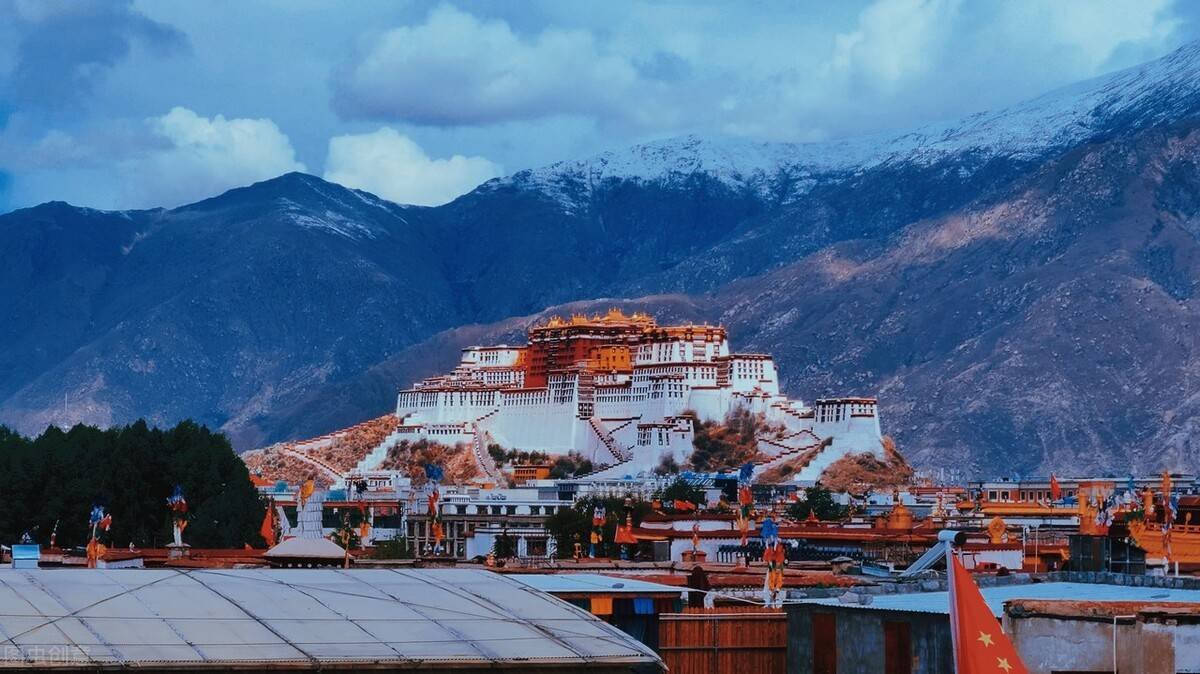
Departing Nyingchi Town, the Niyang River accompanies the road westward. Local legend holds that the Niyang River was formed from the tears of a goddess — its waters are exceptionally clear, originating from Mount Mila in the east and flowing more than 300 kilometres before merging with the Yarlung Zangbo. Passing through Daktze and along the Lhasa River Valley, the first distant view of Potala Palace on Red Mountain signals the end of the road. Lhasa comes into full view as the journey reaches its destination.
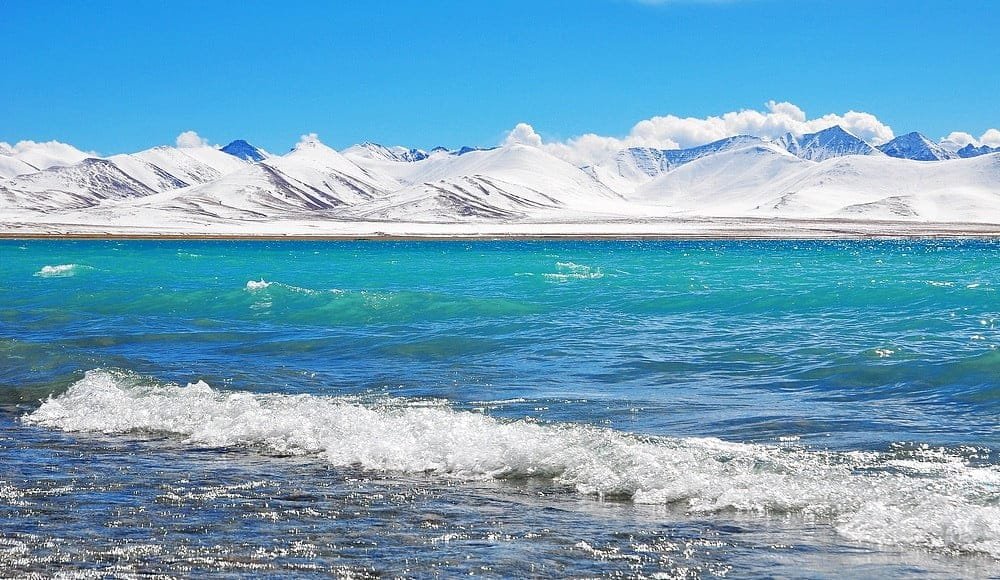
The final day takes a scenic excursion south of Lhasa to Yamdrok Lake. The route ascends Gambara Mountain to a pass at 4,852 meters, where the sacred lake reveals itself at 4,441 meters below — a brilliant turquoise ribbon stretched between snow-capped peaks and open sky. The clarity of the water, the scale of the surrounding mountains, and the quality of the light at this altitude make Yamdrok Lake one of the most visually striking destinations in all of Tibet. After taking in the full panorama, the route returns to Lhasa.
The Sichuan-Tibet Highway is not simply a road — it is one of the most visually and culturally layered journeys available to any traveller. What makes this route genuinely exceptional is the sheer diversity of what it covers across 11 days.
The journey begins in the modern, vibrant city of Chengdu and gradually transforms into something extraordinary. Within days, the road climbs into the ancient Tibetan province of Kham, passes through towns that have served as cultural crossroads for centuries, crosses mountain passes above 5,000 meters, and descends into lush river valleys filled with virgin forests and glaciers. No two consecutive days look or feel the same.
Several stops along this route carry a historical significance that goes far beyond scenery. The Yanjing Salt Fields are the last surviving original salt-dried terrain on the Ancient Tea Horse Road — a living relic of the trade routes that shaped Tibetan civilization. Lithang is the birthplace of several Dalai Lamas. Xindu Bridge is celebrated across China as “Photography Paradise.” The Ninety-Nine Road — a dramatic series of switchbacks descending from Nujiang Mountain — is one of the most technically spectacular stretches of road anywhere in Asia.
The route also delivers three distinct glacier encounters — Laigu Glacier, Yalong Glacier, and Midui Glacier — alongside two of Tibet’s most sacred natural landmarks: Meili Snow Mountain and Yamdrok Lake. Few journeys anywhere in the world pack this level of natural and cultural richness into a single itinerary.
Here are our contact options for your convenience:
Feel free to reach out anytime!
Yes, you have the option to cancel your tailor-made tour. However, be aware that cancellation charges will be applied as per the Tour Tibet cancellation policy. For detailed information, please review our Terms and Conditions.
Arranging a tour in Tibet independently is not possible due to the mandatory Tibet Travel Permit. This essential document is a requirement for all foreign visitors traveling to the region and can only be obtained through a local travel agency authorized by the Tibet Tourism Bureau.
Absolutely! We encourage you to visit our office and discuss your travel plans directly with our experienced travel consultants. Together, we can create a tailor-made Tibet tour that suits your preferences and requirements.
After confirming your tour arrangements, a deposit of 20% of the total trip cost is required to secure your booking. This deposit can be made via PayPal, Credit Card, Western Union, or Wire Transfer. The remaining balance is due at the start of your tour.