Tibetan people
Tibetan Customs
Major Festivals in Tibet
Tibetan Language

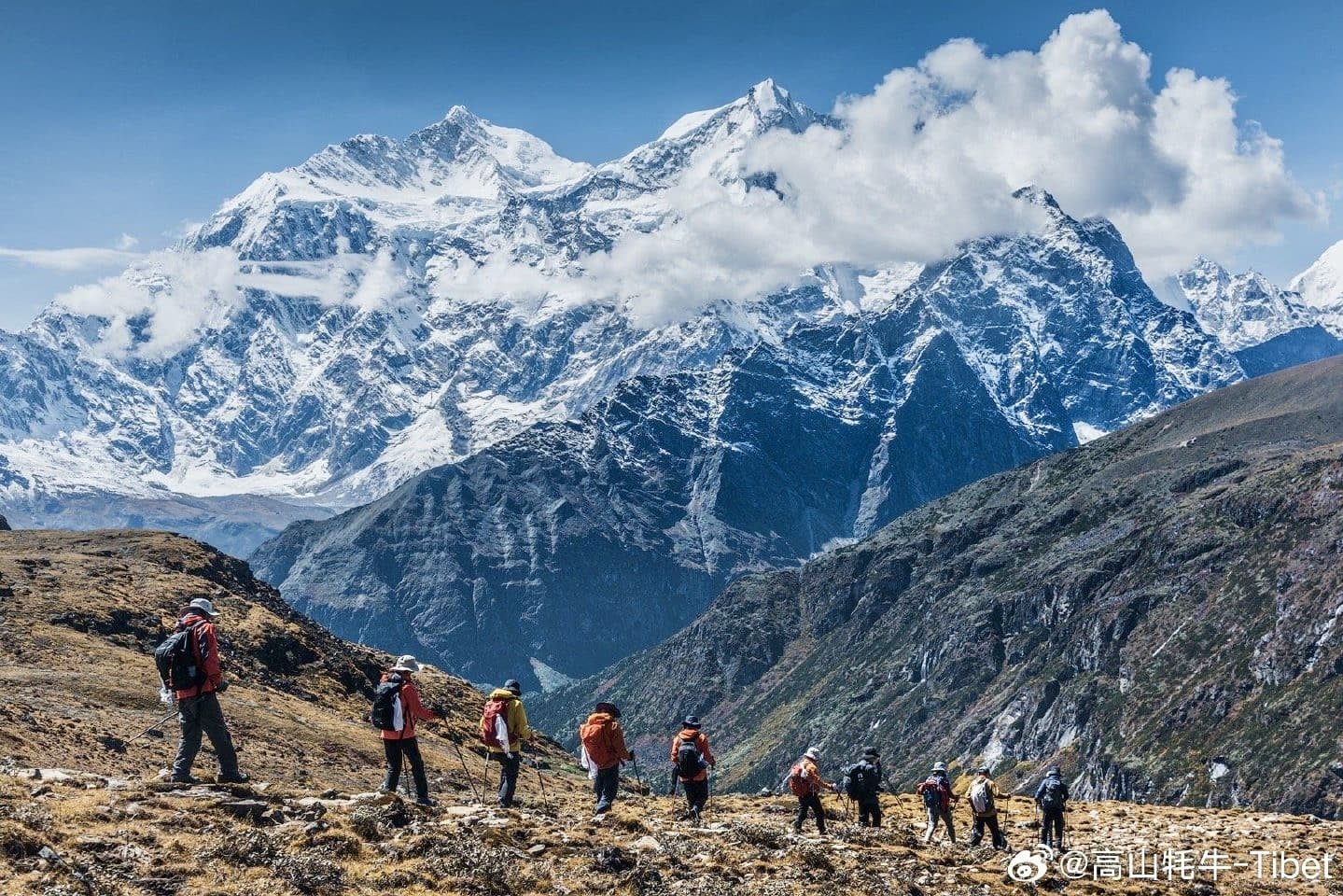
Few journeys in the world carry the weight of standing at the foot of Mount Everest. The Everest Base Camp trek in Tibet is not simply about reaching a famous landmark — it is a passage through some of the most remote landscapes on earth, past centuries-old monasteries, through authentic Tibetan villages, and across high mountain passes that demand both preparation and respect.
The most accessible and widely undertaken route starts at Old Tingri, also known as Gangga Town in Ri County. From here, a 70-kilometre trail follows Rural Road 218 through the Tibetan plateau, passing snow-capped peaks and a series of small, traditional villages before arriving at Rongbuk Monastery and the base camp beyond.
This route is ideal for travellers who want to experience Tibet’s natural beauty and local culture without the extreme demands of a technical alpine trail. The terrain is relatively flat and open, making it a safe and accessible option for most people — including, with proper equipment and adult supervision, younger trekkers.
The best time to visit Tibet for this trek is during April to June and September to October. These periods offer stable weather, clearer skies, and minimal rainfall—ideal conditions for viewing Mount Everest and enjoying the journey. In contrast, the rainy season from late June to August brings heavier clouds and reduced visibility, which can limit mountain views and make trails more challenging.
Seasonal temperatures can vary significantly, even within a single day. While daytime can feel warm under the sun, mornings and evenings at altitude remain cold throughout the year. Dressing in layers is essential for comfort across changing conditions.
On arrival at Lhasa airport or train station, a guide and vehicle will be waiting to transfer you to your hotel. The drive follows the Yarlung Tsangpo River and offers an early glimpse of Tibet — Buddha carvings on the hillsides, colourful prayer flags, and the high-altitude light that gives everything a particular clarity. The first day is kept intentionally light, focused on acclimatization and gentle exploration of the local area.
The day begins at Norbulingka Park, the former summer palace of the Dalai Lama, where traditional Tibetan architecture sits within carefully tended gardens. The next stop is Drepung Monastery, once the largest monastery in the world, which at its height housed thousands of monks. The day concludes at Sera Monastery, well known for its “Buddhism Scriptures Debating” sessions — an animated and intellectually rigorous practice at the heart of Tibetan monastic education.
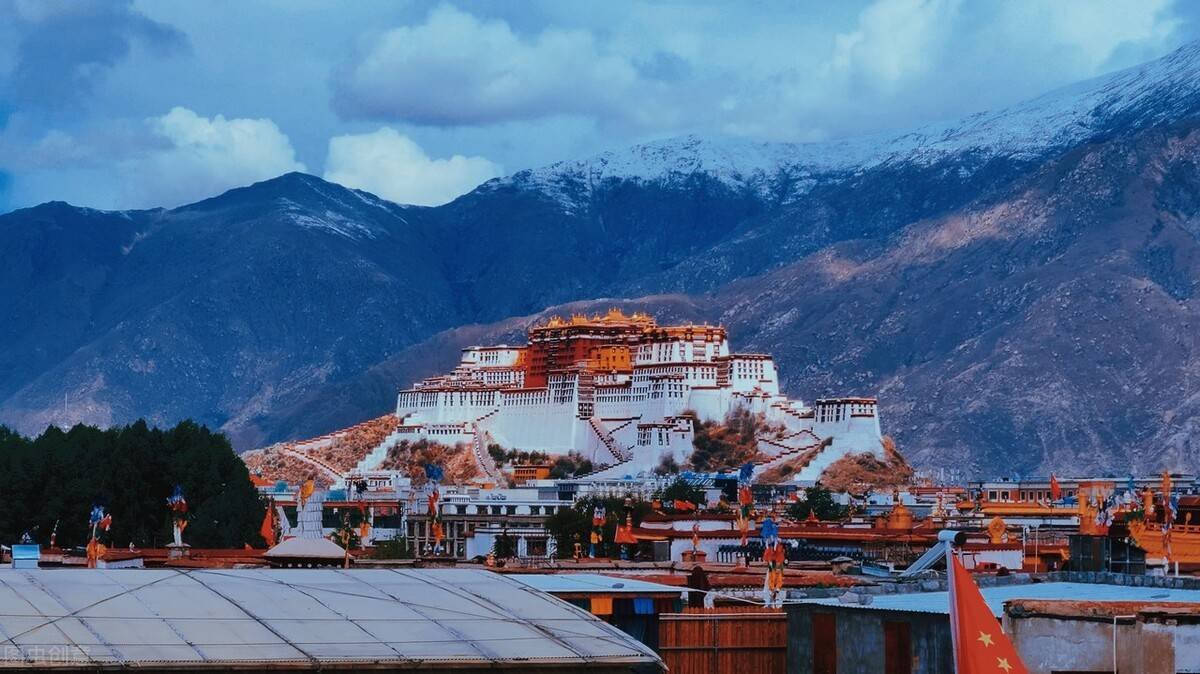
The morning is devoted to the Potala Palace, built in 641 AD and a UNESCO World Heritage Site. It served as the winter residence of the Dalai Lama and remains one of the most architecturally and spiritually significant structures in Tibet. The afternoon moves to Jokhang Temple, the focal point of Tibetan pilgrimage, where devotees travel great distances to worship. The day ends with a walk along Barkhor Street, the traditional circular pilgrimage route that surrounds the temple, lined with local market stalls and a constant flow of pilgrims.
This day involves a scenic drive of approximately 6.5 hours, with a stop at Yamdrok Lake — one of Tibet’s three most sacred lakes. Its turquoise waters set against snow-capped mountains are one of the most photographed sights in the region, and for Tibetan people, the lake holds deep religious significance.
The afternoon brings a visit to Pelkor Monastery in Gyantse, notable for its well-preserved frescoes, statues, and sculptures. The overnight stop is in Shigatse, Tibet’s second-largest city.
The morning begins with a visit to TashiLhunpo Monastery in Shigatse, one of the most historically significant sites in Tibetan Buddhism. The drive then continues to Sakya Monastery, which holds a remarkable collection of over 3,000 handwritten sutras, some thousands of years old. It is one of the most culturally rich stops on the entire journey.
The trekking portion of the journey starts here. This first day covers 8 kilometres over 4 to 6 hours, moving from Old Tingri to Tsojan Village at an altitude of 4,500 metres. The night is spent camping in tents beneath an open sky.
Another 4 to 6 hours of trekking brings you to the small village at Lama La Pass, sitting at 5,100 metres. The landscape here is stark, wide, and deeply quiet. Camping overnight.
The trail continues to Zemukh, a village at 4,900 metres, again covering the distance in 4 to 6 hours. The route passes through traditional Tibetan settlements and open highland terrain, with the mountains growing more prominent with each passing kilometre.
The final day of trekking leads to Rongbuk Monastery, the highest temple in the world at 5,200 metres. The approach to the monastery is one of the most dramatic stretches of the entire route, with the north face of Everest gradually filling the horizon. Camping near the monastery overnight.
The day begins early. After breakfast, a sightseeing bus covers the 8 kilometres from Rongbuk Monastery to Everest Base Camp — though those with energy to spare can walk the distance instead. At base camp, the scale of Everest becomes fully real: the snow-covered summit, the famous Flag Cloud, and the surrounding glaciers make for an experience that is difficult to prepare for in advance.
The afternoon involves a 3-hour drive of approximately 100 kilometres back to Tingri, with a lunch stop, before continuing to Shigatse for the overnight stay.
The return journey to Lhasa covers around 400 kilometres along a route that follows the Yarlung Zangbu River through changing Tibetan landscapes. The drive allows for stops along the way — for photography, to stretch, or to watch pilgrims on the road.
The final day is free until your guide arranges a transfer to the airport or train station. It is a natural pause before departure — time to absorb what the past twelve days have covered, from the monastery courtyards of Lhasa to the glaciers at the foot of the world’s highest mountain.
Going in with the right expectations is key for a trek like this in Tibet. The journey begins with a gradual pace, especially during the first three days in Lhasa, allowing your body to properly acclimatize to the altitude. Once trekking begins, daily hikes of 4–6 hours cover steady distances, but at elevations between 4,500 and 5,200 metres, even moderate walking requires patience. Moving slowly and consistently is the best approach to fully enjoy the experience.
Accommodation during the trekking phase is primarily camping, including nights near Rongbuk Monastery, where you can witness the north face of Mount Everest from your campsite. Conditions are basic, and nights can be cold, so preparation is essential. At the same time, the cultural journey remains a strong part of the experience, with meaningful visits through towns like Gyantse, Shigatse, and Sakya, adding depth and context beyond the trek itself.
Permits are required to access the Everest region, and arrangements must be made in advance. The journey builds steadily toward its final highlight—reaching Everest Base Camp. An early morning here reveals sunrise over Everest, with the famous “flag cloud” drifting from the summit. The scale, silence, and sense of achievement after days of travel combine to create a moment that defines the entire experience.
The Everest Base Camp trek on the Tibetan side stands apart by combining culture and landscape into one seamless journey. It begins in Lhasa, where you explore the living heart of Tibetan Buddhism through Potala Palace, Jokhang Temple, Drepung Monastery, and Sera Monastery. This early immersion provides real context, so by the time the trekking begins, you already understand the spiritual significance of the land you are crossing.
As the journey unfolds, it offers layers rarely found in a single itinerary. You pass the sacred waters of Yamdrok Lake on the way to Gyantse, explore the culturally rich Sakya Monastery with its vast collection of handwritten sutras, and reach Rongbuk Monastery at 5,200 metres. Each location adds depth, blending natural beauty with centuries of history and religious tradition.
The final highlight is arriving at Everest Base Camp, where the north face of Mount Everest dominates the horizon. Here, you witness the summit, the famous “flag cloud,” and glaciers stretching outward in silence. What makes this tour truly special is how it builds gradually—day by day—from cultural discovery in Lhasa to the powerful stillness at the foot of the world’s highest peak.
Here are our contact options for your convenience:
Feel free to reach out anytime!
Yes, you have the option to cancel your tailor-made tour. However, be aware that cancellation charges will be applied as per the Tour Tibet cancellation policy. For detailed information, please review our Terms and Conditions.
Arranging a tour in Tibet independently is not possible due to the mandatory Tibet Travel Permit. This essential document is a requirement for all foreign visitors traveling to the region and can only be obtained through a local travel agency authorized by the Tibet Tourism Bureau.
Absolutely! We encourage you to visit our office and discuss your travel plans directly with our experienced travel consultants. Together, we can create a tailor-made Tibet tour that suits your preferences and requirements.
After confirming your tour arrangements, a deposit of 20% of the total trip cost is required to secure your booking. This deposit can be made via PayPal, Credit Card, Western Union, or Wire Transfer. The remaining balance is due at the start of your tour.