Tibetan people
Tibetan Customs
Major Festivals in Tibet
Tibetan Language

Tibet is one of those destinations that stays with you long after you leave. Between its sweeping mountain plateaus, centuries-old monasteries, and rare wildlife, it offers something few places in the world can match. The Tsurphu to Yangpachen trek captures all of this in a single journey — one that blends spiritual depth, natural wonder, and genuine adventure.
The Tsurphu to Yangpachen trek is not a typical mountain walk. It moves through monasteries and mountain passes, past rare wildlife and thermal springs, alongside ancient pilgrimage routes and remote villages. Each day builds on the last, and by the time you board your flight or train out of Lhasa, you leave with something more than photographs — a genuine understanding of what makes Tibet so remarkable.
This tour is designed for travellers who want more than a highlight reel. It suits those who are genuinely curious about Tibetan Buddhism and want to experience it in its natural setting — not through glass, but by walking the same paths as pilgrims and monks.
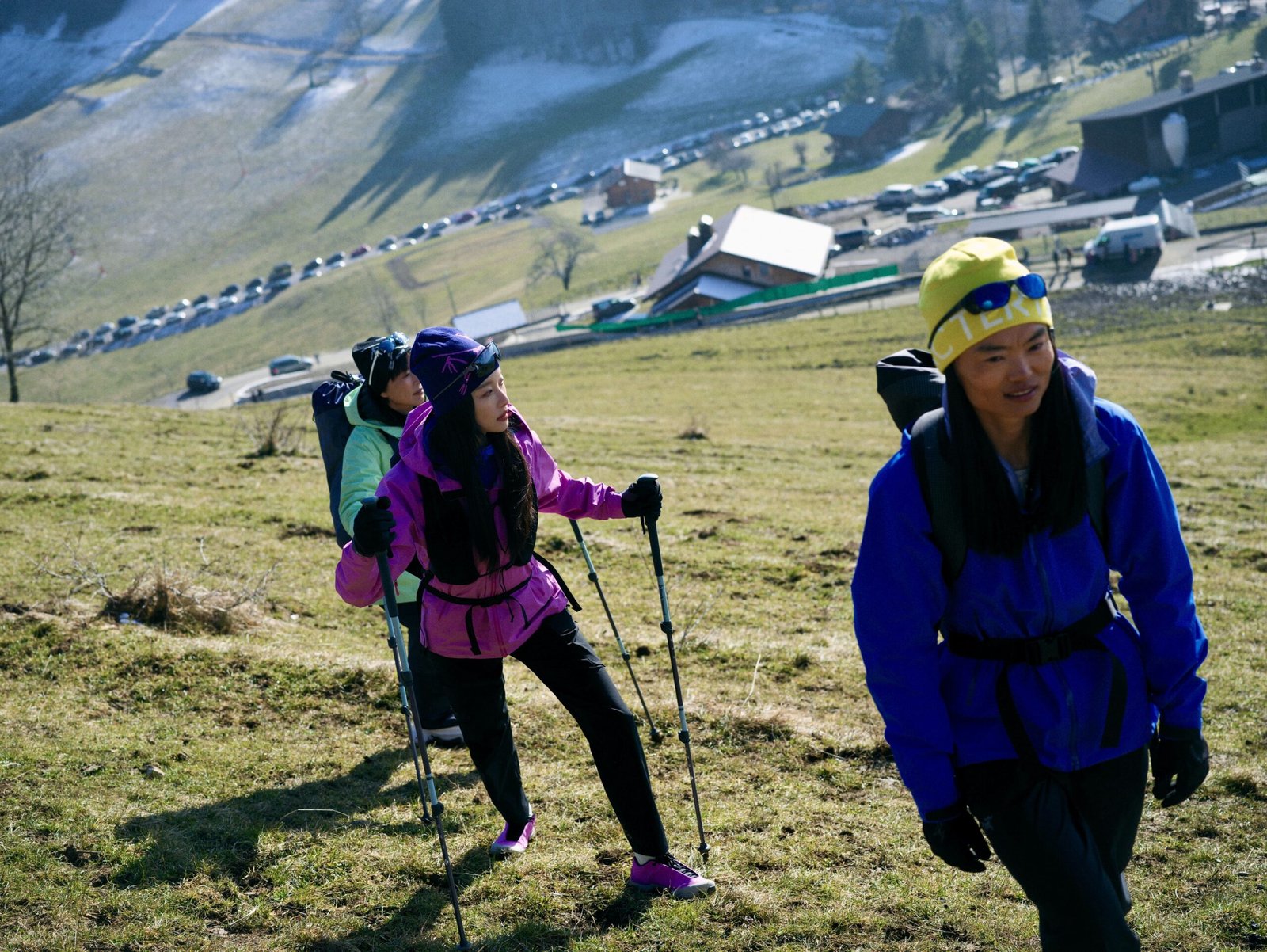
It is a strong fit for people who enjoy being physically active but also value the quieter moments: sitting with a view of the Nyenchen Tanglha Mountains, wandering through a small village at altitude, or soaking in a natural hot spring after a long day on the trail. The trek asks for a steady fitness level and a willingness to camp, but it does not require technical mountaineering experience.
Those who appreciate rare wildlife encounters will find the northern Tibetan grasslands deeply rewarding. The Tibetan antelope, wild yak, and Tibetan wild donkey are not animals most people ever see in the wild — and here, they are simply part of the landscape.
This tour also works well for travellers who want a structured journey with a clear sense of progression. Each day builds naturally on the last, moving from the cultural richness of Lhasa to the physical challenge of the high passes to the stillness of Namtso Lake. There is a satisfying arc to the nine days, and by the end, every part of it feels earned.
The trekking season in this part of Tibet generally runs from late spring through early autumn. During this period, the trails are accessible, the grasslands are at their most vivid, and wildlife is most active on the northern plateau. The Qiangtang grassland that features prominently on days five and six is best experienced when the ground is not frozen and the visibility is clear.
Visiting during this window also means the geothermal landscape at Yangbajing is fully accessible, and the hot springs — one of the trek’s highlights — are most enjoyable after cool days on the trail. Namtso Lake, sitting at over 4,700 metres, is best approached when the mountain road over Legen La Pass is free of ice and snow.
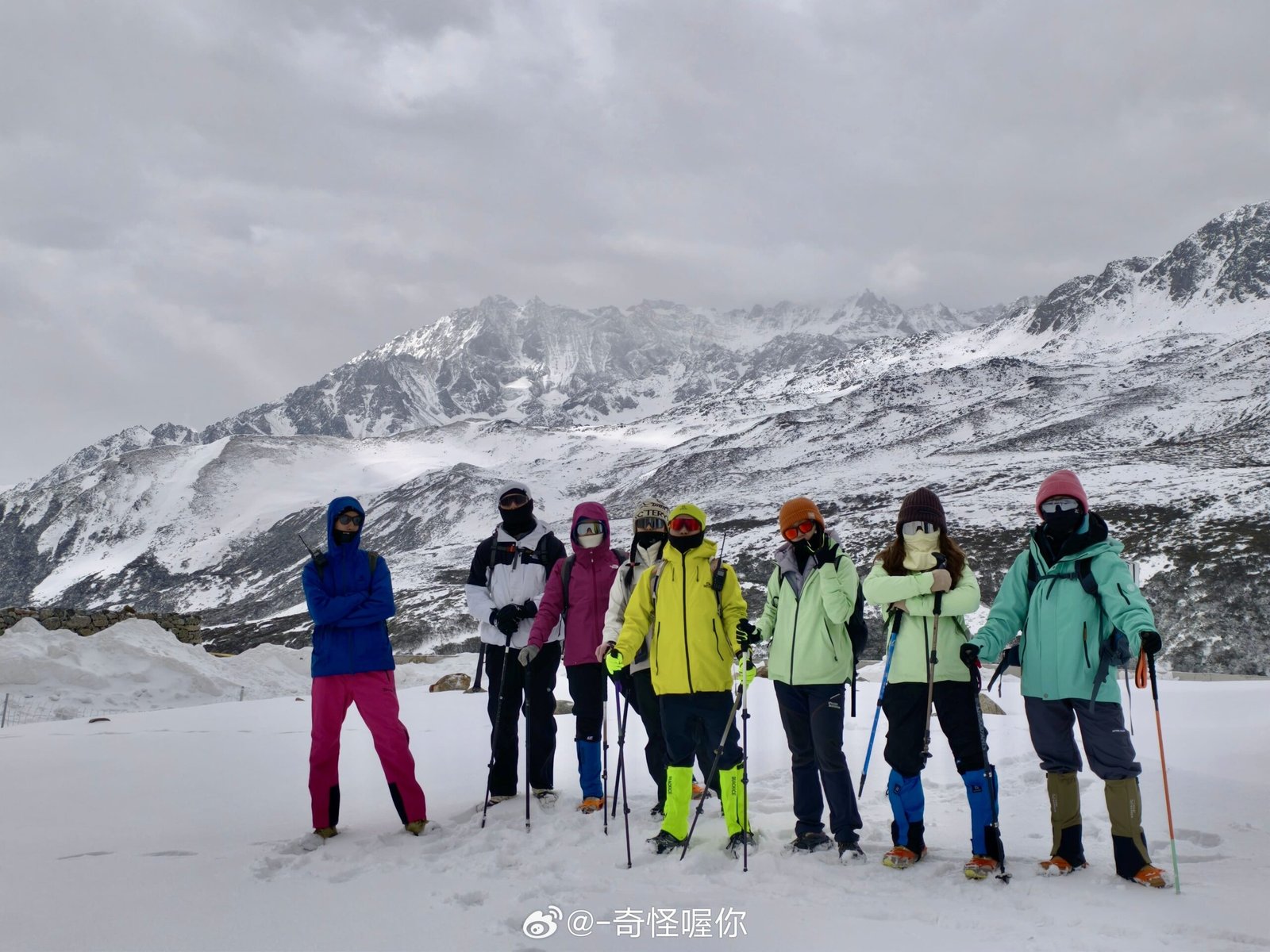
Regardless of when you visit, layers and warm clothing are essential. Temperatures at altitude can shift dramatically between day and night, and mornings at camp will be cold even in the height of summer.
Your journey begins in Lhasa, known as the “roof of the world.” Whether you arrive by air or by train, a guide and private vehicle will be waiting to take you to your hotel in the city.
On the drive in, you will pass along the Yarlung Tsangpo River and catch your first glimpses of Tibetan life — large Buddha carvings etched into hillsides, prayer flags dancing in the wind, and the open warmth of the local people. The rest of the day is intentionally unscheduled, giving you time to rest and acclimatize to the high altitude at your own pace.
The second day takes you through three of Lhasa’s most important spiritual sites. The morning begins at Norbulingka Park, once the summer residence of the Dalai Lama. Its well-kept gardens and traditional Tibetan architecture make it a peaceful place to start the day. From there, you head to Drepung Monastery, historically one of the largest Tibetan Buddhist monasteries in the world — at its peak, it housed up to 10,000 monks. A visit here gives you a rare look into the daily rhythm of monastic life.
In the afternoon, the journey continues to Sera Monastery, famous for its “Buddhism Scriptures Debating” sessions. Watching monks engage in these animated philosophical exchanges is one of the most distinctive experiences in all of Tibet.
Day three focuses on Lhasa’s most iconic sites.
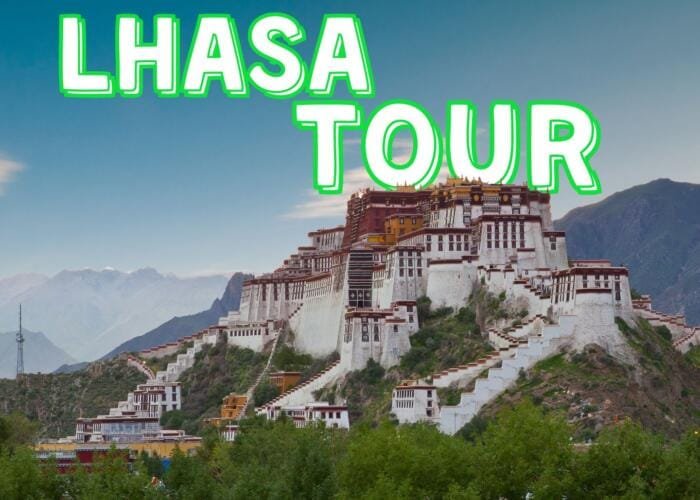
The morning is spent at the Potala Palace, built in 641 AD and once the winter residence of the Dalai Lama. Its grand Tibetan architecture, golden Buddha statues, and the presence of red-robed lamas make it a deeply memorable visit.
In the afternoon, you visit Jokhang Temple, considered the spiritual heart of Tibet. Pilgrims travel from across the region to worship here. The experience is completed with a walk along Barkhor Street, following the traditional kora (pilgrimage circuit). The street is lined with local crafts and filled with a constant stream of devotees — an immersive introduction to Tibetan culture.
The trek officially begins on day four. You start with a drive from Lhasa to Tsurphu Monastery, the seat of the Karmapa and a major stronghold of the Karma Kagyu school of Tibetan Buddhism. Take time to absorb the spiritual atmosphere before lacing up your boots.
About one kilometre from the monastery, the trail forks — take the right path. The route follows the Baima Qiongzong Canyon, a scenic stretch that passes through a small mountain village after around four kilometres. The path continues past the Chubu River, where you will come across an ancient Manidui — a sacred stone pile marking a significant site. Two paths lead onward to camp; the left tends to be easier.
After crossing a mountain pass, Leding Village comes into view — a beautiful cluster of white Tibetan-style houses scattered across a grassy hillside. You camp here for the night.
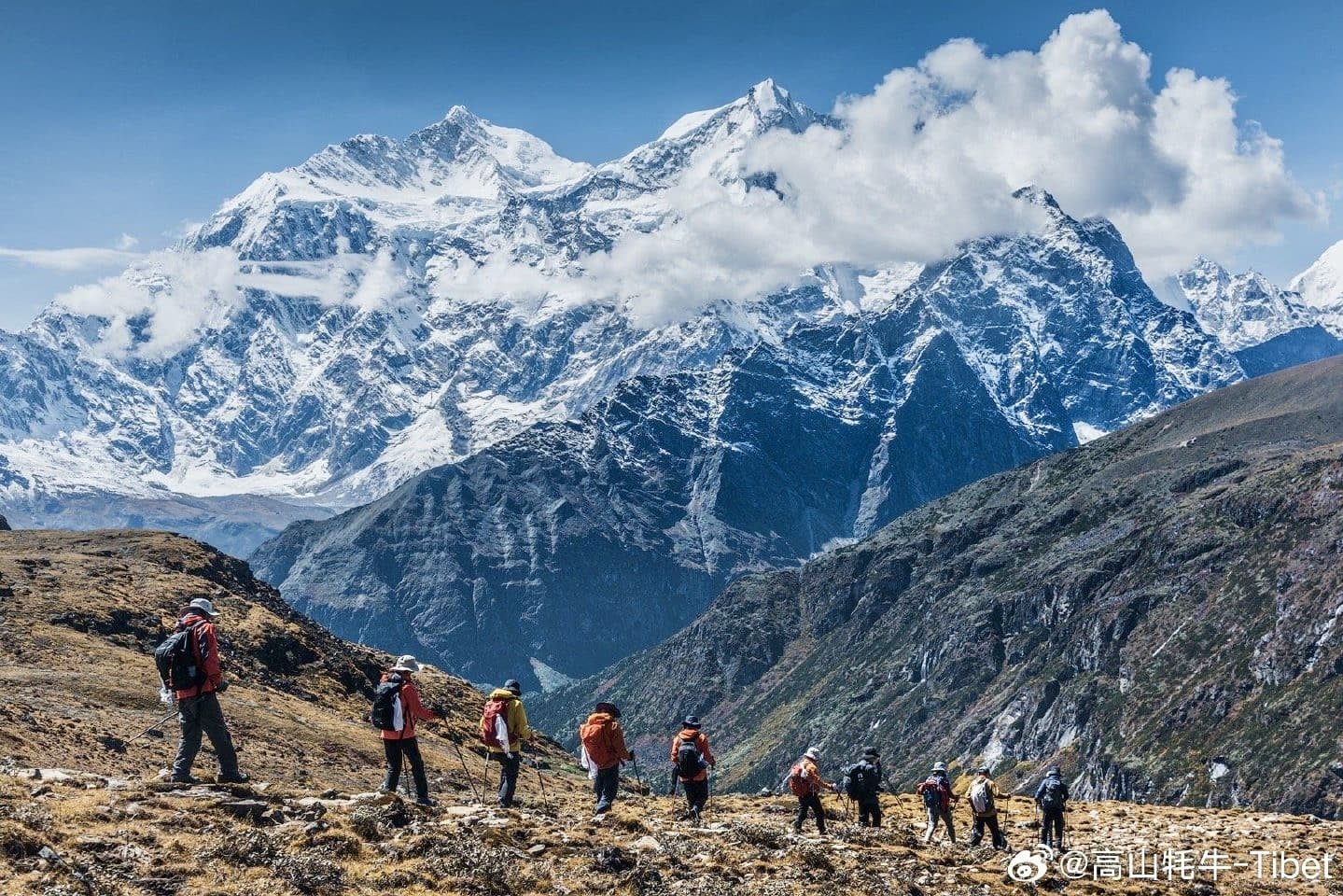
Today’s 15-kilometre trek takes you higher into the Tibetan landscape. About six kilometres in, you reach the day’s highest point: Lazara Pass at 5,300 metres. The altitude is demanding, but the reward is extraordinary — eagles soaring overhead and panoramic views of the Nyenchen Tanglha Mountains stretching across the horizon, with vast grasslands rolling out beneath them.
After descending from the pass, the terrain opens up into expansive grassland. The day ends at Bacuo Village, a small, quiet settlement nestled in this open landscape. You camp here overnight.
This 15-kilometre trek takes approximately 7 to 8 hours and passes through some of the most varied terrain of the journey. The route crosses a river and climbs along mountain roads, offering sweeping views of the Qiangtang grassland to the right, with small villages visible in the distance. A gradual ascent leads to a rewarding vantage point at the top before the trail descends into a peaceful valley where a river runs gently through.
The final stretch takes you alongside the river and over the mountains toward Dorjeling, where snow-capped peaks, green grasslands, and the backdrop of the Himalayas create a setting that is difficult to put into words.
After breaking camp and eating breakfast, you set out on a 14-kilometre trek taking roughly 7 to 8 hours.
Around midday, you arrive at Yangbachen Temple, a site with nearly 500 years of history and the main temple of the Karma Kagyu sect. It is an important place of pilgrimage and offers both spiritual significance and exceptional architecture.
For those looking to rest tired muscles after the day’s walk, an optional visit to the Yangbachen Hot Springs is available nearby. These natural thermal springs are well known for their therapeutic properties and provide a genuinely restorative experience in the middle of the wilderness.
Day eight trades hiking boots for a vehicle seat. You drive toward Namtso Lake, crossing the Legen La Pass at 5,190 metres, where the views are nothing short of breathtaking.
Arriving at the Tashi Dor Peninsula, you are met with the stunning sight of the lake itself — flanked to the north by the snow-covered Thangula range and to the east by the Nyenchen Thangla mountains. Namtso is often called the “Heavenly Lake,” and standing on its shores, it is easy to understand why. You spend the night camping beside the water under an open, star-filled sky. The following afternoon, a four-hour drive returns you to Lhasa.
Your final day in Lhasa is yours to use as you wish — whether that means a quiet stroll through the city, a last round of souvenir shopping, or simply sitting still and letting the experiences of the past nine days settle. When it is time to leave, your guide will arrange a smooth transfer to the airport or train station.
Most treks offer either scenery or culture, but the Tsurphu to Yangpachen route brings both together seamlessly. From your first days in Lhasa, you step into living Tibetan history. Visits to Potala Palace, Jokhang Temple, Drepung Monastery, and Sera Monastery are not just sightseeing stops—they are active spiritual centres where monks debate, pilgrims pray, and traditions continue unchanged. This deep cultural immersion begins even before the trekking starts.
As the journey unfolds, the landscape transforms dramatically. The trail leads through river valleys, along narrow paths, and across high mountain passes reaching up to 5,300 metres. You move into the vast openness of the Qiangtang Grassland, where remote villages and traditional Tibetan homes appear scattered across the hillsides. Each day presents a completely different environment, creating a sense of constant discovery and adventure.
What truly sets this trek apart is the combination of iconic landmarks rarely found together in one itinerary. The journey begins at Tsurphu Monastery and continues toward Yangbachen Temple, before reaching the breathtaking Namtso Lake. Along the way, you also encounter the geothermal landscapes of Yangbajing, spot wildlife like Tibetan antelopes and wild yaks, and camp under the stars beside the “Heavenly Lake”—creating a journey that captures the full spirit of Tibet.
Here are our contact options for your convenience:
Feel free to reach out anytime!
Yes, you have the option to cancel your tailor-made tour. However, be aware that cancellation charges will be applied as per the Tour Tibet cancellation policy. For detailed information, please review our Terms and Conditions.
Arranging a tour in Tibet independently is not possible due to the mandatory Tibet Travel Permit. This essential document is a requirement for all foreign visitors traveling to the region and can only be obtained through a local travel agency authorized by the Tibet Tourism Bureau.
Absolutely! We encourage you to visit our office and discuss your travel plans directly with our experienced travel consultants. Together, we can create a tailor-made Tibet tour that suits your preferences and requirements.
After confirming your tour arrangements, a deposit of 20% of the total trip cost is required to secure your booking. This deposit can be made via PayPal, Credit Card, Western Union, or Wire Transfer. The remaining balance is due at the start of your tour.