
The Ultimate Holy Mt. Kailash and Manasarovar Meditation Tour is a 14-day slow and deeply spiritual journey across Tibet. It combines classic sightseeing with focused meditation at the most sacred locations around Mount Kailash and Lake Manasarovar.
This tour is designed for travelers who want more than photography and checkpoints. It creates space for silence, mantra practice, reflection, and connection with Tibetan pilgrimage traditions.

Core Spiritual Highlights
Meditation in Sacred Locations
The journey includes dedicated meditation sessions at powerful spiritual sites:
- Temples and monasteries in Lhasa
- Rongbuk Monastery near Everest
- Drirapuk Monastery during the Kailash kora
- Shores of Lake Manasarovar
You will have time for silent sitting, mantra recitation, and walking meditation while observing Tibetan pilgrims as they circumambulate and chant.
Cultural and Pilgrimage Immersion
Participants may connect with monks, nuns, and local pilgrims, witnessing devotional practices firsthand. The experience blends the outer journey across Tibet with inner reflection.
Route and Landscape Highlights
This classic overland route follows:
Lhasa – Gyantse – Shigatse – Everest Base Camp – Saga – Darchen – Kailash – Manasarovar – Saga – Sakya – Shigatse – Lhasa
Along the way, you will visit:
- Yamdrok Lake
- Karola Glacier
- Himalayan ranges
- Wide-open Tibetan plateau landscapes
Sunrise meditation near Everest offers a powerful combination of mountain scenery and spiritual practice.
Kailash and Manasarovar Focus
Kailash Kora Experience
The tour usually includes the Darchen to Drirapuk section of the kora. A full half-day is reserved for meditation in and around Drirapuk Monastery, directly facing the north face of Mount Kailash.
Guides share stories about the sacred importance of Mount Kailash in Buddhism, Hinduism, Bon, and Jain traditions.
Lake Manasarovar
At Lake Manasarovar, the experience goes beyond a short stop. You will:
- Sit and meditate by the lake
- Hang prayer flags
- Walk along the shoreline
- Visit Chiu Monastery and its meditation caves
Practice-Oriented Design
This tour emphasizes reflection and pacing.
- Shorter walking days where possible
- Dedicated “meditation blocks”
- Gentle daily themes such as purification, compassion, and pilgrimage intention
- Quiet time for journaling, chanting, or rest
The schedule is structured to allow personal retreat within a group setting.
Comfort and Support
- Gradual Acclimatization: Several days are spent in Lhasa and central Tibet before ascending toward Everest and Kailash. This helps reduce altitude stress.
- Supported Kora: Vehicle support during the kora section is offered where allowed. This allows participants with moderate fitness levels to focus on spiritual practice instead of completing the full three-day circuit.
Experienced Tibetan guides assist with both pilgrimage logistics and basic meditation guidance.
Ultimate Holy Mt. Kailash and Manasarovar Meditation Tour: Complete 14-Day Day-by-Day Itinerary
The Ultimate Holy Mt. Kailash and Manasarovar Meditation Tour is a carefully designed 14-day spiritual journey across Tibet. This route combines sacred monasteries, Himalayan landscapes, and guided meditation sessions at some of the most important pilgrimage sites in the region.
Below is the detailed, day-by-day itinerary of this Mount Kailash and Lake Manasarovar meditation tour.
Day 1 – Arrival in Lhasa (3,650m)
Upon arrival at the airport or train station, you will receive a traditional white hada welcome. A private transfer will take you to your hotel in Lhasa.
After check-in, there will be a short tour briefing, including important information about altitude adjustment. The rest of the day is reserved for acclimatization. No sightseeing is scheduled. A gentle walk near the hotel and early sleep are recommended.
Day 2 – Potala Palace, Jokhang Temple & Barkhor
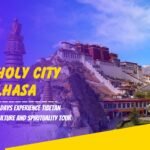
In the morning, visit the magnificent Potala Palace. Explore both the White Palace and the Red Palace, see the stupas of past Dalai Lamas, and enjoy panoramic views over Lhasa.
In the afternoon, continue to Jokhang Temple, home to the revered statue of the 12-year-old Sakyamuni. Afterward, join local pilgrims walking the kora around Barkhor Street and explore the lively old town.
A stop at a traditional tea house offers a taste of Tibetan sweet tea. The evening is free for personal time in the old town.
Day 3 – Pabonka, Rizhui Meditation & Sera Monastery
Drive to the cliff-side Pabonka Palace and visit the meditation cave of King Songtsen Gampo. Then take a 30-minute hike up to Pabongka Rizhui for a quiet and extended meditation session with a bird’s-eye view over Lhasa.
In the afternoon, visit Sera Monastery. Observe the famous monk debates, see sand mandala artwork, explore scripture printing areas, and visit the main assembly hall.
Day 4 – Lhasa – Gyantse – Shigatse (360 km)
Cross Gampala Pass (4,790 m) for your first panoramic view of Yamdrok Lake and Mt. Nyenchen Khangsar.
Spend time along the lakeshore and enjoy the stunning turquoise waters. Optional photos with a Tibetan mastiff are available.
Continue to Karola Glacier and Simila Pass, decorated with colorful prayer flags. Visit Pelkor Monastery and the Gyantse Kumbum Stupa before driving onward to Shigatse for overnight stay.
Day 5 – Shigatse – Everest Base Camp (350 km)
In the morning, visit Tashilhunpo Monastery, the traditional seat of the Panchen Lama. Enjoy a meditation session inside the assembly hall accompanied by monks’ chanting.
Drive across Tsola Pass, Gyatsola Pass, and Gawu La Pass for wide Himalayan views. Continue by eco-bus to Rongbuk Monastery.
At Everest Base Camp, enjoy a sunset view of Mount Everest. Overnight in a yak-hair tent or Rongbuk guesthouse.
Day 6 – Everest Base Camp – Saga (450 km)
Witness sunrise over the east face of Mount Everest. Afterward, take part in a morning meditation at Rongbuk Monastery.
Drive past Lake Peiku Tso with views of Mt. Shishapangma (8,012 m). Continue through the Yarlung Tsangpo valley landscapes before reaching Saga for overnight stay.
Day 7 – Saga – Lake Manasarovar – Darchen (Approx. 450 km)
Drive along the Yarlung Tsangpo River valley, where grasslands gradually change into high-desert scenery. Pass through Zhongba County and remote villages along the way.
Stop at the northeastern shore of Lake Manasarovar to enjoy views of this sacred lake.
Continue to Darchen (4,575 m), the gateway village at the base of Mount Kailash. Rest and prepare for the upcoming trek.
Day 8 – Darchen – Drirapuk (Drive 7 km, Trek 13 km)
Take an eco-bus from Darchen to Sarshung Valley and meet yaks and porters.
Trek along the La Chu (Sarshung) Valley with views of Chuku Monastery and the west and north faces of Mount Kailash.
Reach Drirapuk Monastery (5,210 m), considered the highest monastery in the region. Overnight in the monastery guesthouse.
Day 9 – Meditation at Drirapuk & Return to Darchen
Begin the day with an early meditation session in and around Drirapuk Monastery and its sacred meditation sites.
Spend extended time facing the north face of Mount Kailash for quiet reflection and practice.
After lunch, trek downhill through La Chu Valley back to Sarshung and return by eco-bus to Darchen for overnight stay.
Day 10 – Lake Manasarovar Meditation – Saga
Drive from Darchen back to Lake Manasarovar.
Hang prayer flags and take part in lakeside meditation on the shore of this sacred lake. Enjoy a gentle walk along the water.
Visit Chiu Monastery, known for the meditation cave of Guru Rinpoche. After a short visit, continue the long drive back to Saga for the night.
Day 11 – Saga – Sakya (350 km)
Drive along the G219 highway through Trans-Himalayan landscapes of valleys, rivers, and high mountain scenery toward Sakya. Evening at leisure in Sakya town.
Day 12 – Sakya – Shigatse (170 km)
Visit Sakya Monastery, the seat of the Sakyapa school, known for its Mongolian-style architecture and rich murals.
In the afternoon, drive back to Shigatse along the Friendship Highway.
Day 13 – Shigatse – Lhasa (274 km)
Enjoy a full-day scenic drive from Shigatse to Lhasa. Stop for lunch along the way and take photos at selected viewpoints.
Spend your final evening in Lhasa.
Day 14 – Departure from Lhasa
Transfer to Lhasa airport or train station for your onward journey.
Best Time for the Mt. Kailash Kora Trek
Choosing the right season is essential for a safe and meaningful Mt. Kailash Kora trek. Weather, trail conditions, and temperature changes at high altitude all affect your experience on the 52 km circumambulation around Mount Kailash.
Ideal Months: May to June & September to October
May to June and September to October are widely considered the best times for the Mount Kailash Kora. These months offer clear skies, stable trails, and comfortable daytime temperatures between 5°C and 20°C.
During these periods, the weather is generally dry and visibility is excellent, allowing clear views of Mount Kailash and the surrounding Himalayan landscape. The trekking paths are more stable, making the high-altitude walk safer and more enjoyable.
Weather Overview at High Altitude
The Mount Kailash Kora takes place at elevations between 4,600 and 5,600 meters. Weather can change quickly, and temperature differences between day and night are significant.
- Daytime temperatures: 10°C to 23°C during peak trekking months
- Night temperatures: -5°C to 9°C
While daytime conditions are comfortable for walking, nights are cold and require proper thermal layers.
Strong ultraviolet radiation is common at high altitude. Sunscreen must be applied regularly, and quality sunglasses are essential to protect your eyes from intense sunlight.
Monthly Temperature & Trek Suitability Overview
| Month | Daytime Temp | Night Temp | Conditions | Trek Suitability |
|---|---|---|---|---|
| May–June | 12–23°C | -4–9°C | Clear skies, mild weather | Excellent |
| July–August | 14–22°C | 3–10°C | Possible rain, warmer conditions | Good |
| September–October | 6–20°C | -9–8°C | Crisp air, post-monsoon clarity | Excellent |
| November–March | -2–12°C | -19– -3°C | Snow and ice, roads often closed | Avoid |
Understanding the seasonal patterns helps you plan the Mount Kailash Kora at the safest and most comfortable time of year.