Tsangyang Gyatso remains one of the most fascinating and mysterious figures in Tibetan history. Known as the Sixth Dalai Lama, he was not only a spiritual leader but also a gifted poet whose verses about love, longing, and human emotions still resonate across the Tibetan Plateau.
His life combined spirituality, poetry, romance, and political turmoil. From his remarkable birth to his mysterious disappearance at a young age, Tsangyang Gyatso’s story continues to captivate readers, pilgrims, and travelers interested in Tibetan culture.
Birth and Early Life of Tsangyang Gyatso
Tsangyang Gyatso was born in 1683 in the Mon region of the eastern Himalayas, near present-day Tawang. His birthplace was a quiet village called Urgyeling, where his family lived a simple life.
His father was a devoted lama of the Nyingma tradition, while his mother came from a humble local family. Soon after his birth, signs and prophecies suggested that the child possessed an extraordinary destiny.
At just two years old, he was recognized as the reincarnation of Ngawang Lobsang Gyatso, the powerful spiritual and political leader of Tibet.
However, due to political complexities and secrecy surrounding the death of the Fifth Dalai Lama, the young boy’s identity was kept hidden for many years.
Enthronement in Lhasa
In 1697, at the age of fourteen, Tsangyang Gyatso was finally brought to Lhasa and enthroned as the Sixth Dalai Lama.
The enthronement ceremony took place in the magnificent Potala Palace, which had served as the residence of the Dalai Lamas since the time of the Fifth Dalai Lama.
Although he officially held the highest spiritual authority in Tibet, Tsangyang Gyatso soon showed that his life would be very different from that of previous Dalai Lamas.
A Dalai Lama Who Lived Beyond Monastic Rules
Unlike many other Dalai Lamas who devoted themselves entirely to monastic discipline, Tsangyang Gyatso chose a more unconventional path.
He refused to take full monastic vows and often dressed like a layman instead of a monk. Rather than remaining inside the Potala Palace, he frequently wandered through the streets of Lhasa, especially around the lively Barkhor Street.
Stories about the young Dalai Lama visiting teahouses, singing songs, and meeting ordinary people quickly spread throughout the city.
His behavior shocked some religious leaders but made him deeply loved among the common people.
Tsangyang Gyatso as a Romantic Poet
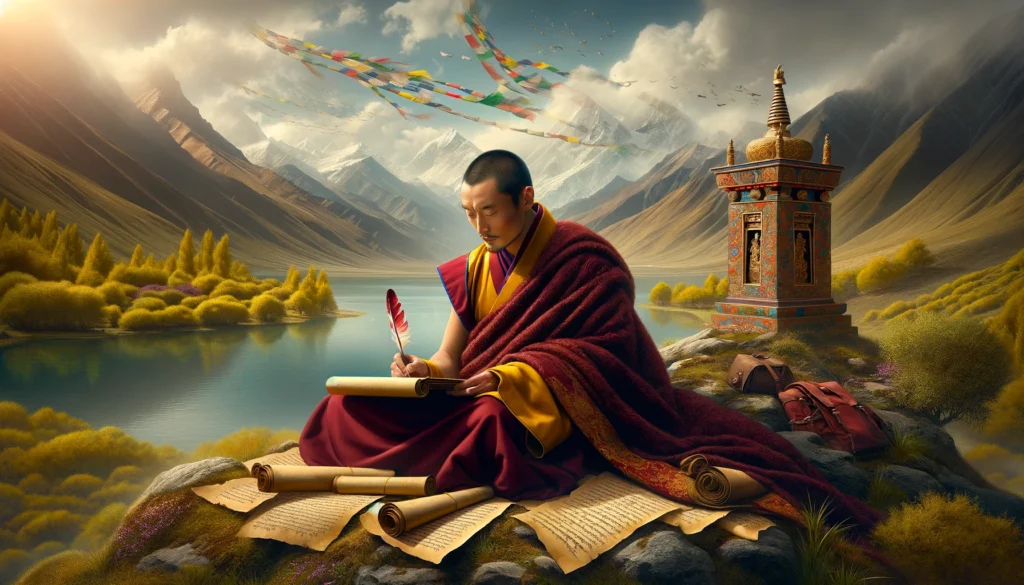
Tsangyang Gyatso is best remembered for his beautiful love poetry. His poems are short, emotional, and written in simple Tibetan language that ordinary people could easily understand.
These verses often speak about love, longing, and the fleeting nature of life.
Many of his poems became widely known throughout Tibet and were passed down through songs and oral traditions.
One of the most famous verses attributed to him says:
“White crane, lend me your wings,
I will not fly far—
From Litang I will return again.”
Another well-known poem reflects the tenderness of his romantic imagination:
“The girl from the east,
With a face like the rising sun,
Has stolen my heart completely.”
Because of these heartfelt poems, Tsangyang Gyatso became one of the most beloved poetic voices in Tibetan literature.
Love Stories and Legends
The romantic nature of Tsangyang Gyatso’s poetry was closely connected with the legends about his personal life.
Despite his position as a monk, stories tell of his relationships with several women in Lhasa. These romances became famous in Tibetan folklore and songs.
One of the most well-known tales describes his love for a young woman named Dawa Dolma. According to popular stories, she was the great love of his life, and their relationship symbolized a deep emotional connection that transcended social expectations.
Accounts of their secret meetings and passionate affection turned Tsangyang Gyatso into a legendary figure of romance in Tibetan history.
Political Turmoil During His Reign
Tsangyang Gyatso’s life unfolded during a period of significant political tension in Tibet.
Power struggles among Tibetan leaders, Mongol rulers, and external forces created an unstable political environment. These conflicts eventually drew the young Dalai Lama into larger regional struggles.
One of the key figures during this time was Lhazang Khan, who later marched into Lhasa and intervened in Tibetan political affairs.
The growing political pressure placed Tsangyang Gyatso in an increasingly difficult position.
The Mysterious End of the Sixth Dalai Lama
In 1706, Tsangyang Gyatso was removed from power by Lhazang Khan and taken away from Lhasa.
He was reportedly sent toward Beijing, but he never reached his destination.
At only 23 years old, the Sixth Dalai Lama disappeared under mysterious circumstances. Some historical accounts suggest he died during the journey near Qinghai Lake, while other legends claim he escaped and lived the rest of his life as a wandering yogi.
The true fate of Tsangyang Gyatso remains one of the great mysteries in Tibetan history.
Enduring Legacy of Tsangyang Gyatso
Even centuries after his death, Tsangyang Gyatso continues to inspire people across the Himalayan region.
His poems are still recited in homes, printed in books, and sung by Tibetans across the plateau. Visitors traveling through Tibet often encounter his verses in markets, monasteries, and cultural gatherings.
Pilgrims and travelers also visit places connected with his life, including:
- Urgyeling, his birthplace near Tawang
- The Potala Palace in Lhasa
- Historic streets around Barkhor where he once walked
Through his poetry and legendary life, Tsangyang Gyatso remains a powerful symbol of love, freedom, and spiritual depth in Tibetan culture.