Sakya: The Birthplace of the Sakya School of Tibetan Buddhism
Sakya, one of the most influential towns in Tibetan history, is the birthplace of the Sakya sect of Tibetan Buddhism and the former capital of the Sakya Dynasty. Rising to prominence in the mid-13th century, Sakya became the political, economic, and cultural center of Tibet for several decades. Even today, the town carries a powerful spiritual presence that reflects its glorious past.
The name Sakya comes from the grey-colored soil of nearby Benboer Mountain. In Tibetan, “Sakya” literally means “grey soil,” a name that visually and symbolically defines the landscape. Walking among the ruins of the Sakya North Temple, visitors can still sense the profound historical and cultural depth of this once-great capital.
Sakya Monastery: The “Second Dunhuang” of Tibet
Founded in 1073 by Khon Konchog Gyalpo, Sakya Monastery stands as one of the most remarkable religious structures in Tibet. Often referred to as the “Second Dunhuang,” the monastery is famous for its unparalleled collection of scriptures, murals, and sacred art.
Under Khon Konchog Gyalpo and his successors, the monastery gradually expanded. His son, Kunga Nyingpo, and later Sakya masters such as Sonam Tsemo and Drakpa Gyaltsen, enlarged the complex, forming an extensive religious center with more than forty structures. The Uze Nyima Hall became the spiritual core of the early monastery.
Sakya Pandita and a Turning Point in Tibetan History
In the mid-13th century, the fourth Sakya patriarch, Sakya Pandita (Kunga Gyaltsen), played a crucial role in shaping Tibet’s historical trajectory. His meeting with Mongol leaders in Liangzhou marked the beginning of a new era, elevating the Sakya school to a position of exceptional influence across Tibet.
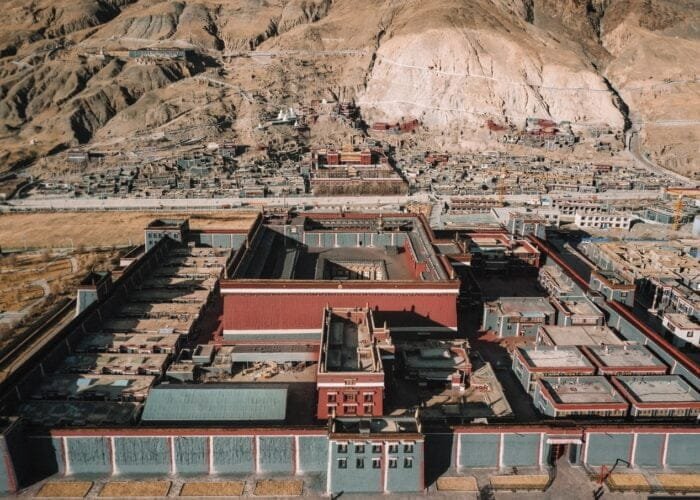
Unlike most Tibetan monasteries, Sakya Monastery was built in a fortress-like architectural style, with thick walls, a rectangular layout, and remnants of a surrounding moat. This design reflects both religious authority and political power. Over its more than 900-year history, the Sakya school ruled Tibet for over 70 years, playing a decisive role in Tibetan governance during the Sakya Dynasty.
The Golden Age and the Rise of Sakya South Monastery (13th–14th Century)
Phagpa Rinpoche and the Expansion of Sakya
The Sakya school reached its height under Phagpa Rinpoche, the fifth Sakya patriarch. In 1268, construction began on Sakya South Monastery, located on the southern bank of the Zhongqu River. This new complex marked a shift from the older northern site and established Sakya as a fully developed religious and administrative center.
Over several generations, the South Monastery expanded into a fortress-like mandala complex, with religious halls, residences, and defensive structures. As the South Monastery flourished, large-scale construction at the North Monastery gradually ceased.
A Center of Learning, Governance, and Culture
For several decades, Sakya functioned as the most powerful religious authority in Tibet. The Khon family lineage produced generations of influential spiritual leaders, scholars, and teachers. Sakya became renowned for its scholastic tradition, scriptural preservation, and artistic patronage, leaving an enduring mark on Tibetan civilization.
The monastery’s exterior is decorated with red, white, and grey stripes, symbolizing Manjushri (wisdom), Avalokiteshvara (compassion), and Vajrapani (power)—three core bodhisattvas in Tibetan Buddhism.
Architectural Layout: North and South Monasteries
Sakya Monastery consists of two main sections: the North Monastery ruins and the South Monastery, which remains the primary site for worship and visitation.
Sakya North Monastery (Ruins)
Located beneath the grey cliffs of Benbo Mountain at an elevation of around 4,316 meters, the North Monastery preserves only foundations and remnants of early structures. Archaeological work has revealed traces of former palaces and halls, offering crucial insight into the origins of Sakya architecture and early Tibetan monastic design.
Sakya South Monastery (Main Complex)
The South Monastery forms a square fortress-like enclosure, covering nearly 45,000 square meters. Surrounded by a former moat and earthen walls, it features corner towers, watch structures, and a single eastern entrance. The design reflects a unique fusion of Tibetan, Chinese, and Indian architectural influences, blending religious symbolism with defensive strength.
Lakhang Chenmo: The Grand Assembly Hall
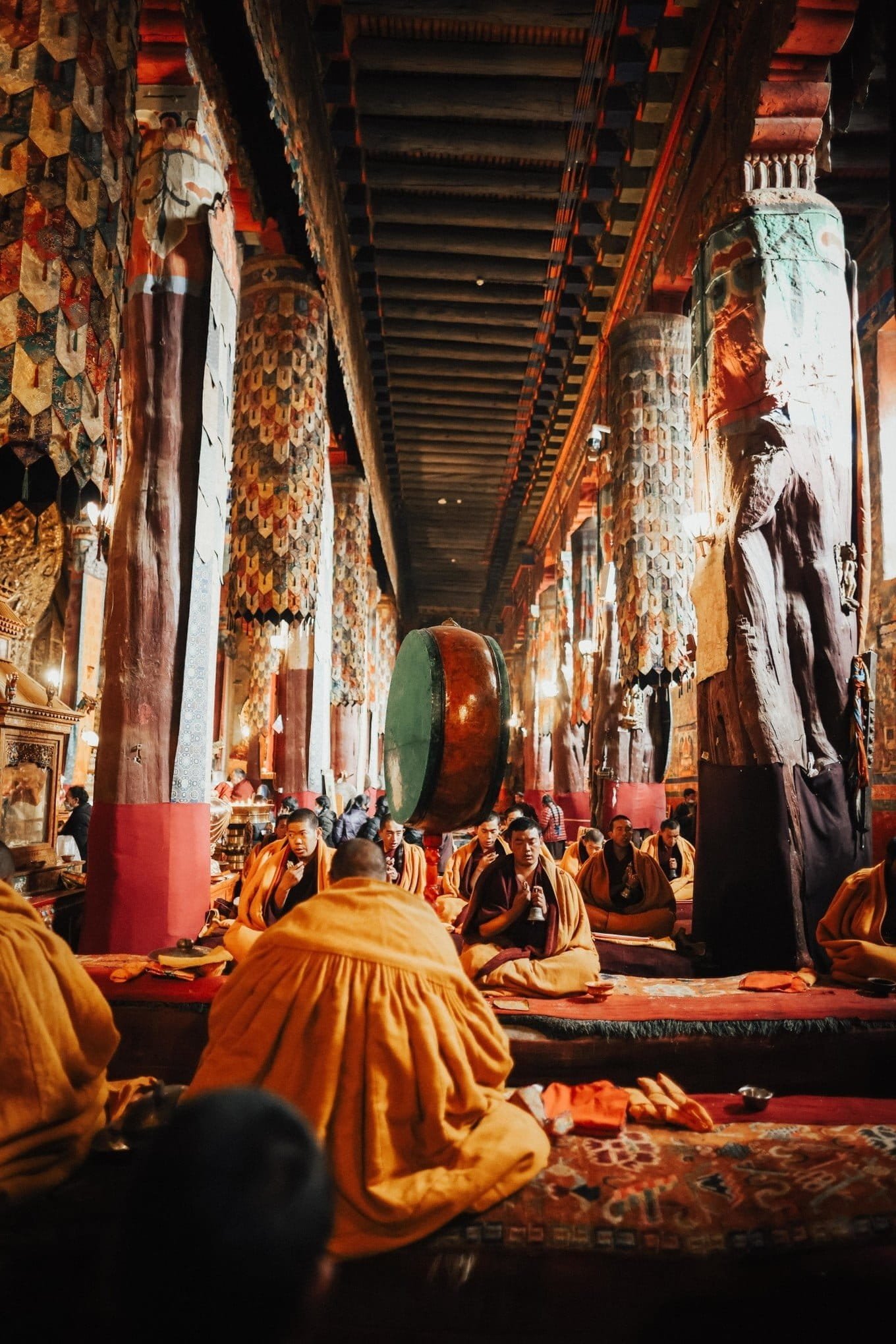
At the heart of Sakya Monastery stands Lakhang Chenmo, the Great Assembly Hall. As the monastery’s main structure, it is both imposing and deeply spiritual. The corridor leading into the hall is lined with golden prayer wheel cylinders, guiding visitors into a sacred atmosphere.
Inside the hall, forty massive columns support the towering structure. Among them, four pillars are especially revered, each wrapped in legend and folklore.
The Four Legendary Pillars of Sakya
- Kublai Khan Pillar: According to legend, this pillar was personally gifted by Kublai Khan, the Yuan Dynasty emperor, symbolizing the close relationship between the Sakya school and imperial authority.
- Bison Pillar: Local stories claim that wild yaks once bowed toward the monastery, leaving horn marks on this pillar as a sign of reverence.
- Ink Blood Pillar: This pillar is associated with sea deity legends. It is said that mysterious blood-like stains appeared on it during transportation to the monastery.
- Tiger Pillar: Perhaps the most famous, the Tiger Pillar is believed to have been carried by a tiger. It stands upright without support, so large that it takes three to four people to encircle it.
Despite centuries of aging, the murals and carvings inside the assembly hall retain remarkable detail, showcasing the artistic mastery of ancient Tibetan craftsmen.

The Sacred White Conch of Sakya
Among Sakya Monastery’s most treasured relics is the White Conch Shell, believed to have been gifted by Kublai Khan. Its spiritual value, however, goes far beyond its royal origins. Tradition holds that Sakyamuni Buddha himself once used this conch, making it a sacred object of immense importance.
Monks believe that the sound of the conch can purify negative karma and cleanse sins. When the conch is blown, monks often line up in a long procession, dedicating the ritual to deceased relatives. They believe this act can reduce suffering in rebirth and guide souls toward virtuous transformation.
Cultural Treasures: The “Four Great Walls” of Sakya
Sakya Monastery houses more than 150,000 cultural relics, earning its reputation as a Himalayan treasury of knowledge and art. Its most famous features are known as the Four Great Walls.
The Great Sutra Wall
Hidden behind Buddha statues in a narrow corridor lies one of Sakya Monastery’s most astonishing treasures—the Sutra Hall. Within this dim and silent space stands the monumental Sutra Wall, a spiritual archive unlike any other in Tibet.
The wall measures 9 meters high and 60 meters wide, containing over 80,000 sutras stored in countless wooden compartments. For centuries, monks painstakingly translated, copied, and preserved scriptures in Sanskrit and Tibetan, often writing with gold or ink-dipped pens.
Standing before the Sutra Wall, visitors experience a profound stillness. Though silent, the space feels alive with the spiritual energy of generations of monks whose hands once touched these sacred texts, dedicating their lives to preserving Buddhist wisdom.

Mural Wall
Nearly 10,000 square meters of murals survive from the Yuan period, including large mandala paintings, lineage portraits of the Khon family, and scenes depicting historic encounters between Sakya masters and Mongol rulers. These murals are invaluable sources for understanding Tibetan art, religion, and history.
Ceramics Wall
Sakya preserves rare ceramic works from different periods, including finely crafted bowls and ritual vessels. Many were offerings presented to Sakya masters over centuries, reflecting the monastery’s historical prestige and artistic exchange.
Statue Wall
Inside the main hall stand seven monumental, immovable Buddha statues, along with thousands of smaller gilded and alloy figures. Some bear inscriptions dating to the early 15th century and are believed to have been crafted by skilled Nepalese artisans.
Sacred Relics and Living Buddhist Traditions
Sakya Monastery’s distinctive white walls and red roofs shelter countless precious relics, including ancient manuscripts, statues, and murals. One of the most revered objects is the Dharma Chakra, believed to have been brought to Tibet by Padmasambhava, the great Indian Buddhist master.
Today, visitors can witness daily prayer sessions, observe monks performing rituals, and explore the monastery’s many halls and shrines. Guided tours and cultural programs offer deeper insight into the Sakya school, Tibetan Buddhist philosophy, and the monastery’s historical role.
A visit to Sakya Monastery is not only a journey through Tibetan history, but also an encounter with a living spiritual tradition that continues to shape Tibetan culture today.
Living Tradition and Cultural Preservation
Sakya Monastery remains an active religious institution, with resident monks performing daily prayers, rituals, and annual festivals such as the Phurba Festival held in the seventh Tibetan month. Scholarly work continues through the study, publication, and transmission of rare Tibetan texts.
Ongoing preservation efforts focus on traditional construction methods, mural conservation, and the gradual digitization of ancient manuscripts. These initiatives ensure that Sakya’s spiritual, artistic, and historical legacy continues to be shared with future generations while remaining rooted in its original cultural context.