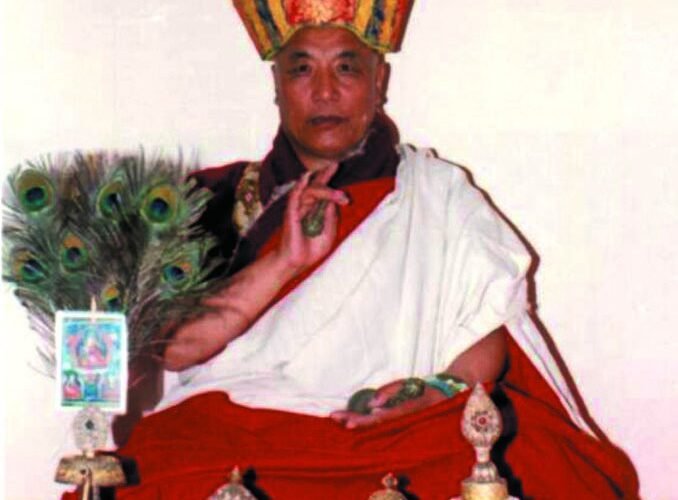
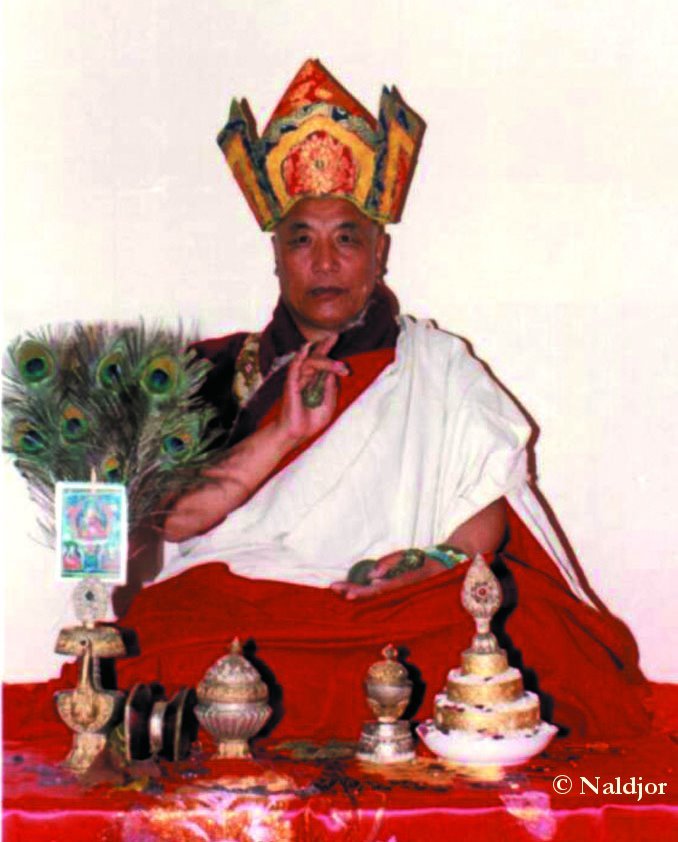
Sherab Özer Rinpoche (Tibetan: ཤེས་རབ་འོད་ཟེར), also written as Sherab Oser Rinpoche, was one of the most revered Tibetan Buddhist masters of the Nyingma tradition in the modern era. Born in 1922 and passing away in 2005, he was widely respected for his deep realization, non-sectarian approach, and lifelong commitment to preserving Tibetan Buddhist culture.
According to oral lineage records and eyewitness accounts from disciples, Sherab Özer Rinpoche manifested the extremely rare Dzogchen realization known as the Rainbow Body (Jalu, འཇའ་ལུས་) at the time of his passing—placing him among the most accomplished masters of recent Tibetan history.
Early Life and Recognition as a Tulku of Sherab Özer Rinpoche
Sherab Özer Rinpoche was born in March 1922, during the Water Pig Year of the Tibetan calendar, in the Xinlong (Nyagrong) region of present-day Sichuan Province. His father was Tashi Gyaltsen, and his mother was Tsokyi.
At only two years old, in 1924, he was formally recognized by Tsopu Dorlo Rinpoche (1930–2004) as the reincarnation of Orgyen Rigdzin Sempa Dorje, a principal lineage holder of the great treasure revealer Ngakla Padma Dudul (1816–1872). Upon recognition, he received the Dharma name Dorje Gyaltsen.
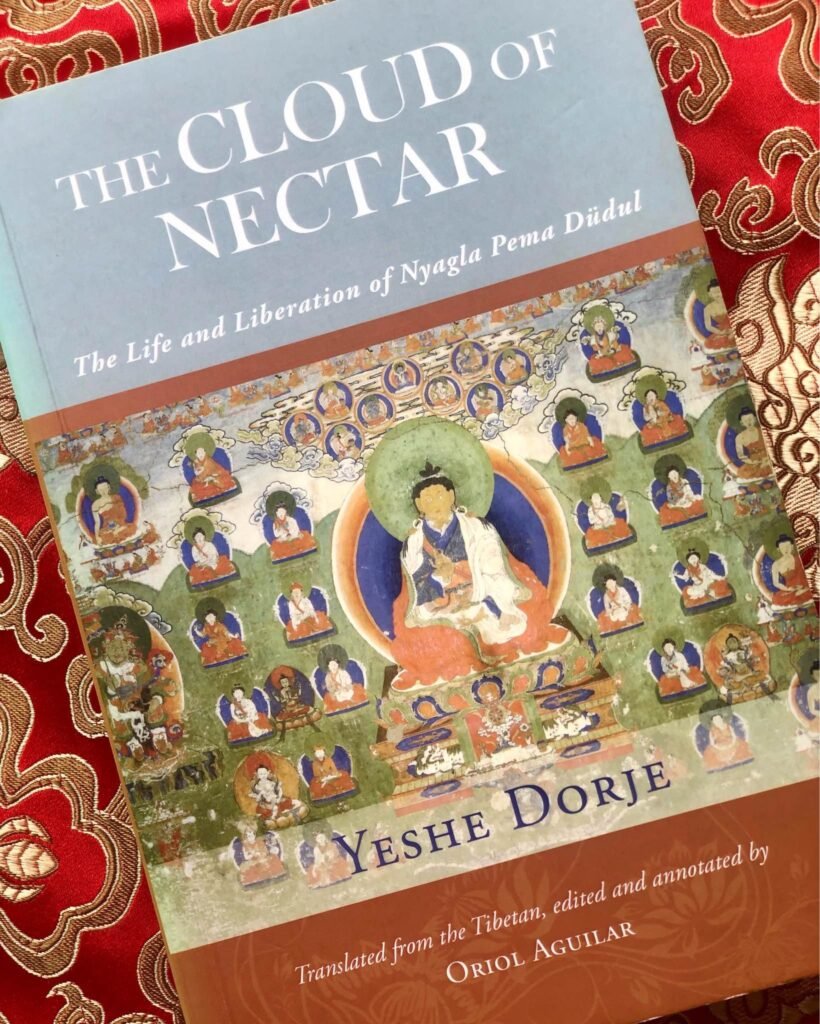
Ngakla Padma Dudul was himself renowned for attaining the Rainbow Body, establishing a powerful Dzogchen lineage that Sherab Özer Rinpoche later upheld and transmitted.
Monastic Education and Early Training
In 1928, Sherab Özer Rinpoche began his formal Buddhist education under Gyurme Dorje, focusing on foundational teachings and intensive Phowa (consciousness transference) practice at a retreat center.
From 1934, he spent three years studying Buddhist philosophy at Tumu Monastery, a branch of Mindrolling Monastery in Lhasa. Tumu Monastery was founded in 1896 by the great tertön Rangrig Dorje (Kusum Lingpa, 1847–1903), another master traditionally said to have attained the Rainbow Body.
This early education grounded Sherab Özer Rinpoche in both philosophical study and experiential meditation.
Advanced Studies at Mindrolling Monastery
Sherab Özer Rinpoche later traveled to Zhanang (Dranang) in Shannan, where he undertook advanced studies under two eminent Mindrolling masters:
- Khenchen Ngawang Khyentse Norbu (1904–1968)
- Mindrolling Chung Rinpoche Ngawang Chödrak (1908–1980)
From these teachers, he received the Dharma name Sherab Özer, meaning “Light of Wisdom”, under which he became widely known throughout Tibet.
Mindrolling training emphasized scriptural mastery, ritual precision, and Dzogchen meditation, shaping his balanced approach to scholarship and practice.
Dzogchen Training and Non-Sectarian Practice
In 1942, Sherab Özer Rinpoche continued his studies at Rikhu Monastic College in the Minyak region. The following year, he resided at Garong Monastery, originally founded in 1860 by Ngakla Padma Dudul and later a major center for the teachings of Sokgyal Lerab Lingpa.
In 1947, at Dretsul Monastery, he received extensive Dzogchen (Great Perfection) teachings from Tulku Dorje Dudul (1891–1959). He also received the complete empowerments and transmissions of the profound treasure cycle “Self-Liberation Pervading Space” (Kha Khyab Rangdrol) from Jazi Amye Tulku Padma Garwang Lingpa (1901–1975).
Beyond the Nyingma tradition, Sherab Özer Rinpoche studied and practiced teachings from the Sakya, Gelug, and other Tibetan Buddhist schools, fully embodying the Rimé (non-sectarian) spirit.
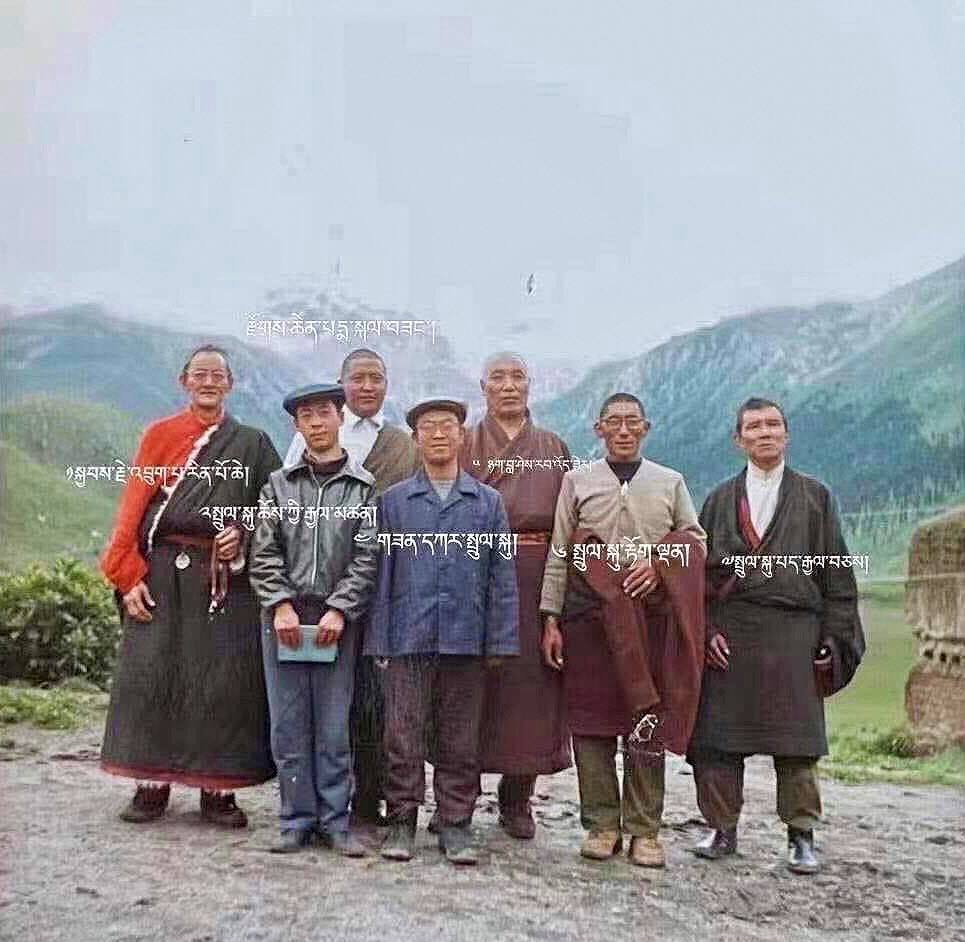
Pilgrimage, Social Engagement, and Cultural Preservation
Sherab Özer Rinpoche later traveled south through Dartsedo (Kangding) to Jizu Mountain in Yunnan, where he paid homage at the Shurangama Stupa, a sacred pilgrimage site.
In 1949, he participated in local administrative affairs at the invitation of regional authorities. In the decades that followed, he lived through profound historical upheavals and personal hardship.
Between 1971 and 1980, he traveled extensively across Sichuan Province, helping establish 34 cultural relic and ancient manuscript preservation centers. His efforts played a crucial role in safeguarding Tibetan religious texts, statues, and ritual objects during a vulnerable period.
Activities After the 1980s
In 1981, Sherab Özer Rinpoche undertook an extensive pilgrimage across Tibet, visiting Lhasa, Samye Monastery, Tsering Jong, Tashilhunpo Monastery, and Sakya Monastery. During this period, he met with the 10th Panchen Lama (1938–1989).
In 1984, he contributed to the founding of the Sichuan Tibetan Buddhist Institute, supported academic research on the Epic of King Gesar, and provided financial assistance for the reconstruction of Kathok Monastery, one of the Six Mother Monasteries of the Nyingma tradition.
Around the same time, he returned permanently to Garong Monastery, vowing to oversee its restoration after widespread destruction. From there, he continued teaching and guiding disciples throughout eastern Tibet and inland China.
Retreats, International Teaching, and Lineage Transmission
In the mid-1980s, Sherab Özer Rinpoche visited Larung Gar Five Sciences Buddhist Academy, where he invited Khenpo Jigme Phuntsok (1933–2004). The two masters later undertook retreats together in sacred caves associated with Padma Dudul and Lerab Lingpa.
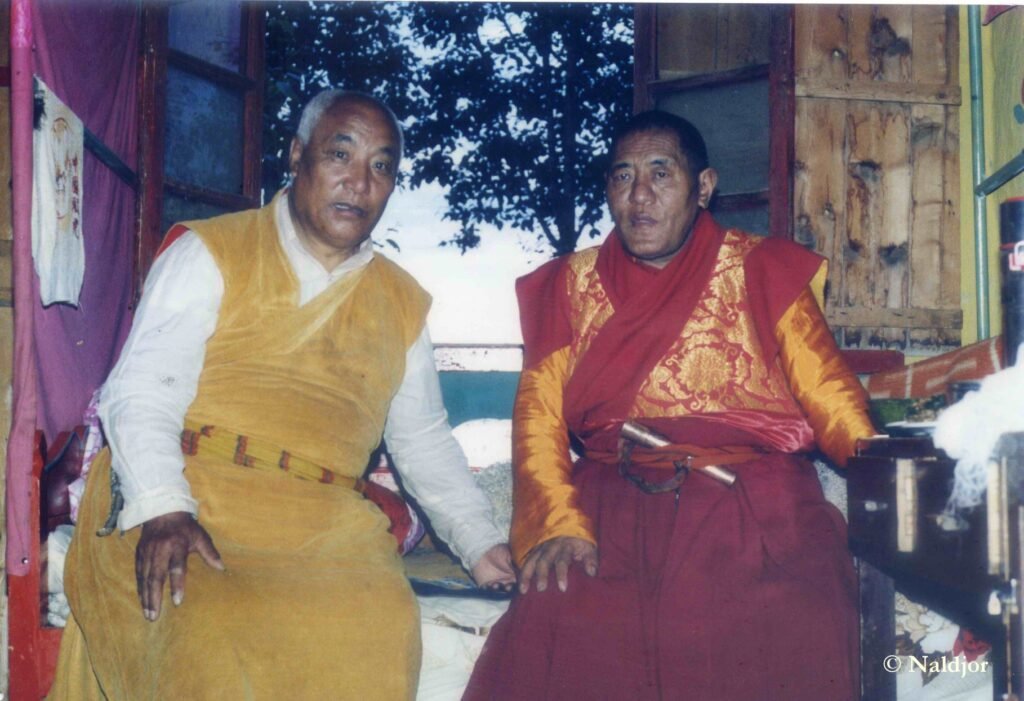
Despite advancing age and declining health, Sherab Özer Rinpoche remained at Garong Monastery, continuously transmitting essential Dzogchen instructions.
In 1998, he traveled to Lerab Ling in France, where he spent several months teaching the Rigpa Sangha. There, he bestowed empowerments and teachings, including “Purification of Dependent Arising” and “Self-Liberation Pervading Space.”
On August 12, 1998, he formally offered the Garong Monastery throne to Sogyal Rinpoche (1947–2019), recognizing him as one of the lineage holders of Lerab Lingpa.
Parinirvana and the Rainbow Body Attainment
Sherab Özer Rinpoche passed away on December 7, 2005, at the age of 83. According to disciples and traditional Dzogchen accounts, he remained seated in meditation posture for seven days following his passing.
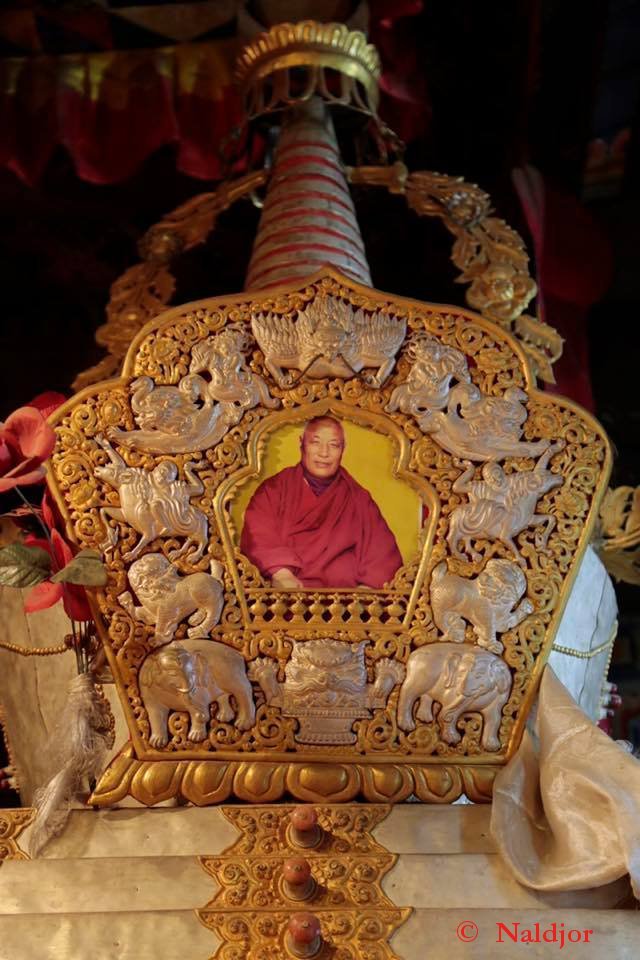
During this period, numerous auspicious signs were reported, including the appearance of vivid rainbow lights in the sky. Witnesses stated that his physical body, originally approximately 190 cm tall, gradually shrunk to around 60 cm.
By December 17, when his remains were placed inside a reliquary stupa, his body was said to be the size of an infant. Within the Nyingma Dzogchen tradition, these signs are regarded as the complete manifestation of the Rainbow Body, marking Sherab Özer Rinpoche as one of the great realized masters of modern Tibetan Buddhism.