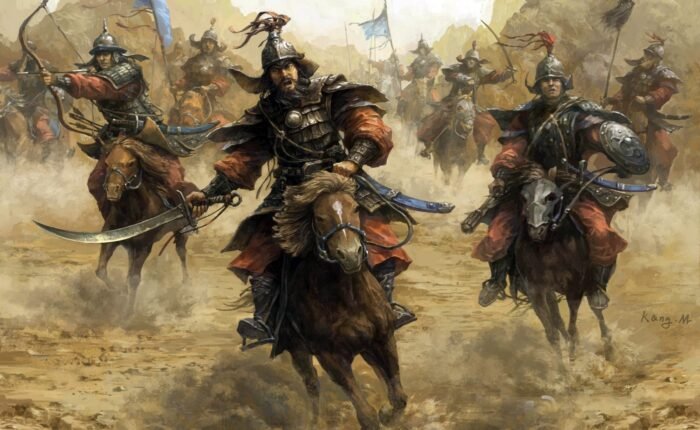
Introduction to the Conflict The Tibet–Ladakh–Mughal War marks a unique chapter in the annals of history, primarily taking place during the late 17th century. This conflict was rooted in a complex interplay of geopolitics, religious affiliations, and territorial ambitions among the three key players: Tibet, Ladakh, and the Mughal Empire. To understand the significance of...Read More
The Tibet–Ladakh–Mughal War (1679–1684) was one of the most important conflicts in the western Himalayan region during the late 17th century. It involved the Central Tibetan Ganden Phodrang government, supported by Oirat Mongolian Khoshut forces, against the Namgyal dynasty of Ladakh, which received backing from the Mughal Empire. This war reshaped political alliances, trade networks,...Read More
Early Life and Recognition Chökyi Gyaltsen, who would later be renowned as the Tenth Panchen Lama, was born in 1938 in Wendu Township of Qinghai Province, China. His early life unfolded in a culturally rich setting steeped in Tibetan Buddhism, which significantly shaped his spiritual journey. Wendu Township, an area known for its strong Buddhist...Read More
Introduction to Chökyi Nyima Chökyi Nyima, recognized as the Ninth Panchen Lama, was born in 1883 in the region of Tibet that is steeped in rich spiritual heritage. His contributions as a scholar, statesman, and spiritual leader have left an indelible mark on Tibetan Buddhism and its practices. The Panchen Lama tradition, which began with...Read More
Early Life and Background Tenpai Wangchuk, the Eighth Panchen Lama of Tibet, was born in 1855 in the serene Zhuchang Village, which is situated in the region of Tsang. His early life began against a backdrop rich in tradition and spirituality, pivotal to his development. The context of his upbringing was profoundly influenced by his...Read More
Introduction to Tenpai Nyima Tenpai Nyima, born in 1781, holds a prominent place in the annals of Tibetan history as the seventh Panchen Lama. His significance is not merely confined to his position; rather, it is interwoven with the rich spiritual and political tapestry of Tibet during a transformative period. Identified as an incarnation of...Read More
Introduction to Lobsang Palden Yeshe Lobsang Palden Yeshe, born in 1738, is revered as the sixth Panchen Lama, a significant figure in Tibetan Buddhism and history. His life spanned a tumultuous period for Tibet, marked by both internal strife and external pressures. Understanding his early life provides insights into his future role as a spiritual...Read More
Introduction to Lobsang Yeshe Lobsang Yeshe was born in 1663 in the region of Tibet, an influential figure in the religious and political landscape of Tibetan Buddhism. As the Fifth Panchen Lama, he inherited a significant spiritual lineage that had shaped Tibetan Buddhism for generations. His lineage traces back to the first Panchen Lama, a...Read More
Introduction Lobsang Chökyi Gyaltsen, born in 1570 and passing away in 1662, holds a prominent position as the Fourth Panchen Lama in Tibetan Buddhism. His lifetime not only encompassed a vital period in the development of Tibetan religious thought but also contributed to the wider socio-political landscape of 17th-century Tibet. As an essential figure in...Read More
Introduction to Lobsang Dondrup Lobsang Dondrup, born in 1505, holds a significant place in the history of Tibetan Buddhism as the Third Panchen Lama. His lineage traces back to the revered Second Panchen Lama, which positions him as a crucial figure in the continuation of the spiritual and educational traditions established by his predecessor. The...Read More
Introduction to Sonam Choklang Sonam Choklang, revered as the second Panchen Lama of Tibetan Buddhism, holds a significant place in the hierarchy of the Gelug school. Born in 1663, he emerged during a period marked by the consolidation of power and spiritual authority in Tibet, particularly under the rule of the Fifth Dalai Lama. His...Read More
Introduction to Khedrup Je Khedrup Je, also known as Khedrup Norsang Dorje, holds a significant place in the history of Tibetan Buddhism as the first recognized Panchen Lama. His life and teachings have left an indelible mark on the Gelug tradition of Buddhism, shaping its development and influencing countless practitioners. Born in the late 15th...Read More
Introduction to Tibetan Meat Consumption Tibetan culture, deeply intertwined with Tibetan Buddhism, showcases unique practices surrounding meat consumption that reflect a complex relationship between diet, spirituality, and the principles of compassion. Traditionally, the consumption of meat in Tibetan society serves not only as a source of sustenance but also as a demonstration of the philosophical...Read More
Introduction to Tibetan Dietary Practices The traditional diet of Tibetans is shaped by a confluence of cultural heritage and geographical constraints. Nestled in the high-altitude region of the Tibetan Plateau, the Tibetan people have developed dietary practices that are profoundly influenced by their environment and history. The harsh climate and rugged terrain of Tibet limit...Read More
Introduction to the Promotion Event The “Lhasa in the Clouds – A Highland Invitation” international route promotion conference took place in Singapore on July 8, 2025, marking a significant milestone in the aviation and tourism sectors. This event aimed to promote the newly established Lhasa-Singapore international flight, providing a direct air link between Tibet and...Read More
Introduction: The Reopening of Zhangmu Border The Zhangmu border crossing, situated between Tibet and Nepal, has long held historical significance as a crucial gateway for trade and cultural exchange. This route, historically known as the Nepalese-Tibetan trade route, has facilitated interaction between the two regions for centuries. However, after years of limited access, the Zhangmu...Read More
Introduction The Zhangmu-Kodari border crossing, which bridges Tibet and Nepal, has long served as a key conduit for trade, tourism, and cultural exchange between the two regions. The reopening of this border in July 2025 marks a significant milestone in restoring connectivity and facilitating travel across the Himalayas. Following the catastrophic earthquake in 2015 that...Read More
Introduction to Gönrik Khandroma Gönrik Khandroma stands as a remarkable figure in the tapestry of Tibetan Buddhism, renowned for her role as a female lineage holder within the revered Baishiya Monastery. Her contributions to spiritual teachings and practices can be seen as pivotal in a tradition often characterized by male leadership. Gönrik Khandroma embodies strength,...Read More
Introduction to Machig Labdrön Machig Labdrön, a pivotal figure in Tibetan Buddhism, was born around 1055 CE in the land known as Tibet. Her life and teachings have had a profound impact on the spiritual landscape of the region and continue to resonate with practitioners today. As the founder of the Chöd lineage, Machig Labdrön’s...Read More
Introduction to Rainy Season Retreat The Rainy Season Retreat, also known as “Varsha Vāsa,” is a long-standing tradition within Tibetan Buddhism that holds profound significance. Dating back to the time of the Buddha, this period of retreat is typically observed during the monsoon months, when the weather conditions create difficulties for monks and practitioners to...Read More