
Mount Everest: The Ultimate Guide to the World’s Highest Peak
Rising above the Himalayas, Mount Everest stands at 8,848.86 meters (29,031.7 feet), making it the tallest mountain on Earth. Known as Chomolungma in Tibet, meaning “Goddess Mother of the World,” Everest dominates the skyline of the Tibetan Plateau with unmatched scale and presence.
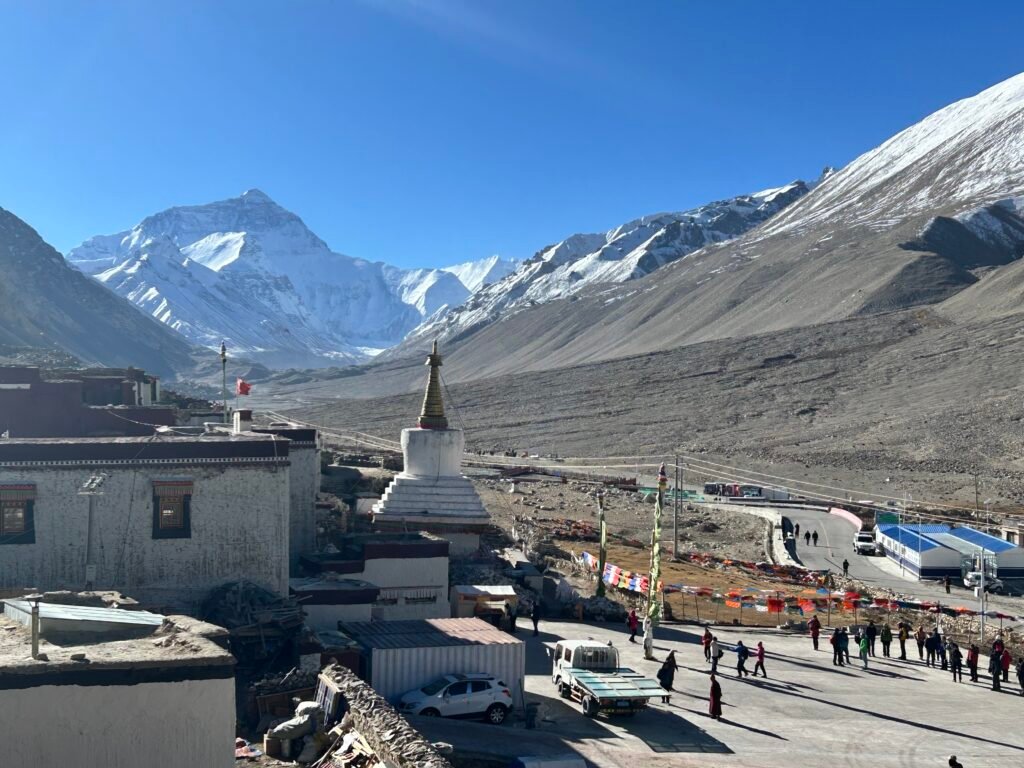
For travelers exploring Tibet, the northern side of Everest offers raw, expansive landscapes, dramatic views of the north face, and easier road access compared to the southern approach in Nepal.
Official Height of Mount Everest (2026 Update)
Mount Everest’s height changes slightly over time due to tectonic activity. The Indian Plate continues to push beneath the Eurasian Plate, causing the Himalayas to rise by approximately 4 millimeters per year.
The current official height is:
8,848.86 meters (29,031.7 feet)
Confirmed in 2020 through a joint Nepal–China survey using advanced GPS and satellite technology. This measurement includes both the rock base and snow cap and remains unchanged as of February 2026.
Historical Measurements of Everest’s Height
| Year | Surveying Authority | Height (meters) | Notes |
|---|---|---|---|
| 1852–1854 | Survey of India | 8,839.8 | First triangulation; called Peak XV |
| 1954 | Survey of India | 8,848 | Long-accepted global figure |
| 1975 | China | 8,848.13 | Snow-inclusive measurement |
| 1999 | U.S. GPS Survey | 8,850 | Not officially adopted |
| 2005 | China | 8,844.43 | Rock-only measurement |
| 2020 | Nepal–China Survey | 8,848.86 | Current official height |
Future earthquakes could prompt another review, but for now, 8,848.86 meters remains the recognized height worldwide.
Everest Base Camp: South vs. North
Most visitors do not attempt the summit but instead travel to Everest Base Camp.
South Everest Base Camp (Nepal)
- Altitude: 5,364 meters
- Requires multi-day trekking
- Located inside Sagarmatha National Park
North Everest Base Camp (Tibet)
- Altitude: Approximately 5,200–5,545 meters
- Accessible by road from Lhasa
- Offers closer, unobstructed views of the north face
The Tibetan side is less crowded and more accessible for travelers who prefer driving rather than long treks. Many itineraries combine Everest Base Camp with destinations like Namtso Lake or Nyingchi for a broader Tibet experience.
Discovery and Early Exploration
Mount Everest was long known to local Himalayan communities before Western surveys identified it as the tallest peak.
During the Great Trigonometrical Survey of India in 1852, mathematician Radhanath Sikdar calculated that “Peak XV” was the highest mountain in the world. It was later officially named by Andrew Waugh after his predecessor, George Everest, in 1865.
Early Expeditions from the Tibetan Side
Before Nepal opened its borders, most early expeditions approached Everest from Tibet:
- 1921: A British reconnaissance team led by Charles Howard-Bury explored routes via the North Col.
- 1922: Climbers reached 8,321 meters from the north side.
- 1924: George Mallory and Andrew Irvine disappeared near the summit. Their fate remains one of mountaineering’s greatest mysteries.
The First Successful Ascent
On May 29, 1953, Edmund Hillary and Tenzing Norgay reached the summit via Nepal’s Southeast Ridge route, marking the first confirmed ascent of Mount Everest.
The north side saw a milestone in 1960 when a Chinese expedition claimed the first ascent from Tibet. Though initially debated internationally, it remains a significant chapter in Everest’s climbing history.
By 2025, more than 12,000 successful summits had been recorded worldwide. Other historic milestones include:
- First woman to summit: Junko Tabei (1975)
- First ascent without supplemental oxygen: Reinhold Messner (1978)
Spectacular Views from the Tibet Side
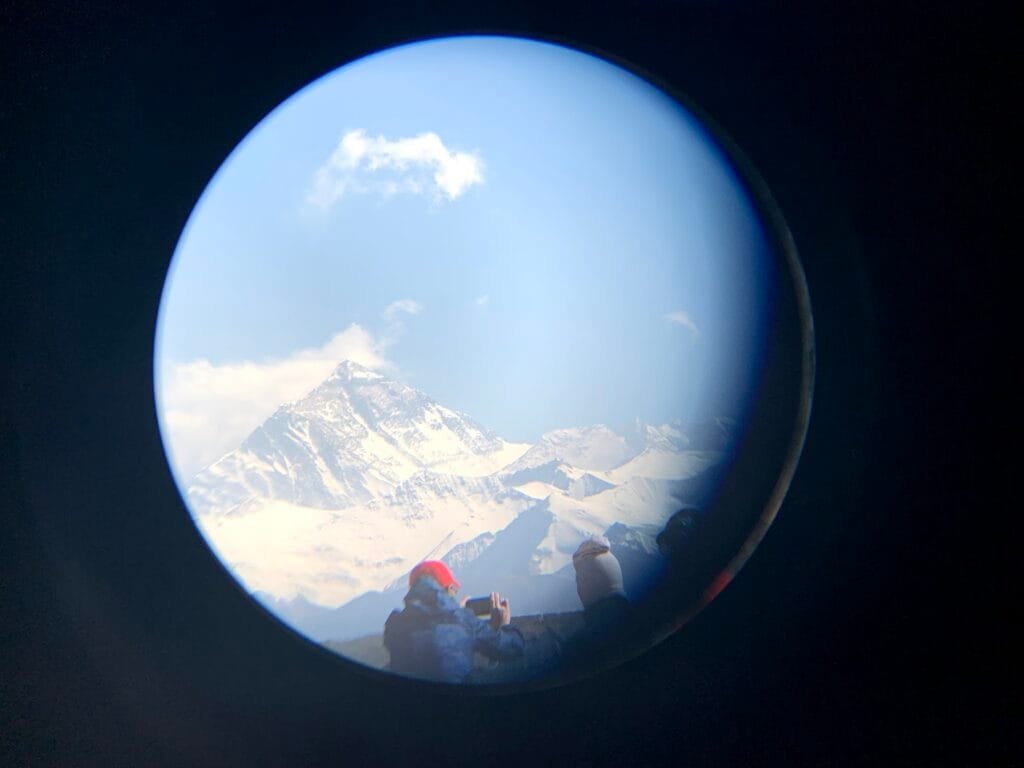
The Tibetan side of Mount Everest offers vast, dramatic panoramas of the mountain’s north face. Unlike the crowded trekking routes in Nepal, visitors can reach multiple viewpoints by road, making it accessible to a wider range of travelers.
The best seasons for clear views are April to June and September to October. Visitors need a Tibet Travel Permit and Alien Travel Permit to access the Everest region.
Key Viewpoints on the Northern Side
| Viewpoint | Elevation (m) | Description | Access & Highlights |
|---|---|---|---|
| North Everest Base Camp | ~5,200 | Closest ground-level view of Everest’s north face | 4–5 hour drive from Tingri; sunrise and star-filled skies |
| Rongbuk Monastery | ~5,000 | World’s highest monastery with Everest backdrop | Short walk to monastery; strong spiritual atmosphere |
| Gawula Pass | 5,198 | 180° panoramic view of five 8,000m peaks | Excellent photo stop en route to EBC |
| Gyatsola Pass | 5,220 | First distant view of Everest range | Scenic viewpoint along Lhasa–EBC highway |
| Rongbuk Valley | ~5,000 | Wide valley with uninterrupted north face views | Ideal for eco-walks and photography |
Among these, Rongbuk Monastery adds cultural depth to the journey. With Everest towering behind it, the monastery connects Tibetan spirituality with mountaineering history.
Sunrise and Sunset on the North Face
Sunrise and sunset from the Tibetan side create unforgettable scenes. As morning light touches the summit, Everest glows in gold and pink hues. At sunset, the north face turns deep orange against the vast Tibetan Plateau.
Clear skies in autumn and winter often enhance visibility, making colors sharper and more dramatic. Many travelers choose to stay overnight near Everest Base Camp to witness both sunrise and a sky filled with brilliant stars.
Travel Tips for Visiting Everest from Tibet
- Acclimate properly in Lhasa before heading to Everest.
- Stay hydrated and move slowly at high altitude.
- Oxygen support is available on certain tours.
- Travel during peak visibility seasons for the best mountain views.
The Tibetan side of Mount Everest offers expansive landscapes, historical depth, and unmatched views of the world’s highest peak—an experience that combines adventure, culture, and natural grandeur in one extraordinary journey.