

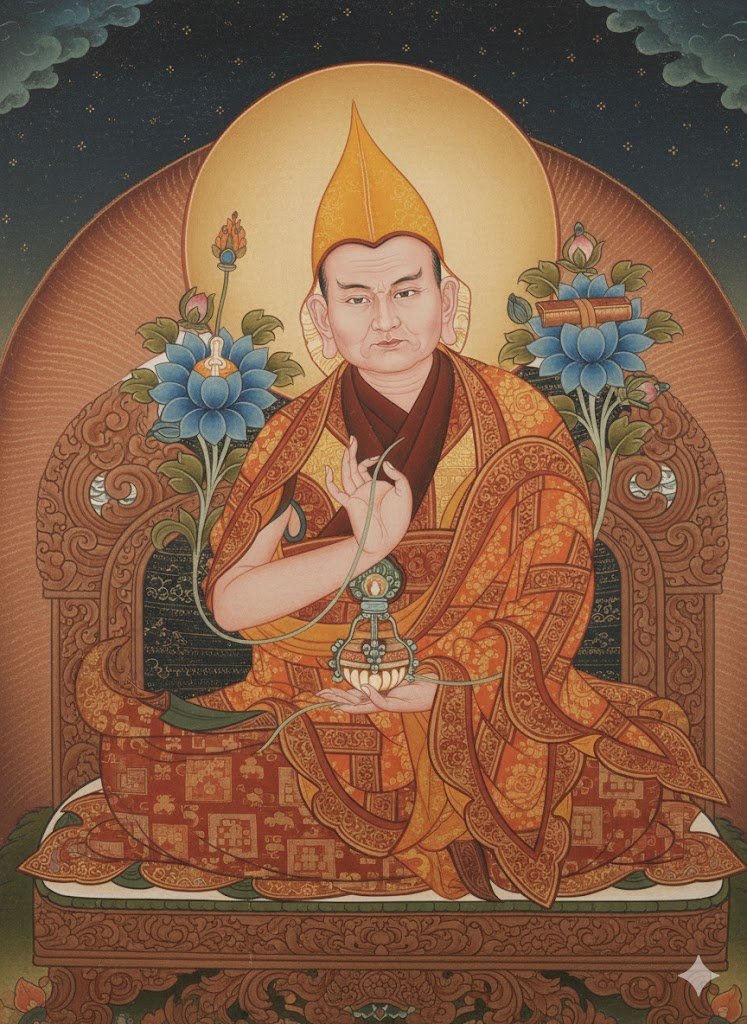
Ngolchu Yangchen Drupai Dorjee was one of the most influential religious activists, linguists, and educators in 19th-century Tibet. Widely respected for his contributions to Tibetan grammar, linguistics, literature, and Buddhist education, his works continue to shape Tibetan studies today.
Born in 1809 near Sekya Tashi Gepel Ling Monastery, in the Yarjuk region of Tsang (Later Tibet)—modern-day Xietongmen—he came from a merchant family. His father was named Tashi, and his mother Ciren Siqu. From an early age, he showed exceptional intelligence, discipline, and a deep interest in learning.
Early Monastic Life and Education
In 1820, following an official summons from Sekya Tashi Gepel Ling Monastery, Yangchen Drupai Dorjee entered monastic life under the guidance of Gaqin Gunqun Qunpei. He shaved his head, took vows, and received the Dharma name Losang Chokpi. The following year, he formally received lay vows and novice (śrāmaṇera) vows in the presence of his teacher.
Remarkably, by the age of 10, he was already serving as a chaxin nieba, a monastic administrative assistant at Sekya Tashi Gepel Ling. This early responsibility reflected both his discipline and the trust placed in him by the monastic community.
At 19, he undertook advanced studies under his uncle Dharmapa Zha, a leading authority on Tibetan grammar and orthography. Under his uncle’s guidance, he mastered phonetics (śabda-vidyā), Tibetan grammar, calendrical science, poetics, as well as exoteric and esoteric Buddhist scriptures, laying the foundation for his later scholarly achievements.
Recognition and Full Ordination
At the age of 34, Yangchen Drupai Dorjee was examined by Dharmapa Zha on The Compendium of Phonetics and poetics. His responses were fluent, precise, and exceptional. Deeply impressed, his teacher immediately offered him a khata (ceremonial scarf) and bestowed upon him the name Yangchen Drupai Dorjee, which became his widely known and commonly used name.
In mid-April of the same year, he received full bhikshu ordination before Dharmapa Zha, marking his formal recognition as a fully ordained monk and scholar.
Pilgrimages and Teaching Activities
At 61 years old, Yangchen Drupai Dorjee embarked on an extensive journey to major religious centers, including Lhasa, Sakya, and Tashilhunpo. During these travels, he made pilgrimages, offered support to monasteries, studied the cultural traditions of Ü-Tsang, and taught Buddhist doctrine to monks of the Three Great Monasteries as well as to lay practitioners.
The following year, he returned to Sekya Tashi Gepel Ling Monastery, where he continued his spiritual practice, teaching, and writing.
Contributions to Tibetan Grammar and Linguistics
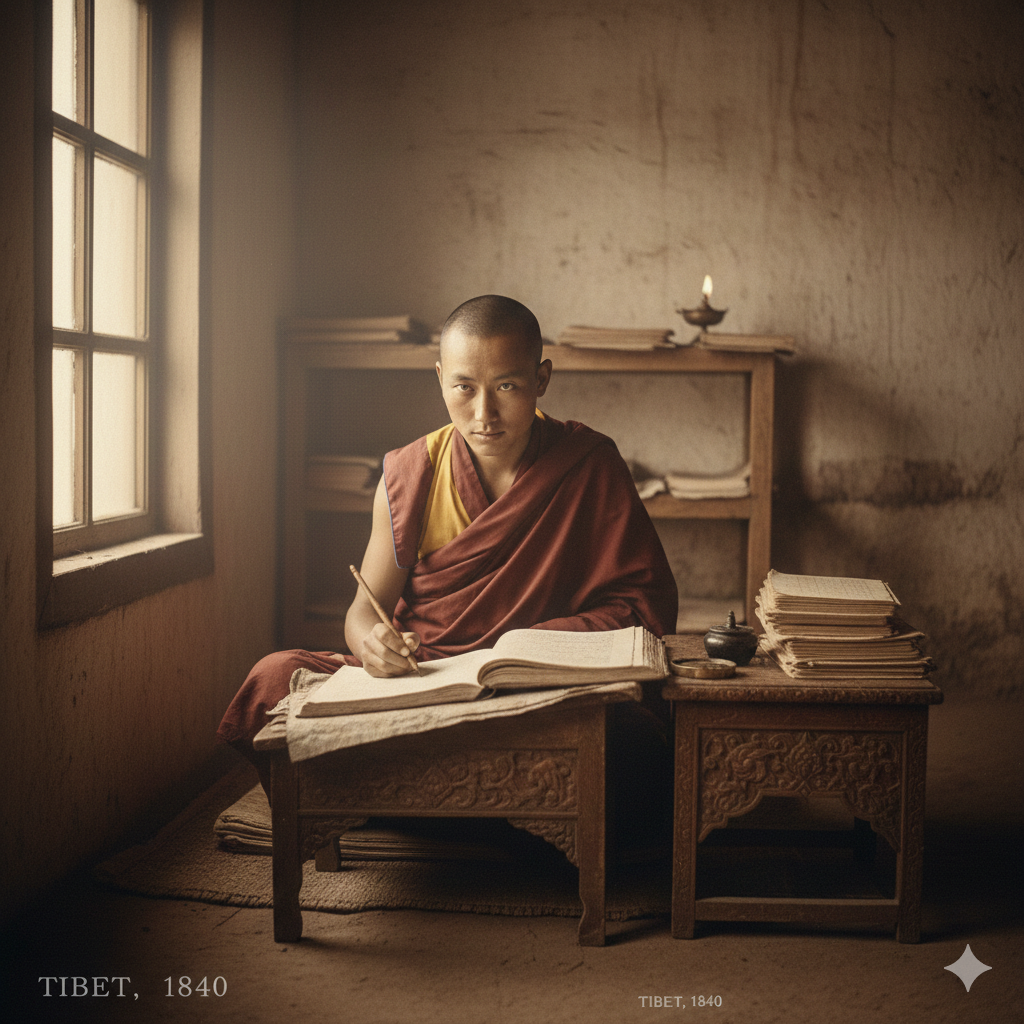
Ngolchu Yangchen Drupai Dorjee is best known as a master of Tibetan grammar and linguistics. Throughout his life, he devoted himself tirelessly to writing, producing influential works not only on religion but also on language, literature, astronomy, calendrical calculation, sculpture, and stupa construction.
His most celebrated grammatical work, “The King of Trees: Essential Meaning of the Concise Thirty Verses,” is regarded as a foundational introductory textbook for Tibetan grammar. Clear, practical, and systematic, it has long been used as a core learning text for students of the Tibetan language.
Another major work, “Ornament of the Hidden Intentions of the Wise,” offers accessible explanations of sixteen difficult and obscure rhetorical expressions, making complex literary concepts understandable to a wide audience. This text became widely circulated and highly valued among scholars and students alike.
Literary, Cultural, and Scientific Works
Beyond grammar, Yangchen Drupai Dorjee made lasting contributions to Tibetan literature and science. His literary works include “Short Song Collection of Bhikshu Losang Qunpei” and “Biography of Losang Qunpei,” both of which reflect his refined literary style and deep spiritual insight.
In the field of astronomy and calendrical science, he authored works such as “Calendar and Cycles: The Chapter on Clarification,” which remain important reference materials for the study of Tibetan astronomical and calendrical systems.
He also authored “Complete Collection of Auspicious Sayings of the Spring Ox from the Han Regions: The Bodhi Tree,” a valuable text introducing the conditions, customs, and cultural practices of Han Chinese regions, reflecting his broad intellectual horizon and interest in cross-cultural understanding.
Teaching Philosophy and Influence
Yangchen Drupai Dorjee emphasized practical learning over rigid dogmatism. He avoided mechanical imitation and instead focused on absorbing the essence, discarding the dross, and skillfully integrating insights from diverse sources. His teaching and writing style was known for being clear, accessible, and deeply grounded in real understanding, making complex subjects approachable for learners at all levels.
Because of this approach, his works were widely welcomed, and many eminent lamas and scholars expressed profound admiration for his scholarship and teaching ability.
Students and Lasting Impact
In addition to his extensive writings and spiritual practice, Yangchen Drupai Dorjee trained many students, a significant number of whom later became outstanding figures in Tibetan society, contributing to religion, education, and culture.
Ngolchu Yangchen Drupai Dorjee passed away in November 1887 at the age of 79, leaving behind a rich intellectual and spiritual legacy. Today, he is remembered as a pillar of Tibetan grammar, education, and scholarly tradition, with works that continue to guide students, monks, and researchers across the Tibetan world.