

The prayer wheel is one of the most recognizable and meaningful symbols in Tibetan Buddhism. Known in Tibetan as Mani Khorlo, the prayer wheel is a sacred object that believers spin to accumulate merit, purify negative karma, and spread blessings to all sentient beings. Turning a prayer wheel is believed to carry the same spiritual power as reciting the scriptures written inside it.
For Tibetans, spinning a prayer wheel is not just a ritual—it is a daily spiritual practice deeply connected to faith, compassion, and the path toward enlightenment.
What Is a Tibetan Prayer Wheel (Mani Khorlo)?
A Tibetan prayer wheel typically consists of a hollow cylindrical wheel mounted on a handle or axle. Inside the wheel are tightly rolled scriptures and powerful mantras, most commonly Om Mani Padme Hum. When the wheel is spun, it is believed that all the mantras inside are activated simultaneously.
Buddhists turn the prayer wheel clockwise, following the direction of the sun and the movement of the universe. Practitioners of the Bon tradition turn the wheel counterclockwise, according to their spiritual lineage. In both traditions, the act of turning the wheel is a form of prayer and meditation.
Types of Prayer Wheels in Tibet
Prayer wheels come in many forms and sizes, reflecting the diversity of Tibetan religious life.
Hand-Held Prayer Wheels
These small, portable wheels are commonly used by pilgrims, monks, and laypeople. Tibetans often carry them during walks, pilgrimages, or daily routines, quietly reciting mantras while turning the wheel.
Large Fixed Prayer Wheels
In monasteries and sacred sites, large prayer wheels are often placed along walking paths. Pilgrims spin them one by one as they walk, turning each wheel with devotion and mindfulness.
Elemental Prayer Wheels
Some prayer wheels are empowered by natural elements:
- Wind prayer wheels spread blessings wherever the wind blows
- Water prayer wheels bless rivers and all beings who touch or drink the water
- Fire or light prayer wheels remove ignorance and illuminate wisdom
These elemental wheels allow prayers to benefit countless beings effortlessly and continuously.
Spiritual Benefits of Turning the Prayer Wheel
According to Buddhist scriptures, the benefits of turning a prayer wheel are vast and profound. The wise disciple Shariputra once asked the Tathagata about the power of the prayer wheel. The Buddha explained that turning it—on special occasions or as a daily practice—brings benefit to all beings across the three realms of existence.
Those who see, touch, or hear the prayer wheel are believed to be protected from rebirth in lower realms and guided toward happiness and liberation. Turning the prayer wheel also brings harmony to the natural world, benefiting land, water, and all living beings.
One Turn Equals Millions of Mantras
Buddha Sugata taught that one day of turning the prayer wheel equals the recitation of 100 million mantras. This makes the prayer wheel especially meaningful for those who cannot read or memorize scriptures.
Texts such as The Complete Works of Mani explain that:
- Prayer wheels placed high can liberate beings wherever the wind reaches
- Prayer wheels empowered by fire or water can purify countless beings
- Simply touching the wheel plants the causes for future success and liberation
Because of this, prayer wheels are cherished by all Buddhas and Tathagatas as powerful tools for enlightenment.
Powerful Mantras Inside the Prayer Wheel
The mantras inside a prayer wheel are believed to transform everything they touch. Turning the wheel is equivalent to chanting the mantra aloud, but its effects extend even further. The blessings reach humans, spirits, gods, nagas, and beings in other realms.
Placing a prayer wheel in a windy place allows the mantra to travel endlessly, benefiting all sentient beings and removing their afflictions. Fire-powered prayer wheels illuminate wisdom, while water-powered wheels increase luck and positive karma for those who come into contact with the water.
Like wind horse prayer flags, prayer wheels use the forces of nature to spread compassion, merit, and spiritual energy throughout the world.
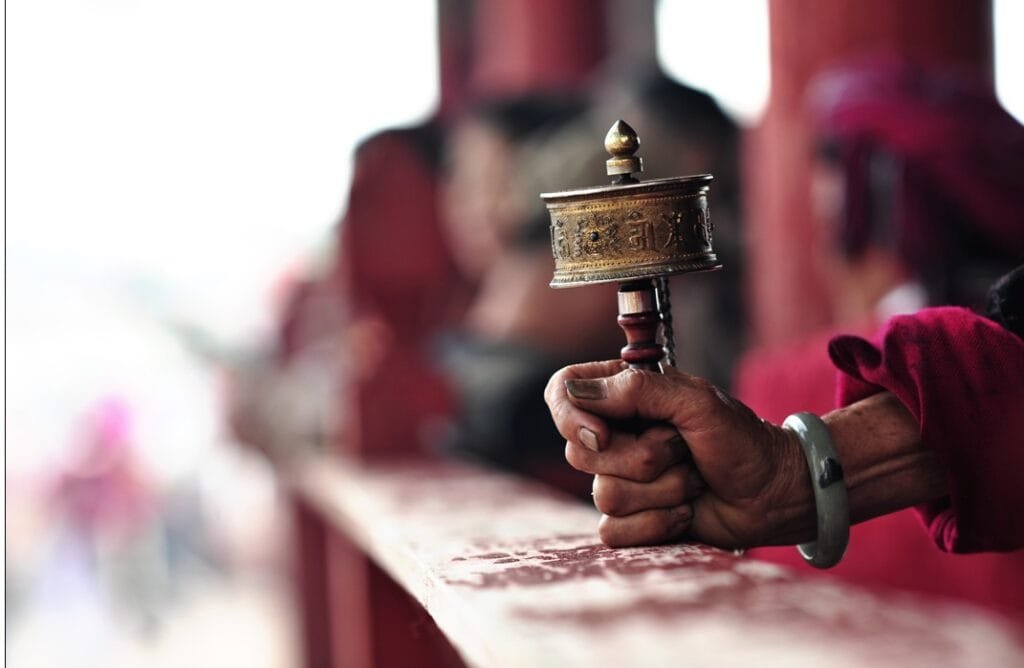
How to Properly Turn a Prayer Wheel
Respect and mindfulness are essential when using a prayer wheel. Practitioners are advised to:
- Sit or stand upright
- Turn the wheel with reverence and calm awareness
- Recite the mantra while turning
- Avoid careless behavior or disrespect
It is said that those who turn the prayer wheel with sincerity will preserve their spiritual roots and develop a peaceful, radiant presence. Turning the wheel frequently—regardless of one’s background—greatly supports the path toward liberation.
Prayer Wheels in Daily Tibetan Life
Tibetans regularly recite Buddhist scriptures, but for those who are illiterate, prayer wheels serve as a powerful alternative. Many households keep portable prayer wheels at home, allowing family members to accumulate merit during daily life.
These prayer wheels vary in size, craftsmanship, and material, but all share the same purpose: to carry sacred texts, generate compassion, and help guide beings toward awakening.
Turning a prayer wheel has become a natural rhythm of Tibetan life—quiet, constant, and deeply meaningful—woven into every step of the spiritual journey.