
Why Yamdrok Lake Is a Cycling Icon
Yamdrok Lake is one of Tibet’s three most sacred lakes, renowned for its ever-changing colors—from bright turquoise to deep sapphire—depending on light and weather. Fed by glaciers and surrounded by towering peaks such as Nojin Kangtsang (7,191 m), the lake is encircled by nomadic pastures, wetlands, islands, monasteries, and traditional Tibetan villages.
Cyclists encounter:
- Vast grasslands with grazing yaks and sheep
- Remote monasteries and lakeside temples
- Islands scattered across the water
- Migratory birds and pristine wetlands
- Long, quiet stretches of road with minimal traffic
The full lakeshore loop covers roughly 240–260 km, with a mix of paved roads, gravel sections, and uneven terrain.
Best Time to Cycle Around Yamdrok Lake Near Lhasa
Cycling around Yamdrok Lake—also known as Yamdrok Yumtso or Yamdrok Tso—is one of the most rewarding high-altitude cycling adventures in Tibet. Located about 100 km from Lhasa and sitting at an average elevation of 4,450 meters, this sacred lake offers dramatic landscapes, spiritual depth, and a serious physical challenge.
The most suitable season for a Yamdrok Lake cycling tour runs from May to October, when weather conditions, road access, and visibility are most favorable for riding at altitude.
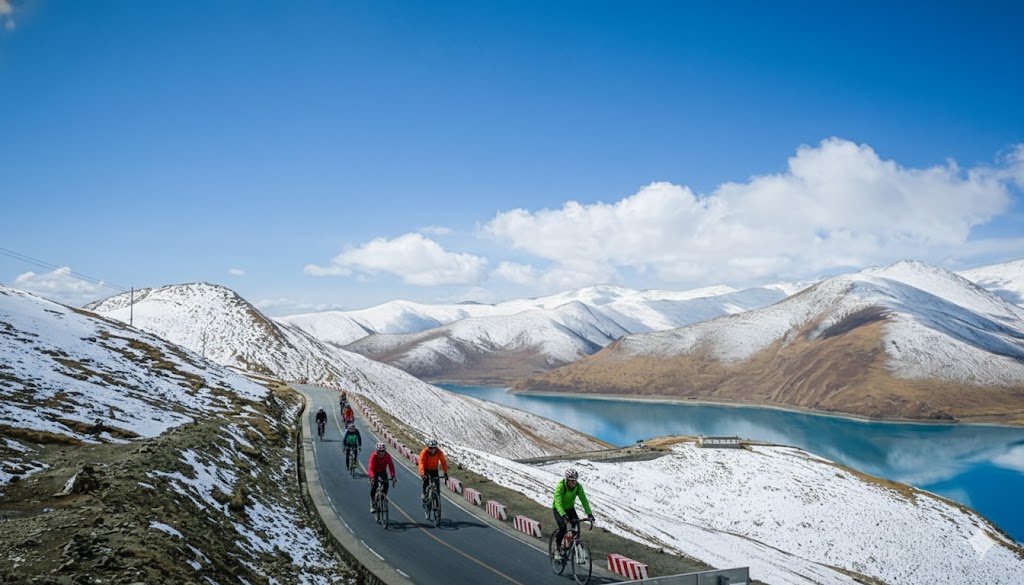
Prime Cycling Windows: May–June & September–October
The best months for cycling near Lhasa and Yamdrok Lake are the shoulder seasons of May to June and September to October. During these periods, cyclists benefit from:
- Stable weather and clearer skies
- Daytime temperatures around 10–20°C (50–68°F) at lower elevations
- Lower rainfall and less wind compared to midsummer
- Excellent visibility of turquoise lake waters, glaciers, and snow-capped peaks
- Fewer tourists on the route
Spring brings alpine flowers and fresh grasslands, while autumn rewards riders with golden fields, crisp air, and dramatic sunrise and sunset colors over the lake.
July–August: Possible but Wetter
Cycling in July and August is still feasible and popular, but riders should be prepared for:
- Increased rainfall, usually short afternoon showers
- Occasional fog that may reduce lake visibility
- Warmer temperatures that can feel humid during exertion
Tibet’s summer monsoon is relatively mild compared to lower regions, but weather can change quickly. Flexibility in daily riding plans is important during this time.
Avoid November to April
From November through April, cycling around Yamdrok Lake is strongly discouraged due to:
- Sub-zero temperatures, especially at night
- Snow and ice on mountain passes such as Kamba La Pass (≈4,794–5,000 m)
- Possible road closures and limited services
- Increased risk of altitude-related health issues
Most cycling operators suspend tours during winter due to safety and accessibility concerns
9 Days Yamdrok Lake Circular Biking Tour
Route: Lhasa – Dongla Village – Gamalin Prairie – Duoque Village – Zhagang Village – Lhasa
This 9-day Yamdrok Lake Circular Biking Tour combines cultural exploration in Lhasa with an unforgettable high-altitude cycling adventure around one of Tibet’s most sacred lakes. Designed for travelers with an average fitness level, the route follows a quieter inner circuit of Yamdrok Lake, offering pristine scenery, fewer crowds, and a deeper connection with the Tibetan plateau.
The journey blends gradual acclimatization, iconic landmarks, remote villages, and lakeside cycling across dramatic landscapes shaped by glaciers, grasslands, and nomadic life.
Trip Overview
- Tour Duration: 9 days
- Tour Type: Private tour with private guide and support vehicle
- Trip Level: Moderate (suitable for riders with basic cycling experience)
- Best Time to Visit: Available year-round (cycling conditions best from May to October)
- Tour Code: TTO-PT-LY9
Cycling distances are balanced with vehicle support, making the tour achievable while still rewarding. Riders experience both paved and rougher sections, especially along the lake’s inner circuit.
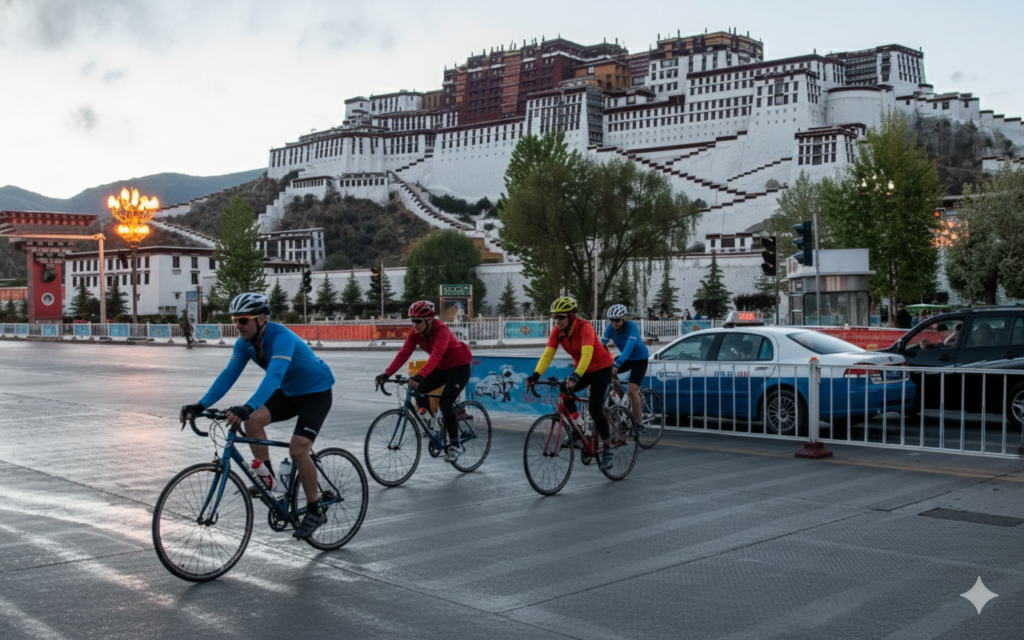
Tour Highlights
- Explore the Potala Palace, an architectural landmark towering over Lhasa
- Walk among pilgrims at Jokhang Temple, the spiritual heart of Tibetan Buddhism
- Experience daily life along Barkhor Street, Lhasa’s historic pilgrimage route
- Watch monks debate Buddhist philosophy at Sera Monastery
- Enjoy sweeping views of the Yarlung Tsangpo River Valley
- Cycle along the turquoise shores of Yamdrok Lake, one of Tibet’s three holy lakes
- Ride through remote grasslands, wetlands, and traditional villages rarely visited by tourists
Detailed Daily Itinerary
Day 1: Arrive in Lhasa (3,650m)
Arrive in Lhasa by flight or train, where your local guide will welcome you and transfer you to your hotel. The drive into the city introduces you to traditional Tibetan villages and expansive plateau scenery.
The rest of the day is reserved for rest and acclimatization. Taking it slow, staying hydrated, and avoiding strenuous activity helps your body adjust to the altitude.
Overnight: Lhasa
Day 2: Lhasa Sightseeing – Potala Palace, Jokhang Temple, Barkhor Street
Begin with a visit to the Potala Palace, once the winter residence of the Dalai Lamas. Walk through chapels, assembly halls, and historic rooms filled with Buddhist art and relics.
In the afternoon, explore Jokhang Temple, the most sacred temple in Tibet. Inside, colorful murals, statues, and incense-filled halls reflect centuries of devotion. The central image of Buddha draws pilgrims from across the plateau.
Later, stroll along Barkhor Street, where pilgrims perform kora (ritual circumambulation) around the temple, offering a vivid glimpse into everyday Tibetan life.
Overnight: Lhasa
Day 3: Drepung Monastery and Sera Monastery
Visit Drepung Monastery, once the largest monastery in the world. Its white buildings cascade down the hillside, and the courtyards provide insight into monastic life and Buddhist learning.
In the afternoon, head to Sera Monastery, known for its lively monk debates. Set in a peaceful valley, the monastery offers a mix of spiritual atmosphere and natural beauty. The debates usually take place mid-afternoon and are a highlight for many visitors.
Overnight: Lhasa
Day 4: Lhasa to Dongla Village (Drive + Cycle)
Drive toward Kamba La Pass (around 4,800m), one of the most scenic viewpoints in the region. From the pass, enjoy a panoramic view of Yamdrok Lake, its turquoise waters contrasting with dark mountain ridges.
After a short rest, begin cycling toward Dongla Village, descending closer to the lakeshore and easing into the biking portion of the tour.
Overnight: Camping at Dongla Village
Day 5: Dongla Village to Gamalin Prairie
Cycle along the lakeshore toward the remote Tsayu Village, a tiny settlement rarely marked on maps. The route follows gentle contours beside the water, offering close-up views of the lake and surrounding grasslands.
Visit Tsayu Temple, one of the smallest monasteries in the area, then continue riding toward the wide-open landscapes of Gamalin Prairie, known for its peaceful atmosphere and sweeping views.
Overnight: Camping
Day 6: Gamalin Prairie to Duoque Village
This day takes you through one of the most isolated sections of the tour. With few settlements and vast open terrain, the ride emphasizes raw nature and silence.
The scenery is defined by rolling grasslands, distant mountains, and ever-changing light reflecting off Yamdrok Lake.
Overnight: Camping
Day 7: Duoque Village to Zhagang Village
Ride toward Dalong Town to visit Dalong Temple, a historic monastery known for its intricate wood carvings. Continue through Arza Township, where elevated viewpoints offer expansive vistas of Yamdrok Lake.
This section covers roughly half of the lake’s inner circuit, blending cultural stops with scenic cycling.
Overnight: Camping near Zhagang Village
Day 8: Zhagang Village to Lhasa
Wake early to witness sunrise over Yamdrok Lake, when the water shifts from deep blue to soft turquoise under the morning light.
Cycle the final stretch of the inner circuit to Xueqing Village, where your support vehicle meets you for the drive back to Lhasa.
Overnight: Lhasa
Day 9: Departure from Lhasa
Transfer to the airport or train station for your onward journey. Your guide will assist with departure arrangements and farewells.
Cycling Experience & Practical Notes
- Fitness Level: Moderate endurance required; prior cycling experience recommended
- Altitude: Gradual acclimatization in Lhasa helps reduce altitude-related risks
- Road Conditions: Mix of paved roads, gravel sections, and bumpy tracks
- Support: Private vehicle for luggage, backup, and safety throughout the tour
This Yamdrok Lake circular biking route offers a rare combination of cultural immersion and high-altitude adventure, following a quieter path through one of Tibet’s most breathtaking landscapes.
Key Highlights Along the Route
- Kamba La Pass Viewpoint: The classic panoramic view of Yamdrok Lake
- Lakeshore Cycling: Constantly changing colors, reflections, and open horizons
- Karola Glacier: Close-up views of high-altitude ice formations
- Cultural Encounters: Monasteries, villages, and nomadic life
- High-Altitude Challenge: Thin air, intense sunlight, and rewarding solitude
Practical Tips for Cycling Yamdrok Lake
Fitness and Acclimatization
A good level of endurance is essential. Riders should spend 2–3 days acclimatizing in Lhasa before cycling to reduce the risk of acute mountain sickness (AMS).
Permits and Logistics
Foreign travelers require a Tibet Travel Permit, which must be arranged through a registered travel operator. Most cycling tours include:
- Support vehicle for luggage and emergencies
- Guides and mechanics
- Meals and accommodation or camping gear
Packing Essentials
Layered clothing, windproof jackets, sunscreen, sunglasses, hydration systems, and basic altitude medications are highly recommended.
Cycling around Yamdrok Lake combines physical challenge, spiritual landscapes, and raw Himalayan beauty, making it one of the most unforgettable cycling routes in Tibet.