Introduction to Khedrup Gyatso and the Meaning of the Reliquary Stupa Khedrup Gyatso, the eleventh Dalai Lama, holds a significant place in Tibetan Buddhism. He was born in 1856 in the vicinity of Huiyuan Monastery, a site emblematic of deep spiritual heritage. His early life was marked by a profound connection to the Buddhist teachings...Read More
Introduction to Tsultrim Gyatso Tsultrim Gyatso, the tenth Dalai Lama, holds a significant position in the lineage of Tibetan Buddhism as a revered spiritual leader. Born in the year 1816 in the Xuezhou Zhuodong region of Litang County, Sichuan Province, he was officially recognized as the reincarnation of the ninth Dalai Lama, Tsangyang Gyatso, at...Read More
Introduction to Lungtok Gyatso Lungtok Gyatso, the Ninth Dalai Lama, emerged as a pivotal figure in Tibetan Buddhism during the early 19th century. Born in 1805, he was recognized as the reincarnation of his predecessor at a remarkably young age of three. This early recognition underscores the deep-rooted traditions of Tibetan culture, where it is...Read More
Historical Context of Jamphel Gyatso Jamphel Gyatso, the eighth Dalai Lama, was born on February 12, 1758, in the region of Ü, located in Tibet. Recognized as a reincarnation of his predecessor, he was formally enthroned in the Potala Palace at a young age, marking the beginning of his significant influence in Tibetan Buddhism and...Read More
Introduction to Kelsang Gyatso and His Legacy Kelsang Gyatso, recognized as the seventh Dalai Lama, remains an influential figure within Tibetan Buddhism, revered for both his spiritual teachings and his role in the propagation of the Gelug tradition. Born in 1708 in a region now part of Tibet, Kelsang Gyatso exhibited profound religious inclinations from...Read More
Introduction to Tsangyang Gyatso Tsangyang Gyatso, revered as the sixth Dalai Lama, stands as a significant figure in the annals of Tibetan history, embodying the duality of a spiritual leader and a prominent poetic voice during the Qing Dynasty. Born in 1683 in Menyu, southern Tibet, his early life was marked by a blend of...Read More
Introduction to Yönten Gyatso and His Historical Context Yönten Gyatso, the Fourth Dalai Lama, holds a significant place in the annals of Tibetan Buddhism. Born in 1589 to the Tümed Mongol tribe, he emerged into a world steeped in rich cultural and religious heritage. His lineage traces back to Altan Khan, a prominent leader whose...Read More
Introduction to Sonam Gyatso Sonam Gyatso, recognized as the 3rd Dalai Lama, played a pivotal role in the landscape of Tibetan Buddhism during the 16th century. Born in 1543 in the Yarlung Valley, he hailed from a noble family, his lineage tracing back to influential figures in Tibetan history. His early life showcased signs of...Read More
Introduction to Gendun Gyatso Gendun Gyatso, recognized as the Second Dalai Lama, was born in 1475 in the village of Danak, situated in modern-day Tibet. His early life was marked by a unique twist of fate that would ultimately lead him to become a significant figure in Tibetan Buddhism. According to historical accounts, Gendun Gyatso...Read More
The Life of Gendun Drub Gendun Drub, recognized as the first Dalai Lama, was born in the Xiadui pasture located in the Sakya County region of Tibet. His early life commenced in a pastoral setting where he spent his formative years herding sheep. This environment played a significant role in shaping his character, instilling in...Read More
Introduction to Tibetan Stupas Tibetan stupas, commonly referred to as ‘chortens,’ are revered as sacred reliquaries rather than mere tombs. These architectural marvels serve a vital role in Tibetan Buddhism, acting as symbols of enlightenment and spiritual significance. Understanding their historical context and functions is essential for grasping their importance within the religious and cultural...Read More
Introduction to Chamdo Ancient Tombs The Chamdo ancient tombs, located within the Chamdo prefecture of the Tibet Autonomous Region, represent a significant and under-explored aspect of early Tibetan archaeology. Nestled in the eastern part of the region, Chamdo offers a diverse landscape, featuring mountains, rivers, and vast plateaus that have historically shaped the lives of...Read More
Introduction to Ngawang Lobsang Gyatso, Great Fifth Dalai Lama Ngawang Lobsang Gyatso, widely recognized as the Great Fifth Dalai Lama, holds a prominent position in Tibetan history as both a spiritual and political leader. Born in 1617 in the Ü region of Tibet, he came from a nomadic family that would shape his formative years....Read More
The Architectural Beauty of Sera Jey College Assembly Hall The Sera Jey College Assembly Hall stands as a stunning manifestation of Tibetan architectural principles, offering an impressive span of 1,700 square meters. This remarkable structure serves not only as a functional space for gatherings and teachings but also as an emblem of the rich cultural...Read More
Introduction to the Lieshan Ancient Tombs The Lieshan Ancient Tombs, located in Dongga Township within Lang County of Nyingchi City, serve as a remarkable testament to the funerary culture of the Tibetan Empire. Nestled at an impressive altitude of approximately 3,200 meters, these tombs are not only a significant archaeological site but also a quintessential...Read More
Introduction to the Tombs of the Tibetan Kings The tombs of the Tibetan kings, situated at the foot of Mount Mure along the Yarlung River, represent one of the most significant archaeological sites that offer insight into the ancient Tibetan Empire. These monumental burial grounds serve not only as final resting places for the kings...Read More
Introduction to Tibetan Architecture Tibetan architecture is a rich amalgamation of cultural influences, shaped by the region’s geographical and spiritual landscape. Among the various styles, three major forms stand out: tombs, palaces, and temples. Each of these architectural styles carries significance that reflects the historical narrative and spiritual ethos of the Tibetan people. Tomb architecture,...Read More
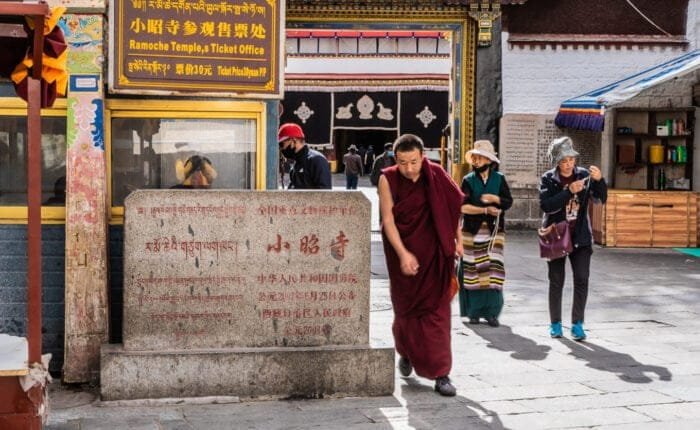
Ramoche Temple, also known as the Smaller Jokhang Temple, is a lesser-known yet historically significant Gelugpa temple located in the northern part of Lhasa, Tibet. Once a thriving center for esoteric Buddhist transmission in Upper Tibet, Ramoche holds deep cultural and spiritual ties to the ancient Tibetan Empire and the Tang Dynasty of China. A...Read More
Historical Context and Early Life Tongwa Dönden, recognized as the sixth Karmapa, was born in 1416 amidst a turbulent era in Tibet’s spiritual and political landscape. The Karma Kagyu lineage, to which he belonged, was experiencing growth and influence, attracting followers and establishing monasteries across the region. This period was marked by the struggle for...Read More
Introduction to Chödrak Gyatso and the Karma Kagyu Lineage Chödrak Gyatso, recognized as the seventh Karmapa, lived between 1454 and 1506, a time marked by profound developments in Tibetan Buddhism, particularly within the Karma Kagyu lineage. This era was significant as it witnessed the expansion and consolidation of the Karma Kagyu tradition, which has remained...Read More