Bon Spirituality, also known as Yungdrung Bon (Eternal Bon), is the oldest indigenous religion of Tibet and one of the world’s oldest living spiritual traditions. Long before Buddhism arrived in Tibet during the 7th century, Bon had already shaped Tibetan culture through its teachings on nature, ethics, rituals, meditation, and the pursuit of enlightenment.
Today, Yungdrung Bon is recognized as one of the five major spiritual traditions of Tibet. While it shares certain philosophical concepts with Tibetan Buddhism, such as karma, rebirth, and compassion, Bon preserves its own scriptures, religious lineage, rituals, and spiritual identity.
Whether you are interested in Tibetan history, religion, or planning a cultural journey across Tibet, learning about Bon provides a deeper understanding of the country’s unique spiritual heritage.

What Is Bon Spirituality?
Bon is the traditional spiritual system of Tibet that developed thousands of years before the introduction of Buddhism. Throughout its long history, Bon has evolved into three major phases:
- Old Bon – The earliest form of Bon, centered on shamanic traditions, ancestor worship, healing, and nature spirits.
- Yungdrung Bon (Eternal Bon) – The classical and most influential form of Bon, based on the teachings of Tonpa Shenrab Miwoche.
- New Bon – A later revival that preserved traditional Bon teachings while incorporating some Buddhist influences.
Among these, Yungdrung Bon remains the foundation of Bon spirituality today.
The word “Yungdrung” refers to the ancient swastika (卍), a sacred symbol representing eternity, indestructibility, and the timeless nature of truth. In Bon, it symbolizes the eternal wisdom of the teachings and has been used for thousands of years as a positive spiritual emblem.
The Founder of Bon: Tonpa Shenrab Miwoche
According to Bon tradition, Tonpa Shenrab Miwoche was a fully enlightened teacher who appeared in the sacred kingdom of Olmo Lungring, believed to have existed in the region of western Tibet or nearby Central Asia.
Bon scriptures describe him as an enlightened being who manifested to help sentient beings overcome suffering and ignorance. Throughout his life, he traveled extensively, taught spiritual wisdom, established religious communities, subdued harmful forces, and revealed different levels of teachings suitable for people with varying abilities.
For Bon practitioners, Tonpa Shenrab occupies a role similar to that of Shakyamuni Buddha in Buddhism, serving as the supreme teacher whose teachings continue to guide followers toward enlightenment.
Core Teachings of Yungdrung Bon
Yungdrung Bon presents a complete spiritual path that combines philosophy, ethical living, meditation, ritual practices, and advanced contemplative teachings. It encourages practitioners to cultivate compassion, wisdom, and inner awareness while living in harmony with both nature and society.
The core principles of Bon include:
- The law of karma and rebirth
- Compassion for all living beings
- Ethical conduct and virtuous living
- Meditation and self-awareness
- Recognition of the innate enlightened nature within every person
- Liberation from the cycle of birth and death (samsara)
Bon also preserves ancient Tibetan traditions such as astrology, healing rituals, sacred ceremonies, and respect for mountains, lakes, and the natural environment, reflecting the close relationship between spirituality and nature in Tibetan culture.
The Nine Ways of Bon
One of the defining characteristics of Yungdrung Bon is its structured path known as the Nine Ways of Bon. These nine progressive vehicles guide practitioners from practical methods for daily life to the highest realization of enlightenment.
- 1. The Way of Prediction (Cha Shen Thegpa)
The first vehicle focuses on understanding and harmonizing daily life through traditional Tibetan knowledge. It includes divination, astrology, ritual ceremonies, and diagnostic methods used to predict favorable conditions, remove obstacles, and restore balance.
- 2. The Way of the Visible World (Nang Shen Thegpa)
This stage explores the relationship between humans and the spiritual world. It includes rituals for healing, purification, protection, and maintaining harmony with local deities, nature spirits, and unseen forces.
- 3. The Way of Magical Transformation (Trul Shen Thegpa)
Practitioners learn ceremonies and rituals designed to overcome negative influences, remove obstacles, and transform harmful energies into beneficial conditions for spiritual progress.
- 4. The Way of Existence (Si Shen Thegpa)
This vehicle focuses on life, death, and the intermediate state known as Bardo. It provides guidance on funeral ceremonies, post-death rituals, rebirth, and the journey of consciousness after death.
- 5. The Way of the Virtuous Layperson (Ge Nyen Thegpa)
Designed for householders, this path emphasizes ethical living through generosity, compassion, fasting, and following the Ten Virtues to accumulate positive karma while living an ordinary family life.
- 6. The Way of the Monk (Drang Song Thegpa)
This stage introduces monastic discipline, vows, scriptural study, and meditation. It establishes the foundation for deeper spiritual practice and renunciation.
- 7. The Way of Primordial Sound (A Kar Thegpa)
The seventh vehicle introduces higher tantric practices involving sacred syllables, visualization, mandalas, and meditation techniques that transform ordinary perception into spiritual realization.
- 8. The Way of the Primordial Master (Ye Shen Thegpa)
Advanced practitioners receive higher tantric instructions under the guidance of qualified masters. Teachings focus on completion-stage meditation, deity visualization, and profound contemplative practices.
- 9. The Supreme Way (Lame Thegpa)
The highest teaching of Bon is Dzogchen, or the Great Perfection. Rather than gradually transforming the mind, Dzogchen points directly to its naturally pure and luminous nature. Through direct realization, practitioners seek complete liberation and ultimate enlightenment.
The Four Portals and the Fifth Treasury
In addition to the Nine Ways, Bon teachings are organized through another important system known as the Four Portals and the Fifth Treasury.
The Four Portals include teachings on philosophy, ritual practices, monastic discipline, higher tantra, and Dzogchen meditation. The Fifth Treasury serves as a comprehensive collection that integrates all Bon teachings into a unified spiritual path.
This organizational structure reflects the richness and diversity of Bon philosophy while making its teachings accessible to practitioners at different stages of spiritual development.
External, Internal, and Secret Bon
Bon teachings are traditionally divided into three levels according to the practitioner’s level of understanding.
External Bon
External Bon emphasizes ethical conduct, discipline, compassion, and the accumulation of merit. These teachings are comparable to the Sutra tradition in Buddhism and provide the moral foundation for spiritual practice.
Internal Bon
Internal Bon introduces tantric methods, including visualization, sacred mantras, meditation, and transformational practices that help practitioners transcend ordinary perception.
Secret Bon
The highest level, Secret Bon, contains the profound teachings of Dzogchen. Rather than relying on gradual development, these teachings point directly to the recognition of one’s innate enlightened nature and spontaneous liberation.
Bon Monasteries in Tibet
Despite centuries of political and religious change, Bon remains an active spiritual tradition with monasteries throughout Tibet, India, Nepal, and the Himalayan region.
Among the most important Bon monasteries is Menri Monastery in India, which serves as the spiritual headquarters of the Bon tradition and preserves ancient scriptures, rituals, and meditation lineages.
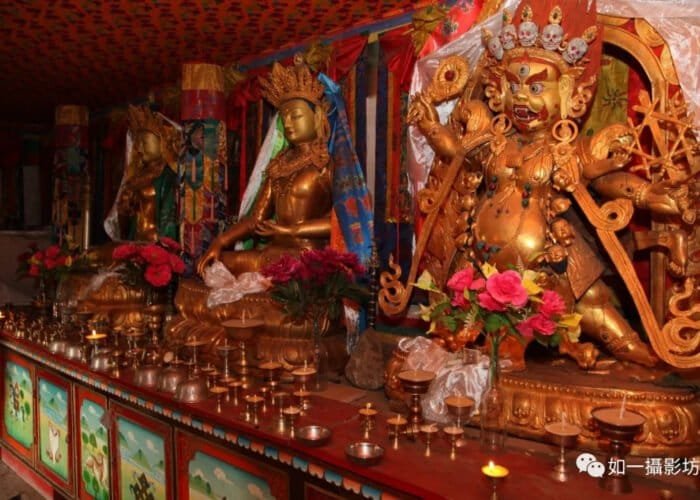
Across Tibet, travelers can also visit historic Bon monasteries featuring distinctive architecture, ancient murals, sacred rituals, and centuries-old traditions that continue to flourish today.
Recognition of Bon as a Tibetan Wisdom Tradition
A significant milestone in modern Bon history occurred in 1978, when His Holiness the 14th Dalai Lama formally recognized Bon as the fifth major spiritual tradition of Tibet, alongside the four schools of Tibetan Buddhism.
This recognition affirmed Bon’s unique contribution to Tibetan philosophy, culture, religion, and history while promoting mutual respect among Tibet’s spiritual traditions.
Bon’s Influence on Tibetan Culture
Bon has profoundly shaped Tibetan civilization for thousands of years. Many aspects of Tibetan culture—including sacred mountain worship, pilgrimage traditions, astrology, healing practices, prayer ceremonies, and respect for nature—reflect Bon influences that remain visible today.
Travelers exploring Tibet often encounter Bon traditions in remote monasteries, village festivals, sacred landscapes, and local customs, offering a fascinating glimpse into Tibet’s ancient spiritual heritage.
Why Learn About Bon Spirituality?
Bon is far more than an ancient religion—it is a living tradition that continues to inspire practitioners around the world. Its teachings integrate ethical living, meditation, philosophy, ritual practice, and the direct realization of the mind’s true nature into a complete path toward enlightenment.
For visitors to Tibet, understanding Bon provides valuable insight into the origins of Tibetan civilization and enriches every visit to monasteries, sacred mountains, and pilgrimage sites. Whether you are interested in religion, history, philosophy, or cultural travel, Bon offers a unique perspective on Tibet’s enduring spiritual legacy.