
Tibetan butter tea, known locally as Po cha (བོད་ཇ་), is one of the most distinctive drinks in the Himalayan world. More than just tea, it is a daily ritual, a source of survival, and a powerful symbol of Tibetan identity.
Prepared and enjoyed across Tibet and neighboring Himalayan regions, butter tea combines strong black tea, yak butter, salt, and sometimes roasted barley flour (tsampa). In high-altitude communities, it is consumed throughout the day—sometimes dozens of small cups—providing warmth, energy, and hydration in an environment where the climate is cold, dry, and demanding.
For travelers exploring Tibet, tasting po cha is often the first cultural experience upon entering a Tibetan home. It represents welcome, respect, and shared humanity.
What Is Tibetan Butter Tea Made Of?
At its core, Tibetan butter tea is simple yet nutritionally powerful. Each ingredient plays a functional role in supporting life at high elevations.
Key Ingredients of Po Cha
| Ingredient | Description | Purpose |
|---|---|---|
| Black Tea | Traditionally compressed brick tea, boiled into a strong concentrate | Provides caffeine and antioxidants |
| Yak Butter | Made from female yak (dri) milk; cow butter is often substituted | Adds calories, warmth, and creaminess |
| Salt | Rock or sea salt | Replenishes electrolytes and balances flavor |
| Water | Boiled thoroughly | Forms the base of the tea |
| Tsampa (Optional) | Roasted barley flour | Adds thickness and extra nutrition |
The result is a savory, creamy beverage often described by first-time visitors as closer to a light soup than a typical cup of tea.
The History of Butter Tea in Tibet
Tea first reached Tibet as early as the 7th century, when trade routes connected the Tibetan Plateau with neighboring regions. Over time, tea became a valuable commodity, often traded for horses and livestock along ancient caravan networks.
The addition of butter and salt developed later, becoming widespread around the 13th century. This evolution was practical rather than decorative. At elevations often exceeding 3,500 meters, the human body requires additional calories and hydration. Yak butter provided essential fats, while salt helped replenish minerals lost in dry, cold air.
Over centuries, butter tea became deeply integrated into Tibetan daily life—especially among nomads, monks, and farming communities who relied on its sustaining qualities.
How Tibetan Butter Tea Is Traditionally Prepared
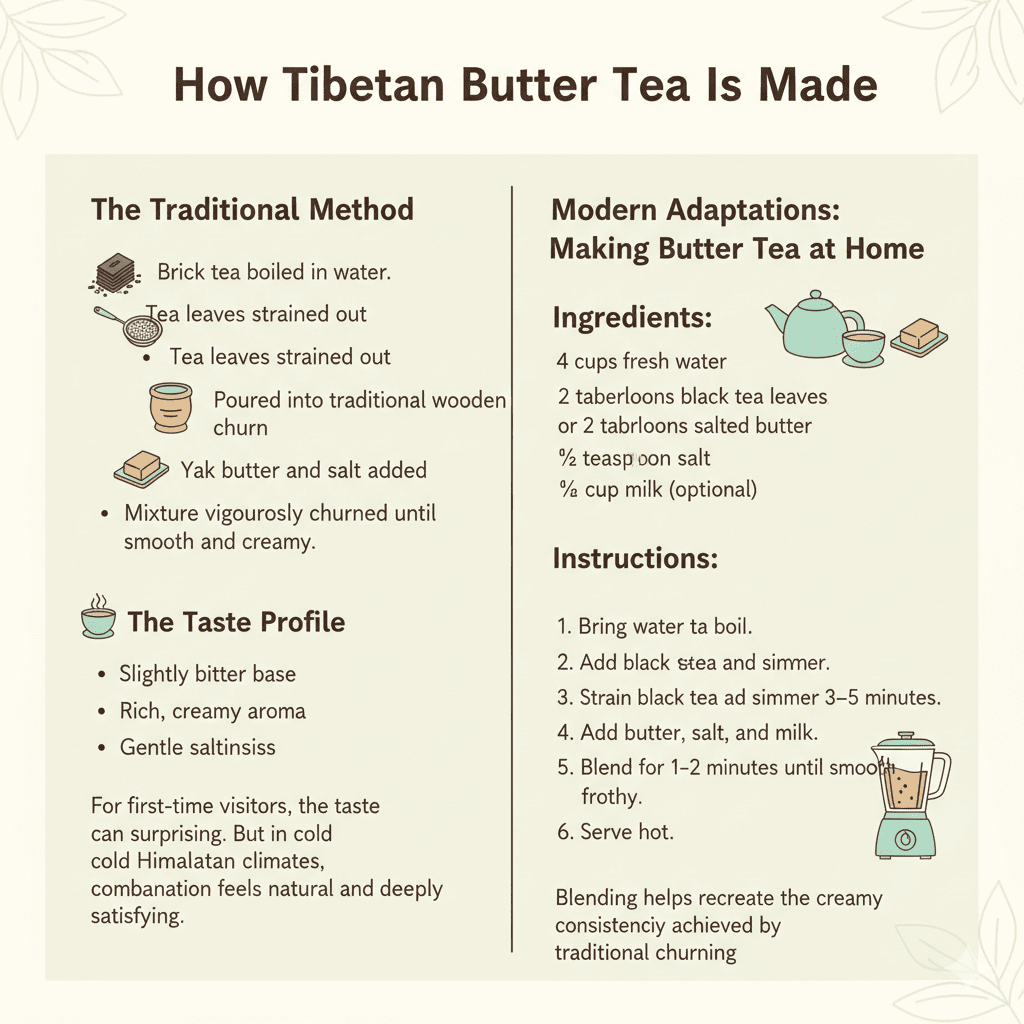
Authentic po cha is made using a wooden churn known as a dongmo. The preparation itself is a rhythmic and meaningful process passed down through generations.
Traditional Preparation Steps
- Boil the Tea
Brick tea is simmered for an extended period to create a strong, dark concentrate. - Strain the Leaves
The liquid is filtered to remove the tea leaves. - Add Butter and Salt
Yak butter and salt are added to the hot tea. - Churn Vigorously
The mixture is churned in the wooden cylinder until emulsified and frothy. - Serve Immediately
The tea is poured into small bowls, often wooden or porcelain, and served hot.
In monasteries and traditional homes, large batches are often prepared daily. During festivals such as Losar (Tibetan New Year), the aroma of butter tea fills households as families gather to celebrate.
The Taste of Tibetan Butter Tea
Butter tea has a distinctive and layered flavor profile:
- Slight bitterness from strong black tea
- Rich, creamy texture from butter
- Subtle saltiness that balances the drink
For newcomers, the taste can be surprising. However, after spending time at high altitude, many travelers find it deeply comforting and energizing.
Why Tibetans Drink Butter Tea Daily
Energy and Warmth in a Harsh Climate
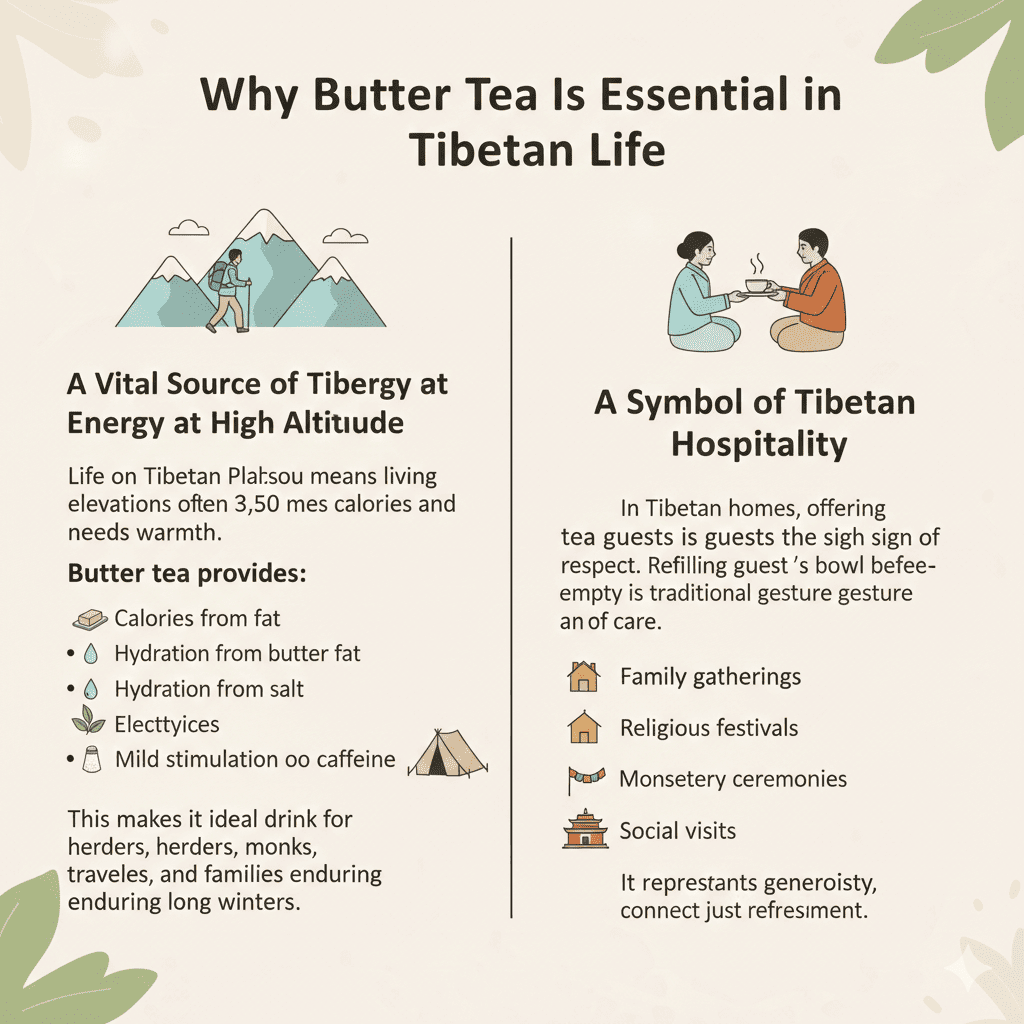
Living on the Tibetan Plateau means dealing with freezing winters, strong winds, and oxygen-scarce conditions. Butter tea offers:
- High-calorie nourishment
- Sustained energy from caffeine and fats
- Hydration in dry air
- Internal warmth in cold temperatures
Its dense nutritional profile makes it ideal for herders, farmers, and monks engaged in physically demanding work.
Support for High-Altitude Adaptation
Butter tea is widely believed to help ease symptoms associated with altitude, such as fatigue and dizziness. While scientific perspectives vary, locals consistently rely on it as a practical adaptation tool for life above 4,000 meters.
Cultural and Social Significance of Po Cha
Butter tea is deeply woven into Tibetan social customs.
A Symbol of Hospitality
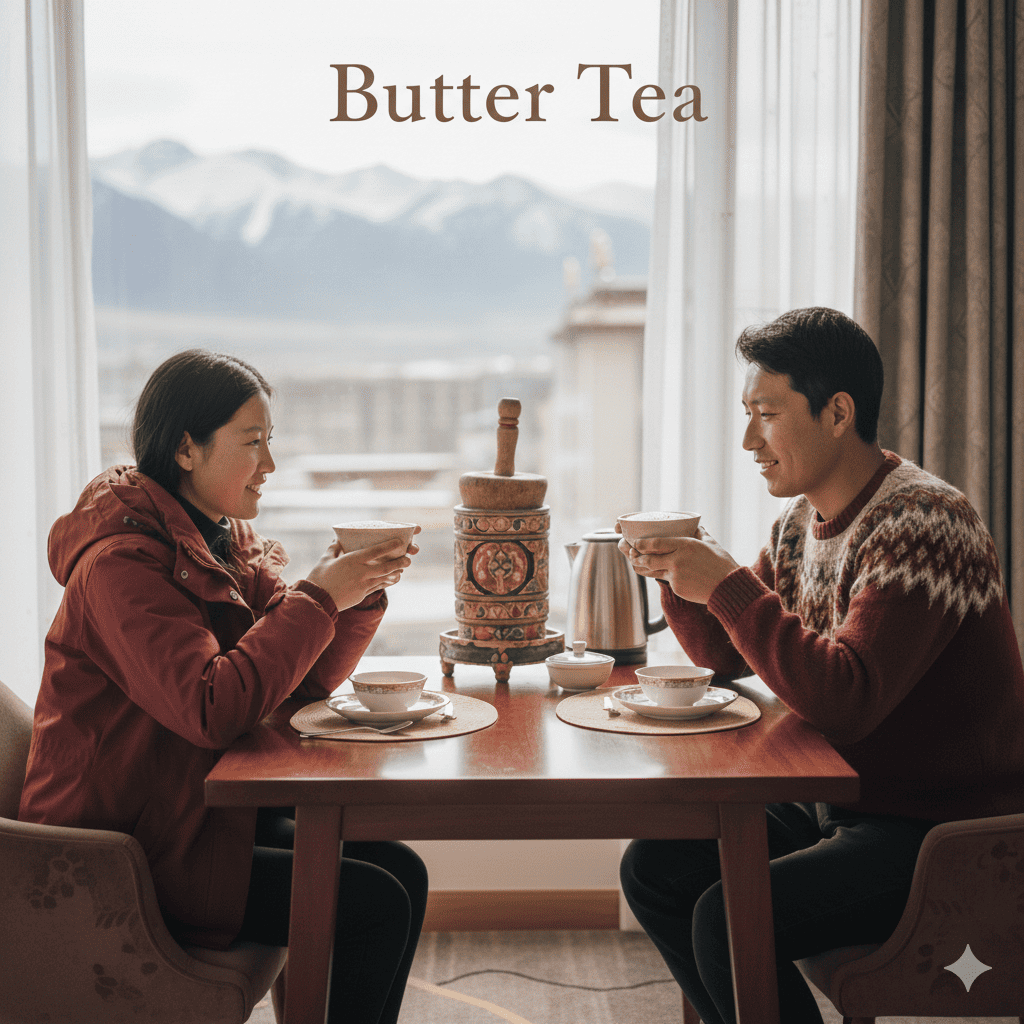
Offering butter tea to guests is an essential gesture of respect. A host will continually refill a guest’s bowl before it becomes empty, symbolizing generosity and care.
Presence in Life Events
Butter tea is served during:
- Weddings
- Religious ceremonies
- Family gatherings
- Funerals
- Daily visits
At weddings, each sip expresses blessings for prosperity. At funerals, it offers comfort and solidarity. In monasteries, monks share butter tea during communal activities, strengthening spiritual and social bonds.
Butter Tea and Tibetan Food Culture
Butter tea is often paired with tsampa, roasted barley flour that can be mixed directly into the tea. This creates a thick, dough-like consistency that serves as a complete meal.
This combination reflects the agricultural foundation of Tibetan life, where barley and yak products form dietary staples. The simplicity of these ingredients demonstrates the ingenuity of adapting to limited natural resources.
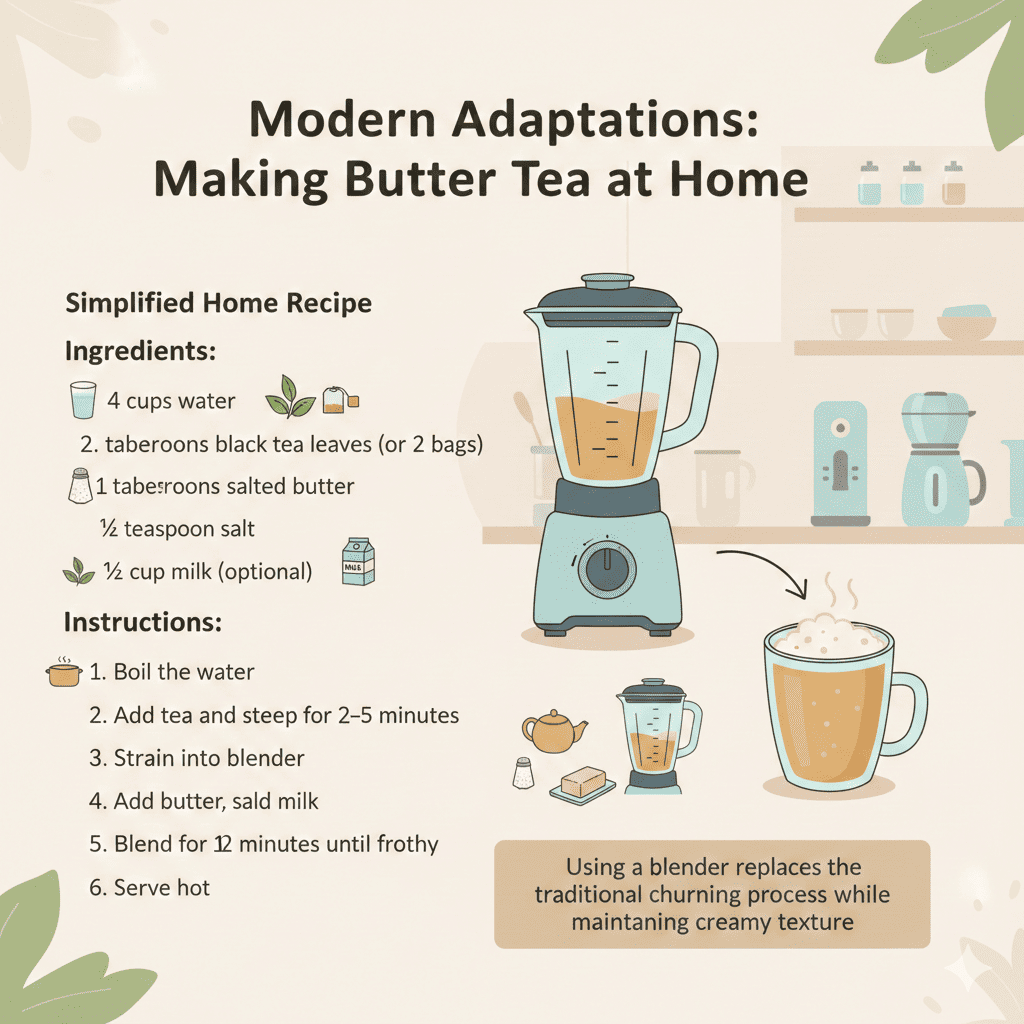
Modern Adaptations: Making Butter Tea at Home
Today, butter tea can be recreated in kitchens worldwide without traditional equipment.
Simplified Home Recipe
Ingredients:
- 4 cups water
- 2 tablespoons black tea leaves (or 2 tea bags)
- 2 tablespoons salted butter
- ½ teaspoon salt
- ½ cup milk (optional)
Instructions:
- Boil the water.
- Add tea and steep for 3–5 minutes.
- Strain into a blender.
- Add butter, salt, and milk.
- Blend for 1–2 minutes until frothy.
- Serve hot.
Using a blender replaces the traditional churning process while maintaining the creamy texture.
Health Benefits of Tibetan Butter Tea
Butter tea’s composition makes it both functional and nourishing.
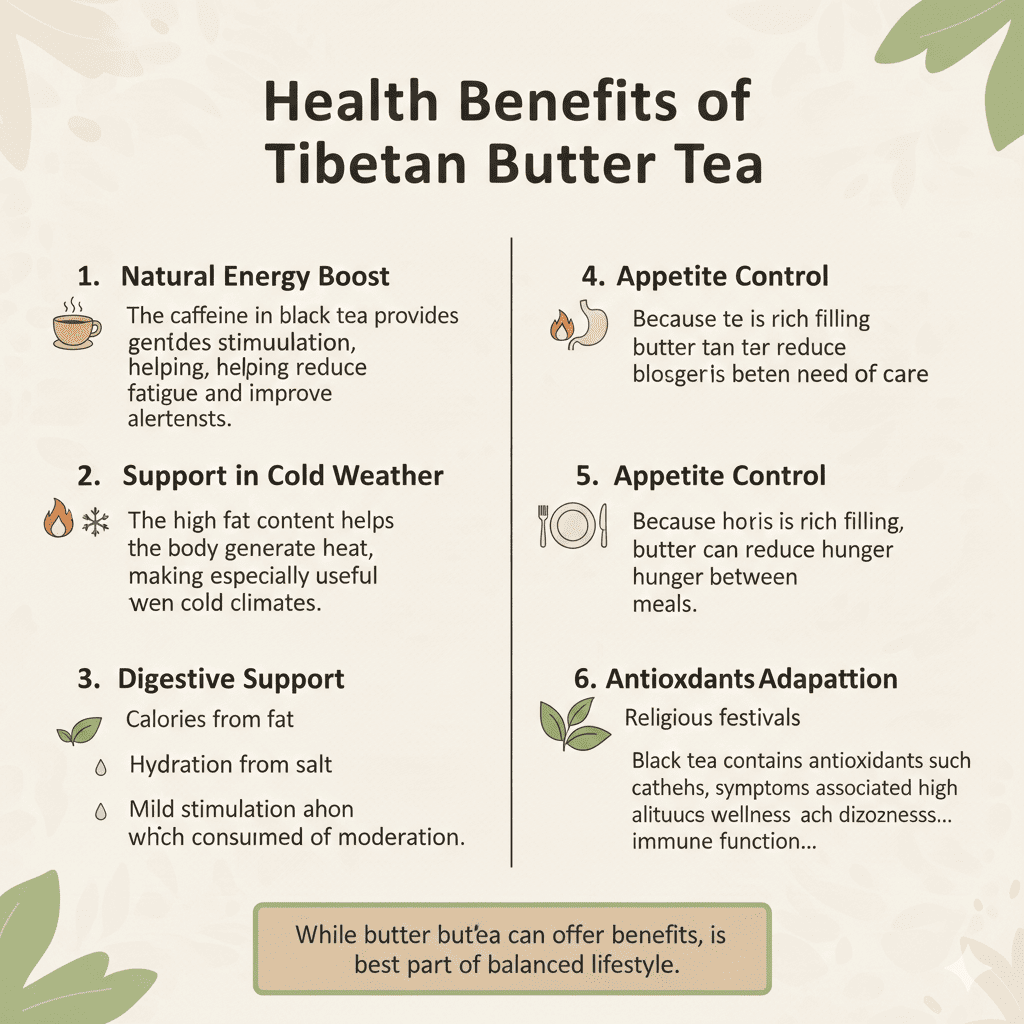
1. Sustained Energy
Caffeine from black tea supports alertness and productivity.
2. Warmth and Caloric Density
Butter provides concentrated energy, essential in cold climates.
3. Electrolyte Balance
Salt helps maintain mineral balance in dry, high-altitude environments.
4. Antioxidants
Black tea contains antioxidants that support overall wellness.
5. Appetite Satisfaction
Its richness can help reduce hunger between meals.
Because of its high fat and salt content, moderation is important—especially for individuals monitoring cholesterol or blood pressure.
Butter Tea Across the Himalayan Region
Similar versions of butter tea appear in parts of Nepal, Bhutan, and among Himalayan communities in northern India. Each region adapts the drink slightly, sometimes adding roasted grains or adjusting salt levels.
Despite variations, the core purpose remains the same: nourishment, warmth, and community.
Experiencing Butter Tea as a Traveler
For visitors to Tibet, accepting a bowl of butter tea is more than tasting a traditional drink—it is participating in a living heritage. Whether in a monastery kitchen, a nomadic tent, or a village home, po cha offers insight into how geography shapes culture.
Its rich, savory character tells a story of resilience and adaptation in one of the world’s most challenging environments.